Where they stand: Bottoms, Jackson on healthcare access


Conversations around whether Georgia should expand Medicaid this election cycle have been heightened by the startling drop in healthcare coverage following Congress’ vote earlier this year to end the Affordable Care Act’s pandemic-era enhanced federal subsidies.
Hundreds of thousands of Georgians dropped their health insurance coverage in the wake of ACA price hikes.
Georgia is one of 10 states that opted not to expand Medicaid ― a Republican-led decision that’s been a source of partisan tension under the Gold Dome.
Instead, Georgia opted for a more limited expansion through Republican Gov. Brian Kemp’s “Georgia Pathways to Coverage” program, which aims to provide insurance coverage for low-income adults. But the initiative has been met with criticism over an 80-hour-a-month work requirement and low enrollment numbers.
Recent polling from the Georgia Health Initiative found that 77% of voters say that a candidate’s plan to tackle rising healthcare costs is a deciding factor when casting their ballot.
Here’s where candidates for governor, former Atlanta Mayor Keisha Lance Bottoms and healthcare CEO Rick Jackson, stand on healthcare access.
Bottoms
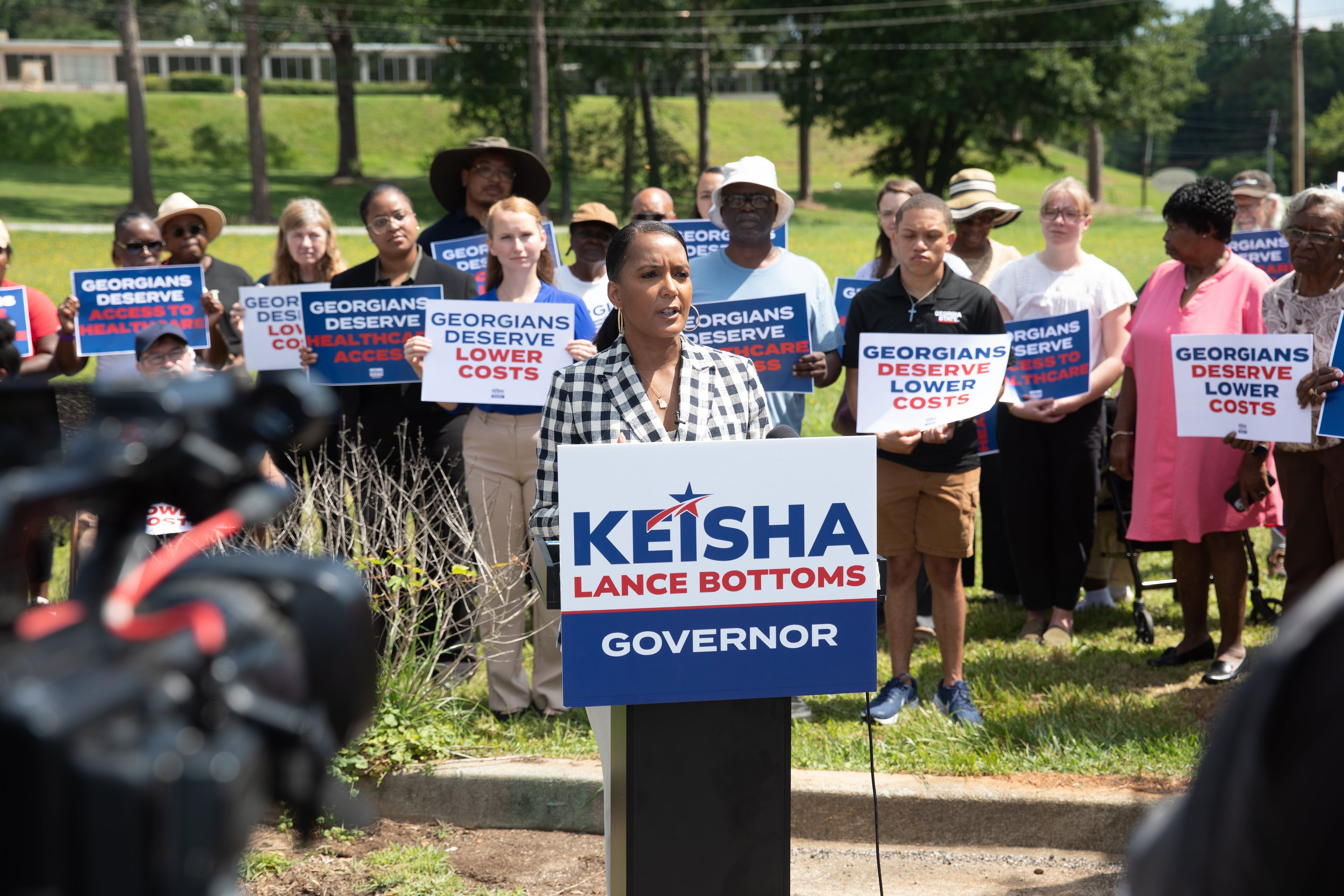
Bottoms is an outspoken advocate for full Medicaid expansion, joining other Georgia Democrats in their sharp criticism of Republican colleagues for failing to do so.
Along with expansion, she proposes raising eligibility for certain adults up to 138% of the federal poverty level — or a salary around $21,000 a year for an individual. She also promises to scrap Kemp’s Georgia Pathways program.
But if elected, Bottoms faces the prospect of navigating a Republican-majority state Legislature that has turned down earlier attempts to expand Medicaid.
The race for Georgia Governor
All about Democrat Keisha Lance Bottoms and Republican Rick Jackson and what they would do if elected.
The Issues: Education | Healthcare | Data Centers | Taxes | Abortion | Immigration
Polls and predictions: Track the race for Governor
Data centers: Bottoms, Jackson clash over data centers. Both have history with the industry.
Their agendas: Keisha Lance Bottoms | Rick Jackson
Crossover voters: Prominent Georgia Democrat crosses aisle for Rick Jackson
Bottoms’ record: 5 defining tests from Keisha Lance Bottoms’ years as Atlanta mayor
Jackson’s business deal: Why Rick Jackson poured millions into a failing Alabama hospital
Big bucks: Rick Jackson’s $87M ad buy targets Bottoms’ mayoral record
Complete coverage: 2026 Georgia Voter Guide
“I will not have the power unilaterally to expand Medicaid,” Bottoms said during a healthcare roundtable in Brunswick. “However, Medicaid has not been expanded in this state because we had a series of Republican governors who didn’t have the desire to expand it — so much of policy begins with the will of the governor.”
The Democrat says that while she works to earn Republican support, she’ll issue an executive order mandating state agencies to begin preparing for expansion.
Jackson

The Republican nominee proposed what he calls “intelligent Medicaid expansion” — a new waiver program that would go further than Kemp’s Pathways program but stops short of full expansion.
“We will cover those who need it the most and keep work requirements in place for those who are able,” he said at a news conference unveiling his policy agenda on Sept. 8.
Jackson argues that Medicaid expansion would move 500,000 Georgians on subsidized private insurance plans onto government sponsored coverage.
But his plan requires enhanced federal funding approved by the Trump administration — dollars that Georgia has been previously denied by the Centers for Medicare and Medicaid Services.