Economic proposal aims to expand Rick Jackson’s political reach

Today’s newsletter highlights:
- A Georgia Jan. 6 riot participant sought Mike Collins’ backing for payments to defendants.
- A medical records dispute tests the Georgia Supreme Court’s stance on the right to privacy.
- Georgia Democrats fault Brian Kemp for opting out of a summer food program for low-income children.
Broader appeal

Rick Jackson spent much of the GOP primary proving he could throw punches. Now, the billionaire healthcare executive is trying to show voters another side of his campaign for governor.
Jackson is set to unveil an economic plan Wednesday morning in downtown Atlanta aimed at restoring historic Black business districts and expanding opportunities for minority-owned businesses.
His “Legacy Corridor Initiative” is the latest piece of a deliberate push to broaden his appeal beyond the GOP base, and it would initially target six commercial districts, including Sweet Auburn in Atlanta.
“Being the number one state for business means nothing if it does not apply to all of our businesses, in all of our neighborhoods,” he said.
The rollout offers a softer side of some of the harder-edged GOP proposals. Over the weekend, Jackson’s promise to protect “the least of these” contrasted with his calls to ban Sharia law and broaden the death penalty.
It also comes after Jackson’s visit to a Black-owned brunch spot in Buckhead that triggered boycott threats and a stinging rebuke from Democratic nominee for governor Keisha Lance Bottoms, who accused him of using the visits as a political prop.
His proposal calls for a “navigator” in each corridor to help connect businesses with government resources, leverage existing tax credits and promote a state tax credit for job-creating businesses.
Things to know

Good morning! Here are three things to know for today:
- President Donald Trump is trying to broker a truce between Jackson and Lt. Gov. Burt Jones, Greg Bluestein reports.
- Pete Buttigieg has endorsed Bottoms, deepening his ties to Georgia Democrats ahead of the 2028 presidential race, Bluestein reports.
- Earlier this year, a Georgia federal court approved an $11.5 million settlement over immigrant workers’ claims, putting an end to a class action lawsuit first filed in 2022, Lautaro Grinspan reports.
Right to privacy

The Georgia Supreme Court was the first in the U.S. to recognize a right to privacy more than 100 years ago. Now, the court is clarifying how that right applies to a civil dispute over medical records.
A woman sued her ex-boyfriend, alleging he hid a herpes diagnosis from her and infected her with the disease. The boyfriend refused to turn over his medical records, citing his right to privacy.
Tuesday, the court agreed the boyfriend has a right to privacy. But they said that right must include an “’elastic,’ nuanced, case-by-case balancing of competing interests.” Among those interests are the girlfriend’s right to seek relief for alleged damages and “the public’s rights to open courtrooms and accessible court records.”
The ruling sends the case back to the lower courts. It also overturned a decision by the Georgia Court of Appeals. But the appellate justices shouldn’t feel too bad. In a footnote, Chief Justice Nels S.D. Peterson wrote the Supreme Court is “at least partially to blame” for the appellate court getting it wrong, “as it can be traced back to our own jumbling together Fourth Amendment concepts, procedural due process and tiers of scrutiny” in previously decided cases.
Boxing Collins in
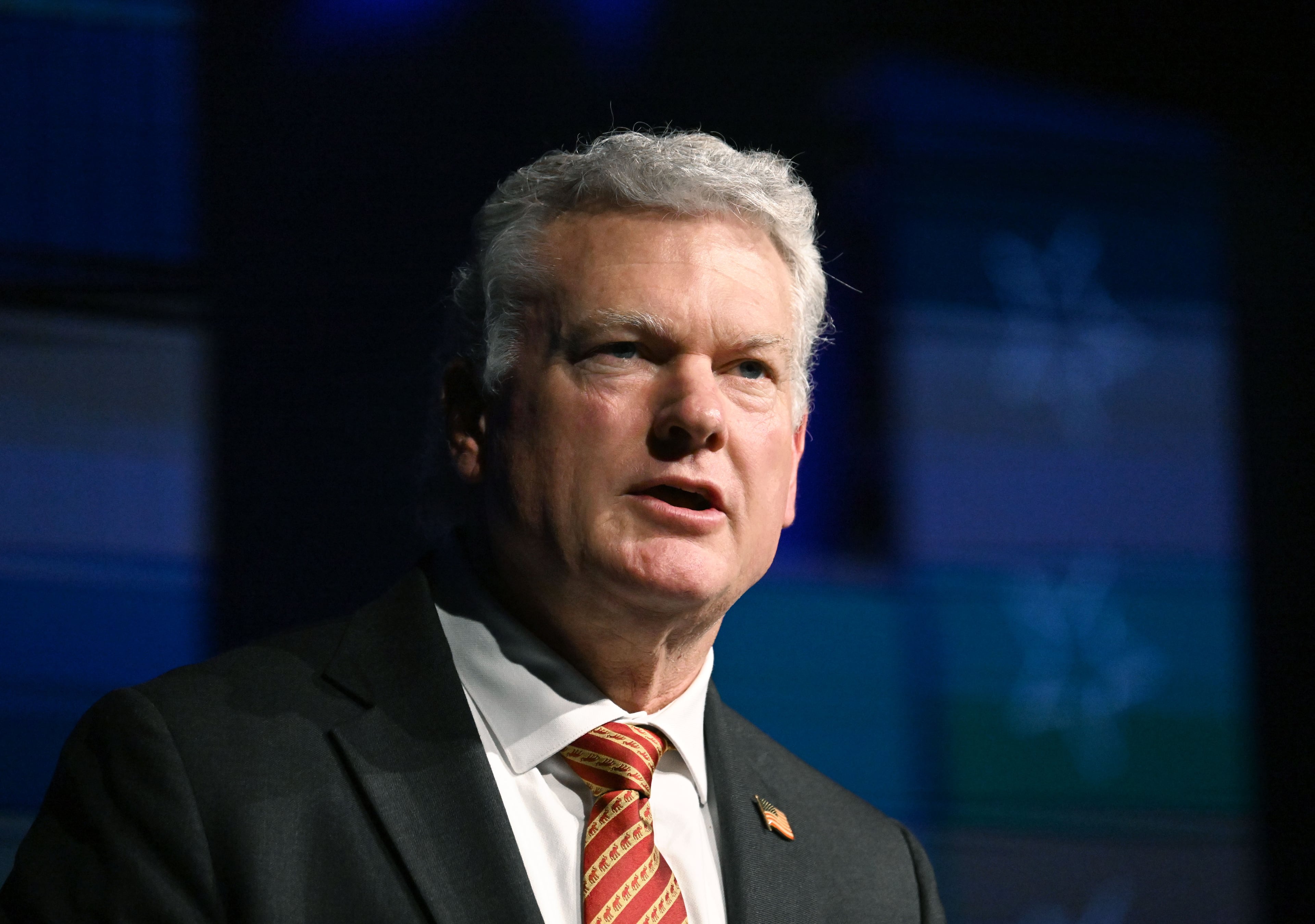
A Georgia man who participated in the U.S. Capitol riot on Jan. 6, 2021, tried to get U.S. Rep. Mike Collins to back a plan allowing people charged that day to receive payment from the federal government.
Dominic Box posed the question to Collins during a campaign stop in Savannah on Tuesday. And he took it as a victory when Collins, the Republican nominee for U.S. Senate, responded he agreed that people who have been harmed by the federal government should be compensated.
Box posted video of the exchange as proof that Collins, R-Jackson, supported the now abandoned effort by Trump to set aside money to pay people who were arrested on Jan. 6. But Collins’ team quickly clarified that wasn’t what he meant.
“Mike Collins fully supports holding the government accountable when federal agencies abuse their power and believes Americans who’ve been wronged by their government ought to have a path to seek justice,” Meyer Siegfried, a spokesperson for Collins, said. “He does not support a blank-check fund or automatic taxpayer-funded payouts to anyone simply because they were prosecuted for January 6.”
Box spent years as a QAnon adherent and conspiracy theorist in Savannah before he livestreamed his march through the U.S. Capitol on Jan. 6, 2021. He was found guilty of two felony counts of civil disorder and four misdemeanors following a June 2024 trial and was awaiting sentencing when Trump pardoned every Jan. 6 defendant.
His participation in the U.S. Capitol riot is just one of several brushes with the law. He was arrested last month outside a Savannah sports bar and charged with two misdemeanors and a felony charge of interfering with public property. He is currently out of jail on bond on those charges.
Laken Riley Act

U.S. Rep. Angie Craig was not successful in her bid to become Minnesota’s governor, losing in Tuesday night’s primary to a progressive rival, Lt. Gov. Peggy Flanagan.
One issue that Flanagan hammered Craig on was her vote in support of the Laken Riley Act, named for the young woman killed on the University of Georgia’s campus by a man who was living in the country illegally. The law gives immigration agencies broad authority to detain migrants accused of a variety of crimes.
Craig later said she regretted voting for the bill. Still, that action dogged her campaign in a state where two people were killed while protesting immigration enforcement efforts.
Could U.S. Sen. Jon Ossoff face similar skepticism from progressives in Georgia as he seeks a second term? He was among four Georgia Democrats who supported the bill, joining fellow Sen. Raphael Warnock, and U.S. Reps. Sanford Bishop, D-Albany, and Lucy McBath, D-Marietta.
So far, none of the four have faced the same pushback from his party’s left flank. That could have to do with the widespread awareness of Riley’s death among Georgia voters. Plus, the type of violence during the protests in Minnesota has not occurred in Georgia.
Listen up

Today on the “Politically Georgia” podcast, Greg Bluestein sits down with veteran Republican strategist Jordan Fuchs to assess Georgia Republicans’ challenges heading into November, from weak enthusiasm to concerns about pocketbook issues and swing voters.
You can listen and subscribe to “Politically Georgia” for free on Apple Podcasts, Spotify, YouTube or wherever you get your podcasts.
Have a question or comment for the show? Email us at politicallygeorgia@ajc.com or give us a call at 770-810-5297 and you could be featured on a future episode.
Today in Washington
- Trump will host an event at the White House with law enforcement and military service members.
- The House and Senate are in recess.
Summer meals

Georgia Democrats are criticizing Republican Gov. Brian Kemp for not participating in a federal program that feeds low-income children during the summer.
The Summer Electronic Benefits Transfer program provides $40 per eligible child per month. In a letter to Kemp, U.S. Rep. Lucy McBath, D-Marietta, said 40% of Georgia’s 2.8 million children qualify for the program.
Kemp has consistently declined to participate in the program, citing concerns about nutrition standards and “fiscal sustainability.” He has pointed to state programs that essentially do the same thing.
This year, the state Legislature attempted to go around Kemp by putting $2 million in the budget to participate in the program next summer. But Kemp vetoed the money, part of a plan to help address a $1.3 billion shortfall caused by an income-tax cut.
“We encourage you to respect the will and bipartisan consensus of the Georgia General Assembly on this issue,” McBath wrote in the letter, which was also signed by Ossoff, Warnock, Bishop, and U.S. Reps. Hank Johnson and Nikema Williams. All are Democrats.
Shoutouts

Today’s birthdays
- State Rep. Brad Thomas, R-Holly Springs.
- Eric Charles Hubbard, outreach and intergovernmental affairs director for U.S. Rep. Hank Johnson.
Want a birthday shoutout in the Politically Georgia newsletter? There’s a form for that. It’s not just birthdays. We’re also interested in new jobs, engagements, birth announcements, etc.
Before you go

Brian Epps left his job as a federal magistrate judge to become the latest judge on the Georgia Court of Appeals. Kemp swore him into office Tuesday.
That’ll do it for us today. As always, you can send your best scoops, gossip and insider information to greg.bluestein@ajc.com, tia.mitchell@ajc.com, patricia.murphy@ajc.com and adam.beam@ajc.com.
Correction
This story has been updated to correct the spelling of Monterrey Mexican Restaurant and the day of U.S. Rep. Mike Collins’ rally in Savannah.