Longest US government shutdown cost Delta Air Lines $200 million
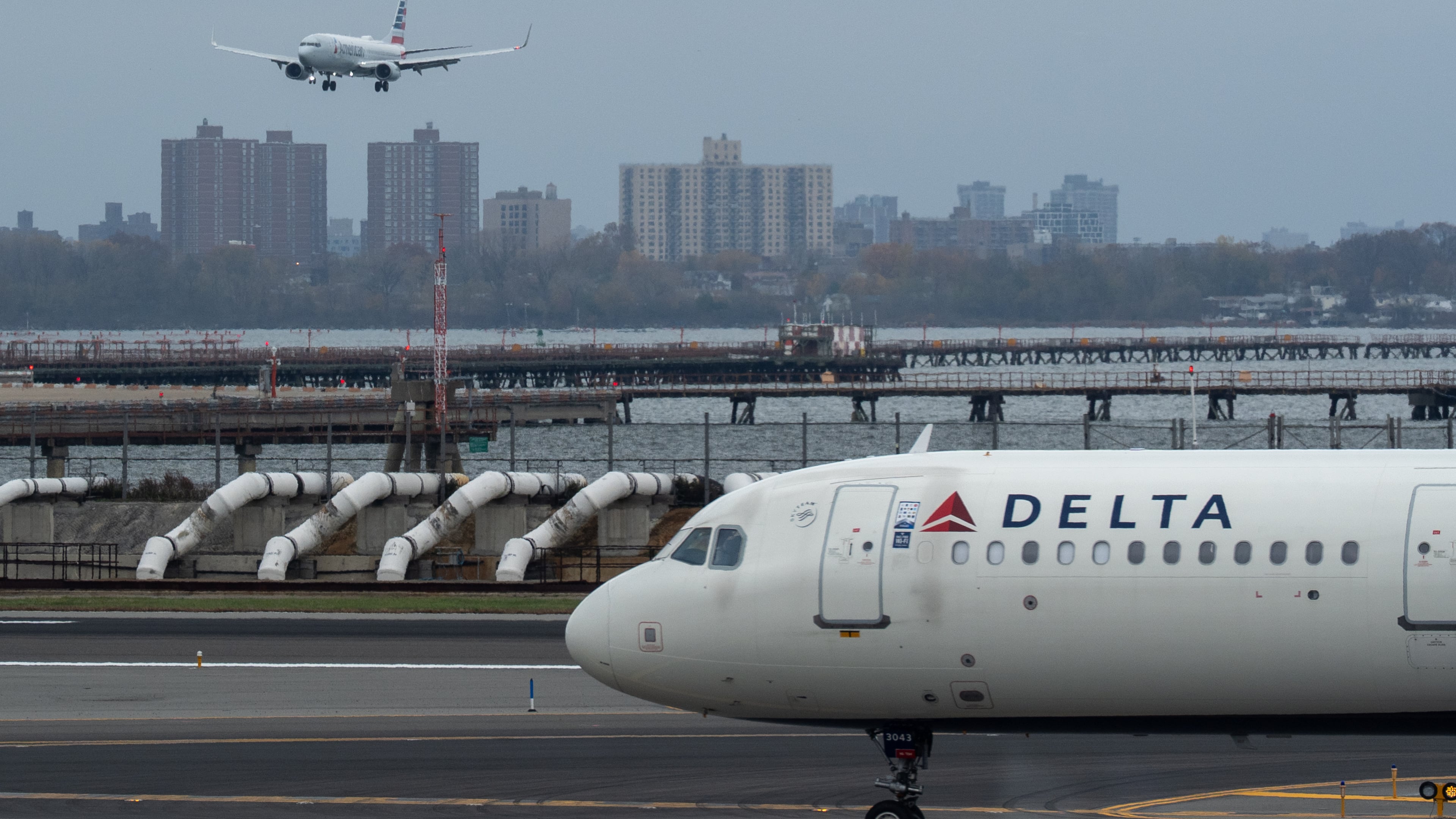
The longest government shutdown on record cost Delta Air Lines an estimated $200 million, CEO Ed Bastian said Wednesday in the first disclosure by a U.S. airline regarding the shutdown’s financial impact.
Bastian told investors that refunds “grew significantly” as bookings also slowed amid the uncertainty in air travel caused by the 43-day shutdown, contributing to Delta's loss of about 25 cents per share.
The shutdown, which began Oct. 1, led to long delays at major airports and historic flight cancellations at 40 of the country's busiest airports as more unpaid air traffic controllers missed work, citing additional stress and the need to take on side jobs. As the shutdown dragged into a second month, the Federal Aviation Administration issued an emergency order requiring commercial airlines to cancel up to 6% of their domestic flights — a decision that Transportation Secretary Sean Duffy described as necessary to guarantee safe air travel.
“When you’ve got the secretary of transportation telling people we don’t have controllers, questioning the safety at some level of travel, which has never before happened,” Bastian said, it led to more customers holding off on booking their holiday travel.
More than 10,000 flights were cut between Nov. 7, when the FAA’s order took effect, and when the restrictions were fully lifted on Nov. 16, less than two weeks before Thanksgiving, the busiest travel period in the U.S.
Despite the disruption to air travel, Bastian said Wednesday he believes the shutdown's impacts are in the rearview. He said Delta had a busy Thanksgiving week and that bookings through the end of the year, especially around Christmas and New Year's Day, were “really strong.”
“I think we’re through it and it was transitory,” Bastian said of the shutdown. “We’re looking forward to a strong December, a strong close to the year.”
Airports impacted by the flight restrictions during the shutdown included large hubs in New York, Chicago, Los Angeles and Atlanta. The flight cuts started at 4% and later grew to 6% before the FAA rolled the restrictions back to 3%, citing continued improvements in air traffic controller staffing after shutdown ended Nov. 12.
Controllers were among the federal employees who had to continue working without pay throughout the shutdown, missing two full paychecks.
President Donald Trump took to social media during the shutdown to pressure controllers to “get back to work, NOW!!!” He called for a $10,000 bonus for those who stayed on the job and suggested docking pay for those who haven’t.
A week after the shutdown ended, the FAA announced only 776 controllers and technicians with perfect attendance during the shutdown would receive bonuses, leaving out nearly 20,000 other workers.
On Wednesday, Sen. Tammy Duckworth, ranking member of the Senate Subcommittee on Aviation, Space and Innovation, sent a letter to Duffy demanding that he also award bonuses to the remaining FAA workers.
“It is wrong to financially penalize these Federal employees for responsibly managing life events beyond their control while working without pay,” she said.
Duffy didn’t immediately respond Wednesday to the letter, but when asked about the bonuses last week at a news conference ahead of the Thanksgiving travel period, Duffy said that both he and the head of the FAA recognize “some of the difficult circumstances our controllers were going through” during the shutdown. But Duffy said a cutoff on the bonuses was necessary.
“If you got 100% on your test, you get the sticker that's a scratch-and-sniff sticker," Duffy said, adding that all the controllers and technicians who were forced to work unpaid would receive full backpay.
___
Associated Press writer Josh Funk contributed to this report.