Sushi, Lowcountry boil, spicy pasta: AJC’s food critic reviews Fulton school lunches

Kids like spicy food now?
According to Fulton County school officials, today’s students not only tolerate more heat — they demand it. Two potential new school lunch items recently tested by students had a real kick: creamy buffalo chicken pasta and an elote-themed version of mac and cheese.
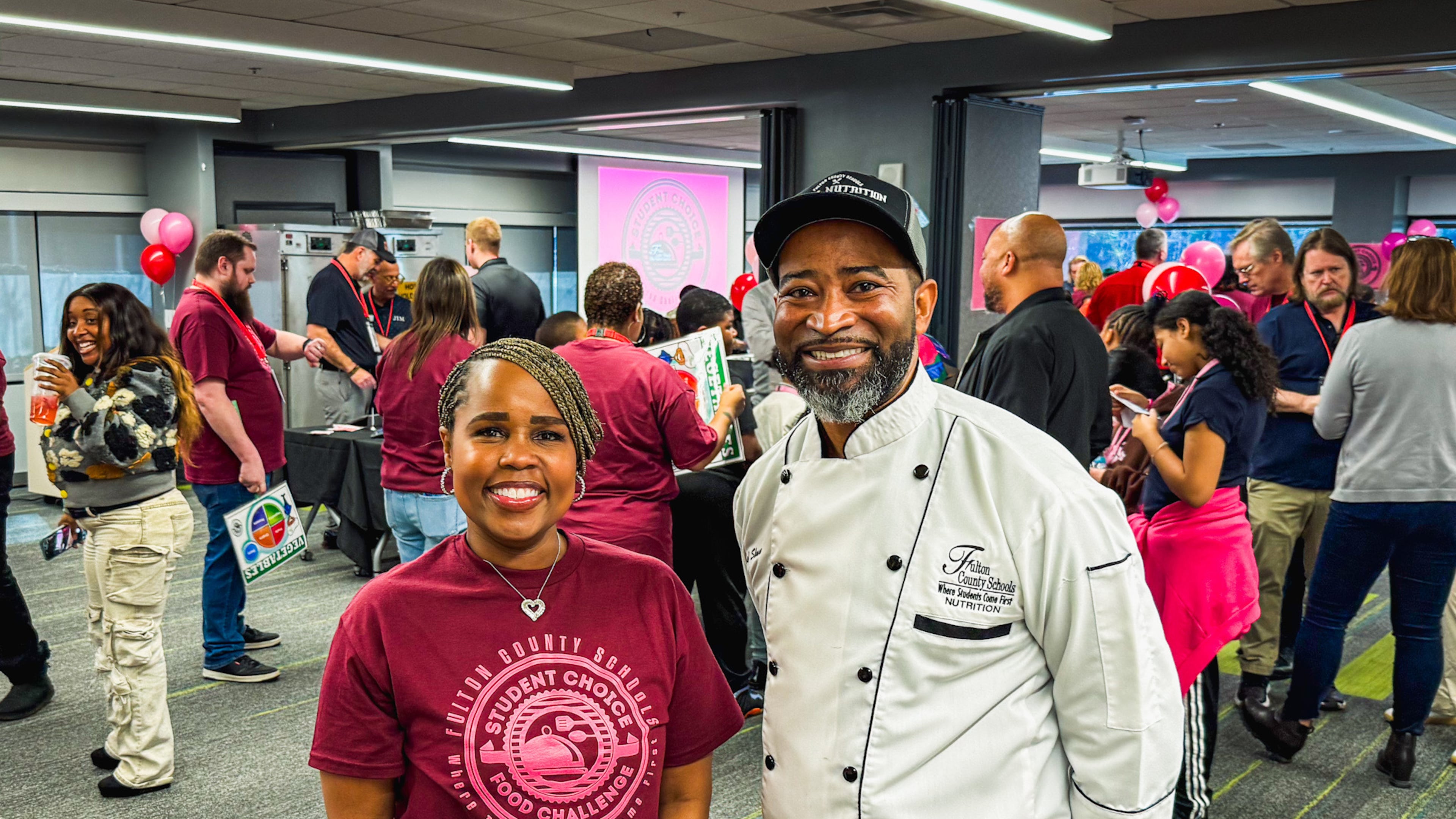
Chef Reggie Sloan, who creates the recipes, said a spicy chipotle chicken bowl he created nearly a decade ago is still one of the most popular lunches in Fulton.
“Kids are very, very vocal about their food,” said Denielle Saitta, marketing and communications coordinator for the school system’s nutrition program. “It’s fascinating to me because some of the recipes are maybe more high-brow than I would think, and the kids love them.”
Dozens of students from elementary, middle and high schools circulated through a conference room at the Fulton County Schools administrative building Friday for the eighth annual Student Choice Food Challenge.
For the better part of a decade, school nutrition staff and vendors have used the event as an opportunity to test new recipes and get instant feedback from students. Kids are invited try up to 10 potential new food items and provide standardized feedback on tablets located at each station.

School lunches might not be considered the cutting edge of the culinary world, but the Student Choice Food Challenge was buzzing with energy. The students, selected from their class councils by school administrators, were thrilled to be there; they got to skip part of their school day to eat.
Maggie Liu and Miya Anderson, sophomores from Northview High School, said they weren’t aware of the Student Choice Food Challenge until they were selected to participate. They appreciated feeling some agency in the menu development process.
“It feels good because when you were younger, you didn’t really have a choice about what to eat or what not to eat,” Liu said.
“It feels great. I like food,” Anderson said in a classic teenage deadpan.

As the kids arrived, they split into four groups (meat, dairy, vegetable and fruit), and each was led from station to station by enthusiastic kitchen managers from across the school system. Between the students’ reactions to the food and the chants of “Fruit! Fruit! Fruit,” the infectious positivity put a smile on every face in the room.
Beneath the fun and flavor-surfing of the day, there’s a deep effort toward nourishing the student body. Creating balanced school lunches in an education system as large and diverse as Fulton County’s is a massive undertaking. For some students, the meals they eat at school might be the most hearty and nutritious of their day.
Each school meal is designed to comply with U.S. Department of Agriculture regulations and align with U.S. dietary guidelines, according to the nutrition program’s website. Sloan said the school system is particularly focused on serving low-sodium recipes. That can be a challenge because, as any cook will tell you, cutting back on salt will cut back on flavor.
“We have to balance flavor with regulations,” Alyssia Wright, executive director of school nutrition, told The Atlanta Journal-Constitution.
To address that challenge, Sloan creates many of the spice mixtures and marinades for his recipes in-house. The school system works with vendors to buy products that can be used in different dishes and take on a variety of flavor profiles.
On Friday, the same chicken thighs were used to make Moroccan chicken rice bowls and creamy buffalo chicken pasta. The sausage used in a Cajun-themed pasta dish can also be used in a seafood-free version of a Lowcountry boil. And isn’t the sausage always the first thing to disappear from a Lowcountry boil, anyway?
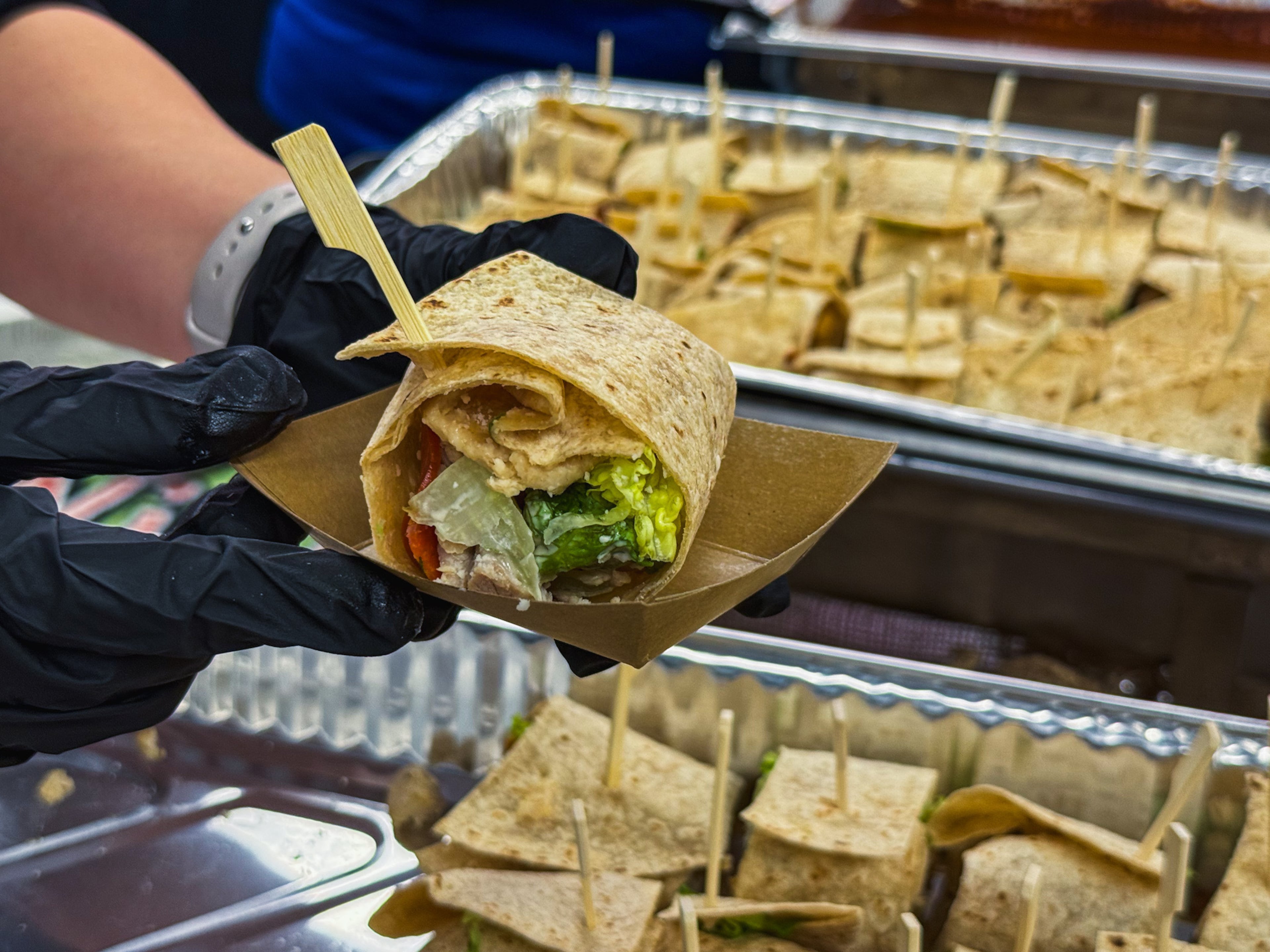
School nutrition officials said Friday they’ve seen students’ palates evolve over the years, sometimes in a direction that benefits the kitchen staff.
Gone are the days of highly segmented meals served on compartmentalized trays. Thanks to growing up with restaurants like Chipotle, most kids are happy to eat a bowl with protein, vegetables, starches and sauce all mixed together.
Creating and serving such a meal at scale is easier than a meal made up of several distinct, stand-alone items. And a diverse student population with wider culinary horizons gives the kitchen staff much more flexibility to be creative.
Even with the day-to-day logistical challenges of serving thousands of students fresh, nutritious meals, the school nutrition officials still see themselves as educators. Sharing their culinary inspirations from around the world exposes kids to a variety of cultures and helps normalize what may have seemed foreign to prior generations.
“We can use our food to explain different things in culture. We have Moroccan chicken over there, for example,” Sloan said.
The dish provides an opportunity for students to be curious about North African cuisine and cooking customs.

“We can use that as a conversation so the (kitchen managers) know that, hey, we do more than just serve y’all food,” Sloan continued. “We also inspire y’all to go visit places, and we inspire you to teach as well.”
“We’ve had parents email us and say, ‘Hey, my kid tried this at school today and now wants me to buy it at the store,” Wright said.
In another case, a student went home and re-created a recipe for roasted green beans that Sloan demonstrated as part of the nutrition department’s Farm to School program, which highlights local produce. According to Wright, the recipe for green beans was one of the most popular among students last year.
“We had a student who went home and prepared those roasted green beans for his family,” Wright said. “The mom took a picture, sent it to us and said, ‘He’s making green beans!’”
A student taking the initiative to cook a vegetable dish for his family might sound like a miracle of education, but such results are clearly the product of hard work.
Many of the administrators, staffers and vendors at Student Choice Food Challenge have attended the event all eight years it has been held, even though they had to skip a year during the COVID-19 pandemic. The nutrition program is transparent, and Sloan takes on an active educational role, regularly interacting with students rather than staying behind the scenes in a kitchen or office.
So, how was the food?
I tried all 10 dishes offered Friday, and they were all pretty good, without qualifiers. The dishes felt hearty and nutritious, but more like home cooking than refined restaurant dishes.
But placed in their proper context, these school lunches blew me away.
I was particularly impressed with the Cuban sandwiches, which were ingeniously prepared in roasting pans that allowed for efficient preparation and heating. Made with turkey and chicken rather than ham, the warm sandwich benefited from the generous application of sharp yellow mustard and large slices of tangy dill pickles.
The low-sodium regulations manifested in an interesting way with the spicy dishes. Sloan explained that salt, which helps enhance and distribute flavors, brings the heat forward in spicy foods, making the heat immediately obvious. With less salt, the heat in the buffalo chicken pasta and street corn mac and cheese built slowly from the back of the palate, becoming spicier with each bite.
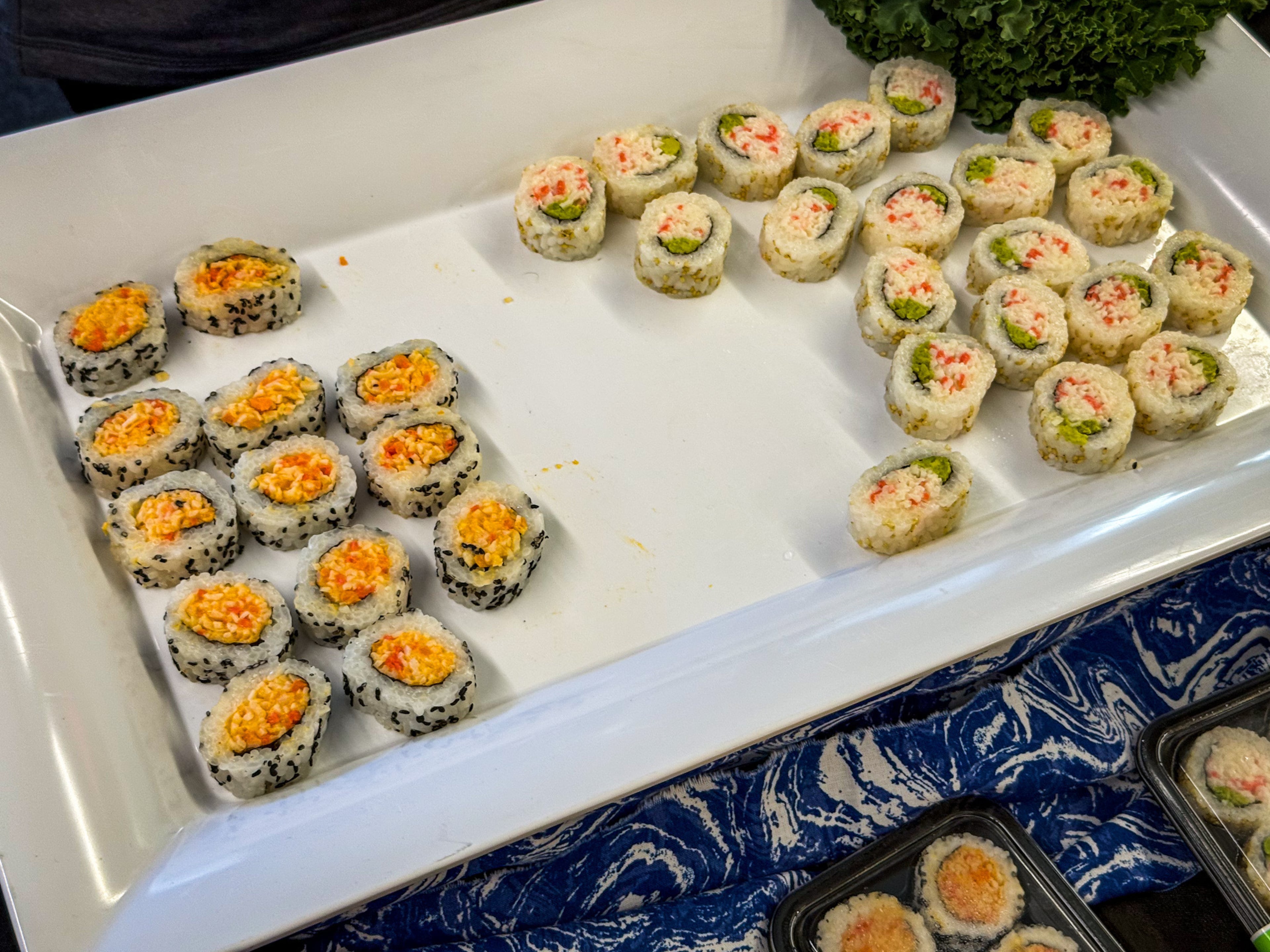
The sushi at Friday’s event felt very beginner-friendly. With protein provided by imitation crab, a cooked product, the rolls did not include any raw fish. The flavor was simple and the rolls were a little too perfectly circular, like cartoon sushi, but there was still a nice crunch from the raw veggies in the center.
I left the event energized, hopeful and impressed with the Fulton County Schools school lunch program. Serving thousands of students hot, tasty meals that nourish and educate them at the same time is a monumental assignment.
Wright, Sloan, the school system’s kitchen managers and the many other people dedicated to that task seem to be hitting the mark, and doing it with enthusiasm and good humor. It helps to have a good attitude — every day, they face hundreds of critics much tougher than me.