Homemade snacks make informal entertaining easy

With the holidays come endless to-do lists — menu planning, grocery shopping, cooking and cleaning — to be ready to entertain guests both planned and unexpected.
Although dinner parties with several courses are a gracious way to share a meal with family and friends, there’s also a time and a place for snacks, an array of savory and sweet bites that can be prepared ahead of time and served with little fuss and little notice. Having snacks on hand means you’re ready to entertain informally at a moment’s notice or treat yourself after crossing off some of the things on those to-do lists.
For this year’s holiday snacks, I took inspiration from two books: “Italian Snacking: Sweet and Savory Recipes for Every Hour of the Day” by Anna Francese Gass (Union Square & Co., 2024) and “A Table: Recipes for Cooking and Eating the French Way” by Rebekah Peppler (Chronicle Books, 2021). Both books offer recipes that emphasize quality over quantity.

In “Italian Snacking,” Gass compiled a book of recipes for what Italians call “spuntini,” quick and small bites designed to be consumed while relaxing, chatting and sharing time with family and friends. The recipes are for snacks Gass has enjoyed during visits to family in Italy.
In “A Table,” Peppler shares recipes she serves at the weekly Sunday evening gatherings she hosts in her Paris apartment. She describes gathering family and friends to enjoy simple, elegant food that fuels engaged conversation.

I looked for variations on the tried-and-true — like eggs mayo instead of deviled eggs; things that could be prepared ahead of time — like roasted olives and lemons; dishes that could be served right from the skillet whether warm or hot — like ratanafa; and something I could stash in the refrigerator that needed only to be sliced and baked — like not-too-sweet sables, to perfume the house with tantalizing aromas as my guests arrive.
Serving delicious snacks can be the easiest way to entertain this holiday season. The secret? A collection of recipes that get the work out of the way so you can serve impressive snacks in no time.
RECIPES
Enjoy these five recipes, variations on some of the standbys of holiday entertaining.
Recipes reprinted from “A Table: Recipes for Cooking and Eating the French Way” by Rebekah Peppler with permission by Chronicle Books.
Recipes reprinted with permission from “Italian Snacking” by Anna Francese Gass, published by Union Square & Co., an imprint of Grand Central Publishing, a division of Hachette Book Group.
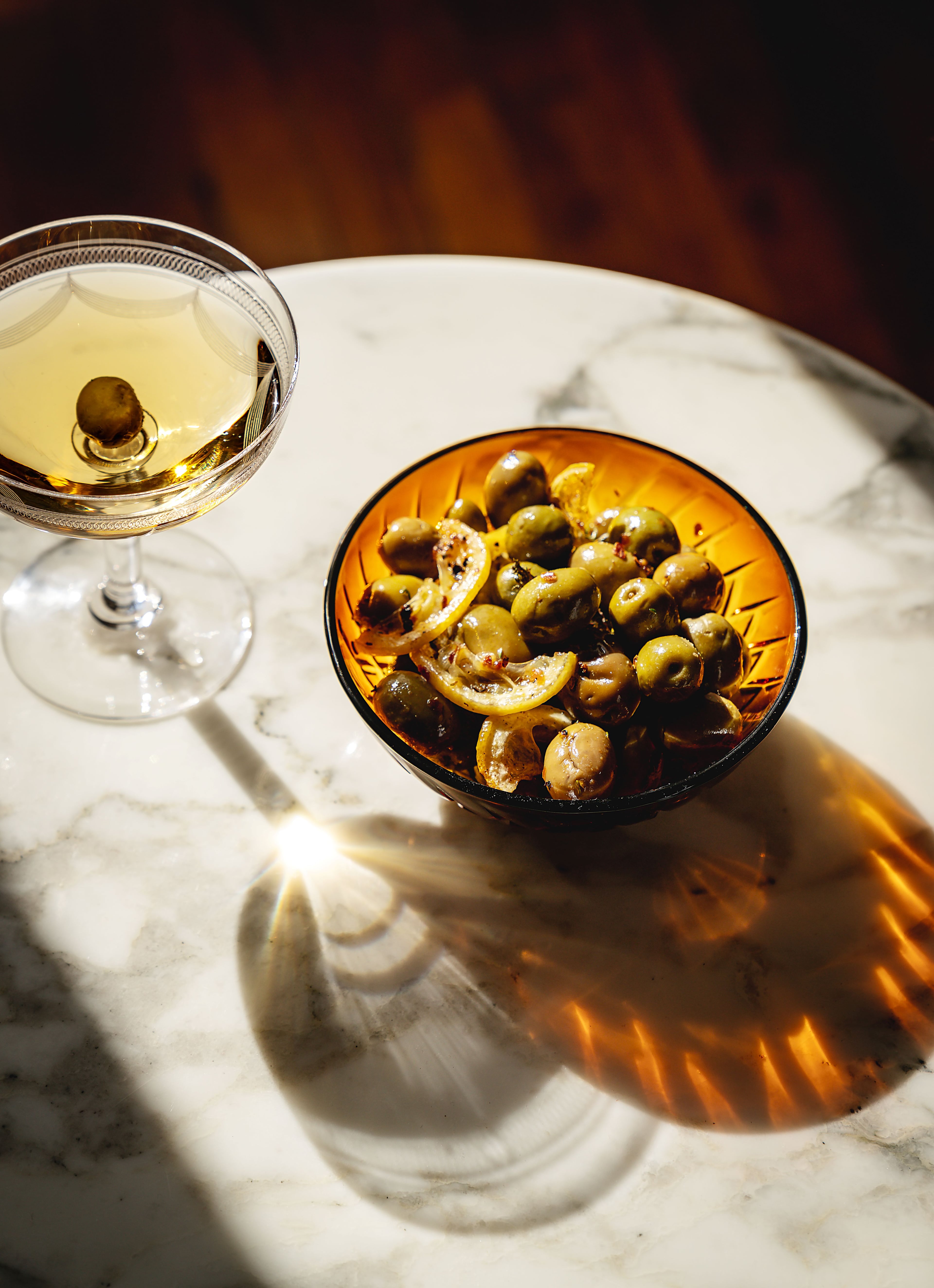
Roasted Lemons + Olives
Instead of putting out a dish of olives straight from the jar, with a few minutes of effort you can treat your guests to warm olives seasoned with lemon, thyme and a tiny bit of dried red pepper flakes. Recipe adapted from “A Table” by Rebekah Peppler (Chronicle Books, 2021).
- 1 medium lemon
- 1 pound mixed olives such as Cerignola, Castelvetrano and picholine
- 4 fresh thyme sprigs
- 2 tablespoons extra-virgin olive oil
- ¼ teaspoon dried red pepper flakes
- Freshly ground black pepper
- Heat oven to 425 degrees.
- Discard ends of lemon and thinly slice ¾ of the lemon into rounds. Remove seeds and cut rounds into half-moons. Set the remainder of the lemon aside.
- On a rimmed baking sheet, combine olives, lemon half-moons and thyme. Drizzle with oil, sprinkle with red pepper flakes and toss to coat. Season with black pepper.
- Roast, turning occasionally, until lemons start to caramelize and mixture is very fragrant, 10 to 15 minutes.
- Remove from oven, squeeze juice from remaining ¼ lemon over mixture and use a wooden spoon to scrape any caramelized bits from the baking sheet.
- May be prepared ahead of time and stored at room temperature for up to 1 day or refrigerated in an airtight container for up to a week. Remove from refrigerator at least 2 hours before serving and serve at room temperature, or warm in a saucepan before serving.
Makes 2½ cups (about 40 olives).
Per olive: 24 calories (percent of calories from fat, 75), trace protein, 1 gram carbohydrates, trace total sugars, trace fiber, 2 grams total fat (trace saturated fat), no cholesterol, 83 milligrams sodium.

Eggs Mayo with Persillade
Deviled eggs are delicious, but fiddly. This French variation requires no piping bag, just peeled boiled eggs, cut in half and topped with a spoonful of mayo and oil flavored with garlic and herbs.
To make ahead of time, cook and peel the eggs up to 3 days in advance and store in an airtight container in the refrigerator, then cut eggs in half and dress just before serving. Recipe adapted from “A Table” by Rebekah Peppler (Chronicle Books, 2021).
- 8 eggs
- ¼ cup mayonnaise
- ¼ cup Persillade (see recipe)
- 1 tablespoon fresh lemon juice
- Fine sea salt
- Freshly ground black pepper
- Flaky sea salt
- Fill a large bowl with ice water and set aside.
- Bring a large saucepan of water to a boil over medium-high heat. Using a slotted spoon, carefully lower eggs into the water one at a time. Cook 7 minutes, adjusting heat as necessary to maintain a gentle boil. Transfer eggs to ice bath and set aside to cool.
- In a medium bowl, mix mayonnaise, persillade and lemon juice. Season to taste with sea salt and pepper.
- Use the back of a spoon to gently crack eggs all over and peel. Cut the eggs in half lengthwise and spoon on a bit of the mayonnaise mixture. Arrange on a platter, sprinkle with flaky sea salt and serve.
Makes 16 servings.
Per serving: 79 calories (percent of calories from fat, 80), 3 grams protein, 1 gram carbohydrates, 1 gram total sugars, trace fiber, 7 grams total fat (1 gram saturated), 94 milligrams cholesterol, 74 milligrams sodium.
Persillade
This vibrant green sauce can also be used as a dressing for avocado toast or stirred into pasta.
- 1 cup tightly packed fresh Italian parsley leaves
- ½ cup extra-virgin olive oil
- 6 cloves garlic
- Fine sea salt
- Freshly ground black pepper
- In the bowl of a food processor fitted with the S-blade, combine parsley, oil and garlic. Pulse until finely chopped.
- Transfer to a small bowl and season with salt and pepper.
- May be made ahead of time and refrigerated in an airtight container for up to 3 days.
Makes ½ cup.
Per teaspoon with a pinch of salt: 47 calories (percent of calories from fat, 96), trace protein, trace carbohydrates, trace total sugars, trace fiber, 5 grams total fat (1 gram saturated), no cholesterol, 8 milligrams sodium.

Mangia e Beve
The fragrance of bacon is an almost surefire way to draw people to the table. These bacon-wrapped green onions, with a name that translates to “eat and drink,” can be prepared ahead of time and baked just before serving. Recipe adapted from “Italian Snacking” by Anna Francese Gass (Union Square & Co., 2024).
- 12 green onions
- 12 thin-cut slices of bacon
- 1 lemon, cut in wedges, seeds removed
- Heat oven to 450 degrees. Line a rimmed baking sheet with parchment paper and fit with a wire rack.
- Trim green onions and cut to equal lengths.
- Wrap each with a slice of bacon in a spiral pattern. Arrange on prepared baking sheet.
- Bake until onions are soft and bacon is crisp, 15 to 20 minutes.
- Squeeze lemon over onions and serve immediately.
Makes 12.
Per serving: 110 calories (percent of calories from fat, 82), 4 grams protein, 1 gram carbohydrates, 1 gram total sugars, trace fiber, 10 grams total fat (9 grams saturated), 18 milligrams cholesterol, 212 milligrams sodium.

Rafanata
No need for potato chips when rafanata is on the table. It’s the Italian version of a Spanish tortilla de patatas and delicious whether served hot or at room temperature.
Three tablespoons of horseradish may seem like a lot, but the flavor is surprisingly subtle and makes the dish a standout. Recipe adapted from “Italian Snacking” by Anna Francese Gass (Union Square & Co., 2024).
- 1½ pounds Yukon gold potatoes, peeled
- 2 teaspoons Diamond Crystal kosher salt, divided
- ¼ cup extra-virgin olive oil
- 1 medium onion, thinly sliced (about 1 cup)
- 10 eggs
- 3 tablespoons prepared horseradish
- ⅔ cup grated pecorino Romano, divided
- Arrange whole potatoes in a medium saucepan and cover with cold water. Add 1 teaspoon salt. Bring to a boil over high heat. Cook 10 minutes.
- Drain potatoes, let cool a bit and then cut into thin rounds. Potatoes will not be cooked all the way through.
- In a large high-sided oven-safe skillet, heat oil over high heat. Fill skillet with potato and onion slices. Reduce heat to medium and cook until potatoes and onion begin to soften, 5 to 7 minutes.
- Turn potatoes and onion so they cook evenly, being careful not to break up the potatoes.
- Reduce heat to low and cook until potatoes are tender when pierced with a fork but not brown, about 3 minutes. May be made up to 1 hour ahead at this point and left in skillet until ready to finish.
- When ready to finish, heat oven to 350 degrees.
- In a medium bowl, whisk together eggs, horseradish and remaining 1 teaspoon salt.
- Turn heat under skillet to low and pour egg mixture over potatoes and onion. Cook until eggs begin to set, about 5 minutes.
- While eggs are cooking, run a rubber spatula round the edges of the frittata to release it from the sides of the skillet. Tilt skillet to allow the raw egg from the top to run down the sides.
- After 5 minutes, remove skillet from heat and sprinkle with ½ cup pecorino Romano. The top of frittata will still be runny.
- Transfer to oven and bake 10 minutes or until eggs are cooked through and puffed on top.
- Use a rubber spatula to slide frittata out of skillet and onto a serving platter. Cut into wedges or squares. Sprinkle with remaining pecorino Romano. Serve warm or at room temperature.
Serves 12.
Per serving: 205 calories (percent of calories from fat, 54), 16 grams protein, 19 grams carbohydrates, 2 grams total sugars, 2 grams fiber, 18 grams total fat (6 grams saturated), 253 milligrams cholesterol, 681 milligrams sodium.
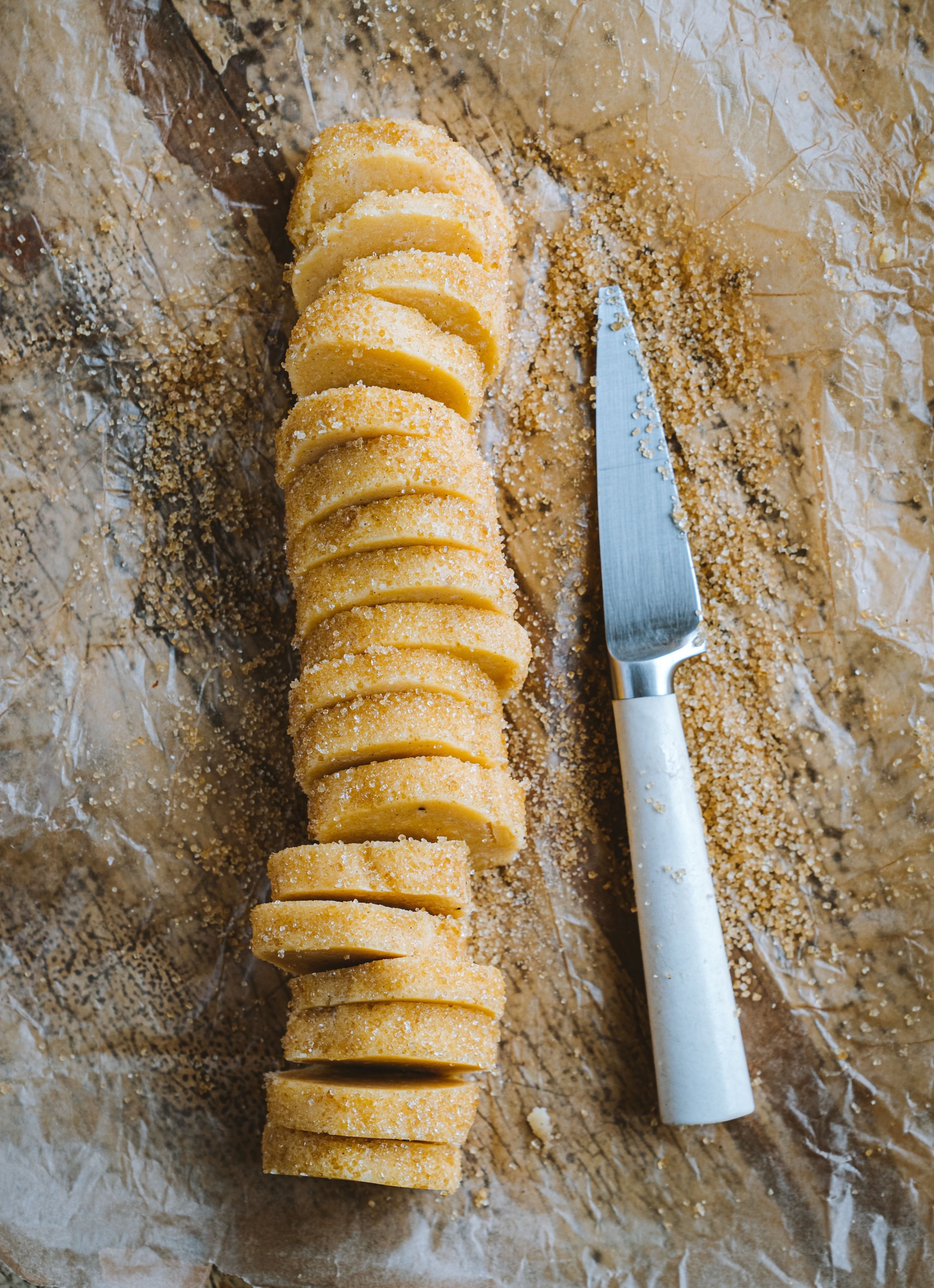
Sables
Refrigerator slice-and-bake doughs like these sables are a less-sweet alternative to the usual array of over-the-top Christmas cookies. Delicious when freshly baked, they are also good a few days later.
The scraped vanilla pod can go into a canister of granulated sugar to perfume the contents for sweetening a cup of tea, poaching fruit or in another cookie recipe. Recipe adapted from “A Table” by Rebekah Peppler (Chronicle Books, 2024).
- 1 vanilla bean
- 1 cup (2 sticks) unsalted butter
- 1/2 cup powdered sugar
- ¼ cup granulated sugar
- 3 egg yolks
- 1 teaspoon vanilla extract
- 2¼ cups all-purpose flour
- 1 teaspoon fine sea salt, plus more for sprinkling
- 1 egg white, lightly beaten
- ½ cup turbinado sugar
- Scrape seeds from vanilla bean into a small bowl. Reserve pod for another use.
- In the bowl of a stand mixer fitted with the paddle attachment, combine butter, powdered and granulated sugars and vanilla bean seeds. Beat on medium speed until light and fluffy, about 1 minute.
- Add egg yolks and vanilla extract and beat 1 minute.
- Remove bowl from mixer and use a rubber scraper to stir in flour and 1 teaspoon salt, just until combined.
- Divide dough in half and form each half into a 10-by-1½-inch log.
- Wrap each log in parchment paper and refrigerate at least 2 hours, or up to 3 days. Logs can also be frozen for up to 3 months.
- When ready to bake, remove dough from refrigerator and heat oven to 350 degrees. Line 2 baking sheets with parchment paper.
- Working with one log at a time, unwrap and brush outside with egg white. Sprinkle with turbinado sugar and turn until completely coated in sugar.
- Use a sharp knife to cut each log into 32 slices, about ¼-inch thick. Transfer to prepared baking sheet. Brush tops of cookies with remaining egg white and sprinkle with additional turbinado sugar and sea salt.
- Bake until sables are set and lightly golden around edges, 12 to 15 minutes. Transfer to a wire rack to cool completely.
Makes 64.
Per sable: 59 calories (percent of calories from fat, 46), 1 gram protein, 7 grams carbohydrates, 3 grams total sugars, trace fiber, 3 grams total fat (2 grams saturated), 16 milligrams cholesterol, 38 milligrams sodium.


