Building a stronger core: 4 exercises to try instead of crunches
“You cannot crunch your way to a flatter stomach,” said Mark Kovacs, Ph.D., an Atlanta-based exercise physiologist and CEO of the Kovacs Institute.
Kovacs, a former professional athlete and NCAA doubles tennis champion, said the misconception that abdominal exercises melt stubborn fat is difficult to shake.
“One of the most persistent myths in fitness is that doing hundreds of crunches or situps will eliminate belly fat,” he said.
But building a stronger midsection takes more than endless crunches. Here’s why having a strong core matters (even if you never see a six-pack) and four exercises that can help you build one.
What a strong core does for your body
Building a strong core is about more than achieving visible abs, Kovacs said. The goal is to develop strength and stability that support the body in everyday activities.
“The goal shouldn’t simply be visible abs,” he said. “It should be developing a strong, functional trunk while maintaining a healthy body composition.”
Whether you’re exercising or going about your daily routine, your core plays an important role in how your body moves, said Jodi Woodward, a fitness instructor in Lawrenceville. It helps support everything from carrying groceries and lifting your kids to getting up from a chair.
“A strong core helps stabilize your spine, support good posture, improve balance and transfer power between your upper and lower body,” Woodward said.
It can also lower your risk of injury by improving how your body handles physical demands, she said.
“As we get older, maintaining strength, stability and balance becomes increasingly important for staying active and independent,” she said.
Woodward encourages women to measure progress by what their bodies can do rather than focusing solely on appearance.
“It’s fine to have some aesthetic body goals, and exercise will help you achieve them,” she said. “But being able to lift heavier weights, maintain better posture, move with confidence and feel stronger in everyday life are much more meaningful measures of progress.”
Strong abs vs. visible abs
Everyone has abdominal muscles. Whether you can see them is a different question.
“How visible they are depends on several factors, including body fat distribution, genetics, muscle development, hormones and age,” Woodward said.
Having lower body fat usually makes abdominal definition easier to see, she said, but every body is different.
“You can significantly strengthen your abdominal muscles without necessarily changing the amount of fat covering them,” Kovacs said.
That’s because you can’t choose where your body loses fat. Core exercises strengthen the muscles underneath, but they don’t specifically burn fat around your waist.
“You cannot choose where your body loses fat, but you can improve overall body composition and metabolic health through consistent training,” Kovacs said.
4 exercises to build a stronger core
A well-rounded core workout should do more than target your abdominal muscles. Woodward recommends these four exercises to engage different muscle groups and help build a stronger, more stable core.
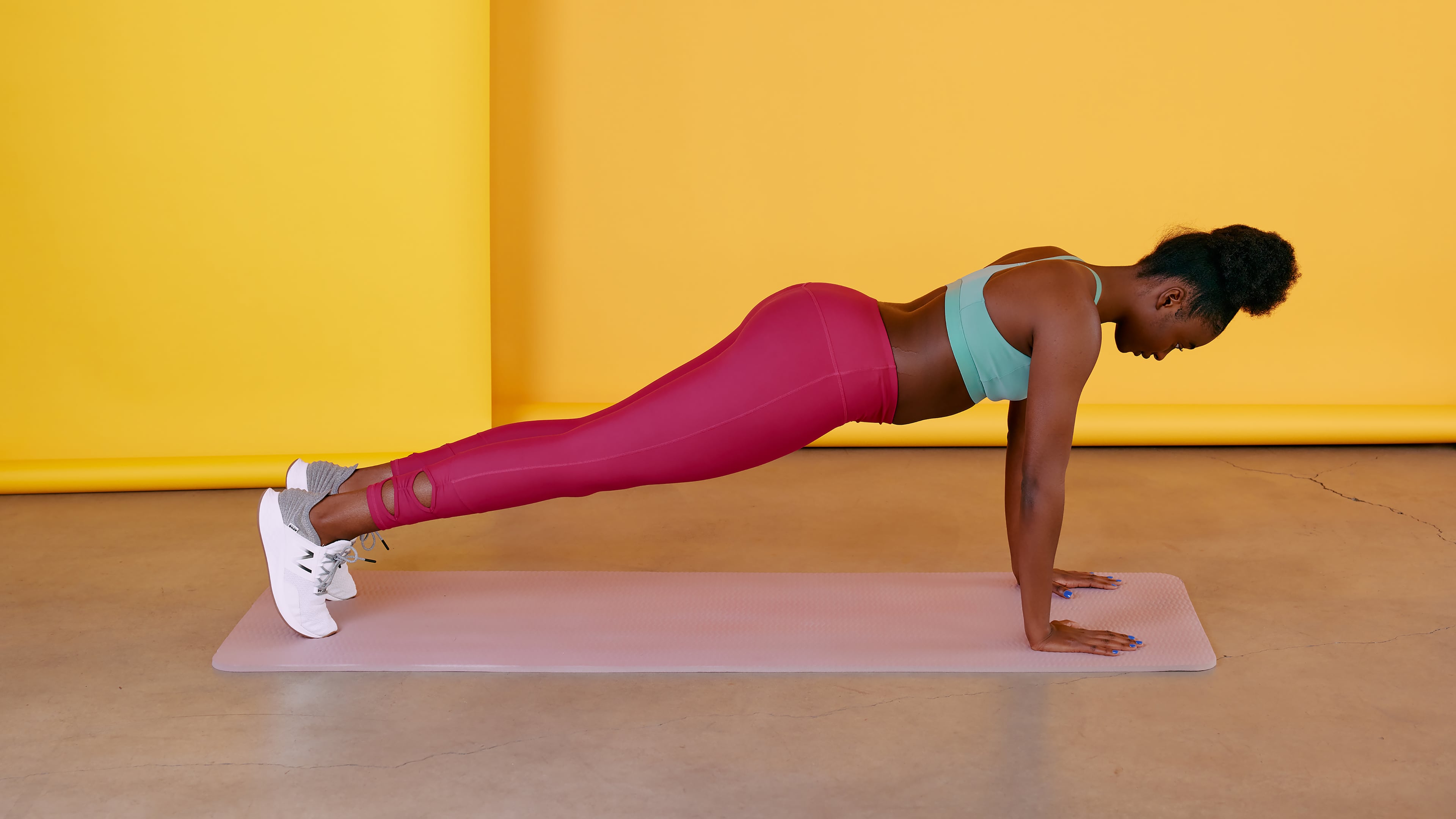
1. Plank
How to do it: Plant your hands directly under your shoulders, as if to do a pushup. Hold your body in a straight line from head to toe.
Sets and reps: Start with 20 to 30 seconds and work up to 60 seconds. Complete two to three sets.
Why it works: Planks engage multiple muscle groups, including your abdominal muscles, back, shoulders and glutes. “Yes, the core can be the main focus,” Woodward said. “However, you get such a great full-body workout without any equipment.”
2. Hip dips
How to do it: Start in a side plank, resting on one forearm with your elbow directly beneath your shoulder. Keep your body in a straight line. Lower your hip toward the ground, then raise it back up. Repeat on the other side.
Sets and reps: Complete two to three sets of 10 to 12 repetitions per side.
Why it works: This exercise targets your obliques, the muscles along the sides of your waist. Because you’re supporting yourself on your forearm rather than your hands, it doesn’t require putting weight on your wrists. Woodward recommends it for people with wrist issues.
3. Leg raises
How to do it: Lie on your back with your legs extended toward the ceiling. Slowly lower your legs until they’re just above the floor, then raise them back up. Keep your lower back pressed against the floor. If you can’t maintain proper form, try lifting one leg at a time.
Sets and reps: Complete two to three sets of 10 to 12 repetitions.
Why it works: Leg raises work your abdominal muscles, while also challenging your hip flexors and core stability. “As a mom who’s had three C-sections, I love this one,” Woodward said, “as it targets those lower core muscles.”
4. Russian twists
How to do it: Sit with your knees bent and feet on the floor. Lean back slightly while keeping your back straight. Rotate your torso from side to side, bringing your hands toward the floor beside your hips. Lift your feet only if you can maintain proper form.
Sets and reps: Start with 10 repetitions on each side and add more as you get stronger.
Why it works: Russian twists work your obliques and challenge your ability to control rotational movement. The exercise can be modified to accommodate different fitness level. “It can be effective for everyone,” Woodward said.