Forget the treadmill: 4 unusual workouts taking over Georgia
Atlanta has a reputation as one of the fittest cities in the country. It ranked in the top 10 of the 100 largest U.S. cities for the second consecutive year, landing at No. 8 in a recent study from the American College of Sports Medicine.
But people are always looking for the next big thing.
Across the city, instructors are building workouts around technology, skating and childhood games, proving a serious sweat doesn’t always have to happen on the treadmill.
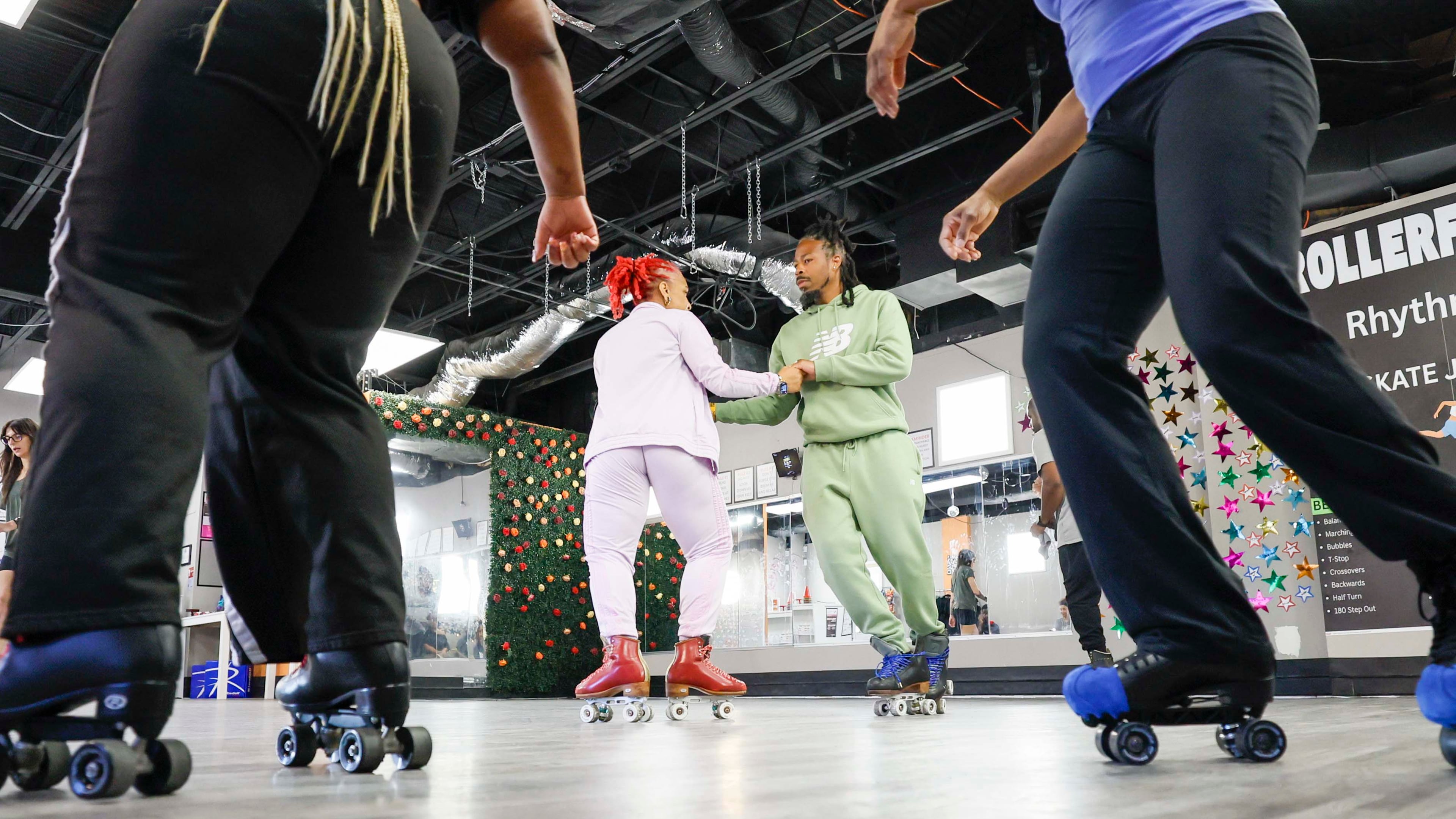
Rollerobics
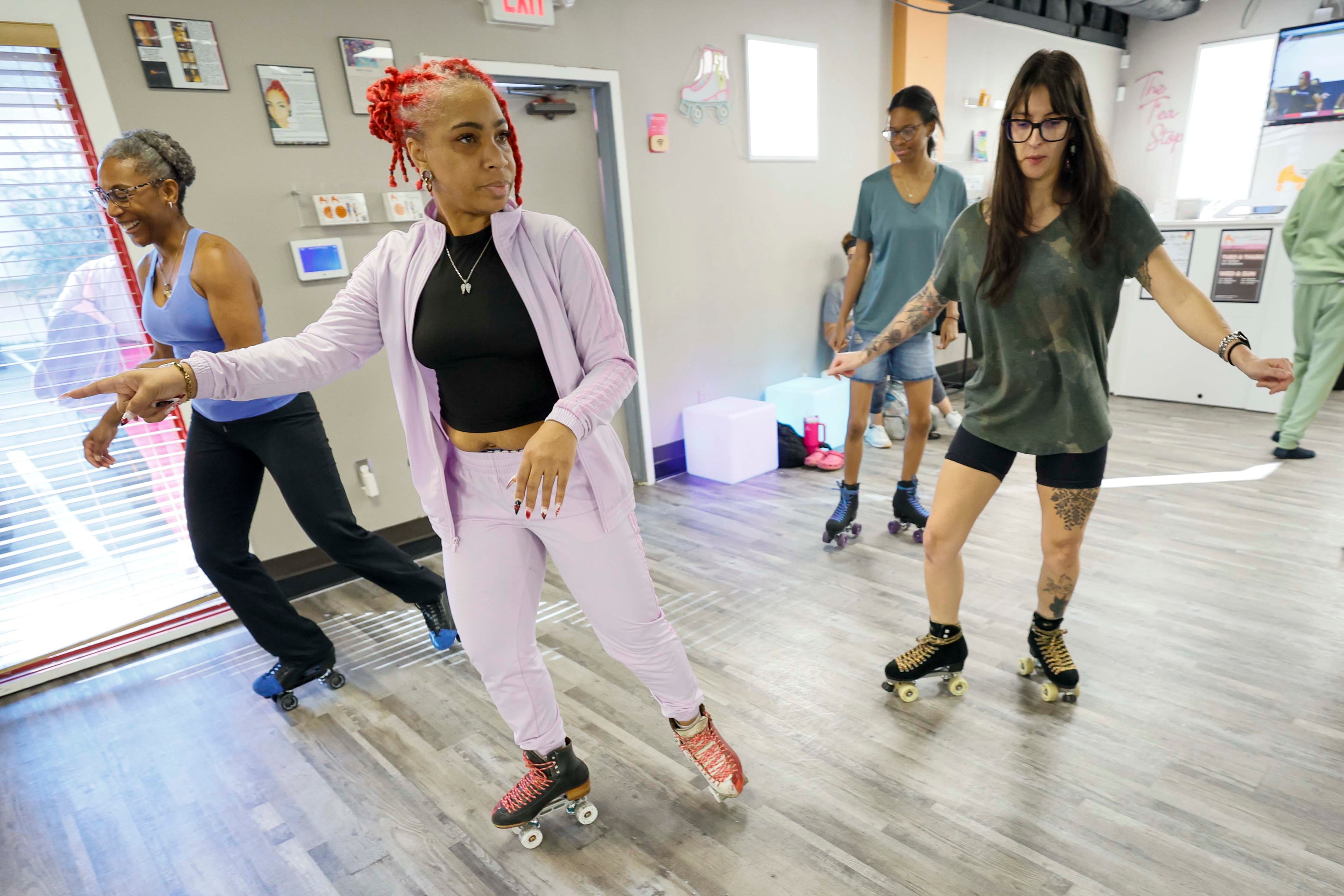
Most don’t think of lacing up a pair of skates as a workout, but Gloria Downs, known to her students as Coach Glo, is out to change that.
“A lot of people come in thinking, ‘We’re just skating,’ and then they’re like, ‘Wait a minute, I’m sweating!’” Downs said.
RollerFit isn’t a rink, Downs told the AJC; it’s a place people come specifically to learn the sport and get better at it. Classes break movement down piece by piece: weight transfer, balance, body positioning, edges, timing and control.
“Something can look effortless when you watch an experienced skater do it, but then you put skates on and realize how much is happening underneath that movement,” she said.
Downs has been roller skating for about 26 years. The RSA-certified instructor says Atlanta’s skating culture — its music, rhythm and history — shapes the experience, but her goal is making that world feel accessible to newcomers who might otherwise feel out of place at a rink.
“You don’t have to already know how to skate to benefit from it,” Downs said, noting that some of the most basic skating fundamentals require serious control and muscle engagement.
She tells the AJC the biggest surprise is how much of the body skating engages at once — the legs and core are working constantly to maintain balance and shift weight, all while learning a new skill.
“If somebody tells you to do repetitions in a gym for an hour, you know you’re exercising the entire time,” Downs said. “With skating, you might spend an hour trying to get a crossover or simply become more comfortable on your skates. Meanwhile, you’ve been moving your body that entire time.”
Beyond her Atlanta studio, Downs has taught roller skating workshops across the U.S. and internationally, sometimes to more than 100 skaters at a time. She said she loves seeing someone come in holding onto the wall, scared to move, and eventually skating independently.
“Whether your goal is fitness, confidence, learning Atlanta-style rhythm skating, keeping up with your kids, or simply doing something fun for yourself, there’s a place for you,” Downs said.
AI-powered strength training
Artificial intelligence has worked its way into nearly every corner of daily life, including, now, the gym. The Exercise Coach is a strength-training studio franchise built around AI-powered equipment, with 10 locations in Georgia including Woodstock, Alpharetta, East Cobb, and Sandy Springs.
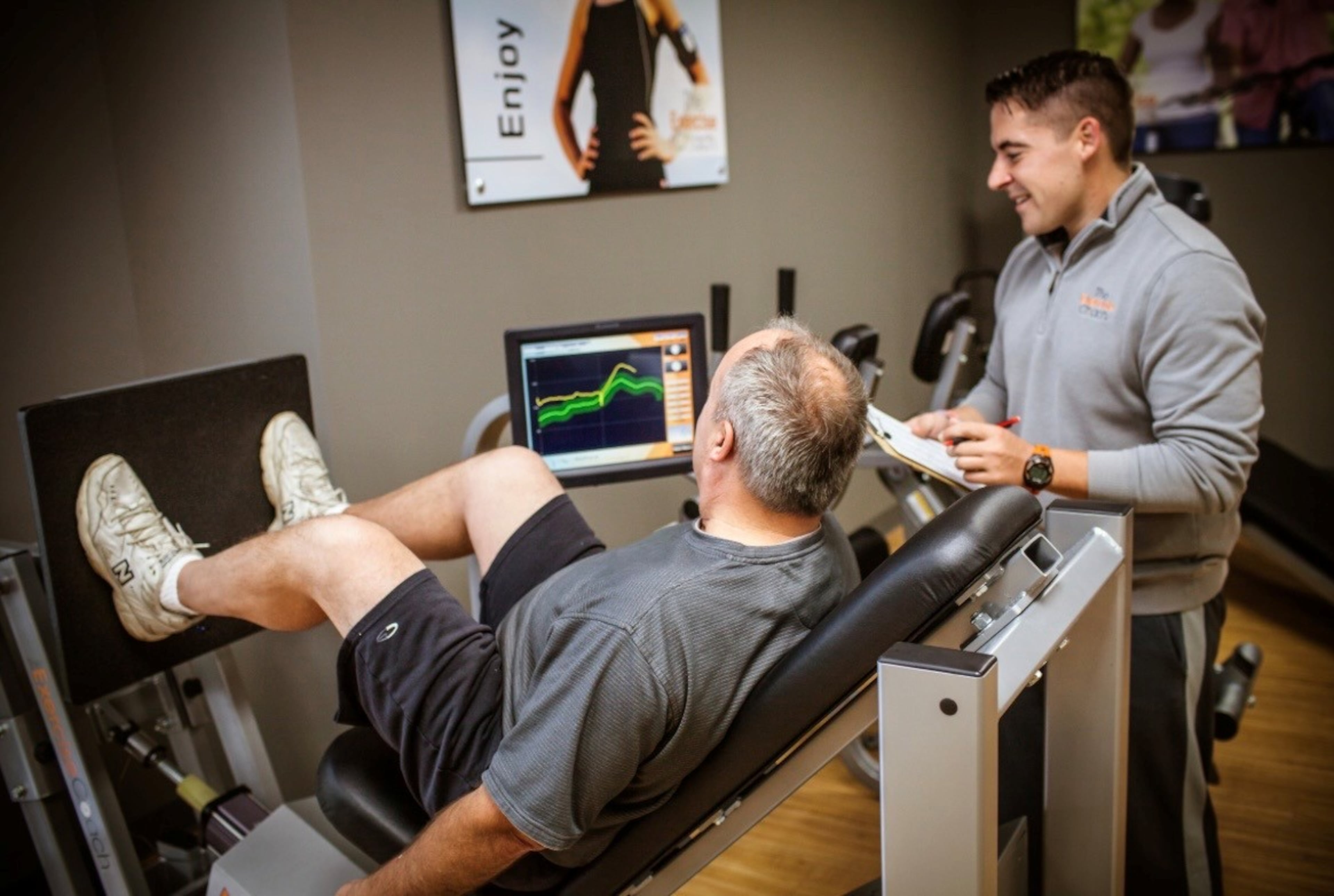
Instead of free weights, the equipment reads how a person is moving and adjusts the resistance in real time as they work out.
“Until now, health and fitness tech, such as wearable gadgets and apps, have tracked activity and reported it after the fact,” Keith Johnson, co-owner of the Woodstock location, told The Atlanta Journal-Constitution. “Now, we offer a tech-enabled workout fueled by instant feedback and adaptation.”
A session starts with a strength and range-of-motion test to establish a baseline. From there, the machines respond to each rep, adjusting resistance to a person’s strengths and weaknesses as they move rather than sticking to a fixed weight.
The sessions run 20 minutes, twice a week, a structure co-owner Celia Isla said is created for efficiency rather than frequency.
“People are blown away at how challenging the workouts are, how efficient they are,” she said. Each workout is built around activating major muscle groups, which Isla said plays a role in strength, balance and reaction time as people age.
For people used to a standard gym setup, this one is different. The equipment is designed to react to them instead of the other way around.
“Strength changes everything,” Johnson said.
Trap Pilates
Pilates has become one of the hottest workouts in recent years, with studios popping up across the country. Atlanta is no exception. But Sonya Simpson, who goes by Kendall J, has put her own spin on the practice, pairing Pilates’ controlled, precise movements with trap music, a genre that originated in Atlanta.
Inspired by 2 Chainz’s 2017 album “Pretty Girls Like Trap Music,” Simpson created Trap Pilates that same year.
“You’re not just listening to the music. You feel the beat, feel the energy, and allow the movement to flow through your entire body,” Simpson, founder of Alter Ego Pilates and Fitness told the AJC.
The class builds gradually, starting with foundational Pilates movements before the music and the intensity ramp up. Instructors choreograph movements that mirror the lyrics of each song, turning a line about rowing a boat, for example, into an actual rowing motion.
New students often underestimate the workout, Simpson said, expecting something closer to a slow, gentle stretch class.
“They actually take their first Trap Pilates class and suddenly they’re like, ‘Oh crap, this is actually hard!’” she told the AJC. “You can see it on their faces.”
The moment that tends to humble people most, according to Simpson, is the plank, held for the length of an entire song, sometimes five minutes at a time. Simpson, who calls herself the “Plank Queen,” said the movement engages the core, arms, shoulders, back, legs and glutes all at once.
What started as a single class has since grown into a movement of its own. After the COVID-19 pandemic, Simpson traded her brick-and-mortar studio for a mobile setup, carrying Trap Pilates into communities across the city instead of waiting for people to come to her. The concept has since expanded into a certification program, with Trap Pilates instructors now teaching Trap Pilates across the country.
Double Dutch
For many, Double Dutch brings back memories of childhood on the playground. Two ropes turning in rhythm and the timing it took to jump in without getting tangled. It always took real skill, and likely wasn’t seen as a workout.
Double Dutch world champions Sean and Michelle Clark decided to change that by creating Double Dutch Aerobics, a structured fitness class built inside the ropes.
“This is a workout where you laugh and forget that you’re working out,” said Sean.
The idea started with Michelle, who had taught nearly every style of fitness class, from spin and boot camp to water aerobics, before landing on something more nostalgic.
“Why can’t Double Dutch be the workout?” Michelle remembers thinking.
The workout is built as an eight-step class, blending the experience of traditional Double Dutch with aerobic exercise.
“You’re getting a serious workout, but at the same time, you feel like you’re 7 years old again,” Michelle said.
The cardiovascular demand comes from constantly jumping, coordinating movement and keeping pace with the rhythm of the ropes while working the legs, core and heart rate at the same time. Most participants don’t realize how hard they’re working until they stop.
Compared with a treadmill, Double Dutch keeps people engaged instead of watching the clock, and that shift in attention is the whole point.
“We like to call it ‘getting in shape by mistake,’ because the fun comes first!” Michelle said.
Sometimes, the best workout is the one that doesn’t feel like one.