Don’t skip leg day: 6 exercises to build stronger legs
Christian Torres says he’s heard every excuse for skipping leg day.
“You know you need it. You just have to figure out how to make it make sense for you,” said Torres, an Atlanta certified personal trainer who goes by Coach Chris.
“An exercise doesn’t need to look advanced to build strength,” he told The Atlanta Journal-Constitution. “The goal is to find the version (you) can perform safely and progressively strengthen over time.”
Adults need at least 150 minutes of moderate-intensity aerobic activity and at least two days a week of muscle-strengthening activity, according to the CDC’s Physical Activity Guidelines for Americans. Yet, according to the U.S. Department of Health and Human Services , about 80% of adults are not meeting the key guidelines for both aerobic and muscle-strengthening activity.
With that in mind, the fitness specialist and founder of Primal OverDrive says he approaches leg training by targeting every major function of the lower body, rather than focusing on just one muscle group. That means incorporating movements that build strength, improve stability and challenge the muscles used for everyday activities such as walking, climbing stairs, standing up and maintaining balance.
Start with these six moves
To put that approach into practice, Torres recommends these six exercises, which can be adapted for beginners and experienced lifters alike.
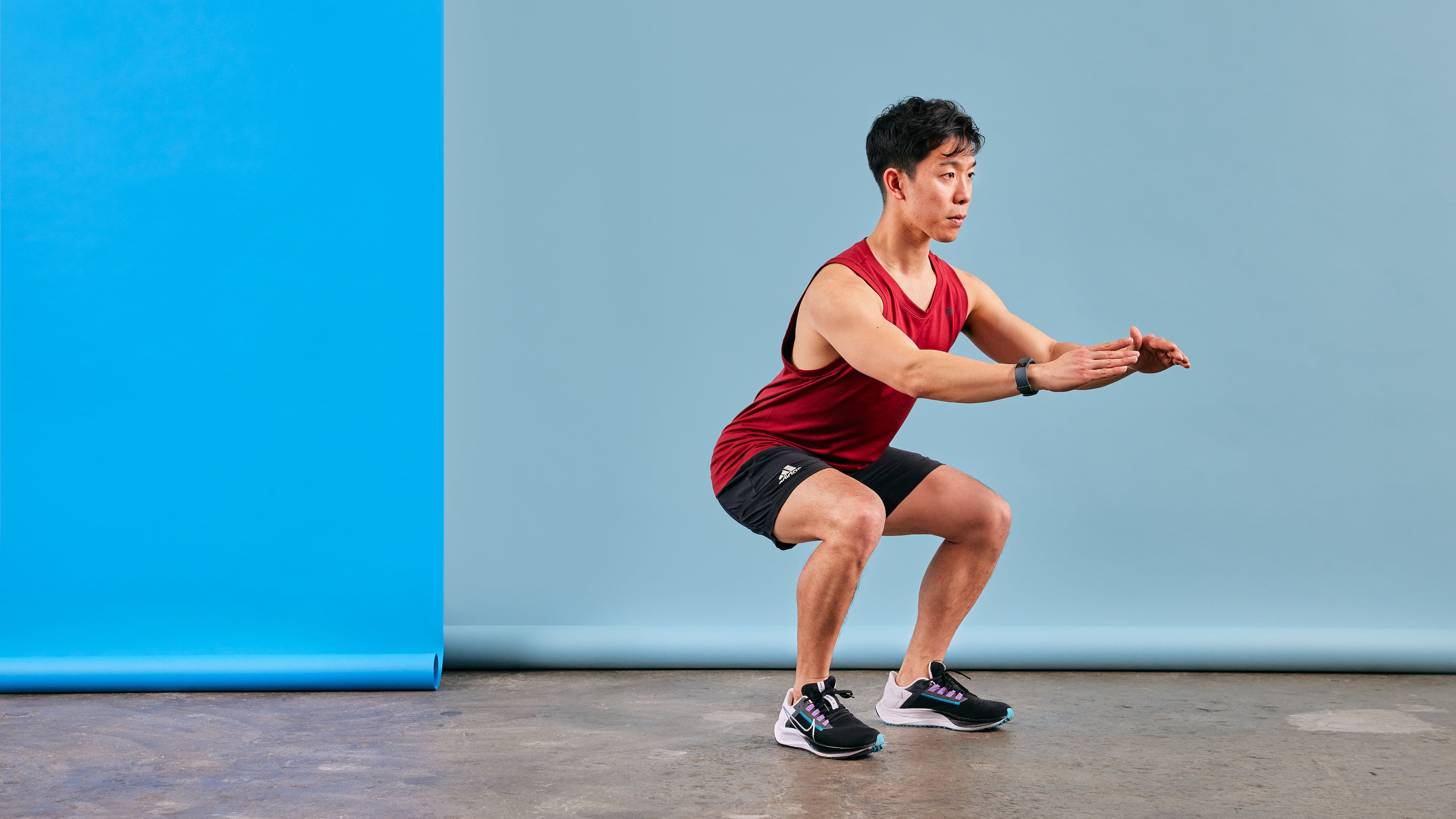
- Squat: “One of the best overall lower-body strength exercises because they train the legs through a movement we use constantly in everyday life,” Torres said. It primarily works the quadriceps, glutes, adductors, hamstrings and core.
- Romanian deadlift: This move strengthens the back of the legs and teaches proper hip hinging, targeting the hamstrings, glutes and spinal erectors.
- Bulgarian split squat: “One of my favorite unilateral exercises because each leg has to produce force independently,” Torres said. “It can expose and improve side-to-side strength differences.” It works the quadriceps and glutes, with help from the hamstrings and adductors.
- Hip thrust: This strengthens hip extension, which matters for running, jumping, climbing stairs and standing from a seated position. It primarily targets the glutes, with the hamstrings and adductors assisting.
- Step-up: A movement that combines strength, balance and coordination, working the quadriceps and glutes along with the hamstrings and calves.
- Calf raise: “The calves often get overlooked, but they are important for ankle strength, walking, running and controlling the body during everyday movement,” Torres said. It targets the gastrocnemius and soleus.
Form first, then add weight
Torres said the most common mistake he sees across all six movements is people adding weight before they’ve mastered the movement.
For squats, he says that can mean knees collapsing inward or heels lifting off the ground. For Romanian deadlifts, it’s letting the movement turn into a squat or rounding the back. For hip thrusts, it’s excessively arching the lower back instead of finishing the movement with the glutes.
“A major theme with all six is control before load,” Torres said. “Someone should earn the right to add more weight by first demonstrating that they can control the movement.”
Once you have the form down, how much you do and how often you train matters, too. For someone specifically trying to build strength, Torres generally recommends three to five working sets of three to eight repetitions on major movements. Beginners often start closer to two to three sets of six to 12 reps.
He recommends training legs about twice a week, splitting the six exercises across two days rather than doing all of them in a single session.
Training after 40
The fundamentals of leg training don’t change much with age, Torres said, but resistance training becomes especially valuable after 40 for both men and women.
“Maintaining muscle strength, lean tissue and bone-loading activity becomes increasingly important with age,” Torres said.
Hormonal and physiological changes that come with age can affect body composition, bone health and recovery, Torres said, but that doesn’t mean people should shy away from challenging workouts.
“It means the program needs to be appropriately progressed and individualized,” he said.
It’s not just about how you look
Torres said stronger legs affect far more than appearance.
“Your lower body helps you get out of a chair, walk, climb stairs, carry things and change direction, while stronger legs can also help improve balance, mobility and your ability to recover when you lose your balance,” he said.
That matters especially for older adults or anyone returning to exercise after time away. Rather than starting with an advanced version of a movement, he recommends regressing it: a sit-to-stand from a chair instead of a squat, or a floor glute bridge instead of a hip thrust.
“The goal is to be the best, healthiest version of you that you can get,” he said.
Above all, Torres said, patience matters.
“Being patient with yourself and taking it one day at a time is the biggest step in the right direction,” he said. “Don’t put pressure on yourself to perform. Give yourself that grace and that time. Be patient and trust the process.”