How old is your heart? AI could help doctors find out
Mendy Lebowitz was in his third year of medical school at Emory University when his father-in-law died of a heart attack at age 63. The family was devastated.
A year later, motivated by the loss, Lebowitz began a research project that uses artificial intelligence to determine how a person’s heart is aging compared with their chronological age.
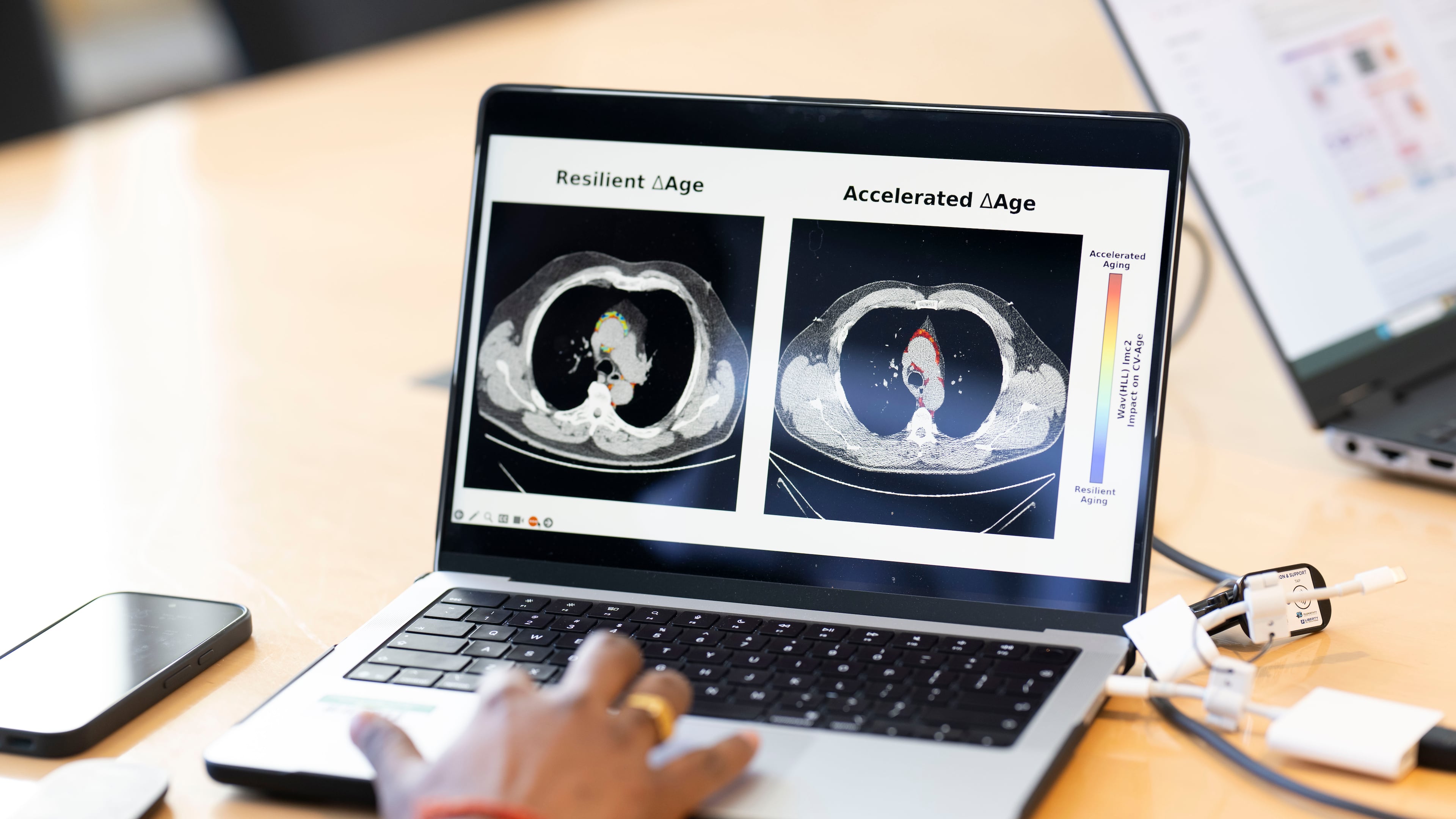
The result is an AI-powered tool that analyzes routine medical images to estimate a person’s cardiovascular age. The research could eventually help cardiologists better identify patients heart health risks.

“We have found that there is a portion of patients that the doctor may say are conventionally low risk. When you look at their AI-derived cardiovascular age, they actually are high risk,” said Lebowitz, lead author of a study based on his research published several months ago in the European Heart Journal.
Lebowitz is pursuing dual medical-doctorate degrees in biomedical engineering from Emory and Georgia Tech while researching AI imaging tools to improve heart health.
The recent study involved about a dozen researchers from Emory, Georgia Tech, Joseph Maxwell Cleland Atlanta Veterans Affairs Medical Center and other large healthcare systems nationwide.
Researchers developed an AI model using computed tomography (CT) chest scans from 3,790 participants in the National Lung Screening Trial, which took place nearly 25 years ago, and 661 patients treated at Vanderbilt University Medical Center. They then tested the model’s accuracy on 714 patients who received lung cancer screening at the Durham Veterans Affairs Medical Center and 43,500 patients who underwent calcium heart scans at University Hospital Cleveland Medical Center.
“In this study, the AI looks at the fat surrounding the aorta, the largest artery that carries blood from the heart to the rest of the body. We look for subtle patterns in that fat that are invisible to the naked eye,” Lebowitz said.
AI analyzes images showing changes in the fat and converts the findings into an estimated cardiovascular age, he explained.
When tested on patients, those whose heart was determined to be older than their chronological age were 1.5 times more likely to experience a heart attack, heart failure or death, the study found. Meanwhile, patients whose hearts were younger than their chronological age were 30% less likely to experience a cardiovascular condition.
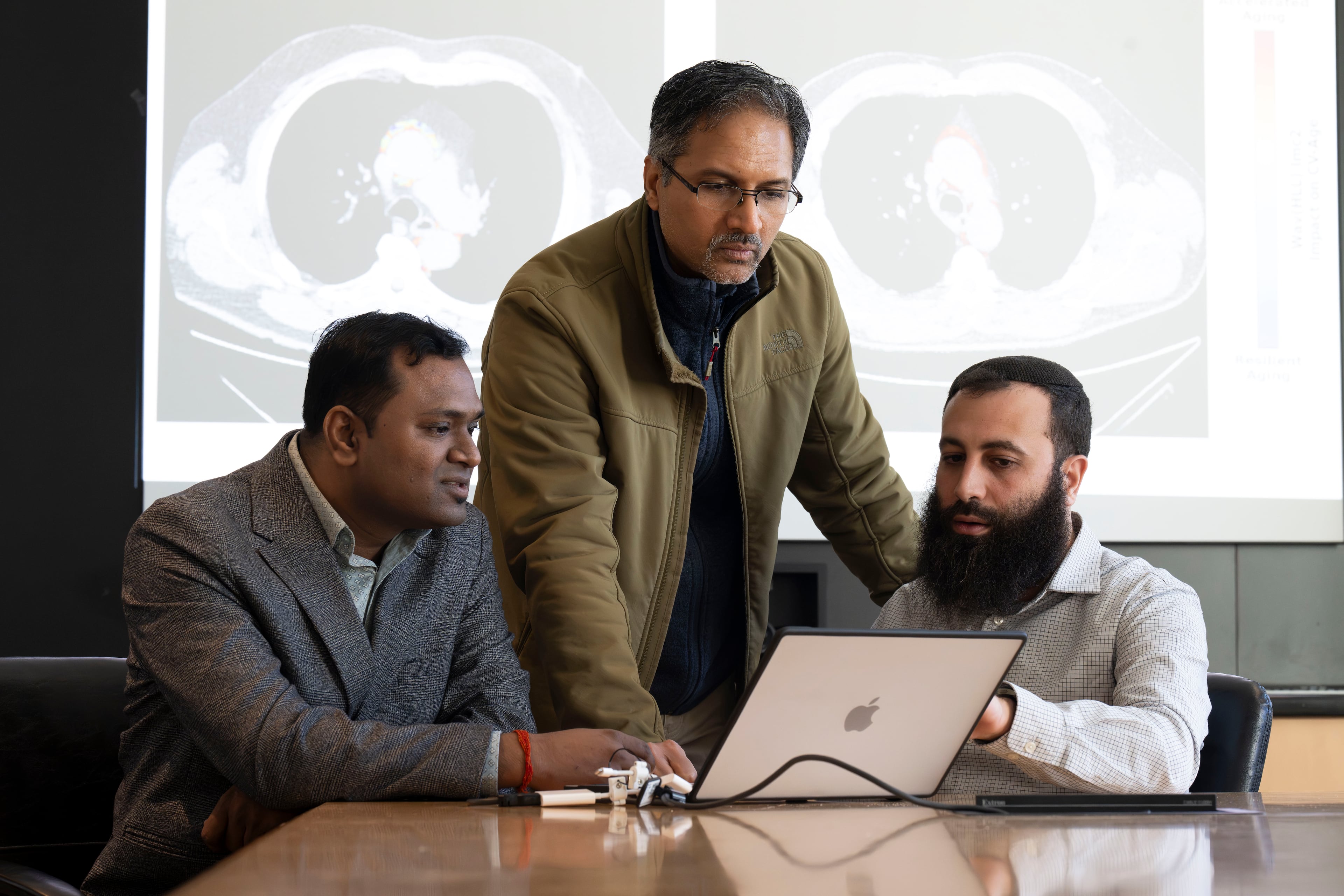
The research team has applied for a patent for the AI tool and is taking preliminary steps to gain approval from the U.S. Food and Drug Administration to sell the AI tool to clinicians. They expect to apply for FDA approval early next year, Lebowitz said.
If approved, clinicians could use the tool to refine recommendations to patients about their risks of heart conditions.
“We want to have a patient come in get their first ever CT scan and the AI will be able to predict their chance of having a cardiovascular event,” he said. “The advancements of AI in the last five years have really let us measure that in a concrete, individualized way. ‘You may be 60 but we think your heart is 75. You’ve got to take XYZ steps to protect yourself.’ We think this is something that is readily understandable to the patient.”

Such research plays a larger role in improving health care, according to Anant Madabhushi, senior author of the study and executive director of Emory’s Empathetic AI for Health Institute.
Last month, Emory and Georgia Tech announced they were investing over $1 billion in AI to promote economic growth in Georgia, including healthcare applications to improve patient care. The AI Health Institute applies AI to cancer, kidney disease and other health challenges, contributing to three spinoff companies and 40 licensed technologies, Georgia Tech reported.
“Much of our lab’s work is about extracting hidden information from images patients already have … at no added cost or burden to the patient,” Madabhushi said.
“Fat around the aorta is visible on millions of chest CT scans done every year for other reasons, such as lung cancer screening. AI can turn it into an estimate of a person’s cardiovascular age and flag people at higher risk long before they have symptoms. It’s a good example of what we call frugal AI — getting more value out of the care we’re already delivering.”
Dr. David Fishman, an interventional cardiologist at Hamilton Medical Center in Dalton, believes such technology will help clinicians target their medical advice.
“Addressing patients in a more preventative manner has always been better for the patient,” he said. “Interventions like exercise, diet, education, and maybe repeat testing to see progression of the disease at an earlier stage.”
Such measures may prevent advanced cardiovascular disease, blockages, and stroke, according to Fishman, director of complex coronary and mechanical circulatory support for Vitruvian Health.
He said he often discusses with patient how their heart is aging slower or faster than they are.
“We are always trying to figure out where they are on that spectrum. Are they 50 turning 30 or are they 50 turning 70?”
If a patient’s heart appears better than expected for their age, clinicians may be able to focus on preventative measures rather than aggressively treating risks with medication, Fishman said.
The cardiovascular-age AI imaging tool is one of several technologies the team is developing to help clinicians evaluate heart health. Lebowitz said these tools could add to information gleaned from standard blood tests and blood pressure readings.
“It just opens up a whole new domain of clinical and cardiovascular risk assessment.”
Roni Robbins has been a journalist for nearly four decades. This is her second stint as a freelance reporter for the AJC. She was formerly an editor and reporter for Medscape. Her writing has appeared in WebMD, HuffPost, Forbes, the New York Daily News, BioPharma Dive, MNN, Adweek, Healthline and others. She’s also the author of the award-winning novel, “Hands of Gold: One Man’s Quest to Find the Silver Lining in Misfortune.”