Susan G. Komen Race for the Cure unites Atlanta breast cancer survivors

Just months after finishing her breast cancer treatment, Alecia Robinson walked in her first Susan G. Komen Race for the Cure in 2023 with a new mission: to help other woman facing the disease.
“I knew I was going to do something after I’d gone through that experience,” said Robinson, 59. She was diagnosed in 2022 with stage 1 triple-positive, HER2-positive breast cancer. Her treatment included a double mastectomy, six rounds of chemotherapy and a year of medical infusions.
Now, the Lithia Springs resident leads Hooters’ Hope, a team that has consistently ranked among the race’s top fundraisers. At press time, its 14 participants raised about $13,700, topping the team leaderboard. Several members, including Robinson, also ranked among the event’s top individual fundraisers.
“I wanted to do something to be able to give back and help others because there were other women who helped me,” she said.
Robinson is among the participants in this year’s Susan G. Komen Race for the Cure, joining others who are walking, running and raising money to support people affected by breast cancer. The Atlanta Journal-Constitution spoke with several participants about their personal connections to the cause and the hope, encouragement and support they want to bring to others facing the disease.
Racing to raise more
In 2017, Stacey Hughes participated in her first Susan G. Komen race with her daughter, just months after being diagnosed with stage 0 ductal carcinoma in situ (DCIS). The Sandy Springs resident, now 53, has been walking in the annual race nearly every year since.
This year, Hughes is among the race’s top 10 fundraisers, having collected about $5,000 at last tally. She also leads Cyber Cares, a team that has raised about $5,500, placing it among the event’s top 10 fundraising teams.
Hughes was still going through radiation treatment at Northside Hospital following a lumpectomy, surgery to remove the cancerous tissue, when she decided to join that first race.
“It just gives you goose bumps to see everybody there and all the organizations and people walking and survivors. It’s pretty inspiring,” said Hughes, a Susan G. Komen leader and chief information security officer for a facility management company in Dunwoody.
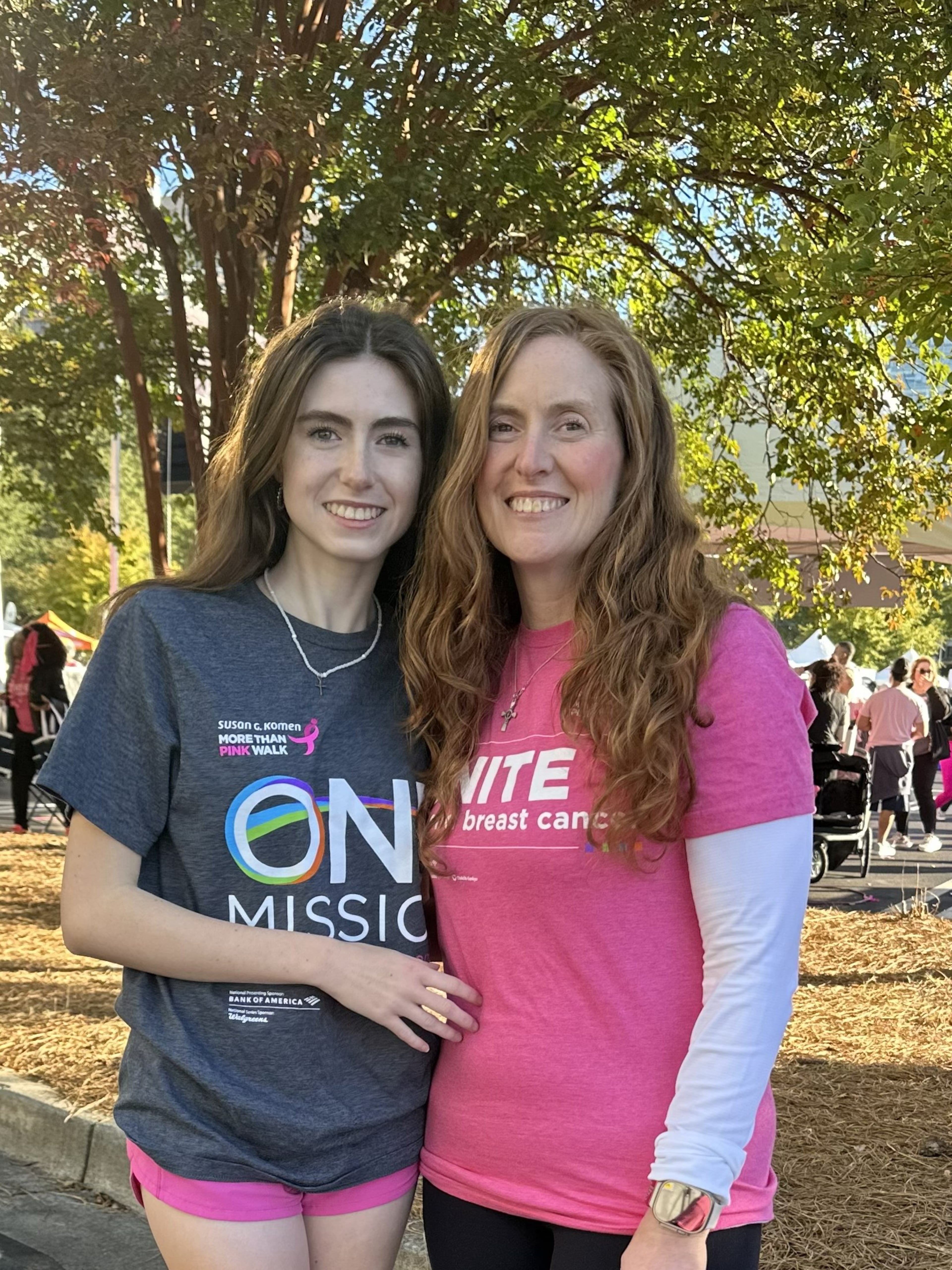
Her commitment to fundraising has grown over the years. In 2021, she was the event’s top individual fundraiser, collecting about $12,700, according to Susan G. Komen.
“Every dollar that gets raised can go for a new drug and a cure someday, treatments for somebody that can’t afford it, being able to take them to the hospital, the more advanced research studies,” Hughes said.
“I really want to do everything I can because I would like to eliminate breast cancer in the future,” she said.
Hughes’ diagnosis came after a routine mammogram in early 2017 revealed an abnormality. A biopsy confirmed DCIS, a noninvasive form of breast cancer that had been caught early. Her grandmother also had breast cancer.
“I was very shocked, scared, concerned. I almost call myself embarrassed at times because how could I let this happen? But, you know, breast cancer doesn’t care who it is, right?” she said.
Racing for more time
Heather Tucker, 32, is among the top five individual fundraisers for this year’s Susan G. Komen Race for the Cure, collecting nearly $6,600 at last tally. She also leads one of the top five teams, Beauty and the Breast, which includes her relatives and has raised about $7,500 to date.
The Peachtree City lawyer has already raised more than four times what she collected last year.
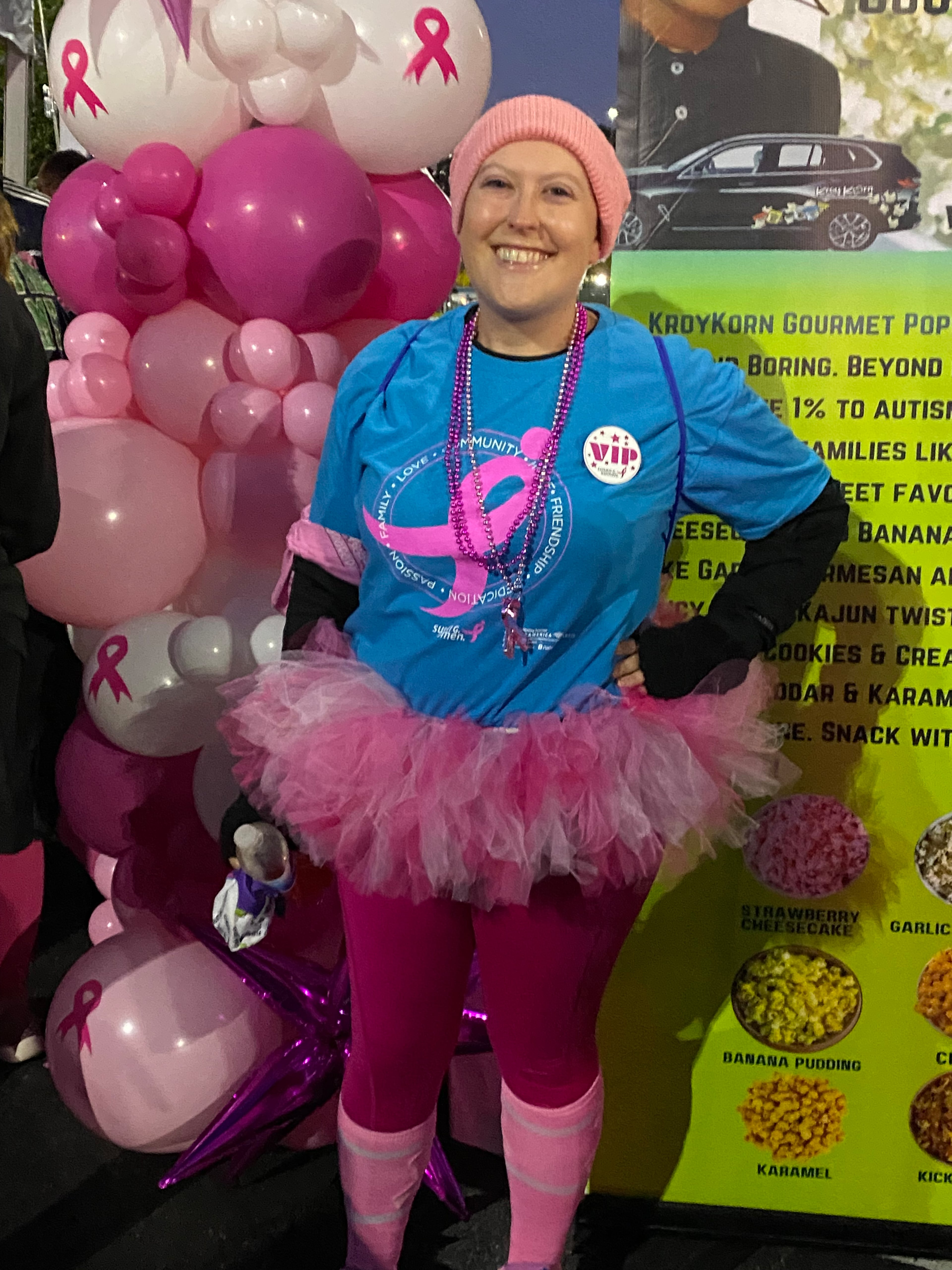
Tucker was diagnosed in 2022, at age 28, with de novo metastatic breast cancer at Winship Cancer Institute of Emory University at Emory Saint Joseph’s Hospital. Her HER2-positive cancer was stage 4 when it was discovered, meaning it had spread beyond her breast to her bones and brain.
“I really believe that we’re going to find a cure for my cancer in my lifetime, so you know that’s why funding research is so important to me. Maybe I have a big head, but in October, when people wear pink, I see it as respect directly to me and I take it all very personally because this is my life. As a metastatic cancer fighter, we’re always fighting,” she said.
Tucker said her doctor has told her she will need chemotherapy for the rest of her life, moving to another drug when her cancer becomes resistant to a treatment. The number of available treatments is finite, she said, making research into new therapies especially important.
Racing to give back
With breast cancer affecting both her mother and aunt, Robinson knew the importance of regular screenings. She began screenings in her early 20s and, because she had dense breasts, alternated between mammograms and MRIs every six months.
One of those regular screenings revealed breast cancer.
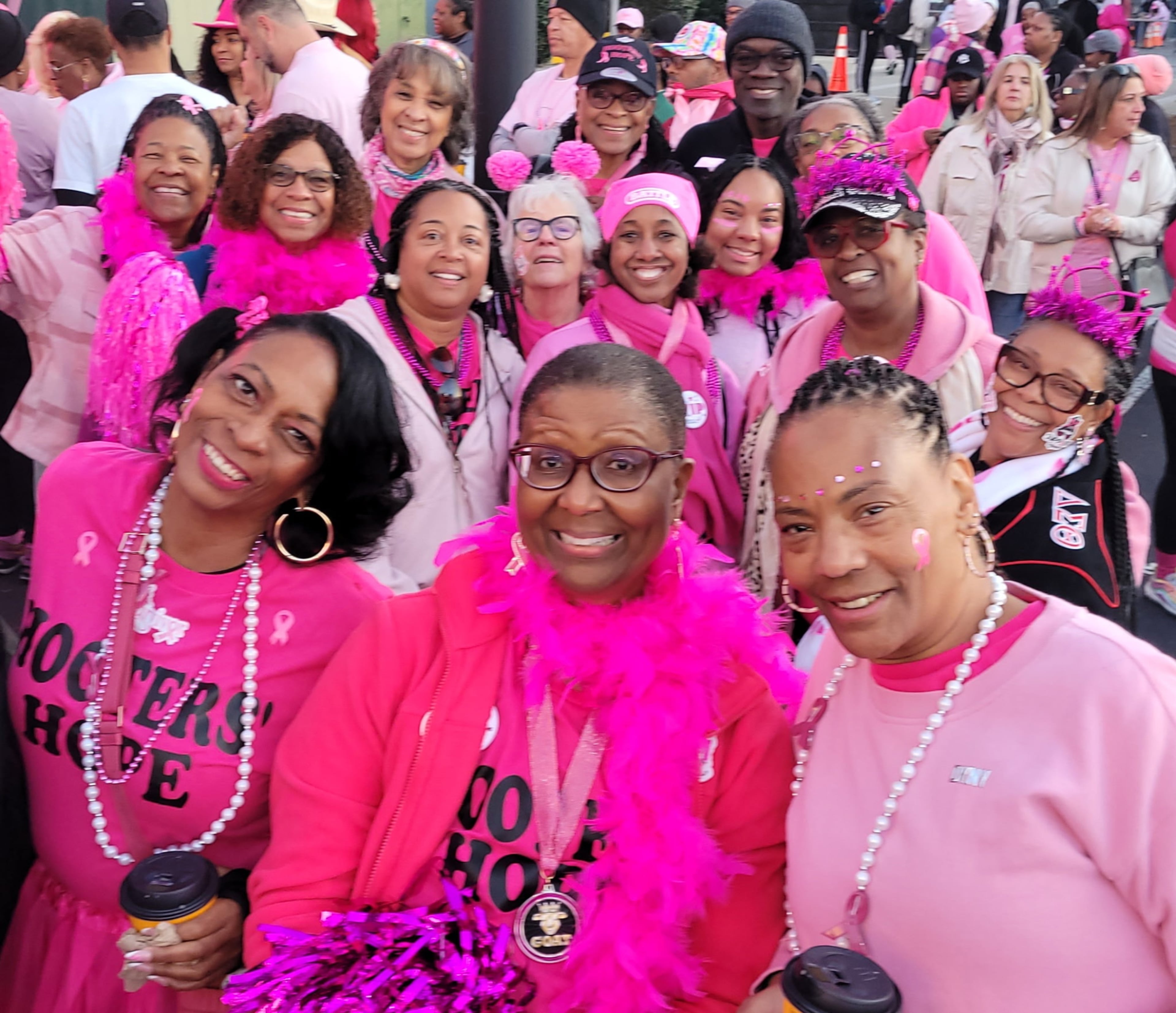
“I went for the mammogram and then wasn’t really thinking much other than I was planning to go on a vacation,” said Robinson, a manager of a medical school center. “I literally left there to go shop for my vacation and I got a call that they saw something unusual that they didn’t see the year before.”
Within two weeks, Robinson had undergone two biopsies, followed by a double mastectomy at Emory Midtown Hospital and treatment through Kaiser Permanente.
During treatment, Robinson was grateful for the support she received from breast cancer organizations. Susan G. Komen provided a $500 grant to help cover bills while she was unable to work. The American Cancer Society connected her with survivors who had experienced a similar type of breast cancer and shared some of the same treatment side effects.
Those experiences inspired Robinson to become an ambassador for Komen and a top fundraiser in the annual race. She wanted to help other patients access the financial assistance, patient navigation and breast cancer education that had made a difference in her own journey.
“I became part of a sisterhood. It was not a sisterhood that I necessarily had hoped to become part of, but I knew that there were women that helped me,” Robinson told the AJC.
“I knew the importance of reaching back or using my own experience to help others going through it. I wanted to find a way to do that and the vehicle for me became Komen.”