Eat smart, age well: How simple choices boost health after 50

Striving for optimal nutrition once you’re 55 or older is one of the few times when sticking with tried-and-true healthy choices is not always a good idea.
Often, older adults need to examine outdated notions before settling on a nourishment approach, Christina Ellenberg, a registered dietitian nutritionist and certified strength and conditioning specialist, told The Atlanta Journal-Constitution.
“Many older adults grew up during decades when fat was labeled as unhealthy, and that message still sticks,” said Ellenberg, the founder of Marietta-based Dietitian Dish. “I frequently see people avoiding foods like olive oil, nuts, eggs or full-fat dairy out of fear, even though these foods can play an important role in heart health, satiety and nutrient absorption.”

To help maintain healthy nutrition as you age, a Harvard study published in Nature Medicine suggests adopting a mostly plant-based diet starting in middle age — so you don’t fall behind on nutrients in your 60s, 70s or 80s.
The study examined more than 105,000 adults ages 39-69 over the course of 30 years and defined healthy aging as reaching 70 without incurring a chronic ailment or heart disease, while maintaining physical, mental and cognitive health.
Researchers found those who limited red meat, processed foods, sodium and sugary foods while eating mostly fruits, nuts, vegetables, whole grains and healthy fats were 86% more likely to age healthily by 70. By 75, they were 220% more likely to stay in that healthy aging sweet spot than those who didn’t choose vegetarian foods and healthy fats.
Ellenberg’s practice follows the motto “sustainable change one bite at a time.” She helps clients choose foods and activities to feel good, support healthy aging and reduce risks for metabolic conditions like diabetes or high blood pressure. She also works with people who are burned out on traditional diets, athletes seeking nourishment that will optimize performance and older women navigating the effects of hormonal changes.
As people get older, the goal of nutrition “really shifts to supporting strength, energy and longevity,” Ellenberg said. “Two strategies I often emphasize are protein intake to help preserve muscle and bone, and consuming fiber for gut health, heart health and blood-sugar regulation.”
She also asks clients to consider overall nutrient density in their food choices. “You may need more nutrition per bite since appetite tends to decrease as we age,” she said.
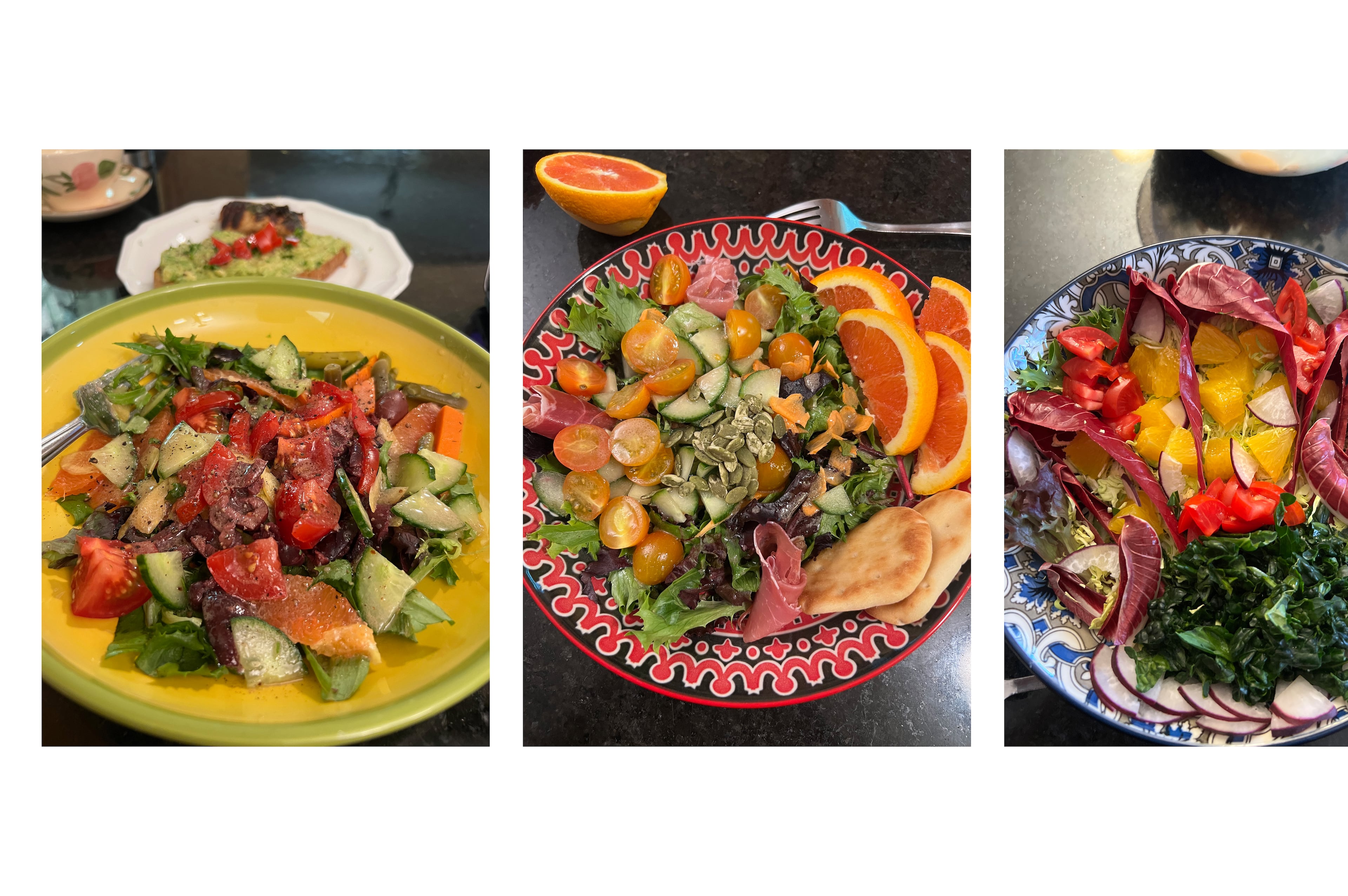
Ellenberg recommends “building blocks” that include lean proteins (eggs, fish, chicken, Greek yogurt, tofu or beans), colorful fruits and vegetables, whole grains, healthy fats (olive oil, nuts, seeds) and calcium- and vitamin D-rich foods for bone health.
If you’re just entering your era of more plants, proteins and healthy fats, the registered dietitian nutritionist recommends simple food combinations that don’t require complicated prep or unusual ingredients.
“For someone new to this way of thinking, I like to keep it very simple,” she said, and offered three starter recipes:
- Greek yogurt, berries and nuts
- A veggie-packed omelet with whole-grain toast
- Salmon, roasted vegetables and quinoa
“Avoiding fats altogether can make meals less satisfying and flavorful — and can lead to undereating or missing out on key nutrients,” Ellenberg said. “As we get older, appetite often decreases, so including healthy fats can help meals feel more enjoyable and nutritionally complete. Healthy fats can also lower cholesterol, protect against age-related cognitive decline and decrease inflammation.”
Most importantly, remember that nutrition for those 55 and older is less about perfection and more about consistently pairing protein, fiber and healthy fats to support fullness, strength and overall health, Ellenberg shared.
“A big part of my work is helping people move away from fear-based food rules and toward a more supportive approach — adding foods into their diet with a focus on nourishment, strength and enjoying food without guilt.”