
His first coaching job paid $100. Now, Nate Ollie keeps climbing — fast.
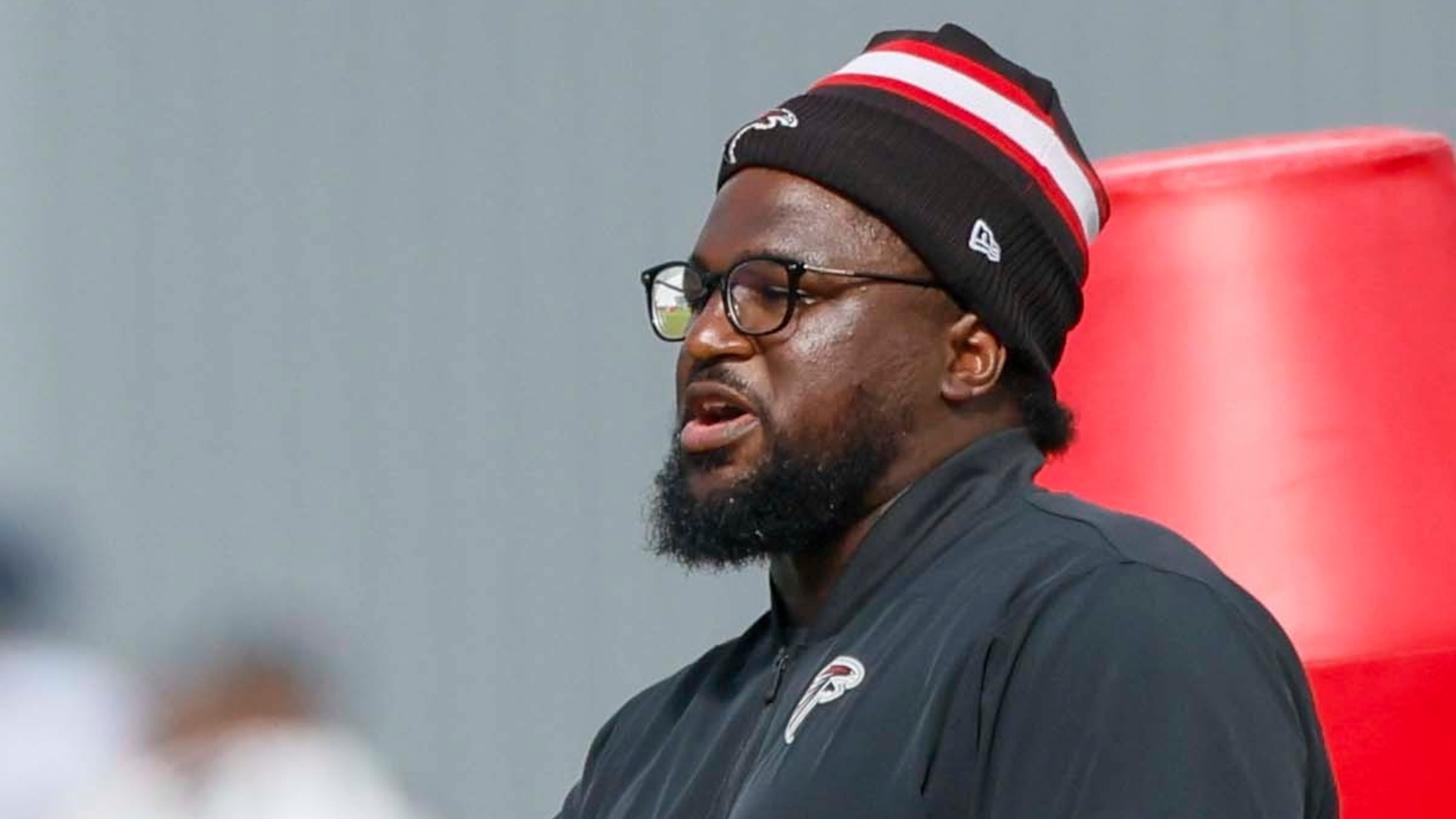

FLOWERY BRANCH — Nate Ollie had already taken the written, physical and psychological tests. The police academy was his next stop. He was 22 years old, freshly graduated from Ball State University with a criminal justice degree and a life in law enforcement waiting ahead.
But he just couldn’t quit football.
Ollie was making $100 a week as a seventh grade football coach in Yorktown, Indiana, and he didn’t have his own place to live. He spent most nights on a friend’s couch, paying $200 in rent each month. Sometimes he’d stay with his girlfriend, now his wife, so he didn’t feel obligated to pay.
Some 12 years later, Ollie, now the Falcons’ defensive line coach and the engine behind one of the NFL’s most impressive groups, still doesn’t know how he survived.
“By the grace of God, bro,” Ollie told The Atlanta Journal-Constitution. “I can’t even tell you, for real. I don’t know how I did it. I just did it. I loved it, (and) it ended up all working out after that.”
Coaching long seemed like Ollie’s calling. He was a team captain at Ball State, a 38-game starter at defensive tackle and a player who, after losing his father right before his senior season, stunned his coaches with the way he compartmentalized his emotions and didn’t let it detract from his leadership.
Ollie’s intangibles planted the roots. He’s since blossomed into a full-grown plant with petals marked by nicknames, cliches, energy, unwavering fashion (or lack thereof) and an innate ability to maximize everybody he coaches. He’s a player-motivator, a mental-manipulator, a career-changer.
And the Falcons relish his presence now — because he may not be around much longer.

Inside the dark room
Every defensive line meeting starts the same way. Ollie turns off the lights, looks at his players and tells them to run in. No stance, no hesitation, just run. “You got to get in there,” defensive tackle Gervon Dexter Sr. told the AJC.
Ollie preaches the idea of a darkroom mentality. He wants his defensive linemen on the field to act like they’re running into a dark room — fast and fearless.
To reinforce it, he spends, defensive lineman Brandon Dorlus estimates, 99.9% of the meeting with the lights off. The lights only come on when Ollie needs to write something on the whiteboard.
“It’s a mindset,” Dexter said. “If you have that mindset when you get down in your stance that you’re going in the dark room, you get off, if you hear that every day, you do that every day, and you have no choice but to do it on the field.”
Outside linebacker Cameron Thomas sees it every time he looks at his iPad. This spring, in one of his first team meetings after joining the Falcons, a picture of a dark room graced the screen. Thomas took a screenshot and made it his screen saver.
“I love the dark room,” Thomas told the AJC. “I honestly, really, do. It’s real, too, when you get out there.”
Asked for their favorite Ollie-ism, players smiled and laughed. Some paused for several seconds and wondered what qualified as PG. He lives in one-liners. Some are vulgar, some aren’t.
There are football-specific slogans like “ADO,” or Attention to Draw Offsides, and life advice like, “The great ones make it.” One of his most common traces back to the dark room mentality: GTFO, or “Get the F--- Off” the ball at the snap.
During meetings, he’ll ask questions, and if players don’t answer in a timely enough manner, he says, “Touchdown.” Then, he gives the answer and moves on. What’s timely? Try a few seconds.
The most popular pick among players was, “You think, you stink.” That one comes with a visual aid, too. He puts the poop emoji in a toilet and shows his players on the screen in the meeting room. The idea, of course, is to play without thinking, because thinking slows them down in his attack-style front.
Ollie’s slogans, at times, feel endless. They also serve a valuable purpose.
“He don’t ask for a lot, but the stuff he do ask for, you got to do it,” Dexter said. “And some of those catchphrases come from that.”
Ollie believes in the power of words. He gives nicknames to the vast majority of his players. Dexter is X-man. LaCale London is Big Twitch. Zach Harrison is the Ambassador of Strain. Da’Shawn Hand is Kingpin. The list goes on.
The root of it is for players to adopt the identity within their nickname. This summer, Ollie wanted undrafted rookie defensive tackle Carlos Allen Jr. to zone out and get off the ball once he took the field. Allen’s nickname? Zoned Out.
“It’s funny,” Ollie said this summer. “You see guys just embrace their nickname. They turn to their alter ego when they’re out there on the football field.”
Ollie doesn’t have a nickname. “Just Nate,” he said. The Falcons don’t want him to be an alter ego. His true self is plenty good enough.

‘Attack, attack, attack.’
Pete Lembo’s phone rang in the spring of 2019. It was Jim Schwartz, a longtime NFL defensive coordinator then in his fourth season with the Philadelphia Eagles.
Schwartz wanted to hire an assistant defensive line coach. He sought someone young and sharp with high upside and a low-maintenance demeanor. Ollie piqued his interest.
And in a 10-minute phone call, Lembo, who coached Ollie from 2011-13 at Ball State, eased any of Schwartz’s potential concerns over hiring a then-27-year-old whose resume included graduate assistant stops at Ball State and Tennessee and one full-time season at Eastern Kentucky University.
“I just remember telling him about Nate and his maturity and how intelligent he is and how passionate about it he is,” Lembo told the AJC. “And that was that.”
Ollie’s two years with Schwartz charted the trajectory of his career. Through Schwartz’s tutelage, Ollie learned everything about the attack front. During his playing days, Ollie operated in a read-and-attack defense, striking opposing linemen and shedding their blocks. Typical defensive line play, he says.
This attack front, meanwhile, is entirely atypical. And Ollie became infatuated with it.
“I loved it so much when I learned it in Philly, because you can take guys and you can unlock more potential,” Ollie said. “You take the thinking out of them and you just simplify it down. You just tell those big guys like, ‘Man, just go.’”
The Falcons are one of just five teams in the NFL to deploy an attack front, joining the Houston Texans, Cleveland Browns, Tennessee Titans and the San Francisco 49ers. And even then, the Falcons are unique. True attack fronts have four down linemen. The Falcons, at times, have three.
The multiplicity within defensive coordinator Jeff Ulbrich’s system turns an already uncommon front into its own commodity. Given that enough teams use it now, offenses have learned the attack front’s warts, Ulbrich said. Ollie noted that jet sweeps, crack tosses and other perimeter runs can be troublesome.
But the Falcons, with their flexibility in personnel up front, feel they have the answers.
“We have enough multiplicity where when you come to the line of scrimmage as an offense, you can’t just book us for this,” Ulbrich said. “I think some of our multiplicity helps protect the attack stuff we do, especially the purest form of it when it’s in a four-down capacity.”
The Falcons’ attack front forces alignment throughout all three levels. Linebackers play differently and take on blocks in a different manner. “I tell our D-line, ‘You blow s--- up, they clean it up,’” Ollie said. The secondary has to be mindful and get involved in the run game if the defensive linemen and linebackers can’t reach the perimeter fast enough.
So far, the ingredients have meshed well.
The Falcons have the NFL’s fourth-best run defense. They lead the NFL with 97 quarterback pressures and rank No. 2 in pressure rate at 42.9% despite the ninth-lowest blitz rate, according to Next Gen Stats. Among defensive linemen, Dexter and Dorlus are fourth and fifth in the league in pressure rate, respectively, while Thomas is eighth.
It’s the Ollie effect, the darkroom mentality on full display, and a nod to one of the game’s brightest young minds.
“It takes a little second to buy in,” Harrison told the AJC. “You hear all the things about attack, attack, attack. You hear, from the outside, it’s not real football. And once he gets here, you hear it, you see it, you’re like, ‘Man, I don’t know about this.’ Then you start doing it on the field. You see results, you’re making plays and getting sacks and TFLs and things like that.
“You’re like, ‘Oh, maybe Nate’s onto something.’ And then once you buy in, it just allows you to take it to a whole ‘nother level.”
‘One of those rare guys that checks all the boxes’
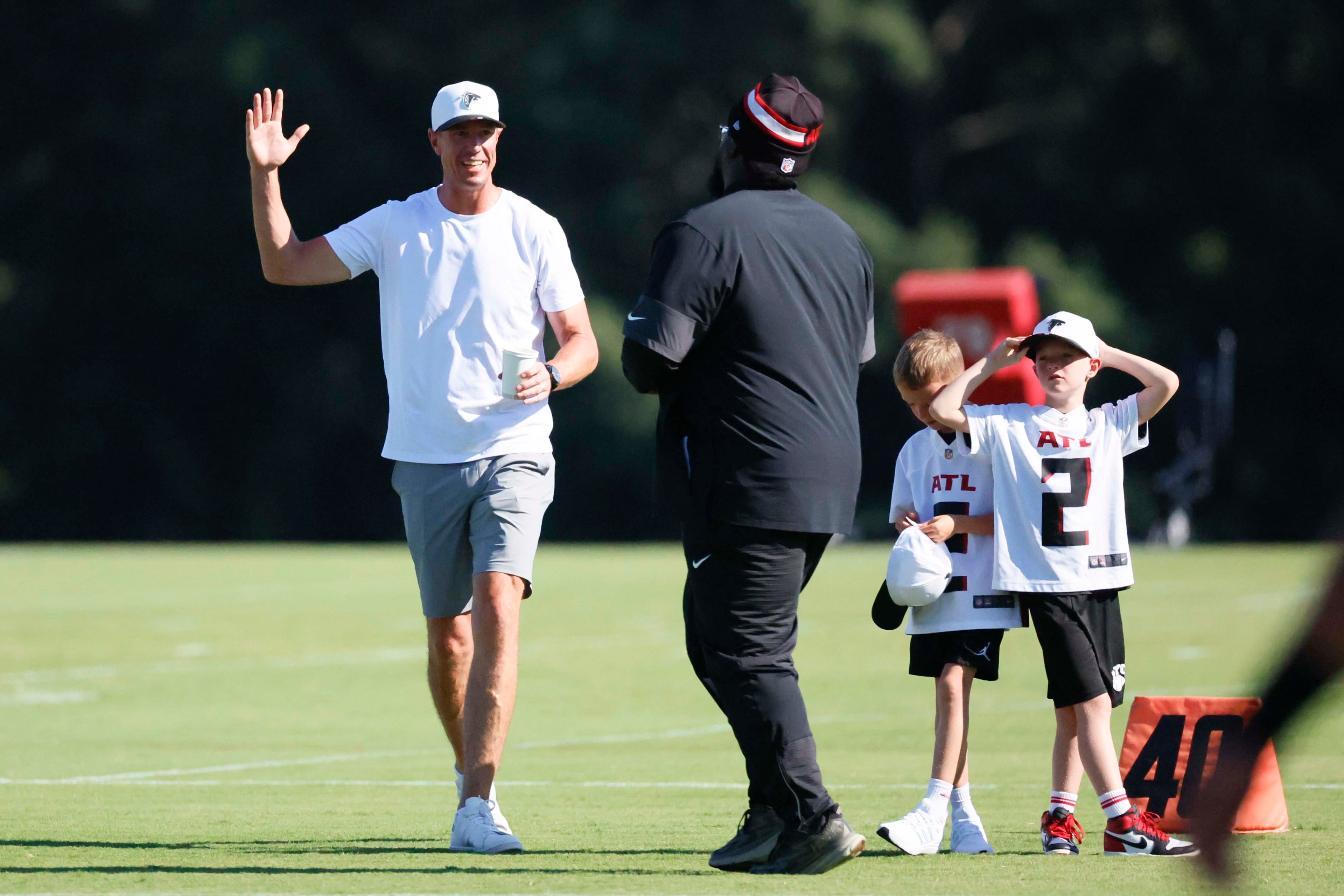
One of the first things Dexter noticed about Ollie was the consistency of his style. A black beanie hardly never leaves the head of Ollie, who doesn’t look too far removed from his days as a 6-foot-1, 295-pound penetrating defensive tackle.
Defensive lineman Jared Ivey joked one has to be in Ollie’s “inner circle” to see him without the beanie. Dorlus, in his second year working with Ollie, said he’s never seen it. Another quipped Ollie’s hair is between him, his barber and nobody else.
“That’s his swag,” Dexter said. “He’s consistent with that. D-linemen — the good ones — always have, like, this swag about themselves. So for him to have that, it’s only right we have it, too.”
Perhaps that’s partially why Ollie resonates so well with his players. He knows how their minds work, because he was once one of them. He was compact, twitchy, strong and played with good leverage, Lembo said. He was technically refined. He could play inside and kick out to defensive end if necessary.
By the time he left Muncie, Indiana, Ollie was a three-time All-Mid-American Conference honoree with 12 sacks and 25½ tackles for loss on his resume. His players didn’t know much about his career, or his highlights, or his accomplishments. But they weren’t surprised.
“Based off the way he coaches, I’m sure he was pretty productive,” Dexter said. “In my perspective, he reminds me of a player. He reminds me of a guy out there that wants to get sacks. He reminds me of an edge rusher. Like, his mentality is he wants you to get production.
“Any coach like that is going to get it out of you. That’s what you want. He wants the same stuff as us. He wants us to be productive. He wants us to get off the ball. So, that’s kind of how I look at it. He’s a great guy. It’s hard not to like playing for him.”
Ollie creates natural, meaningful bonds with his players. He’s given each of them a bracelet that says “Chase God,” reminding his players what’s important. They all wear them.
“Every player in his room would tell you, ‘Nate wants the best for you,’” Ulbrich said. “When a player feels that level of commitment and Nate pouring into him every day, the buy-in just goes to another space. For so many reasons, he gets the best out of people.”
Ollie has built a reputation of elevating defensive linemen. He helped Dorlus and London have breakout seasons last year. He’s taken Dexter’s game to a new level. Maason Smith, who didn’t record a sack or quarterback hit in 2025 with the Jacksonville Jaguars, is currently second in the NFL in pass-rush win rate, taking victories on 27% of his snaps.
That isn’t chance. That’s Ollie.
“I don’t know if I’ve ever been around a coach that gets so much out of his players,” Ulbrich said. “Any player that comes here, in my opinion, that’s in his room is going to outperform anything he’s ever done prior. And he’s consistently put that on tape. Guys are going to strain.
“He’s the rare combination of football acumen, high-level technique coach, but at the same time, juice and energy and then at the same time, connection. He’s one of those rare guys that checks all the boxes for you, so I’m so fortunate that he’s here. He’s a huge part of our success here.”
Energy is often the first attribute mentioned with Ollie. It’s infectious, outside linebackers coach John Timu said, and players have to match it in meeting rooms. “Every single day,” Harrison said.
But energy shouldn’t take away from the brilliance of Ollie’s mind. He knows what to drill into his players from a schematic and technical standpoint. He knows what to hyperfocus on and what his players should and shouldn’t see.
At his core, Ollie is a teacher — and a great one, coach Kevin Stefanski said.
“In a lot of ways, you have to get your guys going. You got to be a lion tamer at times. There’s all sorts of jobs that you have to do,” Stefanski said. “D-line rooms are different. It takes a special person in those roles to get your guys going.”
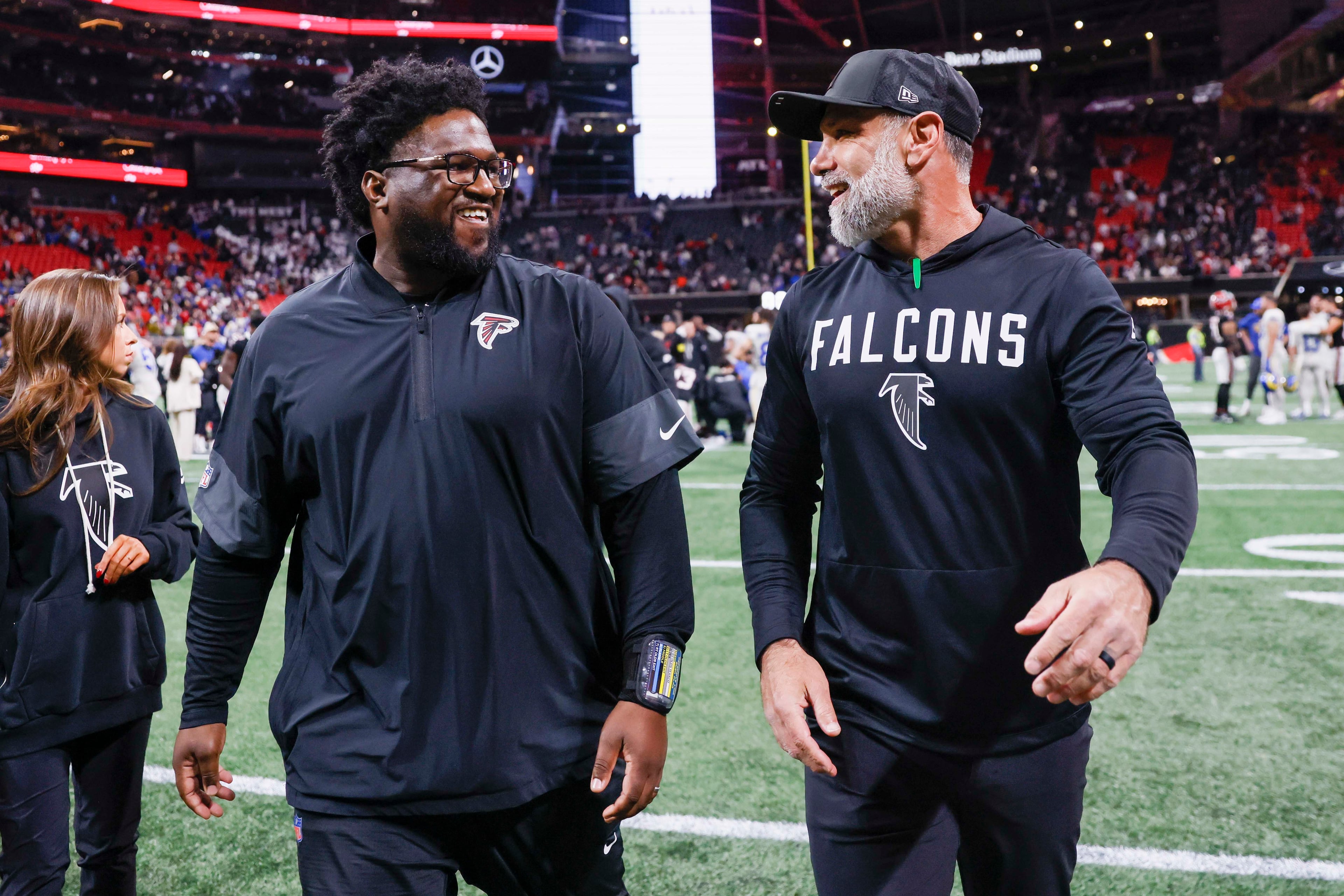
‘Only a matter of time’ until DC job comes
The odds, objectively, aren’t in Ollie’s favor.
There are only five defensive coordinators in the NFL who served as a defensive line coach in their final assistant coaching position before calling plays. Only two — the Baltimore Ravens’ Anthony Weaver and the Pittsburgh Steelers’ Patrick Graham — played defensive line, too. The vast majority of defensive coordinators came from backgrounds at linebacker or defensive back.
Given the play of the Falcons’ defensive line, Ollie has earned the right to dream about just how high he can climb this coaching ladder. Sometimes, he admits, his mind starts to shift. “What are they over there doing?” He’ll ask himself, glancing over at the linebackers.
But he knows the principles that pushed him to this point, and he’ll never leave them.
“What got me here is just, ‘I want to do a good job where I’m at. Keep my feet,’” Ollie said. “Like, I want to be the best D-line coach that I could be. Whatever I can do to help ‘Brich, to serve ‘Brich. You never got it in this thing, but once you kind of feel like, ‘OK, I’m doing pretty good at this,’ my mind can start shifting a little bit more (to other positions).”
Defensive linemen are naturally more focused on the run game and pass rush. They don’t pay much mind to coverage. That, to an extent, has played a part in the reasoning why defensive line coaches don’t get many coordinator opportunities. It’s an important gap in a portfolio.
But Ollie doesn’t have that vacancy.
The 34-year-old sits in hours of meetings every week, rolling through pass coverage, second-level blitzes and a variety of different cover schemes. He’s not leading the discussion by any means, but he’s not in his own bubble, either. He’s absorbing information and trying to learn other position groups.
So, through osmosis, Ollie’s candidacy for defensive coordinator appears quite strong.
“I know Nate is somebody that is well-versed in everything we’re doing,” Stefanski said. “So, I don’t believe in coaches getting pigeonholed as this coach or just that. … It’s only a matter of time when guys like Nate get that type of opportunity.”
But the Falcons aren’t looking forward to that day, because they know all that Ollie means to their organization.
Their pass rush, which Timu previously said was a “generational curse” around the team, set a franchise record with 57 sacks last year. Ollie’s attack-front works. His players are bought in. His energy permeates. He elevates talent.
And all his unique tactics — the nicknames, the catchphrases, the emoji — resting in the brain underneath his black beanie have proved quite the hit in Flowery Branch. It may not be long until the rest of the NFL takes notice.
“I think Nate can go as far as he wants to,” Harrison said. “He’s a man of faith, so he puts his faith in God. Wherever God puts Nate, I know he’s going to succeed and reach his goals, bring people closer to the Lord and help people get off the ball.”