Which Falcons draft picks will play most as rookies? We rank all 6 selections.
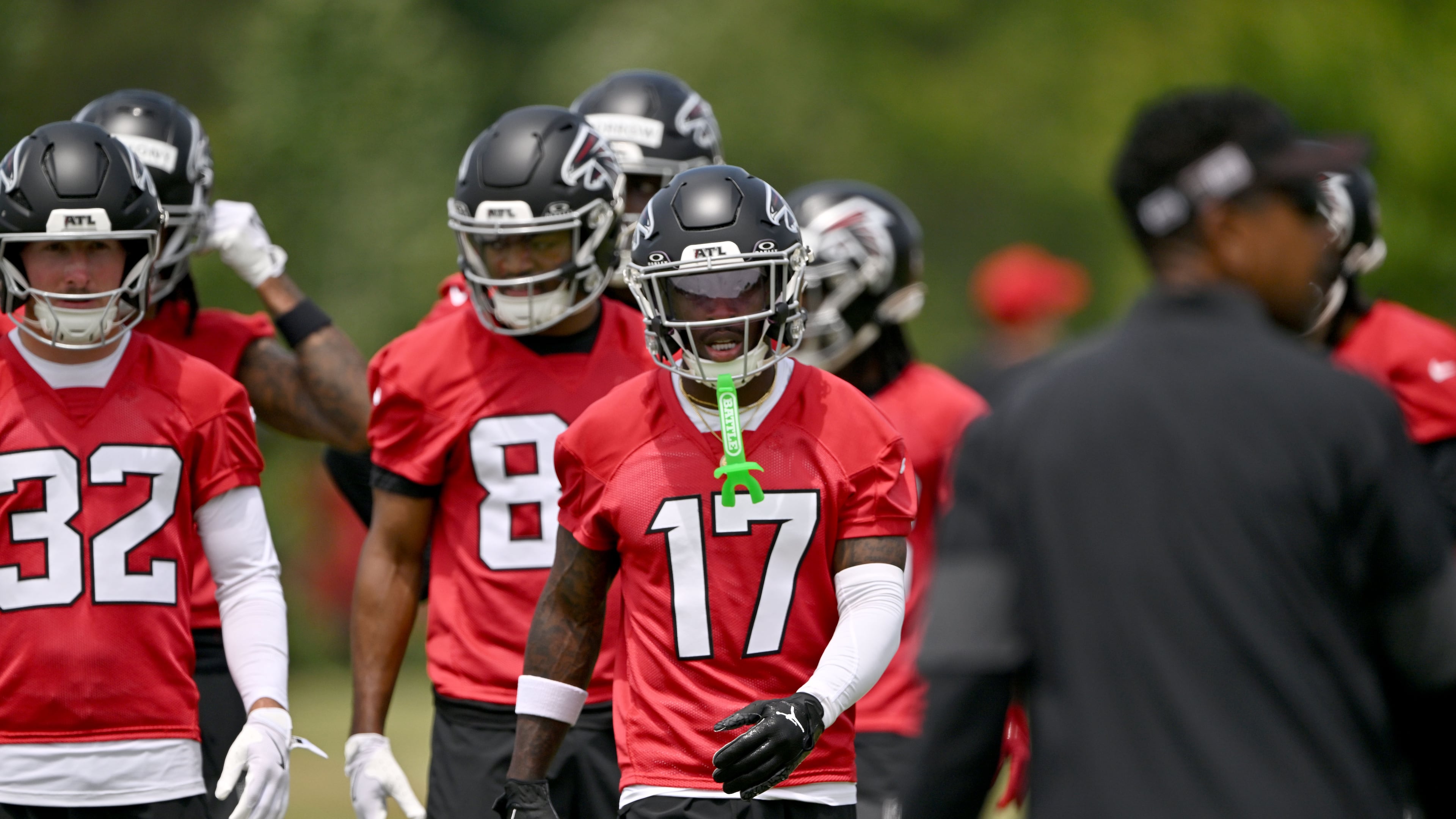

The Falcons’ rookie class is absent a first-round pick, and it’s collectively low on bodies. They made only six selections, tied for the second-fewest in the NFL and took just three players in the first 200 picks.
But first-year coach Kevin Stefanski believes in providing opportunities — to make the roster, to play, to start. It’s the job of the Falcons’ coaches, Stefanski said, to give the players a chance to earn such roles.
And even with a short-handed draft haul, Stefanski didn’t rule out the Falcons giving extensive playing time to rookies this fall.
“I think in this day and age, we’re counting on rookies to play in this league oftentimes, so there’s no concern about putting a guy out there when they’re ready,” Stefanski said Friday May 8 before the team’s rookie minicamp. “I think so much of this game is earning a role. If a rookie earns a role and Week 1, he’s ready to go, he’ll be out there.
“I don’t think you have the luxury of redshirting players, so to speak. We’ll take it on a case-by-case basis. But I’ve had a lot of experience with young players that when they’re ready, they play.”
As the Browns coach last season, Stefanski leaned heavily on rookies. Quarterbacks Dillon Gabriel and Shedeur Sanders started 13 games combined. Running back Quinshon Judkins led the team in rushing, while tight end Harold Fannin Jr. posted team-high marks in catches, receiving yards and receiving touchdowns.
All told, 10 rookies played 13-plus games for the Browns last season. There were 97 combined appearances by offensive players and 88 appearances by defenders, featuring a mix of drafted and undrafted rookies in various roles on a team that finished 5-12.
The Falcons’ roster is in a better spot than Cleveland’s, and they have fewer rookies, too. But snaps are available, and Stefanski hopes a few first-year players step up and take them.
In order from most to least likely, here’s a look at the six Falcons draftees’ odds of rising to the occasion.
1. WR Zachariah Branch
Selected in the third round at No. 79 overall, Branch is the Falcons’ best combination of value, opportunity and positional need. He steps into a receiving corps littered with questions behind Drake London, and his past production, coupled with his playmaking skills, makes him an intriguing solution.
Branch, who spent the first two years of his college career at Southern California, led Georgia in catches, receiving yards and receiving touchdowns. His 81 receptions topped the SEC, and he earned all-conference honors as both a receiver and all-purpose player.
The 5-foot-10, 180-pound Branch spent much of his time at Georgia as a quick-play specialist. His size projects to the slot receiver role, but Stefanski and general manager Ian Cunningham have both expressed belief in Branch’s ability to play on the perimeter, too.
“I think he certainly has inside-outside flex,” Stefanski said. “That word ‘versatility’ comes to mind with somebody that can line up all over, including the backfield, including in motion, those types of things. I don’t think there’s a limit to where he can line up on the field.”
Free-agent signees Jahan Dotson and Olamide Zaccheaus figure to be Branch’s biggest competition for playing time. But Branch’s athleticism, versatility and ability to rip off explosive plays should get him on the field — and if nothing else, his return experience gives him a solid floor on special teams.
2. CB Avieon Terrell
The headliner of the Falcons’ rookie class and perhaps the draft’s best overall story, Terrell has the tools and pedigree to win a starting job this summer. Terrell, the No. 48 overall pick and the first selection of Stefanski and Cunningham’s tenure, primarily played outside corner at Clemson but also has experience at nickel.
Though he’s on the lighter end at 5-foot-11 and 180 pounds, his physicality, competitiveness, ball skills and instincts made him a second-team All-America selection in 2025. He’s a potent blitzer, collecting three sacks last season, and he forced eight fumbles in his time at Clemson, another nod to his willingness to hit and innate ability to generate takeaways.
Terrell, the younger brother of Falcons starting cornerback A.J. Terrell, will have to beat Mike Hughes for the starting spot on the perimeter. There’s also a chance he kicks inside to nickel, where 2024 fourth-round pick Billy Bowman Jr. is still working back from a torn Achilles suffered last November.
An Atlanta native, Terrell could be a Week 1 starter, just like his brother — but there’s plenty of competition in the Falcons’ cornerback room, and he’ll have to earn it.
3. LB Kendal Daniels
Take a glance at the Falcons’ linebacker situation, and it’s easy to wonder just how much Daniels can play this fall. Apart from Divine Deablo, there’s no sure-fire starter. Free-agent addition Christian Harris, who started only one of his 15 appearances last year with the Houston Texans, is the projected answer. But if Daniels has a strong summer, there’s little preventing him from winning the job.
An athletic specimen at 6-foot-5 and 242 pounds, Daniels spent only two years at linebacker in college after transitioning from safety. Yet what he may lack in refinement, he overcomes with speed, range and versatility.
Daniels has a unique blend of size and athleticism for a linebacker, and defensive coordinator Jeff Ulbrich has a reputation for developing similar players into successful pros. Daniels may be the next in line.
And if nothing else, he should find a home on special teams.
4. LB Harold Perkins Jr.
Perkins, the No. 215 overall pick in the sixth round, has the same opportunity as Daniels in a subpar linebacker room. The most pressing conversation for Perkins is where the Falcons ultimately decide to use him. Versatility is his calling card, as he can rush the passer, play in space and align in various spots within the front seven.
But at 6-foot-1 and 222 pounds, Perkins projects best as an off-ball linebacker. The Falcons put him at weakside linebacker during rookie minicamp, a position he believes allows him to run, hit and make plays.
Perkins has experience, though not extensively, working on special teams. He’s likely to start his career as a depth linebacker, subsequently putting him in line for a much heavier workload on punt and kickoff coverage. No matter, there’s a path to a roster spot — and snaps — for Perkins this fall.
5. DT Anterio Thompson
The bulk of the Falcons’ snaps at defensive tackle figure to be owned by Brandon Dorlus, LaCale London, Da’Shawn Hand, Chris Williams and Maason Smith, which leaves minimal opportunity for Thompson to see the field defensively.
But Thompson, a sixth-round pick at No. 208 overall, provides additional value as a legitimate special-teams threat. In 2023 at Iowa, he blocked two punts, tied for third-most in the FBS.
Thompson, who finished his career at Washington, has a unique profile of size and athleticism — at 6-foot-4 and 310 pounds, he ran a 4.73 40-yard dash at the Huskies’ pro day. Such a combination bodes well for his punt-block mastery to translate to the next level, and it may be what ultimately gets him on the team’s 53-man roster out of training camp.
6. OL Ethan Onianwa
The sixth and final member of the Falcons’ draft class, Onianwa went No. 231 overall in the seventh round. He spent four years as an offensive tackle at Rice before transferring to Ohio State and playing guard in a reserve role last season. The fact Onianwa can play four spots on the offensive line gives him a fighter’s chance at making the roster.
But the Falcons have 17 offensive linemen on their 90-man roster and will likely enter the season with around nine or 10. They return four starters from last season, brought in free-agent right tackle Jawaan Taylor and return depth pieces Storm Norton, Kyle Hinton, Michael Jerrell and Jack Nelson.
The 6-foot-7, 331-pound Onianwa will battle for a roster spot, but he’ll face hefty competition.