
She took over her dad’s construction firm and made it a key player in Atlanta

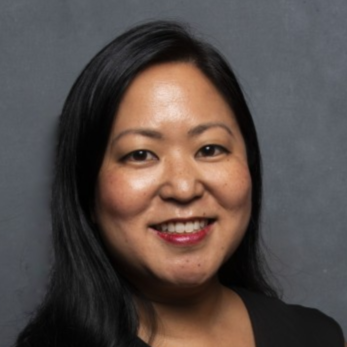
Joy Rohadfox was 27 years old when she took over her father’s construction management firm.
“It’s a male-dominated industry,” said the CEO of Rohadfox Corp. When she took over the company, she wasn’t always accepted in the rooms she walked into.
“Men around the table would not even speak to me,” Rohadfox said. “Very dismissive.” That was in 2001.
“I knew that it was going to be hard,” she said. Her father, Ronald, had started the company in 1976, and some of the staff had known her since she was a child. “And then, now I’m moving in the direction of becoming the CEO and now telling others what to do, with no engineering background.”
One of her first moves upon taking over the company was to move its headquarters from Durham, North Carolina, to Atlanta, winning contract work at the world’s busiest airport, Hartsfield-Jackson Atlanta International, in the process.
Rohadfox also decided to get an MBA from Georgia State University, so she could at least say “when the men start asking me … I do have an MBA. I do know business,” she said. And she continued to draw on her father’s expertise for another decade while he was chairman of the company.
Then, he “told me I could do this,” she said. “From there, I just knew that I had to walk into rooms alone.”
She has now helmed the company for more than two decades.

Rohadfox Corp., a minority-owned construction management firm, has more than 100 employees as it marks its 50th anniversary. Along with its headquarters in Buckhead, it has offices in Los Angeles; Washington, D.C.; Chicago; New York; Richmond, Virginia; Durham and Charlotte in North Carolina; Charleston, South Carolina; Miami; and St. Thomas in the U.S. Virgin Islands.
Some of its major contracts involve helping to manage construction for Hartsfield-Jackson and to expand Los Angeles International Airport in preparation for the 2028 Summer Olympics, as well as program management for MARTA and architecture and engineering for the Atlanta watershed and transportation departments.

Rohadfox sat down with The Atlanta Journal-Constitution and shared her thoughts on second-generation leaders, using instincts in business and how to navigate the politics of competing for contracts.
Edited for length and clarity.
Q. What’s the significance of your company’s 50th anniversary to you?
A. I realized that now I’ve been running this company as long as my father has, 25 years. And it’s about legacy.
This is just continuing to keep his legacy alive — which is now my legacy — and empowering women, and that’s what I’ve been trying to do for the last 25 years.
I do a lot of research on second-generation businesses. (Only about 30% of family-owned businesses) make it to the next generation.
Q. Why do you think that is?
A. There’s a generational gap. Most CEOs tend not to listen to younger people. The active listening skills are not there. I don’t think that some of us are willing to learn.
I think about this all the time.
I try to do a better job than I have been doing, listening to the younger people within the office — and maybe not always change, but at least hear them out.
Q. What’s an example of a valuable kind of thing you’ve learned from listening to some of the younger people in the office?
A. So for years, we had something called a weekly report, and it was paper. It was a hard notebook, and it showed everything that each department did for the week. (At) weekly meetings … we had a weekly report.
I continued this up until two years ago, and it took a long time from them to convince me that we needed to change. We’ve gone now into a system where everything is uploaded into our computer, and I can see what accounting is doing, marketing is doing.
Another piece is that — I’ll admit it … There’s a fear, especially people that are older than me, that they won’t understand how to utilize this new technology. And no one is really sitting down teaching them how to.
Q. Empowering women: Why is that important to you and how do you do that?
A. I started to hear that women aren’t interested in structural engineering because they think it’s not sexy, because they think it’s hard hats and steel toe boots.
But there’s so much more to infrastructure and construction, and so I felt it was important for me to go out and start recruiting women, and that’s what we’ve been doing. … Our staff is probably 70% women.
Q. What’s one mistake that you’ve made that transformed how you approached your career?
One mistake I’ve made is (we) teamed with a partner that did not align with our cultural values, and we had to separate ourselves.
And to this day, I don’t care what opportunity comes through the door — if I feel like it’s just not the right opportunity, the values aren’t aligned, then we will pass it up.
Q. How can you tell if values are not aligned before you’ve struck a deal?
A. Usually it’s intuition. My father always told me that you can walk into a room and immediately you know if the person is telling the truth (and) how they perform. And then you can also do research, obviously.
But this particular firm, we just didn’t align on how they billed, when they billed, how many hours they’re charging. We’ve built 50 years’ reputation on integrity, so I would never align myself with an organization that doesn’t believe in the same.
Q. What are the most interesting or energizing parts of your job?
A. The most interesting parts of my job are, I would say, understanding someone’s personality.
And probably the exciting part is winning.
It’s very political. It’s like “The Art of War.” Never let the enemy know what you’re thinking, and always be prepared, because someone is always after you. For years, I’ve tried to keep a low profile and not be too visible, because then all of a sudden, people will put a target on your back.
AJC Her+Story is a series in The Atlanta Journal-Constitution highlighting women founders, creators, executives and professionals. It is about building a community. Know someone the AJC should feature in AJC Her+Story? Email us at herstory@ajc.com with your suggestions. Check out more of our AJC Her+Story coverage at ajc.com/herstory.