Players to watch in the 2024 General Assembly session

GOVERNOR
Brian Kemp: Like all governors, Kemp will set the agenda for the session, and his role may be even stronger this year because he will play a big role in deciding how to spend, or not spend, billions in state reserves. He’s already set part of the agenda by telling agencies they can request more spending, by calling on lawmakers to speed up cutting the state income tax rate and by committing more than $300 million for end-of-the-year bonuses to 300,000 teachers, school staffers and state workers. Like all governors, Kemp also has the power to decide how much money lawmakers appropriate, to veto legislation and spending, and to dole out judgeships and other jobs to employment-seeking lawmakers.
LIEUTENANT GOVERNOR
Burt Jones: A member of the Senate since 2013, the Jackson Republican was at times at odds with his chamber’s leadership, serving as a GOP elector after the 2020 presidential election when Democrat Joe Biden beat Republican Donald Trump. But when Lt. Gov. Geoff Duncan, a Trump critic, decided not to run for reelection, Jones won the race to replace him. Jones isn’t shy about pushing his own agenda even if it diverts from what Kemp has in mind, and he is considered a likely candidate for governor himself in 2026. The lieutenant governor essentially runs the Senate and typically has a key role in helping to decide committee assignments and whether legislation gets a vote in the chamber.
The 2024 legislative session
The Atlanta Journal-Constitution has the Georgia’s largest team covering the Legislature during the session that ends Thursday, March 28. Readers can follow news of the House and Senate on all of our platforms, ajc.com, the AJC app and our print and ePaper editions.
- The Georgia Bill Tracker offers bills to watch from Crossover Day to Final Adjournment
- A citizen’s guide to the Georgia’s General Assembly
- Key players to watch: Governor, Lieutenant Governor, key legislators
- Track bills and lawmakers: Georgia Legislative Navigator
- FAQ: What do legislators do, how does it work?
- Legislative Lingo: How to speak like a Georgia legislator
FOLLOW UPDATES from the AJC
- Sign up for our subscriber newsletter: Updates on the Legislature and the 2024 elections by email.
- Listen to the Politically Georgia podcast daily at 10 a.m. or on demand
- Get complete daily coverage during the legislative session at ajc.com/politics
- Follow us on X, formerly Twitter at @AJCGaPolitics, on Threads at @ajcnews, and on Facebook at AJC Georgia Politics
KEY SENATORS

Sen. John Kennedy, R-Macon: The central Georgia lawyer was first elected to the Senate in 2014 and rose quickly, serving as a gubernatorial floor leader and majority caucus chairman, where he helped Senate Republicans raise money to support the party’s incumbents and candidates. He led the Senate Redistricting Committee, which redrew political lines in 2021 to ensure the GOP maintained its majority — lines that were later thrown out by a federal judge. He typically presents a calm demeanor in delivering the majority party’s views on issues. The president pro tem is second in charge of the Senate.
Sen. Steve Gooch, R-Dahlonega: He was first elected to the state Senate in 2010 and served as the majority caucus whip from 2014 until his election as majority leader in November 2022. Before being elected as whip, he was the Senate Transportation Committee chairman. Gooch spent legislative sessions lobbying to expand broadband access in rural parts of the state, something given a major boost in recent years by federal funding, and on a host of other issues. He’s an aggressive spokesman for the GOP agenda.

Sen. Blake Tillery, R-Vidalia: First elected to the Senate in 2016, Tillery rose quickly to head the chamber’s budget committee, taking over in 2020 after longtime Appropriations Chairman Jack Hill died. His first budget involved helping to cut state spending by 10% because of expectations that revenue would decline during the COVID-19 pandemic. Since then, he has been in the opposite situation: The state has had record revenue and record spending. A fiscal conservative, Tillery is the General Assembly’s budget veteran now and, as a country lawyer, is good at picking apart requests for higher government spending.

Sen. Gloria Butler, D-Stone Mountain: A retiree who was first elected to the Senate in 1998, Butler is the first woman to lead the party in the Senate, previously serving as chairwoman of the chamber’s Democratic caucus. Butler was one of 16 state electors who voted for Biden and has long been active in party political and legislative initiatives.
Others: Senate Majority Whip Randy Robertson, R-Cataula; Senate Majority Caucus Chairman Jason Anavitarte, R-Dallas; Senate Rules Chairman Matt Brass, R-Newnan; Senate Regulated Industries Chairman Bill Cowsert, R-Athens; Senate Minority Whip Harold Jones, D-Augusta; Senate Democratic Caucus Chairwoman Elena Parent, D-Atlanta; Senate Finance Chairman Chuck Hufstetler, R-Rome.
HOUSE

Rep. Jon Burns, R-Newington: Burns, first elected to the General Assembly in 2004, served as majority leader from 2015 until being elected speaker in January 2023, two months after longtime House Speaker David Ralston’s death. He and Ralston have some similarities. Like Ralston, Burns has been a champion for rural Georgia, a prerequisite for a House speaker. He’s also seen, like Ralston, as level-headed and plain-spoken in a 180-member chamber that can be raucous and fractious at times. A strong supporter of Kemp’s initiatives, Burns has also continued Ralston’s push to increase spending and back legislation to improve the state’s mental health system.
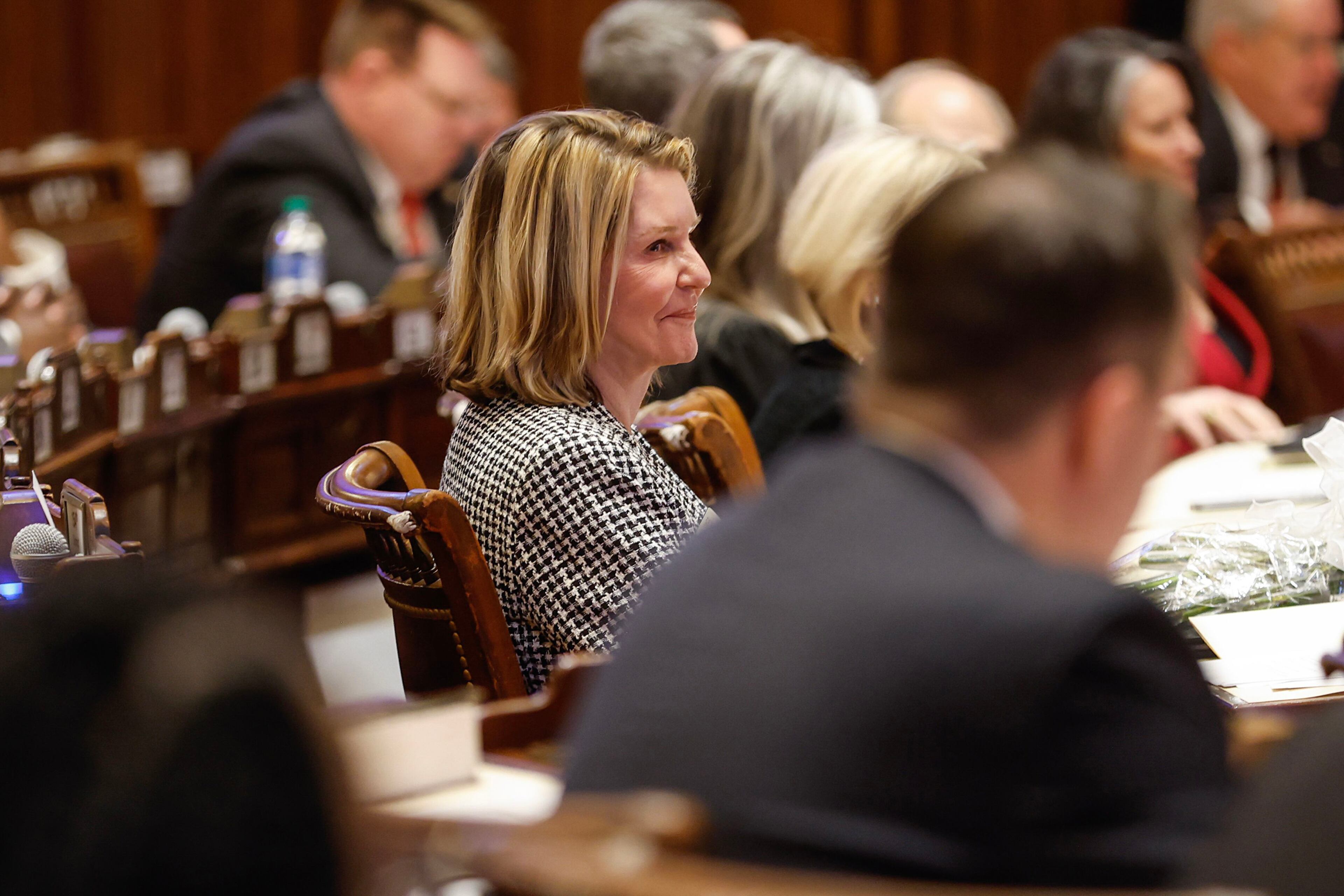
Rep. Jan Jones, R-Milton: A smart, stable leader from a politically important part of metro Atlanta, Jones became the state’s first female House speaker when Ralston died. She returned to the post she had held, speaker pro tem — essentially second in charge of the House — after Burns was elected speaker. A former journalist and marketing executive, Jones has been able to win reelection — handily — at the edge of a part of metro Atlanta that is trending Democratic.

Rep. Chuck Efstration, R-Dacula: The Gwinnett County lawyer took on a new role as majority leader after serving as head of the House Judiciary Committee, where he pushed a wide array of legislation, including changes in ethics laws, the repeal of the state’s citizen’s arrest law and passage of a hate-crimes statute. Now his job is to lead a Republican caucus that is slightly smaller than it was before the 2022 election but still very much in charge of the chamber.

Rep. James Beverly, D-Macon: Following an election in which Democrats inched a bit closer to control of the chamber in 2022, the party’s House caucus elected Beverly to a second term as minority leader. Beverly, an optometrist first elected in 2011, has been a strong voice for the party’s positions and helped the caucus raise big money, which is important in a chamber where Republicans have always had a huge funding advantage at election time.

Rep. Matt Hatchett, R-Dublin: The House Appropriations chairman was chosen in 2022 to replace longtime budget chief Terry England, who is now a top aide to Burns. The committee plays a key role in deciding how the state spends more than $33 billion a year for programs. Hatchett successfully headed House Republican campaign fundraising efforts and was in the majority leadership for years, so the transition to heading the most important committee in the chamber has been smooth. Hatchett had a solid first year in the job, showing an understanding of the issues not typical among rookie chairmen.
Others: Rules Chairman Richard Smith, R-Columbus; Public Health Chairwoman Sharon Cooper, R-Marietta; House Ways and Means Chairman Shaw Blackmon, R-Bonaire; House Minority Whip Sam Park, D-Lawrenceville; House Regulated Industries Chairman Alan Powell, R-Hartwell.