Keisha Lance Bottoms and the long road from Crawfordville to Governor’s Mansion

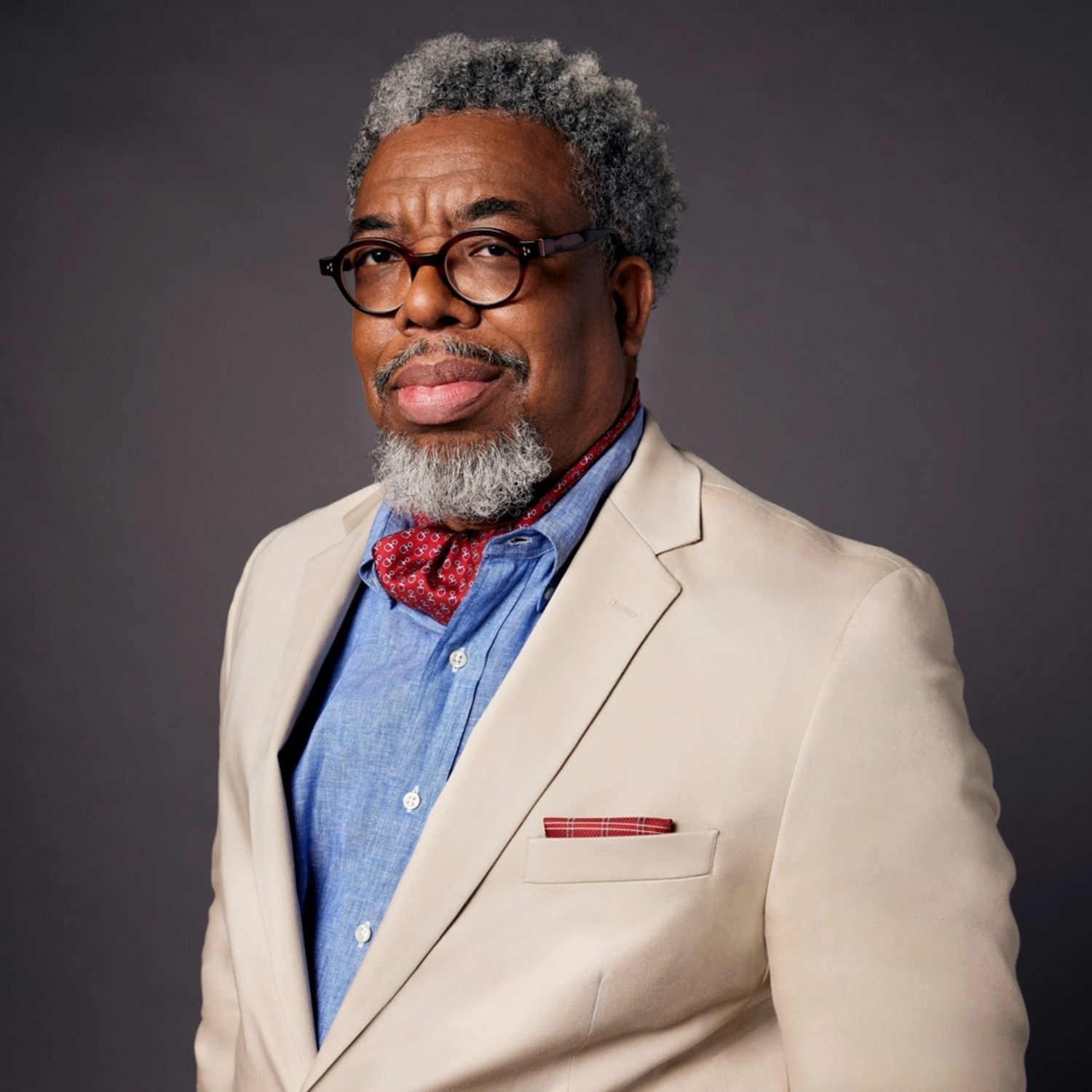
In 1860, an enslaved man named Sheppard Peek was listed among the possessions of William Peek, a white man in Crawfordville.
His value was placed at $1,400.
On another surviving document, Sheppard signed his name with an X.
More than a century and a half later, Sheppard’s great-great-granddaughter, Keisha Lance Bottoms, was elected governor of Georgia.

The distance between Crawfordville and the Governor’s Mansion can be measured in miles. The distance between a man once listed as property and his descendant, now elected to lead the state that sanctioned his enslavement, is harder to comprehend.
Across 250 years of American history, only three Black Americans had ever been elected governor of a state.
L. Douglas Wilder broke the barrier in Virginia in 1989. Seventeen years later, Deval Patrick followed in Massachusetts. Another 16 years passed before Wes Moore won in Maryland in 2022.
Three men. Three states. Across nearly 2½ centuries.
Now Bottoms has joined that extraordinarily small group, along with Republican Byron Donalds, who won Tuesday’s election for Florida governor, and Democrat David Crowley, who won the race for Wisconsin governor.
But she is the first Black woman to do so.
The race for Georgia Governor
Georgia Governor: Keisha Lance Bottoms elected Georgia governor, a first for a Black woman in US
History made: Keisha Lance Bottoms and the long road from Crawfordville to Governor’s Mansion
Democratic wave: A ‘bloodbath.’ Georgia Democrats sweep statewide offices in historic political upheaval
Election results: Track the votes
Live: Latest updates, race calls and early takeaways
Map: How your neighborhood voted
U.S. Senate: Democrat Jon Ossoff wins reelection to U.S. Senate
Key races: Democrats sweep Georgia statewide offices
Constitutional amendments: Georgia voters approve three new amendments to state constitution
Congress: Jim Kingston avoids upset in Coastal Georgia U.S. House race
Complete coverage: 2026 Georgia Voter Guide
Bottoms grew up in an Atlanta where the extraordinary had already become ordinary.
She was 3 years old when Maynard Jackson was elected the city’s first Black mayor in 1973.
Jackson was followed by Andrew Young. Then Jackson returned. After him came Bill Campbell, Shirley Franklin and Kasim Reed.
Eventually, Bottoms herself would become mayor.

When Bottoms was elected in 2017, Atlanta embraced a new refrain: “A mayor named Keisha.”
It became a playful declaration of the city’s Black identity, a reminder of how far Atlanta had traveled from the days when a Black mayor seemed almost unimaginable.
A Black girl growing up in the South during the 1970s and 1980s, in a state that had spent generations denying Black people the most basic rights of citizenship, could see that someone who looked like her could lead her city.
That was the world Maynard Jackson helped create.
The world Maynard Jackson made
On Oct. 16, 1973, Maynard Holbrook Jackson Jr., a 35-year-old lawyer with a commanding voice and an even more commanding presence, was elected Atlanta’s first Black mayor.

For generations of Black Atlantans, such a moment had seemed almost unimaginable.
This was a Southern city where segregation had governed nearly every aspect of Black life, from the schools children attended to the neighborhoods where their families could live. Political and economic power had long rested almost exclusively in white hands.
Now a Black man would occupy the city’s highest office.
Jackson’s election did not erase Atlanta’s racial divisions or resolve the inequalities that had defined the lives of its Black residents. But it changed the relationship between a people and the city they called home.
Keisha Lance Bottoms would grow up in the Atlanta that emerged from that victory.
The daughter of soul singer Major Lance and Sylvia Robinson, Bottoms knew a childhood marked by both opportunity and hardship. Her father’s struggles with drugs and imprisonment disrupted the family, while her mother worked to provide stability and eventually operated a beauty salon.
Bottoms attended Atlanta Public Schools and graduated from Frederick Douglass High School before enrolling at Florida A&M University, a historically Black university in Tallahassee, where she pledged Delta Sigma Theta sorority. She later earned her law degree from Georgia State University.
Her upbringing reflected the possibilities and contradictions of a city that increasingly celebrated itself as a Black mecca.
Black professionals, entrepreneurs and elected officials were reshaping Atlanta, building on the influence of the city’s historically Black colleges and universities, churches and businesses.
But Black political power had not produced universal Black prosperity.
Poverty persisted. Neighborhoods remained divided by wealth and opportunity. The benefits of Atlanta’s transformation were not shared equally among the people who had helped make it possible.
Maynard Jackson understood that winning an election was only the beginning.
When Jackson became mayor, Black businesses had been largely excluded from Atlanta’s lucrative public contracts. Through aggressive minority contracting policies and the expansion of the city’s airport, he opened opportunities for entrepreneurs who had long been shut out of the city’s economic growth.
The policies challenged Atlanta’s white business establishment and its control over the city’s prosperity.
He had crossed a racial barrier, and he intended to use the power on the other side.
What comes after making history
More than five decades later, Bottoms faces a different test.
Bottoms comes to the governor’s office having served as a judge, a member of the Atlanta City Council, Atlanta’s mayor and a senior White House adviser in the Biden administration.
She joined the council in 2010 and won a crowded mayoral race seven years later.
Her four years in office were among the most difficult in Atlanta’s recent history. She navigated a pandemic, racial justice protests, rising violent crime and bitter disputes over policing.

She also faced criticism of her leadership.
Her decision not to seek a second term in 2021 surprised Atlanta and left some wondering if she had walked away when the job became too difficult.
Those questions did not disappear when she entered the governor’s race. Nor should they disappear because she has made history.
Throughout her campaign, Bottoms resisted making her race or gender the centerpiece of her candidacy.

She understood the history she stood to make, but she argued that Georgians were more concerned about the cost of groceries, the quality of their schools and access to healthcare than the identity of the person occupying the governor’s office.
“The question of whether it would be a woman, a Black woman, doesn’t come up,” she said in July. “It’s just about how will you make my life better?”
The distinction mattered. The history of her election would belong to the nation. The consequences of her leadership would belong to the people of Georgia.
Georgia will present challenges Atlanta never could.
The state stretches far beyond the city that shaped her, into rural communities, small towns and suburbs where the political priorities, economic realities and expectations of government can differ sharply from those of the capital.
She will inherit problems involving education, healthcare, housing affordability and economic opportunity that cannot be solved from Atlanta alone.
She will also have to navigate a state government in which political power is divided among institutions and elected officials who may not share her priorities. Winning the governor’s office does not guarantee the ability to turn a political agenda into law.
The country has a habit of placing extraordinary expectations on those who are first, particularly Black Americans who break barriers that should have fallen long ago. They are expected to represent a race, redeem a history and somehow escape the ordinary failures and compromises of political life.
But Bottoms has not been elected to redeem history.
She has been elected to govern Georgia.
And the measure of her victory will ultimately rest in what she does with the power on the other side.
The generations that brought her here
Bottoms’ election belongs to a longer struggle for Black women’s political power.
In 2018, Stacey Abrams became the first Black woman in the United States to win a major party’s nomination for governor.
She lost to Brian Kemp and challenged him again four years later, helping reshape the political possibilities of a state long dominated by Republicans.
But the work began long before Abrams.
Generations of Black women organized communities, registered voters and challenged a political system that depended on their labor while denying them a meaningful voice in its decisions.
There is a temptation to see Bottoms’ election as the fulfillment of an American promise. But that would overlook how long the promise went unkept, and how many people, particularly Black women, struggled to bring the country closer to honoring it.
Bottoms’ victory does not erase that history.
The joy and the uncertainty
In archival footage of Maynard Jackson’s election night celebration in 1973, the faces of Black Atlantans tell a story that goes beyond the excitement of a political victory.
The joy was unmistakable, but so was the uncertainty.
Those people had helped change Atlanta, though they could not know what the city would become or what would be asked of the generations that followed.
Their victory had opened a door, but it offered no guarantee of what lay beyond it.
The same is true of Bottoms’ election.
On the Monday morning before the election, Bottoms traveled 90 miles east of Atlanta to Crawfordville, the small Georgia town where her ancestors had been enslaved.
There were no enormous crowds that her campaign had grown accustomed to. Instead, she stood before about 100 Black voters in a town of roughly 500 people, many of whose families had roots there stretching back generations.
Bottoms has described herself as “at least” a fifth-generation Georgian, noting that her family’s genealogy ends at a plantation in Crawfordville, a historical dead end familiar to countless Black families in America.
In her memoir, “The Rough Side of the Mountain,” Bottoms traces that history to her great-great-grandparents, Sheppard and Betsy Peek.
After speaking Monday, she traveled to an old cemetery, where she knelt at Betsy Peek’s grave and wept.
“My grandmother would tell me the story of her parents packing them up in a horse and buggy and making their way to Atlanta,” she said, wiping away tears. “All of our stories can be told.”