Fallout from 2020 hangs over Georgia’s 2026 race
Today’s newsletter highlights
- Mike Collins responds to Jon Ossoff’s debate challenge.
- Voters in Georgia’s 13th Congressional District head to the polls.
- Georgia politicians run the Peachtree Road Race.
2020’s Shadow

Georgia’s 2026 election is supposed to be about the future. Instead, the past keeps barging back in.
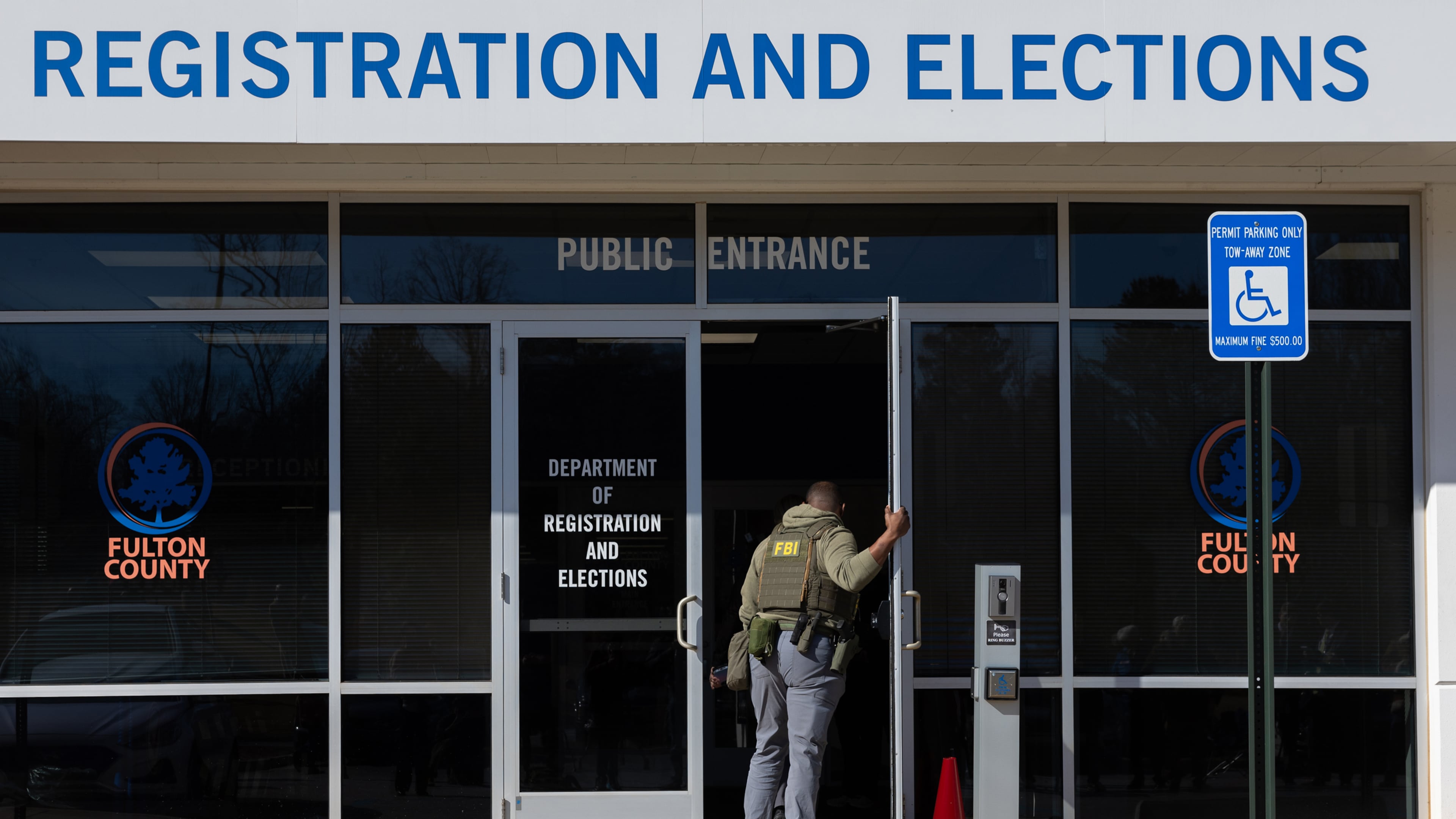
The Trump administration’s decision to “surge” hundreds of FBI analysts to examine Georgia’s 2020 election is the latest sign that the state remains central to the president’s long-running obsession with relitigating his loss to former President Joe Biden.
Critics see it as another attempt to breathe life into claims that courts, investigators and election officials have repeatedly rejected — and another corrosive attempt to undermine faith in the state’s vote.
But the move also reinforces something else: No battleground state remains as consumed by the fallout from 2020 as Georgia.
Democrats continue to organize around defending the legitimacy of the election and warning against Trumpist efforts to rewrite its history.
U.S. Sen. Jon Ossoff and Keisha Lance Bottoms, the Democratic nominee for governor, are trying to mobilize voters exhausted by the president’s push to overturn his defeat.
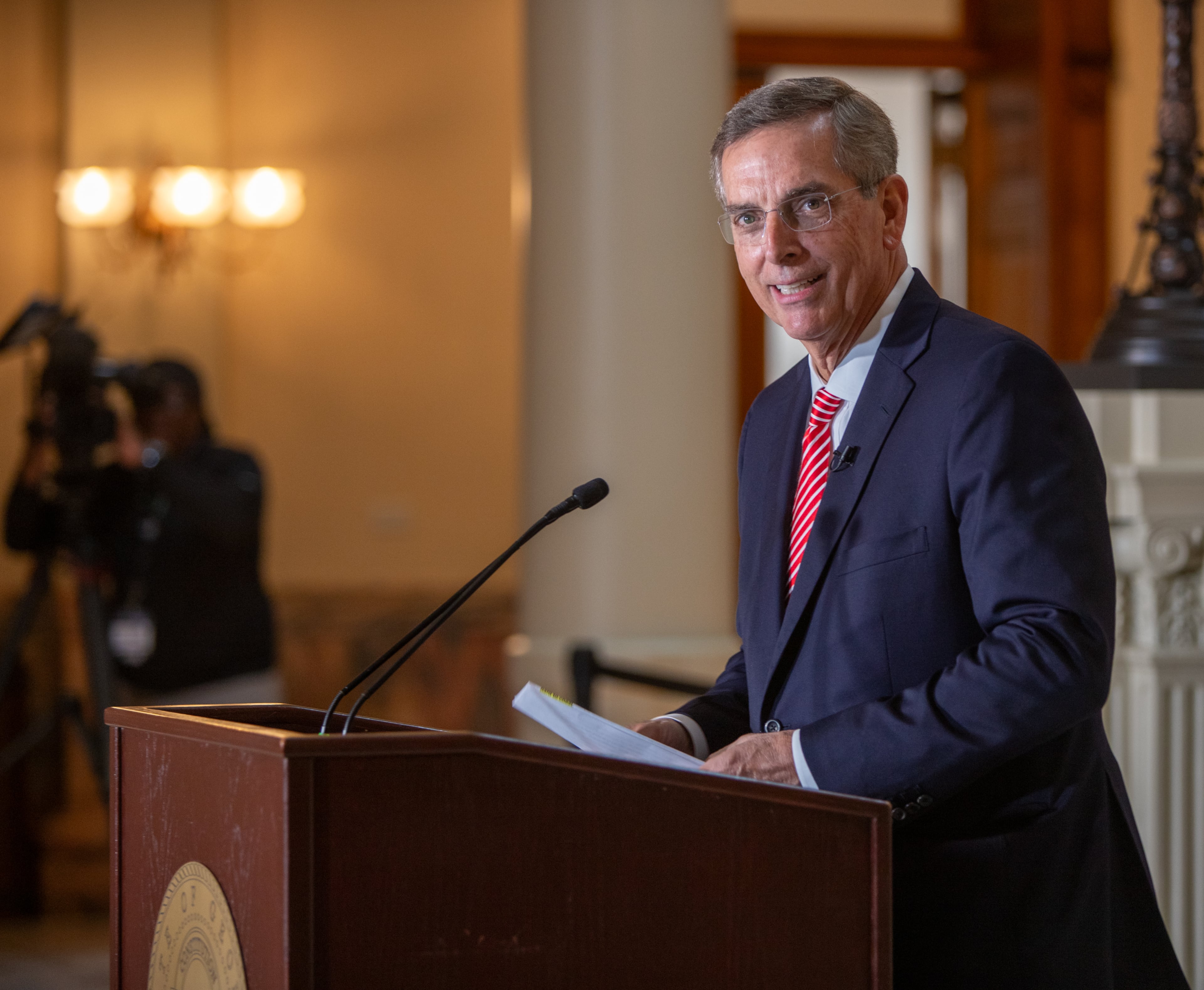
Republicans who resisted President Donald Trump’s pressure are still paying a political price. Secretary of State Brad Raffensperger lost his GOP primary for governor, still hobbled by distrust of MAGA voters for rejecting Trump’s call to “find” enough ballots to overturn his defeat.
Gov. Brian Kemp has never fully escaped the conflict, either. Years after refusing Trump’s demands over the election, he was reminded of the president’s willingness to salt old wounds when Trump swooped in with a late endorsement of U.S. Rep. Mike Collins over Kemp-backed Derek Dooley.
Collins himself continues to insist Trump won Georgia in 2020, illustrating that the election remains a litmus test inside the Republican Party.
Georgia has already begun campaigning for another closely watched election cycle. Yet one of the state’s defining political arguments continues to be the November 2020 vote.
Every new chapter, including this latest FBI “surge,” seems to circle back to the election that refuses to go away.
Things to know
Good morning! Here are three things to know for today:
- The Oglethorpe County School District paid nearly $300,000 to settle a lawsuit with a former Georgia teacher of the year finalist stemming from a social media post about the killing of conservative activist Charlie Kirk, Cassidy Alexander reports.
- Georgia has launched a new program aimed at protecting survivors of family and domestic violence by shielding their addresses from abusers, Caleb Groves reports.
- Elsie Peacock Hand has been a mayor, bank vice president, country music promoter, and longtime political aide and booster, Patricia Murphy writes. Hand turned 100 as America celebrated its 250th birthday this Fourth of July weekend.
Peachtree meets politics

The Peachtree Road Race is more than the world’s largest 10K. It’s one of the few traditions that truly unites Atlanta.
More than 50,000 runners took on the heat, hills and humidity to make their way down Peachtree Street. The course radiated patriotism as thousands of volunteers and fans cheered the runners.
And politicians, of course, joined in. Atlanta Mayor Andre Dickens officially kicked off the race, then joined a pack of supporters and staffers to traverse down the famous route.
U.S. Sen. Raphael Warnock bobbed and weaved his way through the crowd.
We also spotted state Reps. Scott Hilton and Ruwa Romman making their way down Peachtree.
Atlanta City Council members Byron Amos, Alex Wan, Matt Westmoreland, Jason Winston and Thomas Worthy all finished the course.
And so did former Atlanta City Council President Doug Shipman, a speedster who ran with his daughter as she completed the race for the first time.
Listen up

Today on the “Politically Georgia” podcast we answer your questions from the listener mailbag, including what could change in state government if Rick Jackson wins the race for governor in November.
You can listen and subscribe to “Politically Georgia” for free on Apple Podcasts, Spotify, YouTube or wherever you get your podcasts.
Have a question or comment for the show? Email us at politicallygeorgia@ajc.com or give us a call at 770-810-5297 and you could be featured on a future episode.
Special election
Early voting starts today for a special election in Georgia’s 13th Congressional District to determine who will complete the remainder of the late U.S. Rep. David Scott’s term.
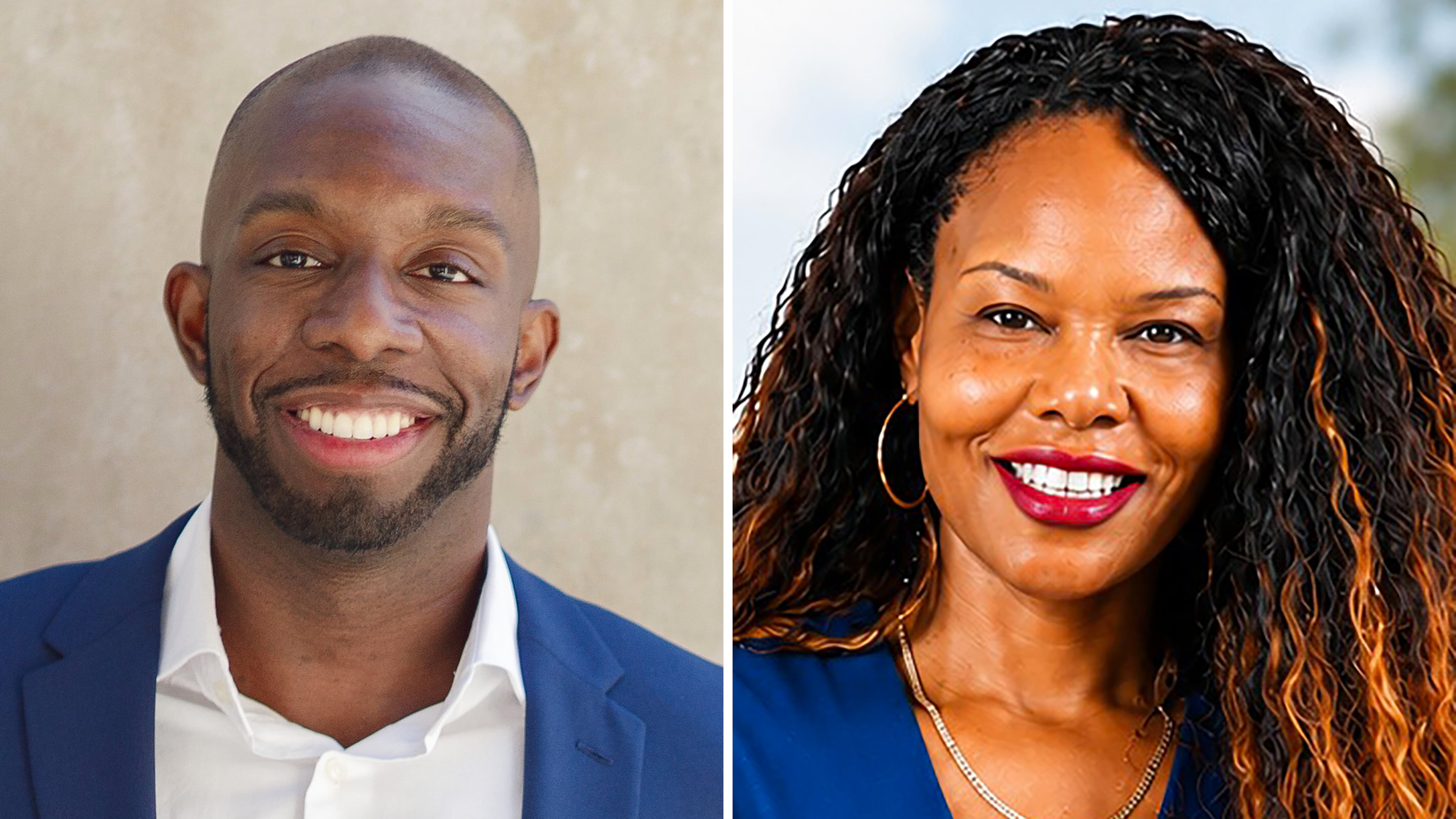
Scott’s daughter, Marcye Scott, is among the four Democrats on the ballot along with two Republicans. The other prominent Democratic candidate is former Gwinnett County School Board Chair Everton Blair, who also campaigned for a full two-year term in the seat but placed third in the May primary.
Whoever wins likely won’t be in office long. State Rep. Jasmine Clark, who won the primary for a full two-year term that starts in January, is not running in the special election. Clark is likely to coast to election in November because the district is so heavily Democratic.
Scott said she is running in the special election to tie up any lose ends left behind by her father, who died in April. Blair said he is in the race because he believes his experience holding office makes him better equipped to be effective even as a short-timer.
The election is July 28. A runoff will be Aug. 25 if none of the six candidates receive a majority of votes. Because of the limited congressional calendar during an election year, the winner of the special election is likely to only spend about nine weeks casting votes in Washington.
Challenge accepted?

We told you last week that Ossoff had challenged Collins to a series of three debates ahead of Georgia’s U.S. Senate election. Collins responded by saying he welcomes the opportunity to compare records.
“I’m glad you’ll be joining me on the debate stage to answer for sending stimulus checks to illegal immigrants, forcing men to compete against girls in sports, and supporting massive inflationary spending that drove up costs for every Georgian,” Collins wrote on X.
But while Ossoff wants three debates, so far the only faceoff confirmed by both parties is an Atlanta Press Club event. But Collins’ response indicates he might be willing to agree to more debates.
Today in Washington
- Trump will host an event launching investment accounts for children. Then, he will depart for Turkey ahead of the NATO summit.
- The House and Senate are out this week.
- Warnock will host an event in Columbus focused on workforce development.
Ad wars

The director of the agency overseeing Georgia’s foster care system said Ossoff’s latest campaign ad shows he is more talk than action.
Candice Broce, who was appointed director of the Georgia Department of Human Services by Kemp in 2021, said the senator has never shown up in person to tackle the issues the spot highlights.
Ossoff’s ad, titled “Our Kids,” highlights the Senate investigation he led into the state’s foster care system and the resulting legislation tackling child trafficking. But Broce wrote on X that his words are meaningless because the senator “is nowhere to be found” when real work is needed.
“Ossoff didn’t get more funding for DFCS after calling us incompetent and resource-strapped,” she wrote on her personal account. “He didn’t secure more federal support for child advocacy centers despite the State’s requests. He didn’t fix federal law putting group homes out of business. He hasn’t streamlined adoptions for kids placed with loving families.”
Ossoff’s team said Broce’s post fails to acknowledge the federal funding he has secured and glosses over the real shortcomings at her agency that the investigation uncovered, including “systemic failures by DFCS to protect children from sexual abuse, severe mismanagement that contributed to injuries and deaths and multiple judges testified Broce asked them to illegally incarcerate foster children.”
“While Sen. Ossoff led oversight, passed an anti-trafficking law, and helped save foster care funding President Trump cut, unqualified partisan hack Broce whines it’s Senator Ossoff’s job to fix the state agency she leads,” the Ossoff campaign said in a statement.
Shoutouts

Today’s birthday:
- Former state Sen. Valencia Seay.
Want a birthday shoutout in the Politically Georgia newsletter? There’s a form for that. It’s not just birthdays. We’re also interested in new jobs, engagements, birth announcements, etc.
Before you go

The cost of healthcare for Georgia school systems has risen “astronomically” over the past 16 years, experts say — forcing educators to make tough choices about the services they’re able to provide for students.
That’ll do it for us today. As always, you can send your best scoops, gossip and insider information to greg.bluestein@ajc.com, tia.mitchell@ajc.com, patricia.murphy@ajc.com and adam.beam@ajc.com.