Top Georgia politicians rake in cash as lawsuits that could stop them drag
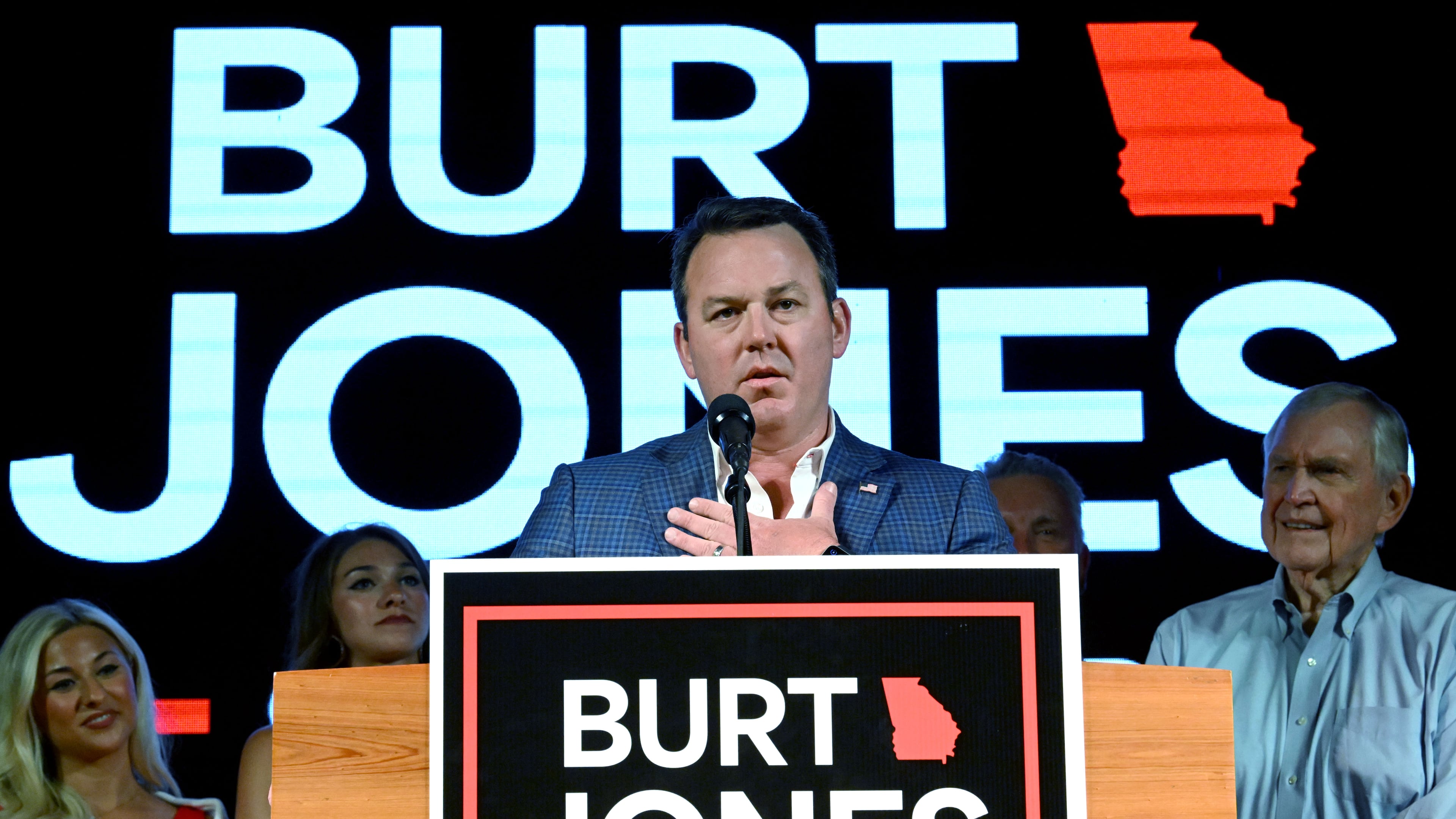

Georgia political leaders from both parties used a questionable state law to raise $6.7 million this year to position themselves and their allies to win statewide races.
Leadership committees chaired by Gov. Brian Kemp, Lt. Gov. Burt Jones and legislative leaders accepted scores of donations this year in excess of contribution limits that apply to other candidates for public office.
Jones, who finished first in a crowded Republican primary for governor last month to advance to a runoff, has raised $2.1 million so far this year through his committee. That’s the most by any of the state’s 10 leadership committees, besting Kemp’s committee by about $475,000, according to an analysis by The Atlanta Journal-Constitution.
But the legality of the fundraising advantage remains an open question. Federal judges have said the committees appear to give their beneficiaries an unconstitutional advantage over rival candidates. Three lawsuits challenging the committees — including one filed by Jones’ chief rival — are still pending.
But for now leadership committees remain a valuable tool for top politicians to influence Georgia politics and boost their own prospects as they seek higher office.
Georgia law caps contributions to political candidates to limit corruption or even the appearance of corruption. Candidates for statewide office can accept up to $8,400 from individual donors for both the primary and general elections, plus another $4,800 for runoff elections.
The law also prohibits legislators and statewide elected officials from accepting contributions during the legislative session.
But in 2021, the Republican-controlled state Legislature created leadership committees that allow certain officials to bypass contribution limits. Such committees can accept unlimited campaign cash and take donations during the legislative session. And unlike independent political committees, they aren’t required to disclose which candidates benefit from their spending.
Under the law, only the governor, lieutenant governor, the Democratic and Republican nominees for those offices and legislative leaders of both parties can create leadership committees. That gives them a powerful advantage over their political rivals.
This year, Georgia’s leadership committees accepted 132 contributions larger than the $8,400 maximum contribution permitted to statewide candidates under Georgia law. That includes 15 contributions of $100,000 or more.
The committees raised $3.1 million while the state Legislature was in session and most state lawmakers were barred from raising money. That’s up more than a third from the $2.3 million they raised during last year’s legislative session.
About 40% of the total raised during the legislative session came from Jones’ WBJ Leadership Committee. So far, it has received 56 donations this year that are greater than the maximum contribution other candidates for governor have been allowed to accept. His largest contributor: the antitax group Fighting for Georgia, which donated $526,742.
In total, Jones’ committee has raised $4 million since announcing his candidacy for governor in July. That’s in addition to his traditional campaign committee, which has raised $4.7 million and is subject to contribution limits.

Though leadership committees bestow advantages, they’re no guarantee of success.
Rick Jackson, a billionaire healthcare executive who will face Jones in a runoff for the Republican nomination for governor later this month, has spent $93 million of his own money to challenge Jones. Meanwhile, a mysterious political group has spent millions more attacking the lieutenant governor.
Jackson’s campaign accused Jones of “abusing” his leadership committee by raising unlimited cash and accepting contributions during the legislative session.
“Burt Jones thinks a level playing field and fair play are for suckers,” the campaign said.
Jackson can create his own leadership committee if he wins the Republican nomination. Keisha Lance Bottoms, who won the Democratic nomination for governor in the May 19 primary, created a leadership committee last week, records show.
A spokesperson for Jones declined to address the role of his leadership committee in the campaign. Instead, spokesperson Kayla Lott kept the focus on billionaire Jackson’s spending in a statement to the AJC.
“Rick Jackson can spend over $100 million attacking Trump-endorsed Lt. Governor Burt Jones, but no amount of money can hide Rick’s record or buy the trust of the people of this state,” she said.
While the candidates compete on the campaign trail, critics continue to argue in court that leadership committees create an unequal playing field for politicians running for the same office. Four years ago, lawyers for Republican David Perdue and Democrat Stacey Abrams won injunctions preventing Kemp’s leadership committee from raising and spending money on his behalf until after he had won the Republican nomination.
The federal judge in those cases ruled such committees were likely unconstitutional. But the plaintiffs eventually dropped their cases, so final rulings never came. Since then, several lawsuits have been unsuccessful at challenging the law.
Three federal lawsuits — one each filed by Jackson, Secretary of State Brad Raffensperger and the Libertarian and Green parties — are still pending in the 11th Circuit Court of Appeals.
Kemp has used his leadership committee to support and oppose candidates, to promote his plan to limit civil lawsuits and to threaten to back primary challenges against legislators who balked at supporting that plan, which ultimately passed last year.
Clarification
June 3, 2026This story has been edited to clarify that Lt. Gov. Burt Jones has raised $2.1 million this year through his leadership committee.