Kemp, Trump flex their political muscles days ahead of Georgia’s runoffs

Today’s newsletter highlights:
- The Georgia GOP governor’s race is one of the costliest contests in the nation, campaign finance reports confirm.
- Judge rules Brad Raffensperger doesn’t have to let anyone watch his office compile results on election night.
- A new poll from a left-leaning advocacy group says Democrats have an edge in the governor’s race.
A tale of two endorsements
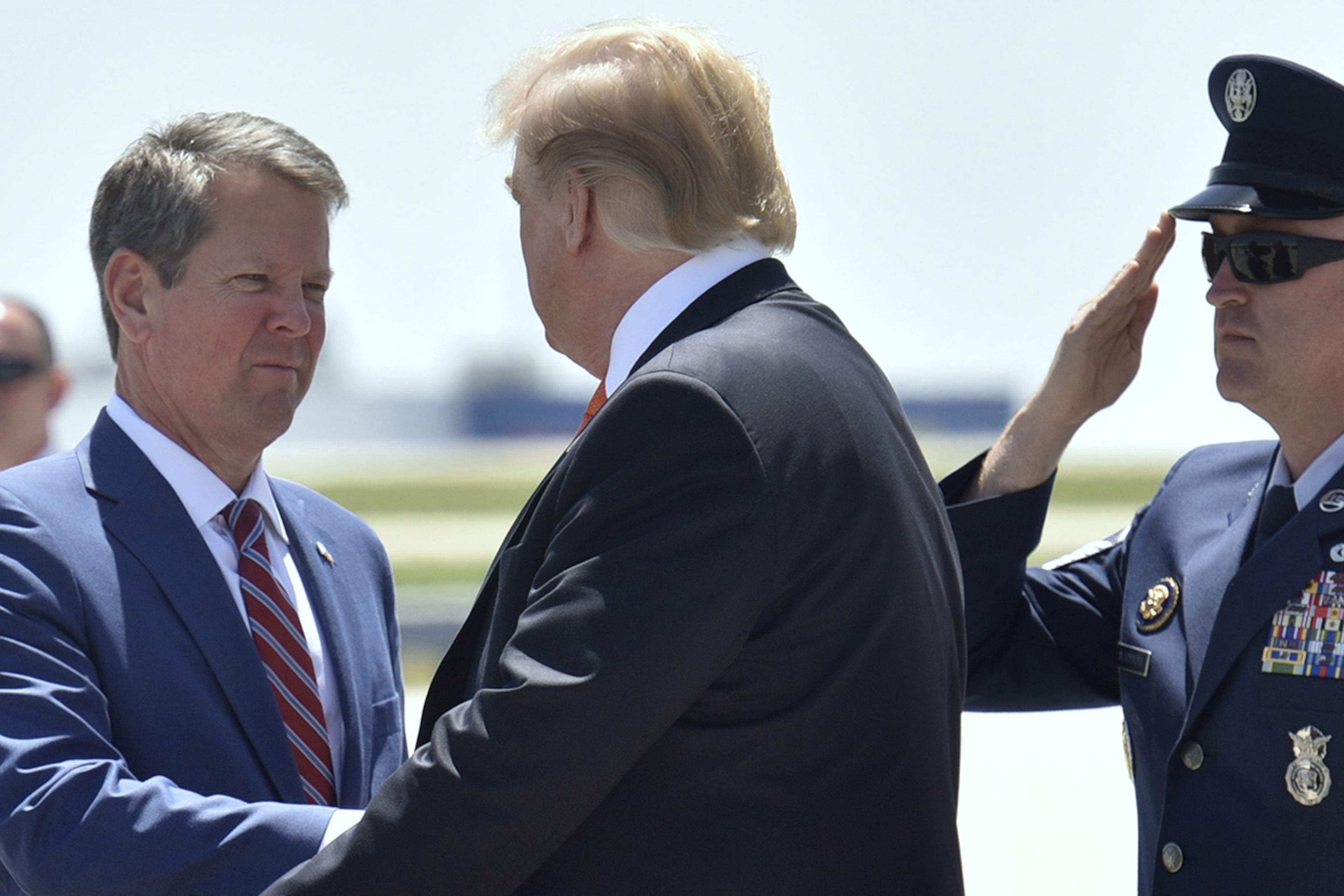
Two bombshell endorsements rocked Georgia politics just days before Tuesday’s runoff, setting up a remarkable display of power by the two Republicans with the most influence in Georgia.
The first arrived when many of you were asleep. Just before 1 a.m. Sunday, President Donald Trump endorsed U.S. Rep. Mike Collins in the Senate runoff, praising him as a “WARRIOR and WINNER” while taking a swipe at his rival, former football coach Derek Dooley.
The move wasn’t entirely unexpected. Republicans had spent months wondering whether Trump would weigh in, and he has intervened in plenty of other high-profile primaries. The surprise was the timing and the bluntness.
Then came the endorsement that truly caught Georgia politicos off guard.
At 5:23 p.m., Gov. Brian Kemp fired off a missive declaring his support for Lt. Gov. Burt Jones for governor, ending months of neutrality and stunning allies who assumed Kemp would avoid taking sides and maintain his focus on Dooley.
Taken together, the endorsements offered a snapshot of Georgia Republican politics in 2026: Trump flexing his influence in the Senate race while Kemp moved to cement his legacy in the battle over who succeeds him.
Let’s start with Kemp.
As the race tightened, many in the governor’s orbit began to view Jones as the Republican best positioned to carry forward much of Kemp’s political agenda, despite their well-documented differences.
Their relationship strained after the 2020 election, when Jones echoed Trump’s false claims of election fraud while Kemp defended the results. They’ve sparred, too, over issues such as Buckhead cityhood since Jones won Georgia’s No. 2 job.
But they’ve also spent roughly 15 years working together, mostly without friction. Jones helped advance many of Kemp’s top priorities, from tax cuts and budget initiatives to last year’s litigation overhaul. And, as Jones told us recently, the two genuinely get along. Like, really.
Kemp’s decision was easier once Trump made his move in the Senate race. Rather than tying the two contests together, Kemp was free to do what he believed was best in the governor’s race, even if it meant endorsing Jones on the same day Trump effectively undercut Kemp’s Senate candidate.
There were other factors, too. Kemp allies were frustrated by some of Rick Jackson’s campaign tactics, including advertising that implied Kemp’s support. And it wasn’t lost on anyone that several of Jackson’s top strategists orchestrated former U.S. Sen. David Perdue’s failed 2022 challenge against Kemp.
But Kemp’s allies say the broader takeaway is that Sunday’s endorsement wasn’t simply about helping Jones win a runoff. It was Kemp’s clearest signal yet about who he believes should advance the governing agenda he spent eight years building.
Now he’ll make the case that a Jones-Dooley ticket gives Republicans their strongest shot at winning in November.
As for Trump’s support of Collins, the Republican told us he was headed home after a long day of campaigning when he decided to go bush hogging. Then came a late-night call: Trump wanted to speak with him.
Not long after, the endorsement landed.
Even if Collins knew it was coming, it seemed to blindside almost everyone else. Campaign operatives from both contenders didn’t issue a response until hours after Trump’s post.
Now, the challenge for Collins is making sure MAGA loyalists who still haven’t voted hear about it.
“We will get that out. I’m not worried about that. We can get our message out to voters,” Collins said. “It’s only a couple of days, but that’s OK. We work hard at everything we do, and we feel confident that our voters are going to show up at the end of the day on Tuesday.”
Three stray thoughts:
- Will this complicate the special session? Some House Republicans are already uneasy about redrawing political boundaries during the special session that kicks off after the runoff. Does Trump’s snub of Kemp in the Senate race, followed by Kemp’s endorsement of a Senate leader many House Republicans oppose, give them more encouragement to rebel?
- Does any noncandidate have more on the line Tuesday than Kemp? If Dooley loses, Kemp’s electability argument takes a major hit. If Jones loses, Kemp will have sided with the losing candidate in the race to succeed him. If both lose, it becomes a nightmare scenario for a governor who remains broadly popular but is struggling to transfer that support to other candidates. If both win, he’s a GOP kingmaker.
- Why endorse Jones two days before the runoff? It’s fair to wonder how many votes can move in 48 hours. But Kemp’s camp is confident Jones has the juice to make sure voters know about his blessing even this late in the game. And just as he’s long argued only Dooley can beat U.S. Sen. Jon Ossoff, expect him to argue only Jones can defeat Democratic nominee Keisha Lance Bottoms.
Things to know
Good morning! Here are three things to know for today:
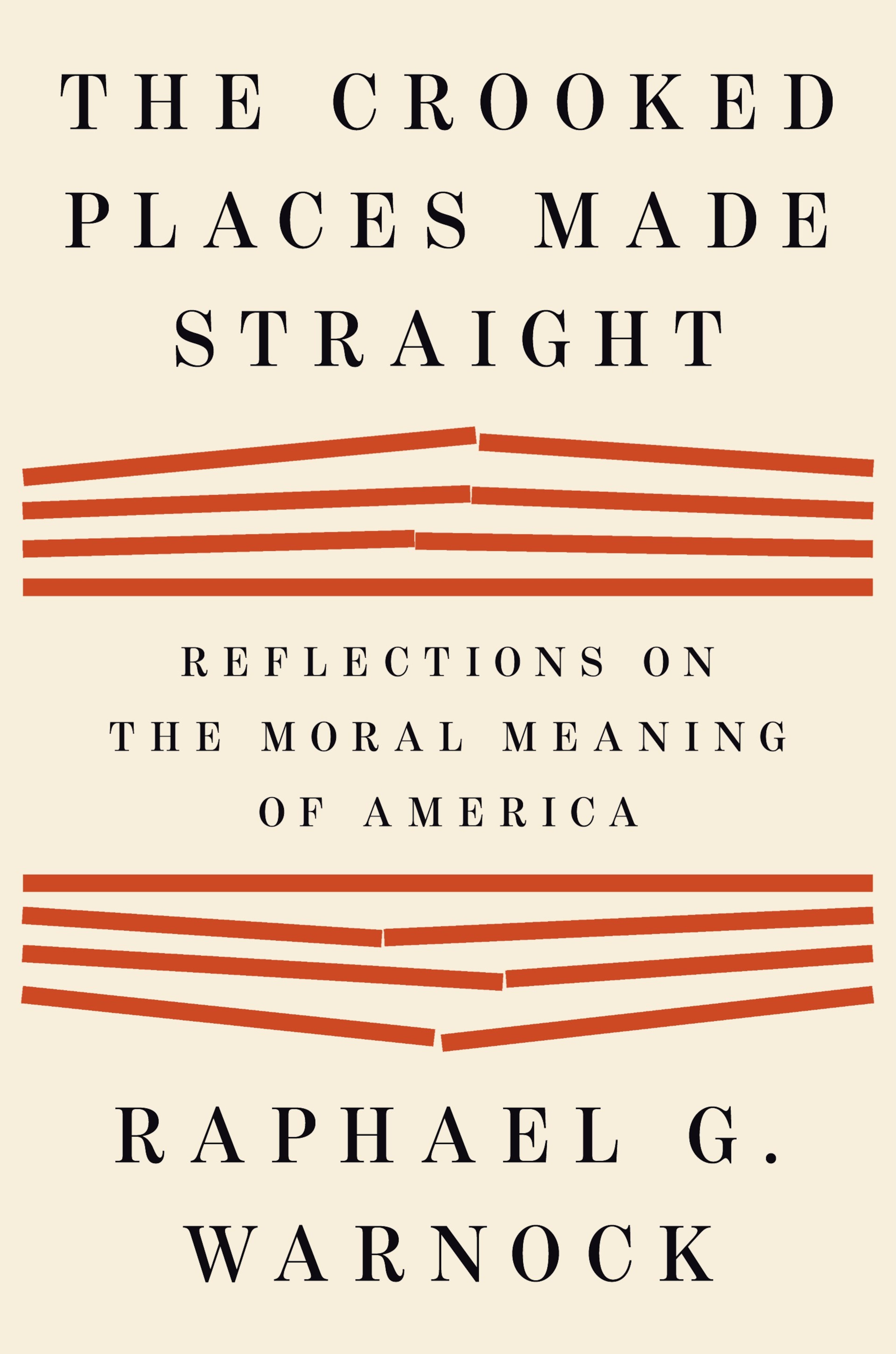
- In his new book, U.S. Sen. Raphael Warnock doesn’t just diagnose what he believes has gone wrong during Trump’s second term. He outlines a vision on what he believes will strengthen the country, Tia Mitchell reports.
- Georgia’s Congressional delegation are watching closely along with everyone else as they wait to see whether the state Legislature will redraw their districts during a special session that begins Wednesday, Mitchell reports.
- AJC politics columnist Patricia Murphy writes that Dooley lost Trump’s endorsement in part because he told the truth about the 2020 election.
Big money

The latest campaign finance reports confirm what Georgia voters have seen for months: The Republican race for governor is one of the most expensive contests in the nation.
Jackson spent another $28.5 million of his own fortune on the runoff after the May 19 primary, bringing his overall spending to roughly $107 million, most of it from his own fortune.
Jones lent his campaign another $9.6 million during the runoff, raising his personal investment to $25.6 million. His campaign has spent more than $30.7 million overall.
Add in other candidates and the total price tag for the race is roughly $160 million, according to an AdImpact analysis. That’s an astonishing sum for a primary that began with Jones as the overwhelming favorite.
Polling time

A new poll from a left-leaning advocacy group shows why Democrats hope they have an advantage no matter which Republican emerges from Tuesday’s gubernatorial runoff.
The survey, commissioned by Education Reform Now Advocacy, shows Bottoms leading Jones by 10 percentage points and Jackson by 15 points in hypothetical November matchups.
The poll found Kemp remains significantly more popular than either Trump or the two Republican candidates, who are all underwater.
The poll also offers a hint of how Democrats could try to broaden the argument beyond Trump.
Asked what elected leaders should focus on so young people are better off, 59% of voters picked reducing inflation and everyday costs. But education ranked high, too: 39% chose improving schools for success after high school, while 32% named making higher education more affordable.
Listen up

Today on the “Politically Georgia” podcast we discuss Kemp’s legacy, Trump’s grip on Georgia Republicans, and a special legislative session starting the day after the runoff.
You can listen and subscribe to “Politically Georgia” for free on Apple Podcasts, Spotify, YouTube or wherever you get your podcasts.
Have a question or comment for the show? Email us at politicallygeorgia@ajc.com or give us a call at 770-810-5297 and you could be featured on a future episode.
Tea leaves

Early voting ended Friday, and the numbers show voters in precincts that most heavily backed Jones and Collins in May are turning out at lower rates in the runoff, according to an analysis by AJC Senior Data Editor Charles Minshew.
Does that mean Dooley and Jackson are likely to win on Tuesday? Not necessarily. It’s difficult to compare the two elections. For one thing, the number of ballots cast ahead of Tuesday’s runoff are just under half the early voting totals for the May 19 primary.
Most of that drop is on the Democratic side of the runoff, where there is a 70% decrease in the number of ballots cast compared to a 30% decrease for Republican ballots. Democrats already have nominees for the top two offices on the ticket — governor and U.S. senator — and the other Democrats running in down-ticket races have less money to help boost turnout.
Republican voters account for about 64% of the ballots cast so far, compared to 41% in May. Those numbers don’t include absentee ballots, which can be accepted until polls close on Tuesday.
Today in Washington
- Trump travels to Evian-Les-Bains, France, for G7 meetings.
- The Senate will vote on more Trump nominations.
- The House is out this week.
Bunker down
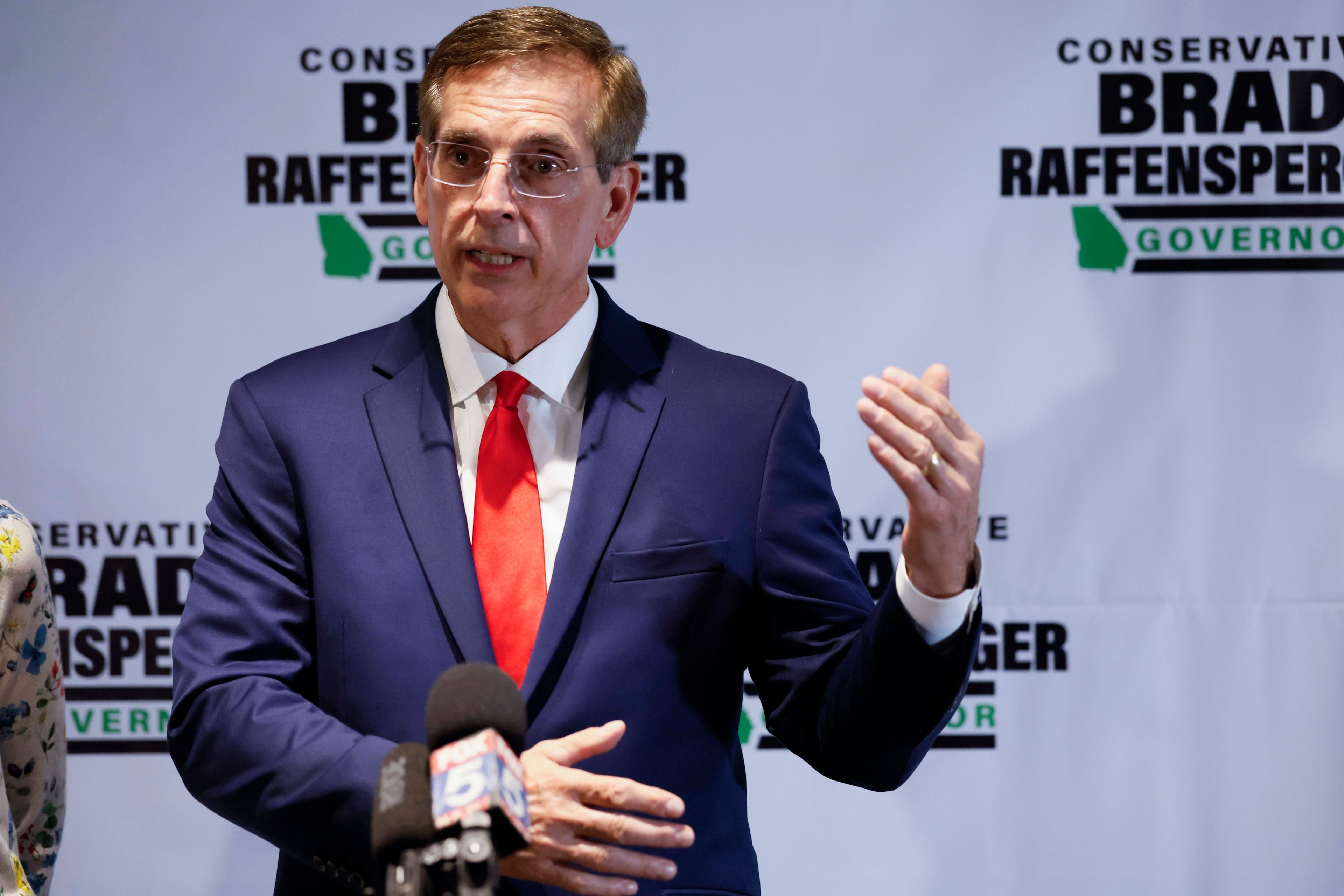
Secretary of State Brad Raffensperger can have the election night “bunker” all to himself.
A judge ruled Friday that Raffensperger is not compelled to let members of the State Election Board — or anyone else — observe his office compile results from across the state in an emergency operations center known as the “bunker.”
Vote counting happens in each of Georgia’s 159 counties. State officials receive and publish unofficial results from across the state in the bunker. The secretary of state’s office also uses the facility to monitor potential threats and other election issues.
State Sen. Greg Dolezal, a Republican running for lieutenant governor in Tuesday’s runoff races, and two other Republicans had sued to compel Raffensperger to let observers in. But Fulton County Superior Court Judge Melynee Leftridge ruled Raffensperger, a Republican, is not obligated to publish unofficial data on election night.
“The unofficial voting results received by the Secretary of State from county precincts are not certified on the day of the election,” she wrote. “In fact, such certification can occur days, if not weeks, later.”
Robert Sinners, a spokesperson for Raffensperger, praised the ruling while calling Georgia elections “the most transparent in the country.”
“Any member of the public that wishes to see the tabulation process may do so at their county election office,” he said.
Shoutouts
Today’s birthday:
- Paul W. Hamilton, a member of the Valdosta-Lowndes County Airport Authority board.
Want a birthday shoutout in the Politically Georgia newsletter? There’s a form for that. It’s not just birthdays. We’re also interested in new jobs, engagements, birth announcements, etc.
Before you go

The latest installment of the AJC’s “Risky Medicine” series explores how Georgia’s underfunded medical board does little to stop doctors who cross the line.
That’ll do it for us today. As always, you can send your best scoops, gossip and insider information to greg.bluestein@ajc.com, tia.mitchell@ajc.com, patricia.murphy@ajc.com and adam.beam@ajc.com.