Challengers jolt Georgia Supreme Court race

Today’s newsletter highlights
- Georgia Republicans believe they’ve found a workaround to lock the clocks.
- Jon Ossoff questions Tulsi Gabbard about Iran’s nuclear capabilities.
- A judge will consider whether the Georgia Republican Assembly broke ethics laws.
Bench battle

Georgia Supreme Court races are normally low-key affairs where incumbents regularly coast to reelection.
That changed overnight last month, when trial lawyer Miracle Rankin launched a challenge to Justice Charlie Bethel and former state Sen. Jen Jordan entered the race against Presiding Justice Sarah Hawkins Warren. Their candidacies jolted Georgia’s legal world and injected rare ideological stakes into a nonpartisan contest.
Now Bethel is responding with a familiar playbook as he gears up for a competitive race.
The incumbent justice is rolling out a bipartisan steering committee stacked with heavyweights from both parties and across the legal establishment. It’s an early sign that Bethel, a former GOP state senator, won’t frame the race as a political fight but instead a referendum on experience, independence and the rule of law.
The roster underscores that approach. It includes former Republican Gov. Nathan Deal, who appointed Bethel to the bench; former Chief Justice Harold Melton; and Democrat Jason Carter, the party’s 2014 gubernatorial nominee and Bethel’s former colleague in the Georgia Senate.
They’re joined by former U.S. Attorney BJay Pak, former Fulton County Attorney Patrise Perkins-Hooker, past State Bar of Georgia president Robin Frazer Clark and defense attorney Ashleigh Merchant.
Things to know

Good morning! The Georgia House on Wednesday voted to suspend the state gas tax for 60 days as prices spike amid the war in Iran. The measure is now in the state Senate.
Here are three other things to know for today
- Plenty of national Democrats are willing to campaign for Shawn Harris in his quest for Congress in northwest Georgia. The challenge is deciding which ones won’t hurt him, writes Greg Bluestein.
- DeKalb County officials’ plan to build a public safety training center could spark a familiar fight, the AJC’s Caroline Silva reports.
- An agreement halting the executions of nine Georgia inmates on death row during the coronavirus pandemic shouldn’t keep them alive anymore, the state’s solicitor general argued Wednesday to the Georgia Supreme Court, the AJC’s Rosie Manins reports.
About time?

Georgia lawmakers have spent years trying to lock the clocks. Now some Republicans think they’ve found a workaround.
State Sen. Bo Hatchett, R-Cornelia, is pushing legislation that would shift Georgia one time zone east — from Eastern to Atlantic Standard Time — a move that would effectively keep the state on daylight saving time year-round without waiting on Congress.
“It’s the only way to keep Georgia sprung forward year-round without having to get congressional approval,” Hatchett told us last night after advancing the measure through the Senate Health and Human Services Committee.
The maneuver exploits a quirk in federal law. While states need congressional approval to adopt permanent daylight saving time, they can petition the U.S. Department of Transportation to change time zones.
Georgia already tried the more direct route. In 2021, Gov. Brian Kemp signed legislation to make daylight saving time permanent, but only if Congress first lifts a federal ban.
Lawmakers overwhelmingly backed that approach, arguing it would end the twice-a-year clock changes blamed for sleep disruption, health issues and even traffic accidents.
But Congress never acted. Now, with Washington stalled, Hatchett and his allies are revisiting the issue with a more creative fix.
It could get a Georgia Senate vote within days.
Saved by the bell

U.S. Sen. Jon Ossoff had about seven minutes Wednesday to question National Security Director Tulsi Gabbard. But his most pointed inquiries about the FBI raid of Fulton County’s election warehouse were cut for time.
Ossoff, who is running for reelection this year, chose to spend the bulk of his time poking holes in the Trump administration’s justification for attacking Iran. He noted Gabbard’s opening statement said Iran’s nuclear program “was obliterated” by a U.S. strike last summer. Why, he asked, did the White House say it had attacked Iran this year to “eliminate the imminent nuclear threat posed by the Iranian regime?”
Gabbard said the intelligence community determined Iran “maintained the intention” to rebuild its nuclear program.
“The only person who can determine what is and is not an imminent threat is the president,” Gabbard said.
“False,” Ossoff replied, adding: “You’re evading a question because to provide a candid response to the committee would contradict a statement from the White House.”
Ossoff then tried to ask Gabbard if she had seen any ballots when she attended the FBI’s Fulton County raid in January. But Committee Chair U.S. Sen. Tom Cotton cut him off, telling him he was out of time.
Both sides

Chris Carr has made ethics laws a focus of his campaign for governor. Now, the Republican attorney general is trying to stress that his commitment extends across party lines.
Carr on Wednesday announced a state administrative judge next month will consider whether the Georgia Republican Assembly — a conservative political group — and its affiliated political action committee violated campaign finance laws.
The State Ethics Commission has accused the groups of failing to disclose more than $180,000 in campaign contributions, failing to file disclosure reports and failing to properly register as an independent committee. A hearing is set for April 22.
Carr’s office is representing the commission. He likened the case to violations committed by the New Georgia Project, the group founded by Democrat Stacey Abrams that agreed to pay a record $300,000 fine last year.
“When New Georgia Project failed to follow campaign finance laws, we took action — resulting in the largest ethics fine in state history. This is no different,” Carr said. “Anyone who abuses the system, no matter their political affiliation, will be held accountable.”
The investigation of the Georgia Republican Assembly stems from last year’s collapse of First Liberty Building & Loan, founded by Republican activist Brant Frost IV. Frost’s son is closely linked to the Georgia Republican Assembly PAC.
Micro macro

Welcome to the microsite primary — where campaigns are building entire digital ecosystems to tear each other down.
With two months until the May 19 primary, Democrats are rolling out a new digital front in the GOP Senate race.
The Democratic Party of Georgia launched georgiagopfacts.com to target the Republican field — U.S. Reps. Buddy Carter and Mike Collins, along with former coach Derek Dooley — casting them as too extreme as they jockey to take on Ossoff.
The site is designed as a one-stop shop to catalog their records and policy positions, part of a broader effort to define the GOP contenders early.
Republicans aren’t sitting still. Collins’ campaign launched its own microsite aimed squarely at Dooley, adding to a growing web of attack pages already targeting Geoff Duncan, Rick Jackson and Burt Jones.
Under the Gold Dome

It’s Day 34 of the legislative session. Some happenings:
- 10 a.m.: House convenes.
- 10 a.m.: Senate convenes.
- 1 p.m.: House Education Committee meets to consider Senate Bill 513, which would allow state officials to withhold driver’s licenses from chronically absent students.
- 1 p.m.: House Ways and Means Committee meets to discuss Senate Bill 382, which would make the statewide base year homestead exemption mandatory for all local governments.
- 1 p.m.: House Judiciary Committee meets to consider Senate Bill 542, which would permit clergy members to be charged with certain improper sexual contact offenses.
- 2 p.m.: Senate Subcommittee on Government Oversight meets to consider House Bill 689, which would establish a homelessness prevention program.
Listen up

Today on the “Politically Georgia” podcast we break down the rapidly intensifying Republican primary for Georgia governor, including Jackson’s massive ad spending and the effect it’s having on races up and down the ballot.
You can listen and subscribe to “Politically Georgia” for free on Apple Podcasts, Spotify or wherever you get your podcasts.
Have a question or comment for the show? Email us at politicallygeorgia@ajc.com or give us a call at 770-810-5297 and you could be featured on a future episode.
Tribute to David Scott

The House Agriculture Committee on Tuesday passed its version of the farm bill, and it included an amendment to rename a funding program for historically Black colleges and universities after U.S. Rep. David Scott, one of its primary champions.
The amendment was introduced by Agriculture Committee Chair Glenn “GT” Thompson, a Republican from Pennsylvania, and approved on a voice vote. U.S. Rep. Austin Scott, a Tifton Republican who is also on the committee, said the renaming is a fitting tribute to Scott, who was so passionate about the initiative.
“The State of Georgia has benefited from his work on many issues, and in particular his work on behalf of historically Black colleges and universities,” Austin Scott said. “Naming the 1890 Scholars program after Chairman David Scott not only honors his years of service, but cements his legacy as a champion of HBCUs in Congress.”
The 1890 program provides federal support to 19 land-grant HBCUs, including Fort Valley State in Georgia and Florida A&M University, David Scott’s alma mater. The money will be used to help educate and train future workers in agriculture industries. Under the new farm bill, the initiative will be renamed the David A. Scott Scholarship Program for Students at 1890 Institutions.
David Scott, an Atlanta Democrat, is running for reelection. But age and health problems have slowed him down considerably. He is facing a tough primary with challengers who say it’s time for a fresh face in his seat.
Today in Washington
- President Donald Trump will meet at the White House with Sanae Takaichi, the prime minister of Japan.
- The House will vote on legislation that would allow the deportation of immigrants convicted of harming a police dog or other animals used in law enforcement.
- The Senate continues debate on the Republican-backed SAVE America Act overhauling federal elections.
- Gabbard, FBI Director Kash Patel, CIA Director John Ratcliffe and others will testify at a House Intelligence Committee hearing on national security and the war with Iran.
- The Senate Homeland Security Committee will debate the nomination of Sen. Markwayne Mullin to serve as the next Homeland Security secretary.
Correction
Yesterday’s newsletter should have said there are 47 members of the U.S. Senate Democratic Caucus.
Shoutout

Today’s birthday:
- State Rep. Viola Davis, D-Stone Mountain.
Want a birthday shoutout in the Politically Georgia newsletter? There’s a form for that. It’s not just birthdays. We’re also interested in new jobs, engagements, birth announcements, etc.
Before you go

U.S. Rep. Andrew Clyde, R-Athens, delivered a brief speech on the House floor Wednesday in tribute to Hall County math teacher Jason Hughes, who was killed in an accident during a senior prank.
That’ll do it for us today. As always, you can send your best scoops, gossip and insider information to greg.bluestein@ajc.com, tia.mitchell@ajc.com, patricia.murphy@ajc.com and adam.beam@ajc.com.
About the Authors
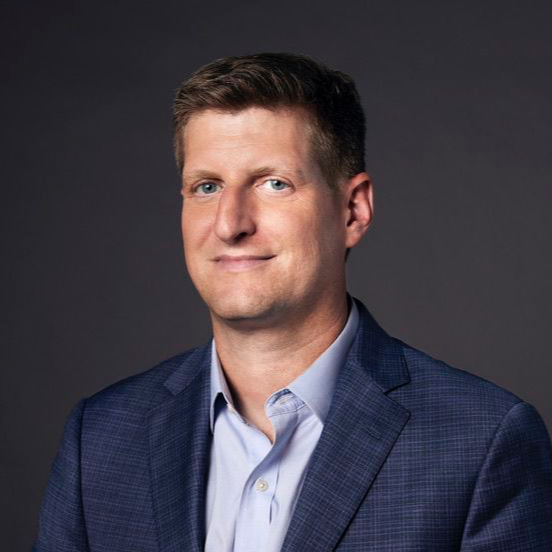
Greg Bluestein is the Atlanta Journal Constitution's chief political reporter. He is also an author, TV analyst and co-host of the Politically Georgia podcast.

Tia Mitchell is the AJC’s Washington Bureau Chief and a co-host of the "Politically Georgia" podcast. She writes about Georgia’s congressional delegation, campaigns, elections and the impact that decisions made in D.C. have on residents of the Peach State.
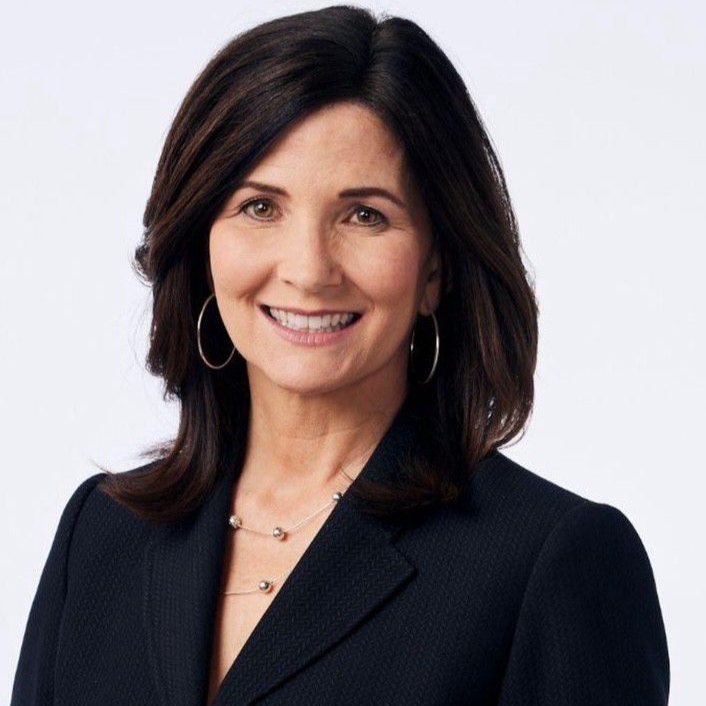
Patricia Murphy is the AJC's senior political columnist. She was previously a nationally syndicated columnist for CQ Roll Call, national political reporter for the Daily Beast and Politics Daily, and wrote for The Washington Post and Garden & Gun. She graduated from Vanderbilt and holds a master’s degree in journalism from Columbia University.

More Stories
The Latest


