America at 250: Let’s renew our tradition of service and volunteerism
America has now marked the 250th anniversary of the Declaration of Independence — a remarkable milestone for a nation founded not on ethnicity, religion, geography or royal bloodline, but on an idea: that all people are created equal, endowed with unalienable rights and capable of governing themselves.
That idea was revolutionary in 1776. It remains extraordinary today.
But ideas alone do not build nations. People do. And for 250 years, what has made America exceptional is not simply what we declared, but what we have done — together.
From the earliest settlers who survived because neighbors shared what little they had, to the citizen-soldiers who secured our independence, to generations of Americans who answered the call during times of war, disaster and need, service to something larger than oneself has been part of the American story from the very beginning.
As we begin our nation’s next 250 years, we should do more than celebrate our history. We should recommit ourselves to one of the enduring values that has sustained America for 2½ centuries: service to others.
Bush’s ‘points of light’ challenges us to do better
President George H.W. Bush captured this spirit when he spoke of America as a “thousand points of light” — ordinary citizens performing extraordinary acts of service in their communities. More than three decades later, that vision remains as relevant as ever.
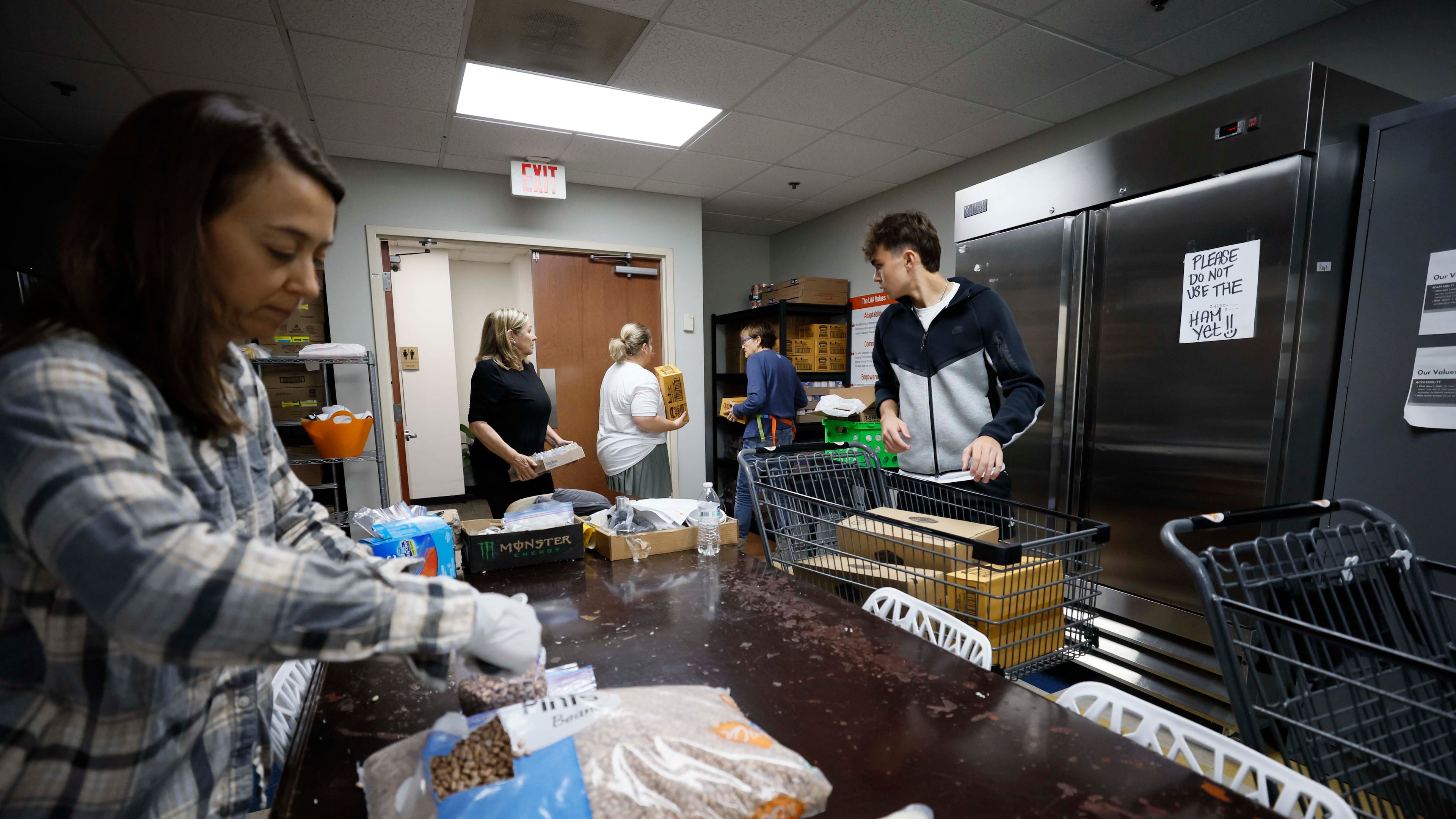
Every day, Americans volunteer in schools, food banks, houses of worship, community centers, hospitals and disaster recovery efforts. They mentor children, care for veterans, support seniors, rebuild neighborhoods and strengthen communities. They remind us that citizenship is not merely something we possess; it is something we practice.
My own appreciation for service has been shaped by experiences spanning both government and the nonprofit sector. Early in my career, I served at the Peace Corps during one of the most consequential moments in modern history.
As the Berlin Wall fell and Eastern Europe emerged from decades of Communist rule, I witnessed the deployment of some of the first Peace Corps volunteers to the region. Those volunteers were not diplomats or soldiers. They were Americans sharing skills, building relationships and helping strengthen civil society in newly emerging democracies.
It was a powerful reminder that service is one of America’s most effective exports.
Years later, I had the privilege of serving on the board of the Corporation for National and Community Service, the federal agency that oversaw AmeriCorps and helped provide the infrastructure and resources supporting organizations such as Teach For America, City Year, Habitat for Humanity and hundreds of other nonprofits serving communities across our nation.
Today, I serve as vice chair of the board of Points of Light, the world’s largest organization dedicated to volunteer service. In each of these roles, I have seen firsthand how service changes lives — not only for those receiving help, but for those providing it.
I have also witnessed something else: Service brings people together.

Volunteerism helps us and connects us
At a time when our nation often seems defined by division, service remains one of the few endeavors that consistently transcends politics.
A volunteer helping rebuild homes after a hurricane rarely asks whether the family receiving assistance is Republican or Democrat. A mentor helping a struggling student does not inquire about political affiliation. Service focuses us on what unites us rather than what separates us.
The opportunities to serve are as diverse as America itself. Some Americans wear the uniform of our armed forces. Others serve through the Peace Corps, AmeriCorps-supported organizations or one of the thousands of nonprofits strengthening communities every day.
While the pathways differ, they share a common purpose: helping others and strengthening the nation.
As artificial intelligence reshapes the economy, the skills that make us uniquely human — leadership, communication, empathy, teamwork, judgment and adaptability — will become even more valuable. Service helps cultivate those skills while giving young people a sense of purpose and connection that no technology can provide.
Service is not a detour from preparing for the future. For many young people, it may be one of the best ways to prepare for it.
Volunteerism also addresses another challenge facing our country: growing social isolation.
In a society where too many people feel disconnected from one another, service creates relationships builds trust, and strengthens communities. It reminds us that we are part of something larger than ourselves.
That is why Points of Light has set an ambitious goal of helping double volunteerism in America over the coming decade. At a time when many Americans are concerned about polarization and declining civic engagement, volunteerism offers something increasingly rare: an opportunity to work side by side with people whose backgrounds and viewpoints may differ from our own while pursuing a common purpose.
America has a unique heritage of civic engagement
America at 250 essays: Read more from Georgians celebrating Independence Day
In May, the AJC started publishing publishing Opinion essays to commemorate the 250th anniversary of the United States’ Declaration of Independence.
- America at 250: Georgia cities like Eatonton restore our faith in democracy (By AJC Opinion Editor David Plazas)
- America at 250: Celebrate independence by remembering the ladies of Georgia (Margaret E. Holt of Watkinsville, Suzanne M. Minarcine of Macon, Madeline Van Dyck of Athens and Marilyn Vickers of Athens
- America at 250: Civic hygiene can save election integrity in Ga. and beyond (Lori Ringhand, UGA law professor and author of “We the Voters”)
- America at 250: Dr. King’s Prince Hall reminds us to honor the whole story (Carrie Besnette Hauser and Phillip June, Trust for Public Land)
- America at 250: KKK granite from Georgia built U.S. Treasury. Trump wants you to forget that. (Bethany Luchetta, a Daughter of the American Revolution)
- America at 250: Georgians put aside political differences for one night (Keith Strigaro, Georgia Historical Society)
- America at 250: My immigrant clients believe in U.S. system. We should too. (Mills Fleming, immigration attorney in Savannah)
- America at 250: Adams, Jefferson disagreed to the end on Revolution’s meaning (Marianne Holdzkom, Kennesaw State University professor)
- America at 250: Thanks to civics educators for forming the nation’s future (David Bobb, president and CEO, Bill of Rights Institute)
- America at 250: How to live the ‘Georgia Way’ as a discipline for public life (Chris Clark, CEO, Georgia Chamber of Commerce)
- America at 250: First-generation Americans lean into their parents’ cultures (AJC Photojournalist Arvin Temkar)
- America at 250: Atlanta created the model for civil rights and prosperity (John Hope Bryant, CEO of the Operation HOPE)
- America at 250: Celebrating 2-1/2 centuries of disagreeing about our democracy (Page Alexander, CEO, The Carter Center)
- America at 250: Expand who is seen, who is heard and who has opportunity (By Margaret Mitchell, CEO of YWCA USA, and Danita V. Knight, CEO of YWCA Greater Atlanta)
- America at 250: Was slavery wrong? Museums must now answer that question. (Yaba Baker, a fourth-generation grandson of David Drake, aka Dave the Potter)
As America embarks on its next 250 years, we have a unique opportunity to renew that spirit.
Imagine if every American dedicated just a few hours each month to helping others. Imagine if every young person graduated from high school having participated in meaningful community service. Imagine if more businesses encouraged employees to volunteer and more communities expanded opportunities for civic engagement.
The impact would be profound.
The story of America has never been solely about what government does for its citizens. It is also about what citizens do for one another. Alexis de Tocqueville recognized this nearly two centuries ago when he observed America’s unique capacity for voluntary association and civic engagement. It remains one of our nation’s greatest strengths.
The founders pledged their lives, their fortunes and their sacred honor to the proposition that a better future was possible. They did not do it alone. They did it together.
Two hundred and fifty years later, together is still the only way.
There could be no more fitting way to begin America’s next chapter than with a renewed commitment to service, volunteerism and strengthening the communities we call home.
Eric Tanenblatt is global chair of public policy and regulation at Dentons, vice chair of the Board of Points of Light and a former board member of the Corporation for National and Community Service. He previously served in the administration of three U.S. presidents, as senior adviser to former U.S. Sen. Paul Coverdell and as chief of staff to Georgia Gov. Sonny Perdue.
Send letters to the editor of 250 words or fewer with your name, city or town and contact information to letters@ajc.com.