America at 250: Atlanta created the model for civil rights and prosperity
This Independence Day, the nation turns 250 years old. We will celebrate a country that has done something no other has done at this scale: written down the idea that all of us are created equal, and then spent two and a half centuries arguing, bleeding and climbing our way toward living up to it. America is the world’s greatest idea.
I love this country enough to tell it the truth. And the truth is that we have confused symbolic progress with economic progress for too long. One gives you a seat at the table. The other lets you pay for the meal.
Look at the markets this summer. The S&P 500 has set record after record, crossing 7,600 for the first time, climbing to new highs more than 20 times this year alone. Headlines call it a boom. And it is — for some. The question I want Atlanta to sit with over the holiday is simple: a boom for whom?
Most Americans don’t build wealth by trading stocks. They build it slowly, through a 401(k), a pension fund, a home. But the gap is stark: Roughly 70% of white adults own stock in some form; for Black adults, it’s closer to half. White households hold about 87% of all the stock in this country. For every $100 in wealth a white family has, a Black family has roughly $15.
Homeownership tells the same story, and this is where Atlanta has something to teach the nation. Nationwide, Black homeownership sits near 44% — almost exactly where it was in 1968, when housing discrimination was still legal. But here at home, metro Atlanta leads every major market in America, with a Black homeownership rate above 55%, the highest in the country.
Here’s the unfinished business of the freedom movement
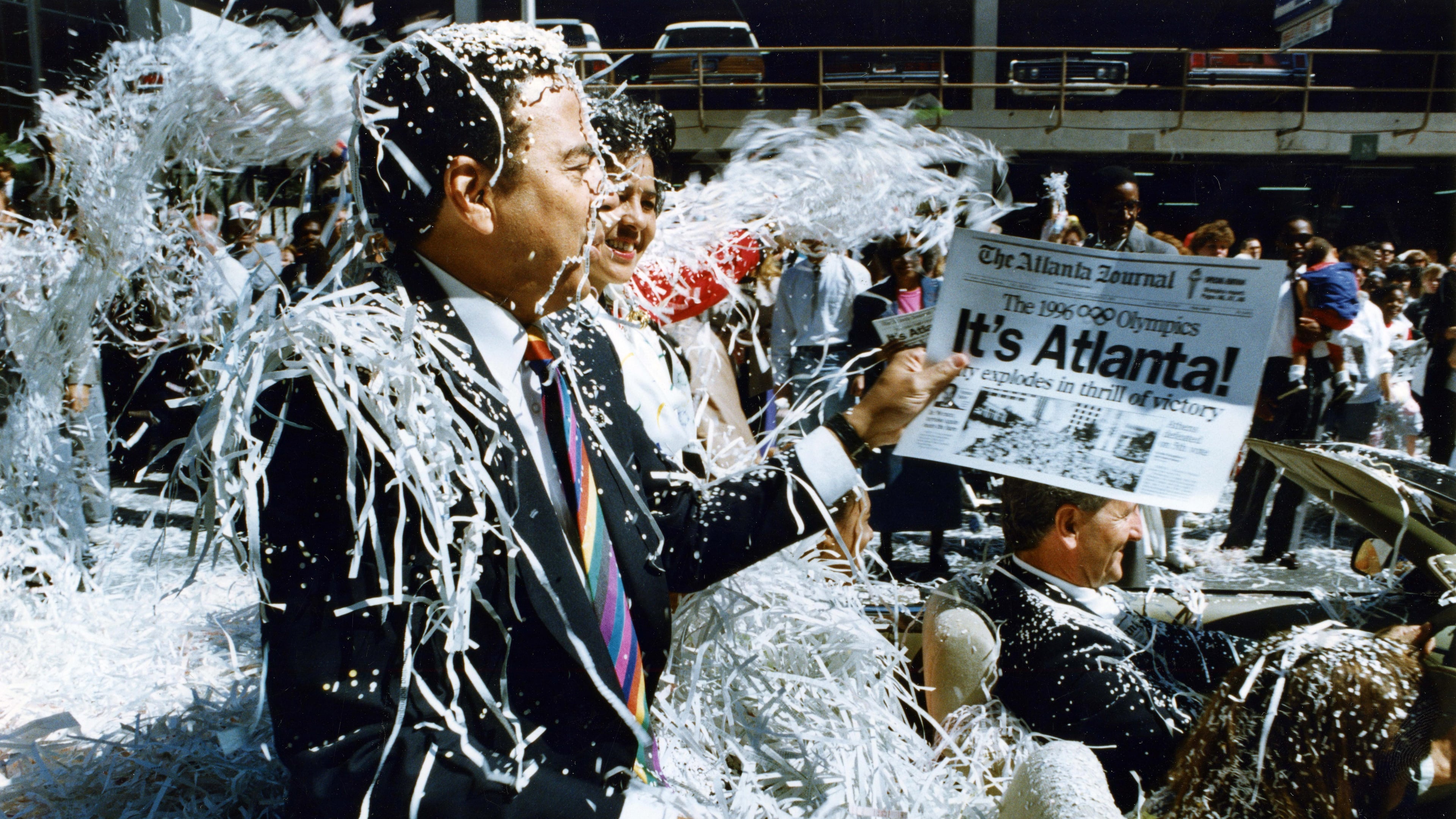
That is not an accident. I think often of the man who proved it could be done. When Andrew Young left Dr. Martin Luther King Jr.’s side in 1968 — after Memphis, after the balcony, after the funeral train — he could have spent the rest of his life as a custodian of the movement’s memory. Instead he ran for Congress, became America’s ambassador to the United Nations, and then came home in 1981 to do something almost no one expected of a civil rights preacher: run a city like closing a deal.
As mayor, he went to Wall Street, to Tokyo, to Frankfurt, and sold the world on a Black-led Southern city, helping draw in tens of billions of dollars in private investment and over a thousand new businesses. He took the moral capital King built and converted it into actual capital. Recalling how the city financed its airport without a dollar from Washington, Young put it plainly: “We went to Wall Street. It’s integrating business and politics.”
That is the dividend of a city that decided its diversity was not a problem to be managed, but an asset to be invested in. Atlanta built Black colleges, Black banks, Black businesses and a Black middle class, then put them to work alongside everyone else — and turned itself into the only truly international city the traditional South has ever produced. It’s home to the world’s busiest airport, host of an Olympics, anchor of a metro economy that today tops $604 billion, according to the U.S. Bureau of Economic Analysis — among the 10 largest in the country, and larger than the national economy of Singapore. Our diversity didn’t slow this economy down. It is the engine.
This is the unfinished business of the freedom movement. When Dr. King was killed, he was in Memphis standing with sanitation workers over wages, planning a Poor People’s Campaign over economic justice — asking what it profits a man to win the right to sit at the counter if he cannot afford the meal. Civil rights got us the vote and the seat. What I call the silver rights movement is about the dollar — financial literacy, ownership, access and participation. Young’s career is the proof of concept: he took King’s “what” and built the “how.”

This is what closes the race and class gaps
America at 250 essays: Read more from Georgians celebrating Independence Day
In May, the AJC started publishing publishing Opinion essays to commemorate the 250th anniversary of the United States’ Declaration of Independence.
- America at 250: Georgia cities like Eatonton restore our faith in democracy (By AJC Opinion Editor David Plazas)
- America at 250: Celebrate independence by remembering the ladies of Georgia (Margaret E. Holt of Watkinsville, Suzanne M. Minarcine of Macon, Madeline Van Dyck of Athens and Marilyn Vickers of Athens
- America at 250: Civic hygiene can save election integrity in Ga. and beyond (Lori Ringhand, UGA law professor and author of “We the Voters”)
- America at 250: Dr. King’s Prince Hall reminds us to honor the whole story (Carrie Besnette Hauser and Phillip June, Trust for Public Land)
- America at 250: KKK granite from Georgia built U.S. Treasury. Trump wants you to forget that. (Bethany Luchetta, a Daughter of the American Revolution)
- America at 250: Georgians put aside political differences for one night (Keith Strigaro, Georgia Historical Society)
- America at 250: My immigrant clients believe in U.S. system. We should too. (Mills Fleming, immigration attorney in Savannah)
- America at 250: Adams, Jefferson disagreed to the end on Revolution’s meaning (Marianne Holdzkom, Kennesaw State University professor)
- America at 250: Thanks to civics educators for forming the nation’s future (David Bobb, president and CEO, Bill of Rights Institute)
- America at 250: How to live the ‘Georgia Way’ as a discipline for public life (Chris Clark, CEO, Georgia Chamber of Commerce)
- America at 250: First-generation Americans lean into their parents’ cultures (AJC Photojournalist Arvin Temkar)
- America at 250: Atlanta created the model for civil rights and prosperity (John Hope Bryant, CEO of the Operation HOPE)
- America at 250: Celebrating 2-1/2 centuries of disagreeing about our democracy (Page Alexander, CEO, The Carter Center)
- America at 250: Expand who is seen, who is heard and who has opportunity (By Margaret Mitchell, CEO of YWCA USA, and Danita V. Knight, CEO of YWCA Greater Atlanta)
- America at 250: Was slavery wrong? Museums must now answer that question. (Yaba Baker, a fourth-generation grandson of David Drake, aka Dave the Potter)
But here is the harder truth Atlanta now has to face. The dividing line in this city is no longer only the one Dr. King and Andrew Young spent their lives fighting. Increasingly, it is class. Walk from one MARTA stop to another and life expectancy can swing by a decade or more, regardless of who you are or what you look like.
A child’s ZIP code now predicts more about their future earnings and their odds of ever owning a home than almost any other factor — and that line cuts through Black neighborhoods and white ones, old Atlanta and new exurban Atlanta alike. Some of the same families who broke the housing barrier in the 1970s now watch their grandchildren priced out of the very neighborhoods their parents integrated, while newcomers of every background arrive in the exurbs with no on-ramp to the ladder Atlanta built. Race opened the door. Class now decides who can afford to walk through it.
What closes both gaps is not charity, and it is not magic. It is four things:
- Access to capital
- Real participation in markets
- Financial literacy, taught like reading
- A clear ladder into homeownership
Where those show up, the gap shrinks, for poor families of every color. Where they don’t, it grows. Atlanta is proof of the first half of that sentence. Closing the class gap is proof we still owe the city.
We are in a global competition for the future, and no one wins it with a third of their team on the sidelines, whatever their race or ZIP code. A country that wants to lead the world has to upgrade who gets to participate in its own economy. That is not a favor to the underrepresented; it is national strategy. Two hundred fifty years ago, the founders wrote that they were forming “a more perfect union.” Not a perfect one — a more perfect one. They built the verb “forming” into the sentence on purpose. Andrew Young understood that the verb meant work, not just witness.
So, this Fourth of July, by all means, celebrate. As Atlantans, we have more than earned it — we built the model. But somewhere between the cookout and the fireworks, ask the harder question this city is still answering: not just how free we have become, but how free we still intend to make one another, across every line that still divides us, including the newest one: class.
That is the freedom worth another 250 years.
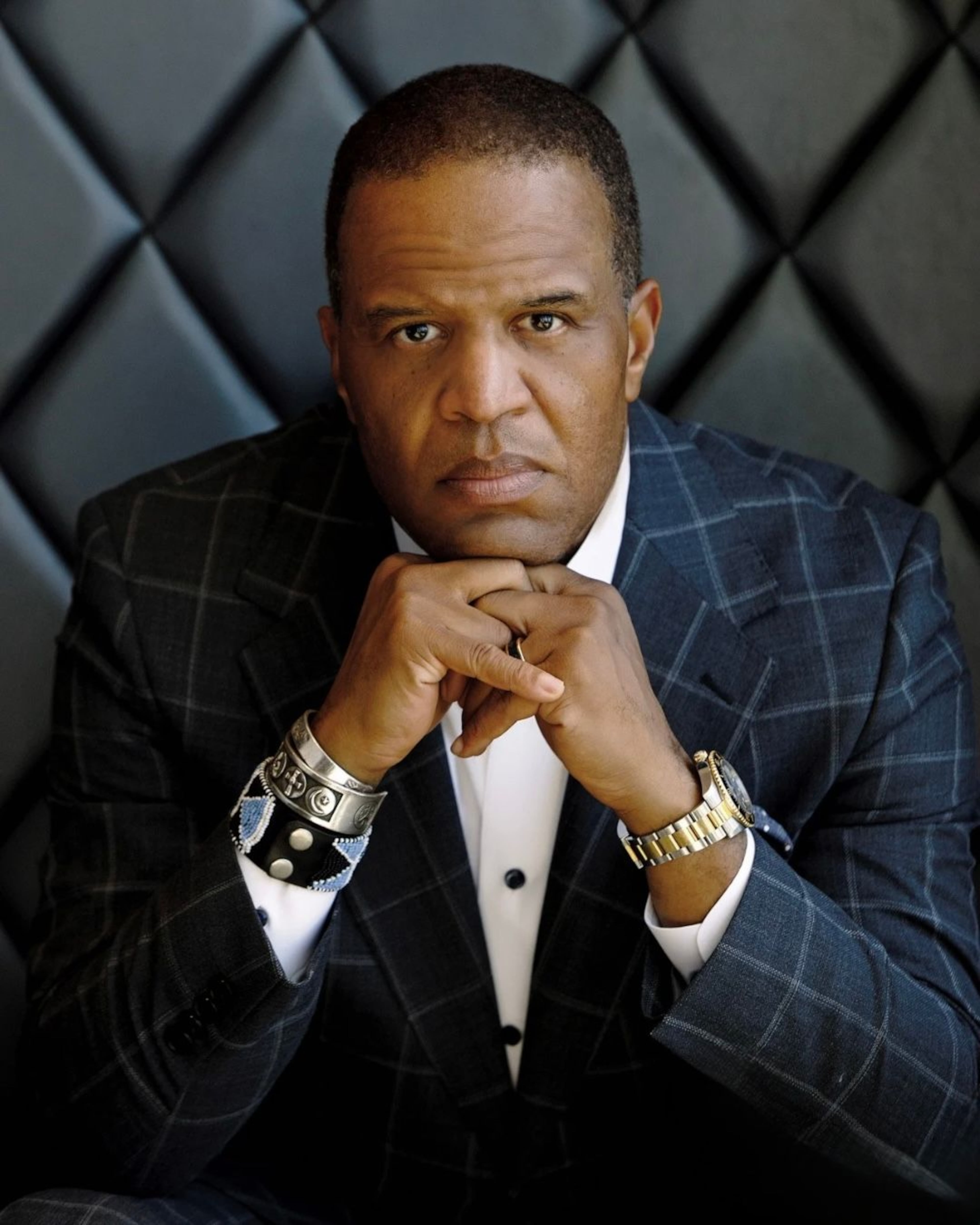
John Hope Bryant is founder, chairman and CEO of Operation HOPE and Bryant Group Ventures and author of “Capitalism for All.”
Send letters to the editor of 250 words or fewer with your name, city or town and contact information to letters@ajc.com.