America at 250: Georgia cities like Eatonton restore our faith in democracy
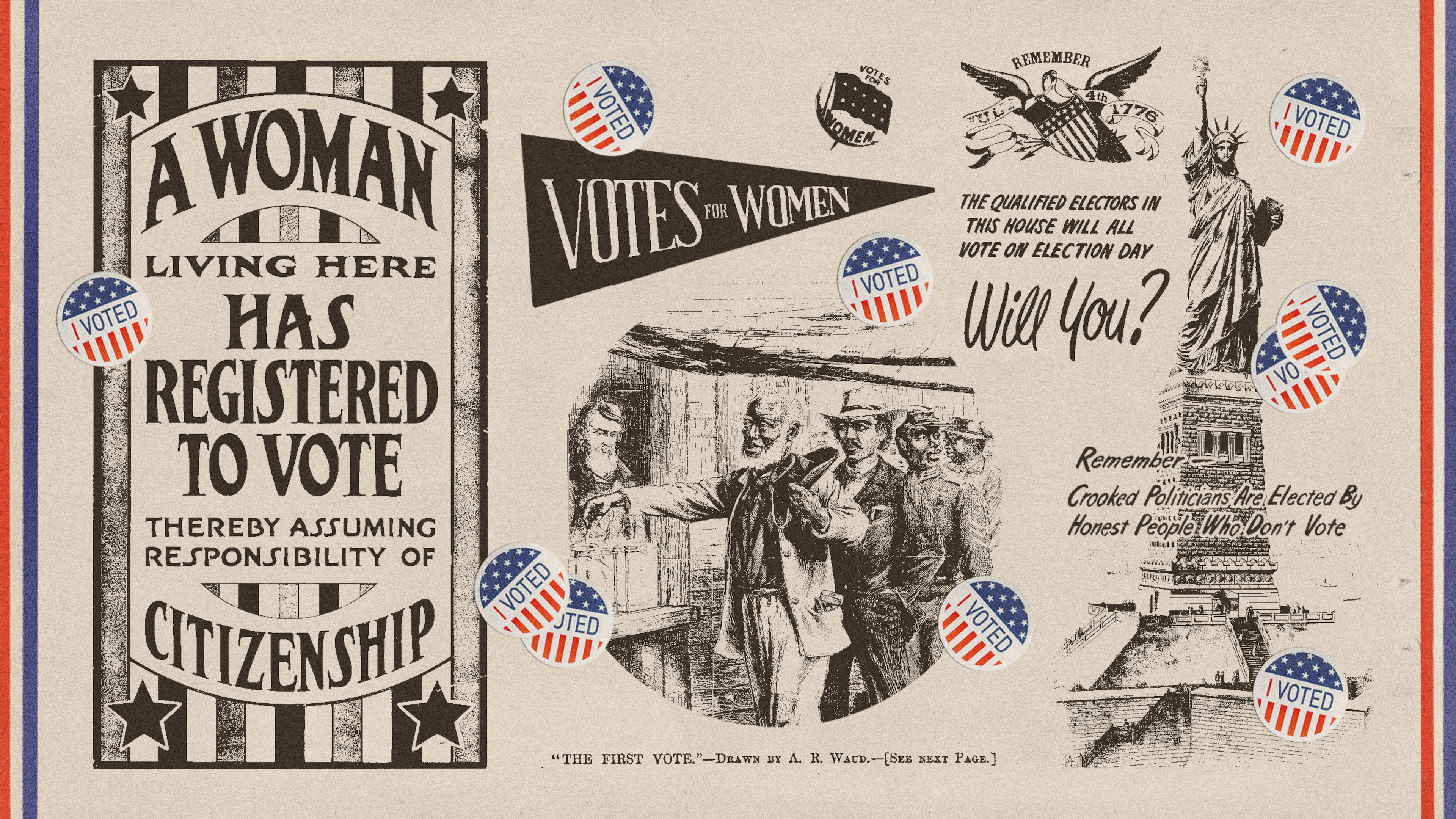
Our soon-to-be 250-year-old democratic republic endured major stress tests recently that shook the faith of citizens across the political spectrum.
A presidential assassination attempt at the April 25 White House Correspondents’ Association dinner engendered conspiracy theories on social media that further pushed people into their corners.
An April 29 U.S. Supreme Court ruling that undermines the 1965 Voting Rights Act added fuel to the fire of an already hyperpartisan push to redraw congressional maps where the politicians get to pick their voters and not the other way around.
Meanwhile, the descendant of the British monarch — whom Founding Father Thomas Jefferson called a “Tyrant” in the Declaration of Independence in 1776 — reminded national elected leaders of what America is all about.
King Charles III, in his address to Congress on April 28, celebrated the U.S. and U.K.’s shared values of democracy and checks and balances, and he joked that he had no plans to reclaim the former colonies lost by his ancestor, King George III.
“America’s words carry weight and meaning — as they have since independence — the actions matter even more,” the king said.
Outside the halls of Congress, there is a powerful conversation about American voices, voting rights and democracy happening right here in Georgia — in small and rural communities that want citizens to engage with each other and in the practice of self-governance.
This is an incredibly positive sign in a year — our nation’s semiquincentennial — where citizens ought to be reflective of how we can continue to grow into the “more perfect union” described in the preamble to the U.S. Constitution.
Celebrate your republic across the state
Hours before the WHCA dinner, I drove from Atlanta about 80 miles east to Eatonton, where the Putnam County government hosted Georgia’s inaugural Smithsonian Institution Museum on Main Street tour called “Voices and Votes: Democracy in America.” (Indiana, Utah and Wyoming are also participating in the Museum on Main Street program.)
Eatonton, centered between Lake Sinclair and Lake Oconee, is one of seven small and/or rural Georgia cities that will host the exhibit, tailored to their particular community, between now and March 19, 2027.
The other cities are Hartwell, Cartersville, Mount Vernon (hosting twice), Perry, Brunswick and Dawson.
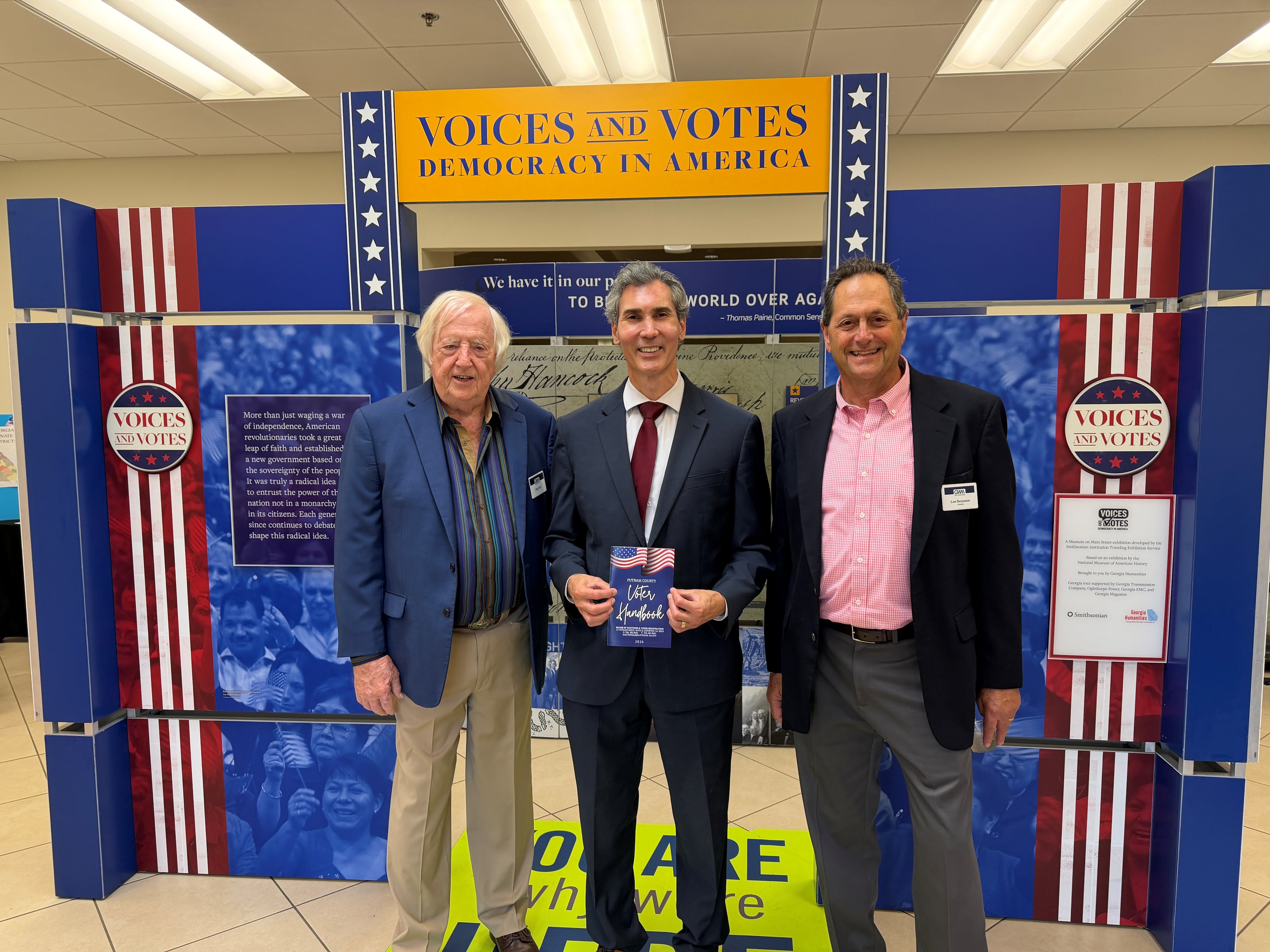
They are located all around the Peach State and near major centers of population where bigger-city residents should consider taking a day trip to celebrate American history and democratic values.
Georgia Humanities — the state’s 55-year-old affiliate of the National Endowment for the Humanities — started working with the Smithsonian two years ago to develop the exhibit.
Even though the project lost federal funding, the organization made it a priority to move forward, Georgia Humanities President Mary McCartin Wearn said in an interview.
“We love the fact that we bring this national content to the small community, but we love also that we elevate the small community’s voice because they are telling their stories of democracy,” McCartin Wearn said.
Each community has a local lead. In the case of Eatonton, the Georgia Writers Museum took charge.
The Eatonton area has nurtured great writers including Alice Walker (“The Color Purple”), Flannery O’Connor (“A Good Man Is Hard to Find and Other Stories”) and Joel Chandler Harris (“Uncle Remus, His Songs and His Sayings”).
“The exhibit is called ‘Voices and Votes,’ and it’s about the history of democracy and voting,” Lou Benjamin, board president of the Georgia Writers Museum, said in an interview. “And that’s a history that the exhibit does a great job of presenting in terms of who gets to vote, who didn’t get to vote, how those struggles took place, what the voting procedures have been over the years and how that’s changed and continues to be a debate, and how you can be involved and participate in government even without voting,”
“And I think the interesting question was, what are the rights of a citizen versus what are the responsibilities of a citizen?” he added.
The April 25 grand opening featured an exhibit on national and local history, not shying away from topics such as voter suppression (the Ku Klux Klan and poll taxes), and also celebrated milestones such as the election of the city’s first Black mayor, John Reid, who still presides over Eatonton and came to the event.
Former Georgia Gov. Nathan Deal, a Republican, spoke on a panel along with former Democratic state Rep. Calvin Smyre, who served in the General Assembly for 48 years, and former Georgia Secretary of State Cathy Cox, now president of Georgia College & State University.
Civility is more than mere politeness
Benjamin’s remarks on rights versus responsibilities of citizens are right on.
In my previous work of community building in Tennessee, traveling to communities, large and small, across the state created opportunities for residents of different political stripes to engage with each other on finding common ground and also discussing meaningful disagreements peacefully and constructively.
An antidote to the noise inflicted upon us by partisan politics is getting out and getting to know your neighbors and the communities around you.
Check out one or more of these “Voices and Votes” exhibits in Georgia with your family, friends, colleagues, schools, religious groups or other associations to engage in the practice of democracy and civility — a term often overshadowed by its modern definition of politeness.
It’s far more than that — it’s about sustaining, challenging and participating in society for the means of building community. While you’re there, eat at a restaurant and explore local sites to embrace the splendid diversity of this state.
We build on the legacy of the Founding Fathers by confronting hard truths and connecting with each other. In 1776, they put their lives on the line by criticizing and rejecting the rule of a tyrant. To endure another 250 years, Americans must strive to live and put into action those values of “Life, Liberty and the pursuit of Happiness” for all to secure freedom for generations to come.
David Plazas is the AJC’s opinion editor. Learn more about “Voices and Votes” at georgiahumanities.org.
The AJC is inviting readers to answer this question: “What are your hopes, concerns and reflection on the United States turning 250 this July 4?” Email letters of 250 words or fewer with your name and city/town to david.plazas@ajc.com. Use the subject line “America at 250.”
Correction
This column has been updated to correctly identify Chip Bell in a photo caption.