KKK granite from Georgia built U.S. Treasury. Trump wants you to forget that.
Editor’s note: This essay is part of the AJC’s America at 250 series leading up to and celebrating the United States of America’s 250th anniversary of independence July 4.
President Donald Trump has ordered the removal from federal spaces of historical images that “minimize” or “undermine” the U.S. before America’s 250th birthday this July 4.
As a Daughter of the American Revolution whose family owned Stone Mountain, Georgia — and whose family’s granite is literally embedded in the U.S. Treasury — I’d like to explain why that order should trouble every American, regardless of politics.
I began tracing my lineage in 2020, meticulously working through birth certificates, death certificates, and marriage records to authenticate my connection to William Watkins Wynn, my family’s Revolutionary War service member. I was proud. I still am. But genealogy, when pursued honestly, doesn’t only yield pride. Sometimes it yields reckoning.
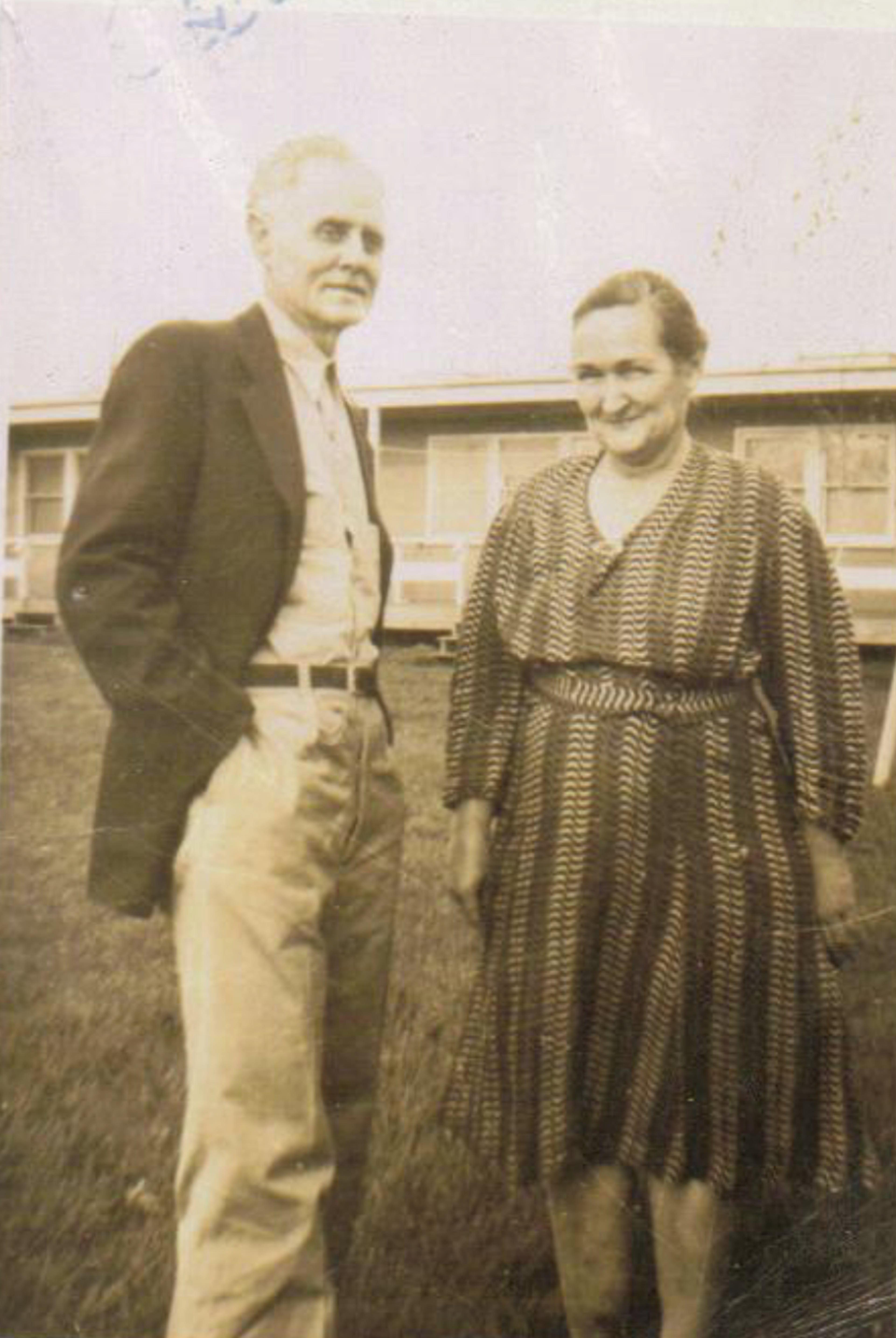
My maternal line runs through a woman named Lottie Pearl Venable, my great-great-grandmother. She was born into one of Georgia’s most prominent families — and she spent her life quietly surviving the violence that prominence concealed.
She eventually fled her abusive husband, leaving her children behind because, in that era, children were the legal property of their father. She found a kind farmhand, started over, and lived long enough to move in with her grandchildren and make them after-school snacks. She bore the Venable name but lived nothing like the Venable legacy. That paradox took me years to understand.
Facing the legacy of the Venable family and Stone Mountain
Because the Venable legacy is this: The Venable Brothers purchased Stone Mountain, Georgia in 1887. In November of 1915, Sam Venable hosted the first official regathering of the Ku Klux Klan on that mountain after decades of dormancy — 15 men climbing to the summit, setting up an altar, opening a Bible and burning a 16-foot cross. Among them was Sam’s 13-year-old nephew, James Venable, who would grow up to become the imperial wizard of the KKK. Lottie Pearl was 21 years old that night.
The Venable Brothers also ran a thriving granite business. Stone Mountain granite — quarried from that same mountain — was sold for the steps of the U.S. Capitol, the Brooklyn Bridge and the U.S. Treasury.
It was transported to Washington on railroads built largely by enslaved labor. My grandfather used to say, “Follow the money, Bethany.” The fact that the seat of American financial power is constructed from stone sold by the family that revived the Klan is not a metaphor. It is architecture.
This is the history the executive order wants cleaned up before our birthday celebration.
Secretary of the Interior Doug Burgum’s Order 3431, titled “Restoring Truth and Sanity to American History,” directs the removal of what it calls disparaging historical images from federal spaces by the 250th anniversary of the Declaration of Independence. The administration frames this as restoration — returning America to an accurate, unified national story. But accurate for whom? Unified around what?
You cannot remove the image while the stone remains in the wall. The Treasury building is not a neutral structure that happens to have a controversial mural. It is built, in part, from granite sold by men who used the profits and the mountain itself to orchestrate a racial terror movement. Removing a plaque or a portrait does not change what the building is made of. It only changes what we are willing to say out loud.
That is the precise danger. Erasure does not eliminate ideology — it relocates it. What we refuse to examine in the light, we cannot challenge, teach against or heal from. The Klan did not disappear when Reconstruction ended and public memory of its founding violence faded. It re-emerged in 1915 — on a mountain owned by my family — larger and more organized than before. Suppression is not resolution. It is postponement with interest.

Honest relationship with history requires a conversation
I understand the pain that Confederate monuments cause. I am not arguing that communities must preserve every symbol of racial terror in perpetuity. What I am arguing is that a federal order mandating historical sanitization on a political deadline is not the same as a community reckoning honestly with its past. One is erasure dressed as healing. The other is the harder, slower, necessary work.
My daughters hiked Stone Mountain in January 2023, not knowing our family’s connection to it. They came back to the hotel thrilled about the views, the carved faces of Confederate generals on the granite face.
I had to sit them down and tell them what that mountain meant — what our name meant in that place. It was uncomfortable. It was necessary. That conversation is what an honest relationship with history looks like. Not a federal order. Not a deadline. A willingness to say: this happened, we are connected to it and we do not look away.
If we are going to celebrate 250 years of American history this July 4, we should be honest about what those years contain. My family’s granite is in the Treasury. My family’s name is on the mountain. I am not asking America to be ashamed. I am asking it to be accurate. You cannot build a more perfect union on a foundation you refuse to examine. Lottie Pearl Venable survived by facing hard truths and leaving what could not be redeemed. She did not pretend. Neither should we.
Bethany Luchetta is a Daughter of the American Revolution (member #1016236) and a freelance writer. She is author of, “The Roadie Wife” and “The Roadie Wife, Finding My Way.” As a dual undergraduate major in sociology and communications, she enjoys writing and the study of family and community connections.
The AJC is inviting readers to answer this question: “What are your hopes, concerns and reflection on the United States turning 250 this July 4?” Email letters of 250 words or fewer with your name and city/town to david.plazas@ajc.com. Use the subject line “America at 250.” Also, send letters to the editor of 250 words or fewer with your name, city or town and contact information to letters@ajc.com.