Trump’s baseless claims about election fraud undermine faith in Ga. elections

The FBI and the director of national intelligence descended upon Georgia last week and seized 656 boxes filled with thousands of Fulton County records from the 2020 election.
The precise focus of a federal investigation into Fulton’s management of the 2020 election is not yet known.
But this much is clear and has been clear for nearly six years: President Donald Trump has stubbornly refused to believe a majority of Georgia voters rejected him in favor of Joe Biden in 2020.
Now that he is back in office, this investigation could prove to be a crucial step in the administration possibly “invalidating” the results from 2020 to prove Trump right.
Also, broader efforts to attain voting data managed by states and counties signal the administration’s intent to influence voting ahead of this year’s midterm elections.
Therefore, it is critical that Georgia Secretary of State Brad Raffensperger continue to fight the federal government’s bid to intrude on the state’s constitutionally granted authority to administer elections. He needs the support of Gov. Brian Kemp, a former secretary of state who understands the stakes.
Authoring an alternative history
Trump-aligned groups have sought investigations and pushed theories to support Trump’s false claims that he won Georgia. Since 2020, The Atlanta Journal-Constitution has reported allegations of widespread fraud and followed the string of lawsuits and state investigations into voting. Each time, Georgia’s results have been affirmed.
The Georgia secretary of state investigated 296 complaints about the 2020 election. No evidence of widespread fraud was found. To be clear, Fulton’s elections were not perfect. A State Election Board investigation found that 3,000 ballots had been double scanned, which was caught during a recount. The error did not change results in a race where Trump lost by 11,780 votes.
It is possible that the same data in different hands could yield a different narrative, one aimed at casting doubt on the accuracy of an election that has been deeply investigated.
Some of the people who have spent years pushing baseless claims about rampant fraud now hold key roles within the Justice Department.
The warrant issued last week demanded the following from Fulton County:
- Physical ballots from the 2020 general election, in-person, absentee and other ballots, and absentee ballot envelopes.
- Tabulator tapes for every voting machine used.
- Ballot images produced during the original ballot count beginning on Nov. 3, 2020.
- Voter rolls from the 2020 general election from absentee, early voting, in person and any other voter roll.
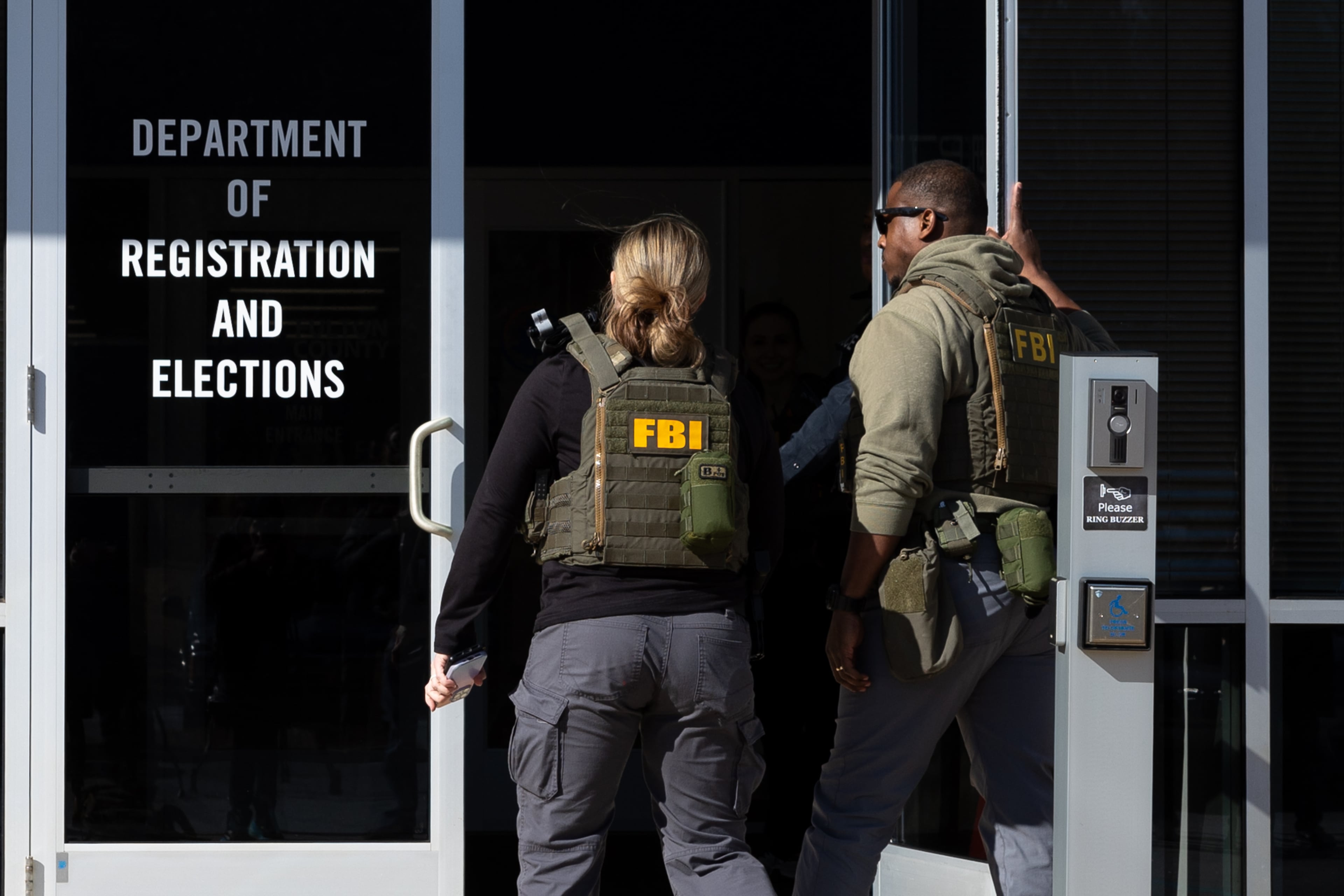
It would deliver a severe blow to the faith in Georgia elections should a Justice Department predisposed to the belief that Trump was defrauded find different conclusions with the same data. That would author an alternate history, putting the federal government in dispute with state findings and leaving voters to doubt whether their votes counted. How would one expect voters to trust a process whereby a losing candidate could “win” six years later?
Holding on to Georgia voter data
Then there are the current, unredacted voter rolls.
The Trump administration has sued Georgia for unredacted voter rolls, meaning the federal government is seeking documents that include driver’s license numbers and Social Security numbers of Georgia’s 8 million registered voters. Constitutionally, states are not obligated to share that level of data with the federal government. Additionally, state law prohibits the Georgia secretary of state from sharing Social Security numbers where there is risk of third-party exposure.
Raffensperger argues against sharing such a trove a data, rightly pointing out that it could needlessly expose Georgians to possible identity theft.
Here is the other risk. A national database of voters in the hands of the federal government would undermine states’ responsibility to manage their voter rolls.
The Trump administration has made clear it wants to build a national database to manage voter rolls, effectively allowing the government farthest from the people to determine voter eligibility. States have always done this, maintaining which voters have moved, died or lost their voting rights and keeping those lists accurate and current.
A scenario where both the state and the federal government are making that determination would invite chaos and would again undermine confidence in voting and elections.
A scenario where that responsibility shifts to the federal government would be even worse.

Trump understands the stakes for the 2026 election, and he has proven repeatedly his willingness to push the bounds of his legal authority and to dishonor history and custom to influence election results.
Giving his administration this data — and effectively the authority to pick voters — would be ill-advised, ahistorical and impractical.
This year’s midterm elections will determine the balance of power in Washington, D.C. Georgia’s U.S. Senate race is expected to play a pivotal role. Incumbent Jon Ossoff is the only Democrat up for reelection this year in a state won by Trump.
Georgia will also elect a new governor and constitutional officers, who in 2028 will hold key positions during the next presidential election.
This state’s voters deserve to go to the polls confident that their votes will count and that results will be accurate.
That is best accomplished by Georgia — not Washington — managing its voter rolls and running its own elections as our nation’s founders envisioned.
Editor-in-Chief Leroy Chapman Jr. wrote this editorial on behalf of the AJC editorial board, comprised of President and Publisher Andrew Morse; Head of Standards Samira Jafari; Opinion Editor David Plazas; and Chapman.
FBI raids Fulton election office
Search warrants showed agents were seeking ballots from the 2020 election that Donald Trump has claimed was filled with fraud. Past recounts and court challenges have not backed up those assertions. Read more
2026 Midterms: Georgia activists working with Trump administration to influence elections
Political battle: Former Georgia chief justice appointed to mediate Fulton FBI raid dispute
Court filing: Bipartisan group of former prosecutors denounce FBI seizure
The case: Election skeptics eagerly await criminal charges in Fulton election case
Interview: State Election Board chair dismisses calls for Fulton County takeover
Allegations: Skeptics of 2020 election look for answers
Reaction: FBI affidavit for Fulton’s 2020 records fuels GOP calls for state takeover
Affidavit explained: The AJC breaks down key details in the document used to seize the ballots
The affidavit: Unsealed documents in Fulton County raid show FBI relied on election skeptics
Watch: Police body cam footage shows confusion at FBI raid
Trump: Fulton FBI raid will show 2020 election was stolen
Timeline: How we got here
Opinion: The FBI raid isn’t about the 2020 elections. It’s about 2026 and 2028.
Listen to the AJC’s Breakdown podcast: Fulton County vs. Donald Trump
Special report: Inside the campaign to undermine Georgia’s election
More Stories
The Latest

