

Morning, y’all! To all the cooks, two more weeks until Thanksgiving. Enjoy the calm before it’s Go Time.
Let’s get to it.
*But first, check out this week’s episode of “Flagship”!*
REVISITING THE GAMBLING GAMBLE

Georgia is among the most populous states that ban sports betting and casino gambling. Multiple attempts over the years to legalize both activities have fallen short, and neither the reasons nor the votes fall along party lines.
The incoming Georgia legislature could revive the possibility.
Betting on taxes; taxing the betting
While some see forms of gambling as a harmless pastime, it is also proven to be addictive and dangerous. States that have legalized sports betting predictably see a rise in bankruptcies and consumer financial issues. Why would a state want to legalize it?
One word: taxes.
Major money from gambling could be used to fund state priorities.
- Gov.-elect Keisha Lance Bottoms has said casino gambling could generate up to $500 million a year to help expand pre-kindergarten access and “the broader early learning pipeline.”
- Lt. Gov.-elect Josh McLaurin says scrambled conversations about what type of gambling to allow and where the money would go have bogged down past efforts under the Gold Dome.
- McLaurin says legalization of casino gambling, or “destination gambling,” would be much safer than legalizing a form of mobile wagering.
- Some hopefuls are already rolling the dice. Earlier this year, a casino company secured a $20 million option to buy a shuttered JCPenney in Macon in hopes that state lawmakers will approve casino gambling.
🔎 READ MORE: A look at gambling debates among Georgia lawmakers
Not signed up yet? What’re you waiting for? Get A.M. ATL in your inbox each weekday morning. And keep scrolling for more news.
HOW GEORGIA UNIVERSITIES ARE DEALING WITH AI
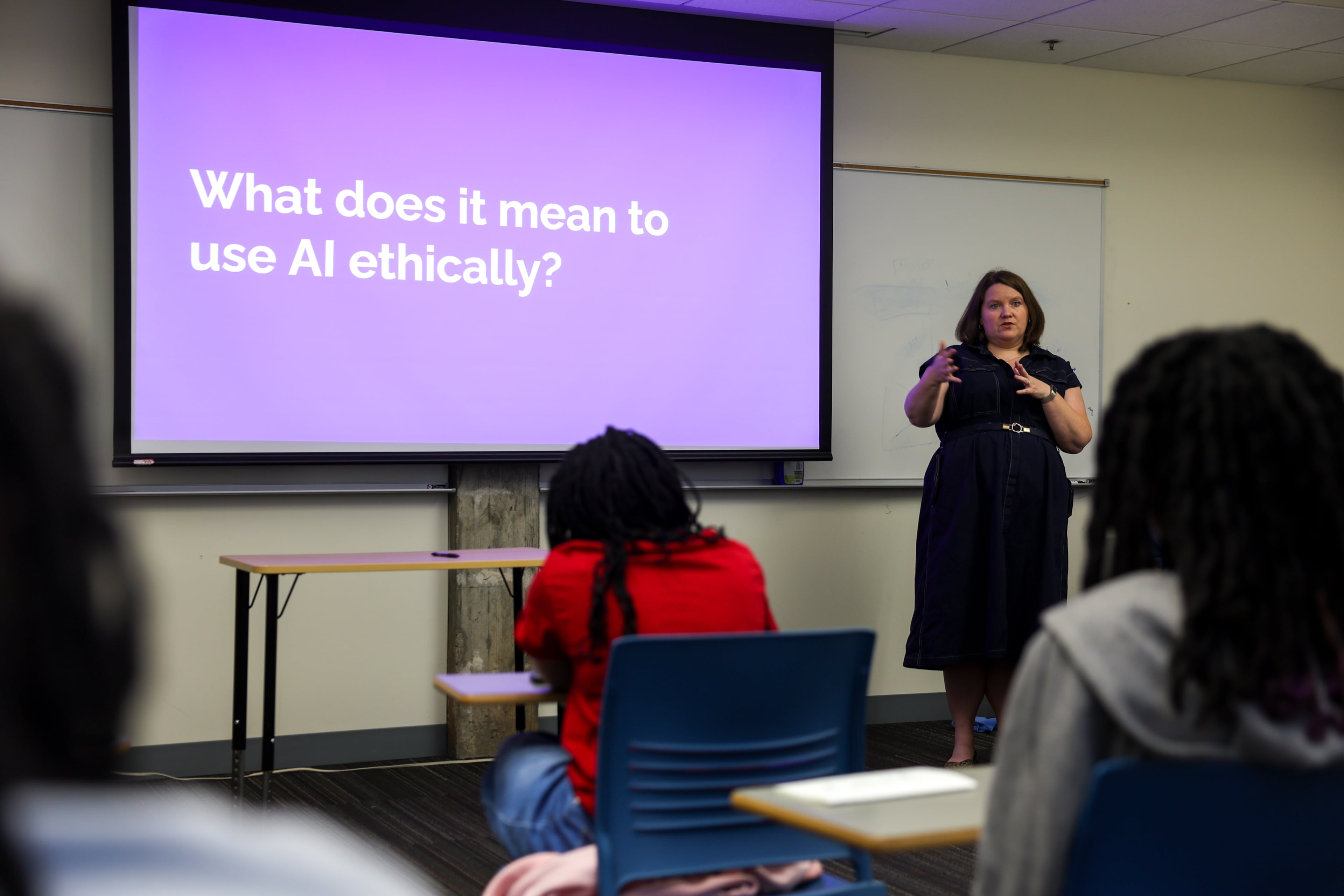
The rising prevalence of artificial intelligence tools, especially among younger digital natives, has presented several quandaries for colleges and universities.
What Georgia schools are doing
- Some schools like Georgia Tech, Georgia Southern University and Georgia Gwinnett College have added mandatory AI elements to their curriculums, usually framed as a chance to learn the “fundamentals.”
- At Agnes Scott College, a mandatory AI class also tackles bigger questions, like the ethics of its use and how it challenges philosophies around learning and, indeed, the role of higher education itself. Phew!
🔎 READ MORE: Georgia educators sound off on their AI fears, hopes
AI either-or
No spoilers, but I chatted with AJC education reporter Jason Armesto, who wrote the above story, for a future episode of the AJC’s “Flagship” podcast. It was a fascinating, rabbit-holey conversation and he identified several ways in which institutions are being pulled in different directions:
- Use AI, but not like that: Educators have long sounded the alarm over AI’s role in cheating, plagiarism and more nebulous forms of academic dishonesty. (If AI told you the answer, did you really learn it?) At the same time, the whole world is so bullish on AI, institutions feel the need to include it. How can they communicate the difference to students?
- For jobs, or against jobs: An increasing number of companies say they want early-career hires to have AI skills out of college. However, AI is also a clear and present danger to many careers, which creates friction and uncertainty among students.
- A helper or a mind flayer: Educators are trying to find the line between AI as a potential brainstorm partner that can contribute to research and accelerate learning, and a technology that can threaten the entire neurological and experiential process of learning.
Again, phew!
There’s much more, but you’ll have to wait for next week’s “Flagship.”
MUST-KNOW POLITICS AND BUSINESS
🐘 A very interesting divide is forming in the Georgia GOP between those who want to double down on pre-midterm rhetoric and strategy and those who don’t. The GOP’s official post-midterm briefing recommended commonalities the party could find with incoming Democratic state leaders. Some Republicans say it’s a reasonable approach, but others are angry it isn’t more obstructive.
🏛️ Brian Kemp, Jon Ossoff and Raphael Warnock: All giants in Georgia politics, all popular prospects for the 2028 presidential election. Here’s how they got there and what other Georgia politicians think.
🇺🇸 Atlanta City Council members unanimously voted to ask Mayor Andre Dickens and his administration to create an office of veterans affairs.
⛪ FREE TO READ: I really liked this piece by the AJC’s Patricia Murphy looking at the role of Black churches in U.S. Sen. Jon Ossoff’s midterm victory.
YEP, THAT’S EXACTLY WHAT I THOUGHT THEY’D LOOK LIKE

A collection of paintings owned by Atlanta media mogul Ted Turner will go up for auction soon, and they are very Ted Turner.
The founder of CNN and longtime owner of the Braves was a noted environmentalist and loved a good Western landscape, both in person and on the canvas. More about his art collection here.
THIS WEEK ON ‘FLAGSHIP’
We have two crazy good conversations on “Flagship” today.
🎧 Listen to “Flagship” on the AJC site or anywhere you get your podcasts. Just search “AJC Flagship.”
‘Urban Cowboy’ and constitutional law
First, AJC courts and legal affairs reporter Rosie Manins runs us through the saga of the “Urban Cowboy,” a Georgia horseman who’s suing Fulton County after they seized his horses during a 2016 arrest and didn’t return them when the charges were dropped. The case could set historic, nationwide legal precedents.
Bonus: A deep dive into the Fifth Amendment, woo!
Mercy and monsters
Then, an emotional interview with AJC reporter Thomas Lake, who pieced together the story of a 50-year-old Georgia crime and a murderer still languishing on death row.
Bonus: Some heavy meditations on loss.
Reading list:
- In legal fight, Atlanta’s ‘Urban Cowboy’ could help Georgia property owners
- 50 years after two girls were attacked, the survivor tells her story for the first time (This is very upsetting, just be forewarned.)
NEWS BITES
A historic ocean liner was sunk to start life anew as the world’s largest artificial reef
“Wonder what they used this for?” — a fish, unaware of the twin universe of life just above the depths
The 2027 Coachella lineup is here: Dua Lipa, Tame Impala and SZA to headline
Ooh, I actually know all of those acts!
Braves’ Walt Weiss finishes second in NL manager of the year vote
He still finishes first in our hearts.
ON THIS DATE
Nov. 12, 1921
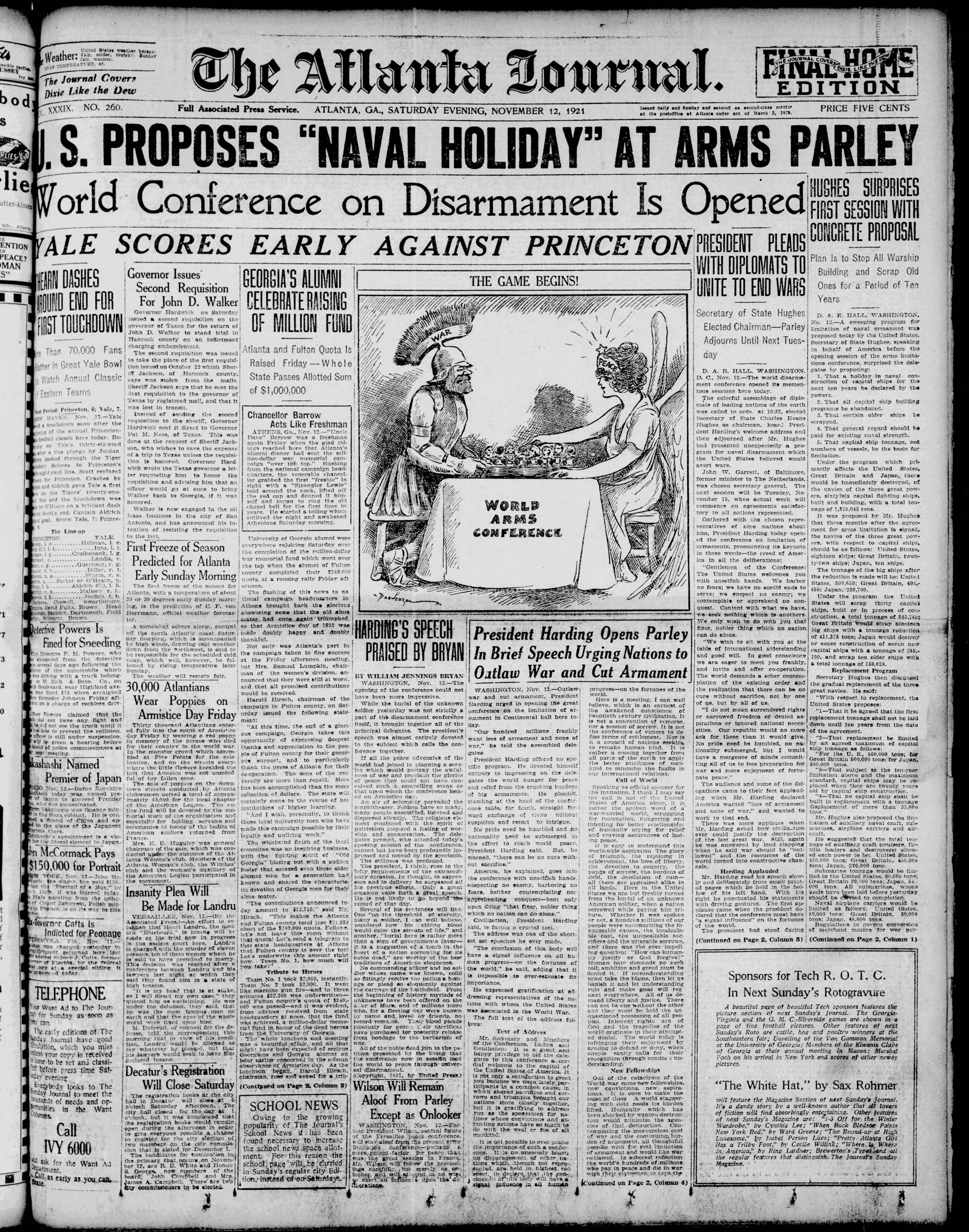
President Harding opens parley in brief speech urging nations to outlaw war and cut armament. In opening the great conference on the limitation of armament in Continental hall today, President Harding devoted himself entirely to impressing on the delegates the world hunger for peace and relief from the crushing burdens of big armaments. … “Here in the United States we are but freshly turned from the burial of an unknown American soldier, when a nation sorrowed while paying him tribute. Whether it was spoken or not, a hundred millions of our people were summarizing the inexcusable causes, the unspeakable sacrifices and the utterable sorrows, and there was the ever impelling question: ‘How can humanity justify or God forgive?’”
This one hurts.
ONE MORE THING
So as to not end on a very depressing “On This Date” note, I’ll end on this thought-provoking line from columnist and award-winning psychotherapist Barton Goldsmith, Ph.D., in his new AJC article about finding purpose:
“We all have something to offer, and doing what we can to make a difference, even a small one, can change the world. Regardless of what you think of yourself, you matter to others. By taking action, you may also inspire them to find their own paths and sense of purpose. Sometimes, you make a difference simply by being present in someone’s life.”
Thanks for reading to the very bottom of A.M. ATL. Questions, comments, ideas? Contact us at AMATL@ajc.com.
Until next time.