2 girls walked into the woods in 1976. The kidnapper is still on death row.

Editor’s note: This story contains graphic content.
SMYRNA — On May 4, 1976, two girls left Russell Elementary School and took a shortcut home through the woods. On that path they met a stranger. He said hi, or hello, and the girls did the same. They walked past him. The younger one was Lori Ann Smith, age 8, who lived her life as if she had nothing to fear.
Lori sometimes walked up to new people and introduced herself like a confident grown-up. She rode the stud bull her grandfather kept on his farm in Kentucky. She even hinted at being unafraid of death itself. The last time she saw Kentucky, at the cemetery where her great-grandfather was buried, Lori picked out her own grave site.

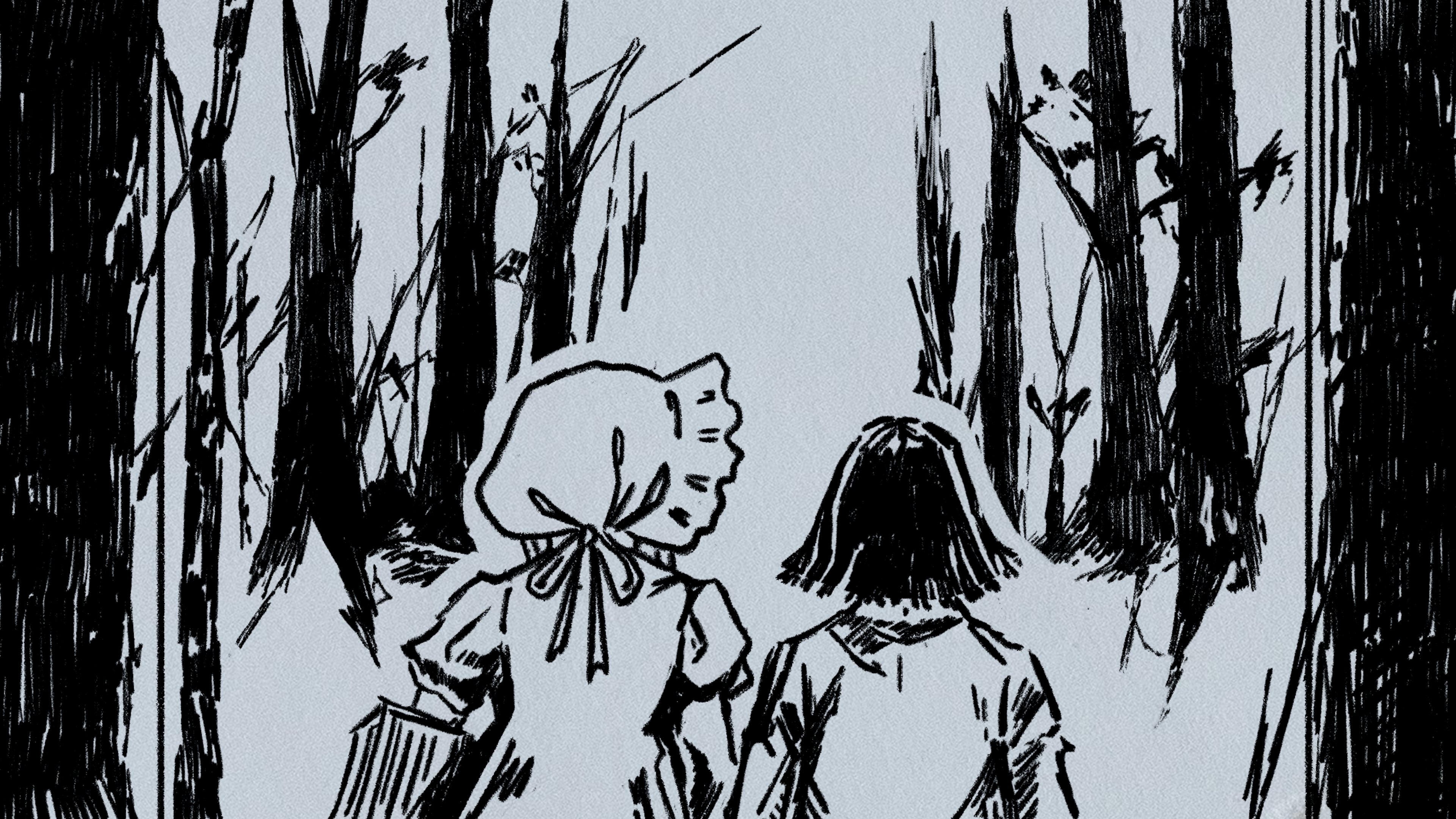
On that Tuesday in 1976 in Atlanta’s northwestern suburbs, the school celebrated the nation’s upcoming bicentennial. Students were encouraged to wear old-fashioned clothes. Lori went with jeans and a navy-blue jacket. Her 10-year-old friend wore a bonnet and a long yellow dress. They passed the stranger. Then he caught Lori, putting an arm around her waist.
Lori’s friend put down her books and tried to escape. But the kidnapper seemed to have long arms. With his free hand, he reached out and grabbed the neckline of her dress. For the moment, he had both girls. He said he had a gun in his pocket, and he would use it unless they did as they were told.
That part of the story is not in dispute. The kidnapper admitted it under oath at his trial in 1976, after which he was sentenced to death in the electric chair.
But the kidnapper never went to the electric chair. He outlived the lieutenant who helped crack the case. He outlived the judge who signed his execution order. The state of Georgia sent 23 men to the chair between 1976 and 1998, but the kidnapper was not among them. He outlived the electric chair. The state has administered 54 lethal injections since then, but the kidnapper has yet to receive one. Fifty years have passed since that afternoon in the woods. The kidnapper has become one of the longest-serving death row inmates in American history.
Thus, for his victims and their families, the case has not been put to rest. Nor have important questions about what preceded it. The same justice system that allowed five decades between a sentence and its completion also failed to stop a crime spree before it was too late. By his own admission, the kidnapper had many other victims. If he’d been caught and prosecuted sooner, Lori Ann Smith would probably be alive.
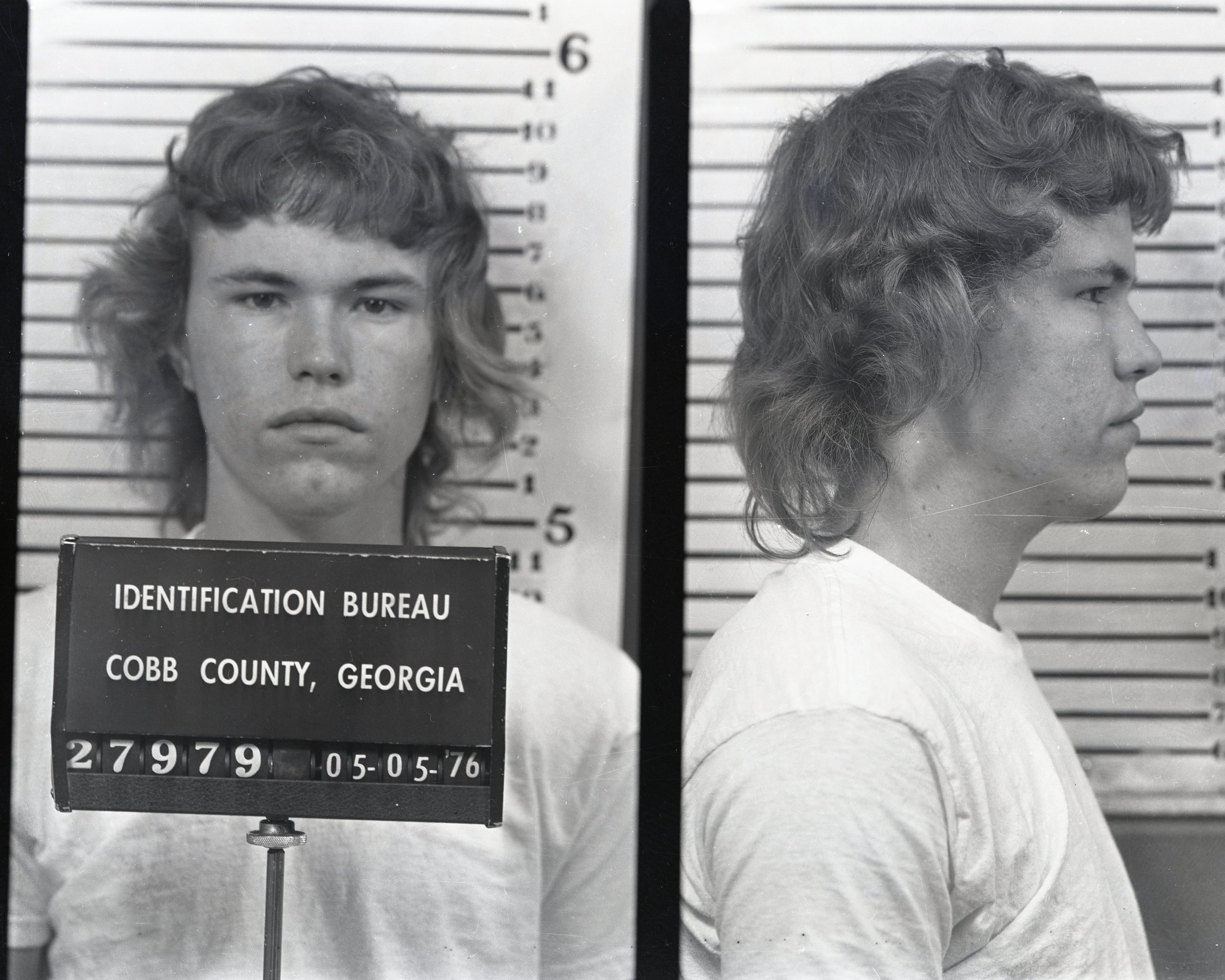
The kidnapper’s name is Virgil Presnell Jr. His voluminous court file contains various claims about injustice. About cruel and unusual punishment. About a mother who smoked cigarettes and drank bourbon during her pregnancy, about a father who beat him and tore up his drawings, about various falls or collisions that may have exacerbated the brain damage that might help explain what he did.
But on that spring afternoon, it was the girls who learned about cruelty and injustice.
About desperation and survival.
About what you might have to do when a strange man puts a hand over your mouth and forces you into his car.
Five decades after the kidnapping, the surviving victim gave her first interview about the case. She asked that her name not be used. The Atlanta Journal-Constitution is honoring that request, which is consistent with AJC policy against naming victims of sexual assault. This story is also based on interviews with about a dozen other people, including Lori’s sister and father; and a review of more than 10,000 pages of court documents, including the survivor’s testimony from two trials.
The surviving victim is now 60 years old, still living in metro Atlanta, and has spent years wondering how she could have saved Lori. But there is another part of the story she has not forgotten. Something she did later that afternoon. She followed the sound of a ringing bell.
A reporter asked what would have happened if she hadn’t done that.
“Oh,” she said, “I have no doubt I’d be dead.”

Lori’s mother searches the woods, and a neighbor makes a strange discovery
On Plantation Road in the Foxfire subdivision, the 10-year-old’s mother waited and wondered. Sometimes the girl came straight home after school. But sometimes she stayed afterward with her teacher to feed the gerbil or change its sawdust. Minutes passed. The phone rang. It was Joyce Smith, Lori’s mother, asking where the girls were.
Smith checked her daughter’s room. The lights were off and no one was there. She walked into the woods, on the trail toward the school. Near the end, on the ground, she saw schoolbooks. Opening them, she saw a familiar name. Lori’s 10-year-old friend. The girl in the yellow dress.
At Russell Elementary in southern Cobb County, the principal made an announcement over the loudspeaker. Come to the office if you’re here. No one responded. Smith went back through the woods to call for the girls. Some boys with bikes joined the search. Smith brought the schoolbooks to her neighbor’s house, further alarming her neighbor.
Smith called her husband and asked if she should call the police.
Go ahead, he told her.
More volunteers joined in. Another neighbor searched the woods, calling to the children, hearing nothing back. Somewhere in the woods was an old building, perhaps a shed, and nearby he found some items that disturbed him.
A sleeping bag. And two pieces of blue nylon rope.

‘Thou shalt not kill,’ a girl says on the witness stand
The girl in the yellow dress was still 10 when she testified at the trial in August 1976. The judge cleared the spectators from the courtroom.
“She won’t come in without her mother,” said District Attorney George “Buddy” Darden, who would later serve 12 years in the U.S. House of Representatives.
“Is that all right?” Judge Luther Hames Jr. asked the defense attorneys.
“Provided there is no outburst by her,” attorney Milton Grubbs said.
“Well,” the judge said, “I will warn her.”
The girl took the witness stand. The prosecutor asked if she had studied the Ten Commandments in Sunday school.
“Yes,” she said.
“For example,” Darden asked, “would you tell us what any of them are?”
“Thou shalt not kill,” she said, “thou shalt not commit adultery, thou shalt not bear false witness against thy neighbor—”
Darden asked if she knew what that last one meant.
“I do,” she said.
“Do you know you are to tell the truth here today?” Darden asked.
“Yes,” she said, and told the story: the end of the school day, the walk through the woods, the stranger who grabbed her and Lori and threatened to kill them if they didn’t do what he wanted. The threat worked. As he led them deeper into the woods, holding them by the wrists, they walked along quietly.
When they reached the shed, the kidnapper tied their wrists with blue rope. He said he was going to put them in the trunk of his car. According to her friend, Lori had the presence of mind to negotiate. She asked if they could ride in the front seat instead.
If you promise not to get out, he said, and untied them.
Presnell would later admit that the sleeping bag in the woods was his. It’s not clear from his testimony why he left it behind, or why he decided to lead the girls to his blue Plymouth Duster and drive them somewhere else. Judging from his subsequent actions, he may have decided those woods were too close to a residential neighborhood.
Lori’s mother did not return a reporter’s phone calls for this story. But on the witness stand, she went down a heartbreaking list of what-ifs. What if the family had never moved to Georgia? What if they’d chosen a different neighborhood? What if she had picked Lori up after school? What if Lori had never been born?
A close look at the timeline leads to another question like that. If the kidnapper had stayed in the same woods where he left the sleeping bag, would Lori’s mother have found the girls in time? Who knows. By the time she walked the path to look for them, it seems they were already gone.
A long shadow falls over the Smith family
Here is a cruel and unusual punishment that Lori’s sister has been suffering through for 50 years. She is tormented by the memory of a Christmas present. Specifically a Lite-Brite, the classic toy that allows children to make designs and artwork using colorful pegs and a lighted box. Lisa’s crime, if you can call it that, was one of envy. One Christmas morning, she saw the Lite-Brite in a stack of gifts from Santa Claus. She wanted that Lite-Brite, so she put it in her own pile. But the Lite-Brite was not for her. Santa had brought it for Lori. And by the time Lisa had a real chance to keep it, she didn’t want it anymore.

The two sisters shared a bedroom. Each had her own bed, but Lori often got into Lisa’s bed. Sometimes they put on Elvis records in the living room and sang along. If Lisa wanted to go somewhere, she often had to bring Lori. Lisa got tired of it, and told Lori so. One more item for her future bundle of guilt.
On the night of Lori’s disappearance, as her parents handled urgent matters involving the search, Lisa and her brother, Jim, were kept in their parents’ bedroom. And so it was through the bedroom door, after someone delivered the news, that Lisa heard her mother screaming.
Later, when they were going through Lori’s things, her mother found the Lite-Brite and offered it to Lisa. But it felt wrong to take what had been Lori’s. After a while, Lisa stopped telling people she used to have a sister. She went to bed alone in the room they once shared, afraid there might be a bad man lurking in the closet.
There was an empty place at the Smith table, an unused seat in the car. Lisa kept looking over her shoulder, running at top speed to her friend’s house, sprinting back home. One time someone left the door locked by accident, her mother recalled in a victim-impact statement. Lisa stood outside, calling, “Let me in, he’s going to get me.”
The kidnapper’s long shadow fell across North Georgia, over Tennessee, all the way to Kentucky, where Joyce Smith’s parents put new locks on their doors. Where her father went quiet and her mother seemed to sing less, if at all. Lori’s grandparents died in the 1980s, two more people outlived by a man who’d been sentenced to death.
Time happens to everyone, at least to those of us still here, which means the people who remember Lori are now 50 years older than they were when she departed. Lisa was 12, and is now 62. Scott Smith was 35, and is now 85, with a cane and a rolling walker, sitting on the couch in a house only 2 miles from Lori’s old school, talking with his remaining daughter about the poor old Lite-Brite.
“It’s still up in the attic,” he says.
“I don’t want the Lite-Brite,” Lisa says. “It’s just—”
She trails off.
“So it looks brand new,” her father says. “You know, ‘cause it never got played with.”

Long ago, Lisa told her father to throw it away. But everyone must decide these things for themselves :what to keep, and what to let go.
“I just wanted to hang on to it,” he says.
“It’s goin’ in the garbage,” she says, taking off her glasses, wiping away tears.
Inevitably, the conversation turns to the man whose name Lisa would rather not speak. Virgil Presnell. She and her father are talking about how it will go if he is ever executed. Who might watch it happen. Scott Smith was not there to save his daughter. He thinks he should be there to see justice done in her name.
Time is running out.
“You know,” he says, “and if for some reason my health gets to where I can’t go, then somebody can have my seat.”
Did the girls have a chance to escape?
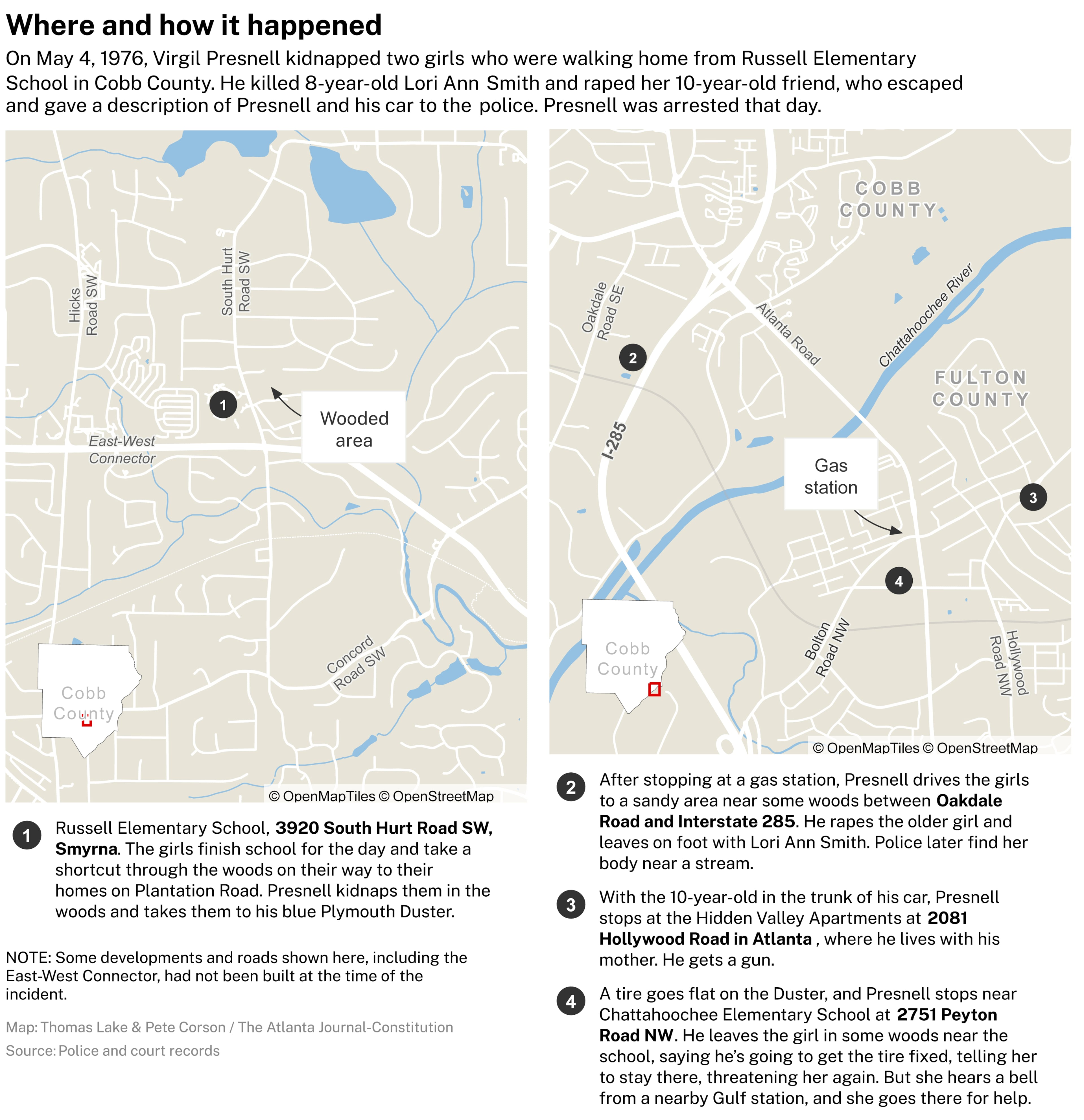
With the kidnapped girls in the front seat of his blue Plymouth Duster, Presnell drove on toward his next destination. Near the school, according to his testimony, one of the girls asked where they were going.
“For a ride,” he told them, and said he would bring them back later.
Then he did something that seemed to jeopardize his plan: He stopped at a gas station to fuel up.
In his telling of the story, the abduction could have ended here.
“Well,” he said at his trial, “at the time I was nervous and wanted to give the girls a chance to leave if they wanted to.”
The AJC sought to interview Presnell for this story. A reporter wrote to him via email and regular mail but did not receive a reply. Joan Heath, director of communications for the Department of Corrections, said in an email that the department’s policy “does not permit interviews with offenders under death sentence.” Presnell’s attorney, Nathan Potek, of the nonprofit Federal Defender Program, declined to speak on the record.
In any case, Presnell’s 1976 testimony provides no further support for the claim that the girls were free to leave at the gas station. He didn’t say he told them they could go, and he didn’t say he rescinded his threat to shoot them.
To the contrary, Lori’s friend says he renewed that threat. She estimates that Presnell threatened to kill her more than 20 times that day.
Yes, she thought of escaping here. This may have been her best chance to save Lori.
“I blamed myself for many, many years thinking I should have gotten out of that car,” she said in her interview with the AJC in September. “I should have gotten us out of that car. Hollered and screamed.”
But in addition to her fear of Presnell, she worried then that no one would believe their story.
“I mean, you know,” she said, “kids throw tantrums all the time.”
Presnell paid for the gas and got back in the car. The window of opportunity closed. He drove south and east, roughly 7 miles from the school, approaching some railroad tracks off Oakdale Road in southeastern Cobb County.

What was going through Lori’s mind as she rode in the front seat of the Duster? It must have been hard for an 8-year-old to know what was real, and what was a lie. When Lori’s friend was asked what Lori said during the abduction, she thought she remembered Lori saying something in the car. Something from a place of hopeful innocence:
“He said he was gonna take us home.”
Presnell did not take them home. He turned off Oakdale, going east, not far from the Chattahoochee River. Even now, with all the development of the last 50 years, the place is relatively secluded. There are no houses nearby. Woods remain near Interstate 285, and a little stream runs through them. Presnell stopped the car. He and the girls got out.
A boy who played with toy cars; a man on a crime spree
If Virgil Presnell learned to do horrific evil by age 22, he was certainly not born that way.
As a boy he was gentle, according to relatives who spoke with his defense attorneys. He looked young for his age, and played with younger children. He had a habit of laughing or smiling at inappropriate times, or just staring with his mouth open. His father called him an idiot, and an uncle told him to go play in traffic. He did poorly in school, especially in math, but he seemed to have other abilities. He would later recall taking apart an old clock and putting it back together. He liked to look at maps, studying the terrain, estimating distances and travel times. Sometimes he played alone, deep in his own imagination, building roads in the yard, digging trenches, driving toy cars across miniature bridges.
Virgil’s mother grew up poor in Atlanta, dropping out of school in eighth grade, and in 1953 she married a soldier with a drinking problem. He went out and drank. She stayed home and drank, even after their son was conceived, later admitting in an affidavit that she drank during the entire pregnancy. She said a doctor used forceps to deliver her son, leaving marks on the sides of his head. As a baby he fell on his face, bloodying his nose. Later he fell off a swing and got hit in the eye with a softball. Boxing at age 15, he was knocked out. In a car crash involving a telephone pole, his head hit the windshield.
Advocates say Presnell’s behavior can be at least partly explained by brain damage. Some combination of Fetal Alcohol Spectrum Disorder and “insults to the brain which may have contributed to his brain impairment,” according to a psychologist who evaluated him at a defense lawyer’s request. This is relevant to his case because Georgia law prohibits the execution of people with intellectual disabilities.
There is contradictory evidence about Presnell’s intellectual capacity. Various tests have given him a wide range of IQ scores, with one at 67 and another at 113. (The average IQ is about 100.) His advocates say IQ is not a fair measure of his intelligence, because it doesn’t properly show the deficits in adaptive functioning brought on by Fetal Alcohol Spectrum Disorder. That may be true. But in 1999, a court-ordered forensic psychiatrist named Alisa Smith interviewed Presnell for about two hours and filed a report that described a 45-year-old man of average intelligence and what seemed like an engaging personality.

Presnell had become so skillful with needlepoint and canvas that he made three-dimensional cars and trucks and gave them to his mother. He liked to read in prison: National Geographic, Reader’s Digest, automotive magazines, the novels of Stephen King, including an extended version of “The Stand” that ran for more than 1,000 pages.
The forensic psychiatrist gave him a hypothetical situation. What would he do if he saw a small fire in a crowded theater? Presnell laughed.
“My sense of humor says to shout, ‘Fire!” he said, “but that would cause a panic. I guess I’d report it to someone in charge.”
In his younger days, Presnell seemed to enjoy outsmarting people. He told the psychiatrist about stealing cars from dealerships, driving them around and returning them before anyone knew they were gone.
“I used to play games,” he said. “I used to like to go into stores back in the days when they had mirrors and binoculars, before there was video surveillance. I’d play with them. I’d let them see me slip a pen up my sleeve or something. Then I’d go in another part of the store and drop it off when they weren’t looking. Then I’d laugh when they caught me but couldn’t find anything on me. I just liked messing with them.”
One thing that seemed absent from Presnell’s early life was a strong moral compass. His mother was frequently at work. His aunts spoke frankly with him about “illicit sexual activities” from soap operas and romance magazines, a psychologist testified. Attorney Steve Schuster told a jury that one of his grandfathers “decided the way to make him a man was to send him to the bathroom with Playboys.”
Several relatives had a history of child molestation, according to court records. An uncle “encouraged Mr. Presnell to engage in inappropriate sexual behaviors with young girls when Mr. Presnell was still a small boy,” according to a psychologist’s report that also said a 16-year-old girl molested Presnell when he was 9 or 10.
When and why Presnell began molesting girls is not entirely clear. Court records suggest it may have begun in 1969, when he was 15. By his own account, pornography played a role in his development. He told a psychiatrist in 1976 that he “started going to adult bookstores, peep shows, movies and all.” He said he purchased books “about young girls having sexual desires for older men.” In an interview with police, he said, “You know, I kind of wish they’d have closed down them bookstores. I’m afraid somebody else might get fantasies and ideas like I did, buying them books.”
Schuster, the attorney, put it another way: “Pornography became his map for relations with females.”
There is a clear progression in the story of Virgil Presnell. A worsening trajectory of deviant behavior. He described it himself in interviews with psychiatrist Harry Porter in 1976.
“I had a desire for young girls that I couldn’t get rid of,” he said. “I started hanging around schools a lot with binoculars, watching the girls. I would masturbate from time to time while watching the girls. By doing that it seemed to relieve some of the desire. Then it wasn’t good enough. I had to have the real thing from young girls.”
He began accosting and abusing girls around metro Atlanta. From Riverside to Hapeville, from Forest Park to Decatur. Time and again, he got away with it. He would stalk them, grab them and sexually molest them, or try to, until they escaped or he let them go. When questioned by investigators two days after the kidnapping near Russell Elementary, he told story after story in graphic detail.
“How many girls have you molested sexually or, you know, over the years?” Sgt. Doug Williams of the Cobb County Police asked him.
“I guess around 10 or 15,” Presnell finally said.
That estimate could be too low. At one point he told the investigator, “Good gosh, half of them I might have forgotten about.”

Two incidents in particular suggest that Presnell’s rampage could have been stopped before he reached Russell Elementary School. He told Sgt. Williams that a couple of years earlier, he used to sit in his car near a school playground in Atlanta and watch the girls. Children saw him and thought he had a gun. A police officer got involved, he said, and “got me whenever I was getting ready for another, you know masturbation.” Presnell said he was told “that if I ever got seen around there again, they would arrest me and psychiatric treatment and all but I never went back around. That should be on record there, ‘cause they took my name, address, and all, the description of my car …”
That car was the blue Plymouth Duster. The same one he used for the kidnapping.
Early in 1976, Presnell was accused of raping a 13-year-old girl in Ocala, Florida. He was 22. She told police he forced her behind a Long John Silver’s restaurant and attacked her. Presnell was arrested and charged with involuntary sexual battery. He said she had consented. The local sheriff later wrote that the 13-year-old was “a delinquent child” who “lied about the events that occurred.” Presnell pleaded guilty that February to contributing to the delinquency of a minor and was sentenced to 19 days in jail, which he had already served, on condition that he leave the state of Florida.
He did.
About two months later, according to a subsequent Fulton County indictment, Presnell raped a girl under the age of 14 in northwest Atlanta. But he wasn’t charged until after the murder, and court records indicate the case was never prosecuted.
Nineteen days after that, he attacked a 10-year-old girl in Clayton County. She was walking home from school through the woods. He had a pocketknife. She escaped with scratches on her face and arms. Once again, Presnell wasn’t charged until after the murder. He pleaded guilty to aggravated assault with intent to rape.
Ten days after the Clayton County incident, Presnell drove to Russell Elementary School in Cobb County and watched children through binoculars. He saw a girl walking through the woods.
The next day, he came back to get her.
The girl grows up, and struggles to ask for ketchup
In the years after the kidnapping, the girl in the yellow dress kept having the same terrible dream. From a distance, she could see her little sister on the sidewalk. A car drove up and a man got out. The big sister wanted to help, but there was nothing she could do. The kidnapper reached for her little sister, those long arms stretching out —
She’d grown up in a house without much swearing, if any. The words Presnell used were new to her. What he told her to do, what he said he would do, what he actually did. These common profanities became trigger words. If she was watching TV or out in public and she heard one of these words, it landed like a slap in the face.
She did not go to the grocery store alone for the first time until 1997, according to her victim-impact statement. That was more than 20 years after the kidnapping. She was afraid to go to the post office, stop at a gas station, make a simple phone call for work. At Burger King, she had to give herself a pep talk before she could go back to the counter and ask for ketchup.
“And I remember being scared of every man in the world,” she said, “including my father.”
When they were in the car together, she sat as close to the passenger door as she could. It “absolutely wrecked him,” she said, that he hadn’t been there to protect her from the kidnapper.
The survivor didn’t feel a need to see Presnell executed. She just wanted him to leave her alone. She said it was even harder to testify against him the second time, at his resentencing trial in 1999, when she had to look again at the face that gave her nightmares.
Her father wanted the death sentence carried out, she said. He was still waiting in January, when he died at 82.
The survivor said she’s had ulcers, phobias, PTSD. She’d always been good at noticing things, and after the kidnapping this ability seemed to acquire new importance. Looking at other vehicles, she took note of the people inside. She memorized license-plate numbers. A man with children in the front seat? Were they taken against their will?

Presnell led the girls into the woods near I-285, miles from where he abducted them. He carried a piece of blue carpet. He made the girls undress. As he was raping the older one, Lori sat on the carpet with her knees drawn up, rocking back and forth. When Presnell stopped, Lori put her clothes back on. Presnell told the older girl he was taking Lori back to the car. They left. The older girl was bleeding and in pain. She was in no condition to escape.
When Presnell came back alone, the older girl asked where Lori was. He said Lori had gotten away.
Presnell took her back to the blue Plymouth Duster. Now he made her get in the trunk.
It was a tight space, but not too small for a 10-year-old girl who weighed barely 70 pounds. And it wasn’t entirely dark. The Duster had taken some damage, leaving a small hole or breach. A ray of light came in. She could see a little piece of the sky.
As the Plymouth roared on, she closed her eyes and prayed to Jesus.
1873 Georgia court ruling on ‘mercy’ spawns new sentencing trial
There were three Lisa Smiths at Lisa Smith’s high school, and eventually Lisa Smith came to accept the thing that made her different. A shorthand description other people used. It was true in high school, and true at the large extended Smith family reunions they had every year in Kentucky. She was Lisa Smith, the one with the dead sister.

Lisa grew up, got married and became Lisa Hare. A few months ago she sat in her living room and sipped coffee from a tall pink mug and shared a few things she’d learned about capital punishment in Georgia.
“When you have a death-penalty case,” she said, “you have so many appeals. Appeals after appeals after appeals.”
The death sentence is only the beginning. These cases spend years bouncing around between the local superior court and another superior court near Georgia’s death row in Jackson and the Georgia Supreme Court and the federal district court and a federal appeals court and even the U.S. Supreme Court, which can instruct a lower court to make yet another ruling. The AJC analyzed all 77 of the executions that Georgia has carried out since Presnell was first sentenced to death. From sentence to execution, those other cases took an average of about 17 years.
Why has the Presnell case taken so much longer? Some judges have found merit in his appeals. Both a federal-district court and the Eleventh Circuit Court of Appeals held that at the original trial in 1976, District Attorney Buddy Darden made an error in his closing argument. Darden quoted from a notorious 1873 Georgia Supreme Court ruling that said, in part, “We have had too much of this mercy. It is not true mercy. It only looks to the criminal, but we must insist upon mercy to society, upon mercy to the poor woman whose blood cries out against her murderers.”
The federal appellate court said Darden violated Presnell’s right to due process by telling the jurors they should not consider giving him mercy. The 1992 ruling cited case law that did not exist in 1976. In other words, Darden’s argument was acceptable when he made it but was retroactively deemed improper.
“No,” Darden said in a phone interview when asked if he regretted citing the 1873 case. “No. It was good law at that time.”
A favorable appellate ruling gave Presnell a new sentencing trial in 1999. His mother said she still loved him. His aunt asked the jury to spare his life. Once again, he was sentenced to death. The appellate cycle began again. Two more decades passed. On April 27, 2022, the Georgia Department of Corrections issued a press release saying that Presnell would be executed at 7 p.m. on May 17.

But the execution was delayed once again when his attorneys filed a new lawsuit that accused the Georgia Attorney General’s Office of breaching an agreement made during the coronavirus pandemic. That agreement said the AG’s office would not pursue execution orders until various pandemic-related conditions were met. Normal inmate visitation would need to resume first, for example, and the COVID-19 vaccine would have to be available to everyone.
Long after the end of the pandemic, that lawsuit is still pending in Fulton County Superior Court. Presnell is now the third-longest-serving current death row inmate in America, measured from his original death sentence, according to an AJC analysis of data from the Death Penalty Information Center and state prison data from Florida, Georgia and Louisiana. Among Georgia inmates executed since his original sentence, none waited nearly as long as Presnell has. No one else held out for even 40 years.
There is no doubt Presnell has suffered. According to an attorney’s clemency request, he’s been repeatedly beaten and raped during his 50 years in prison.
“Virgil’s been punished substantially,” said Senior Judge Adele Grubbs, who served on his defense team in 1976.
Presnell turned 72 last December. With each passing day, the possibility increases that he will never be executed.
Lisa Hare was asked how she would feel if Presnell died of natural causes.
“Cheated,” she said.

‘He told me if I moved, he would kill me’
The girl in the yellow dress was still in the Duster’s trunk when Presnell crossed the county line and drove into Atlanta. He later told authorities that he stopped at his apartment on Hollywood Road to change clothes and pick up a gun.
Didn’t he already have a gun? He kept telling the girls he did. Either way, a real gun did materialize before the end of the kidnapping. It was a Galesi .25-caliber pistol, blue steel with white handgrips.
Less than a mile from Presnell’s apartment, the girl heard a thud. The sound of a tire going flat. He let her out of the trunk. She saw the gun. They were still in northwest Atlanta, on Peyton Road, near what was then Chattahoochee Elementary School. Atlanta is sometimes called the City in a Forest. When Presnell led the girl into the woods, it was the third separate grove of trees they’d walked into that day.
In those woods, he sexually abused her again. He told her he was going to get the tire fixed. There were tools at his mother’s place around the corner. He was leaving, but he told her he would be back.
On this point, the survivor is adamant:
“In no way, form, fashion did he ever let me go.”
“He never released me. He never had intention of releasing me. He told me if I moved, he would kill me.”
Presnell’s true intentions have been debated since then. He said he did not plan to kill the girl. He said he was going to bring her home. And if he’d been stopped by the police, he might have used the gun on himself.
But the authorities developed another theory. Presnell had already eliminated one witness to his crimes. That left one witness still alive.
Under this theory, the flat tire took on greater significance. Prosecutors were convinced it saved the girl’s life.
There’s no way to be sure where Presnell would have gone. Where he actually meant to take her. The flat tire forced him to stop in a relatively populated area. In a place where others might have heard a gunshot, or the noisy retreat of a car on three good tires. And so Presnell had to improvise. He had to stash the girl in the woods while he went to repair the flat. If this theory is correct, he had to hope her fear would hold her in place.
But the girl in the yellow dress overcame that fear. She heard a bell in the distance, the kind that used to ring when a car drove up to a full-service gas station, and she followed that sound.
She walked out of the woods to the Gulf station on Bolton Road. Someone called her mother, and someone called the police. She gave an accurate description of the suspect and his vehicle, right down to the damaged exterior that let daylight into the trunk. It wasn’t long before the police found a man outside the Hidden Valley Apartments, changing a flat tire on a blue Plymouth Duster.
Investigators told the man an 8-year-old girl was missing. They needed to find her. The day was slipping away. Eventually, he agreed to show them where he last saw her. As dusk fell, Presnell and the officers walked into the woods off Oakdale Road.
Could the DA obtain an execution order?
About one-third of Americans oppose the death penalty, according to a recent poll from the Pew Research Center, and Flynn Broady says he agreed with them before he read the Virgil Presnell case.
“There was no question about who committed this crime,” said Broady, an Army veteran and Democrat who became Cobb County’s district attorney in 2021. “And just the cruelty, the brutality, the planning. Everything that went into this, he deserved to die.”
Broady says that after reading this case, he stopped letting his daughters walk alone.
“Some monster like him is out there,” he said, “just looking for an opportunity.”

In June of this year, the Georgia Supreme Court issued an opinion that sent Presnell’s lawsuit involving the attorney general back to the lower court. There’s no telling when that suit will be resolved. But three judges added a concurrence that could make the whole thing irrelevant — and finally clear the way for Presnell’s sentence to be carried out.
Joined by Justice John Ellington and Justice Shawn Ellen LaGrua, Justice Benjamin Land wrote that the Attorney General’s pandemic-related agreement did not bind local district attorneys.
“Thus, while the Agreement unquestionably ties the Attorney General’s hands when it comes to his office’s pursuit of execution orders, it does not tie the district attorney’s hands at all,” Land wrote. “If the district attorney wishes to obtain an execution order without the blessing or request of the Attorney General, there is nothing in the Agreement that prevents him or her from doing so.”
Flynn Broady lost the Democratic primary election to Sonya Allen in 2024 and left office a few months later. Allen, the current district attorney, did not respond to multiple inquiries about the case. But Broady said if he were still district attorney, he would seek an execution order for Virgil Presnell.
A distant glimpse of the old crime scene
Not long after his daughter was killed, Scott Smith received a visitor from Kentucky: a former co-worker who’d lost his wife and two daughters in an accident back in the ‘60s. This man drove all the way to Georgia to share some hard-earned wisdom with a fellow survivor.
There is a future, he said, even though you don’t see it right now.
“So I thought if he could do this,” Smith recalled, “surely I could.”
And so he persevered, through the shadowlands of grief, through his divorce with Lori’s mother, deciding neither to hate Virgil Presnell nor to shy away from what Presnell had done. He attended both trials, bought his own copies of the trial transcripts, walked into the woods to see the place where his daughter took her final breaths.

One sweltering Thursday morning in September, he dressed in Kentucky blue and took his cane and left his walker behind and gave a reporter a distant glimpse of the old crime scene.
Heavy trucks roared past on Interstate 285. About half a mile southwest of South Cobb Drive, he directed his driver to pull onto the shoulder. A billboard stood near a garbage truck on a hill. Below that was a stand of trees and a little stream.
He was asked how this place made him feel.
“Well,” he said, “that’s why I don’t come over here often.”
“You just think about all the pain that those girls had to go through.”

On the evening of May 4, 1976, Virgil Presnell led police officers into the woods. They found Lori’s body near the creek. The cause of death was drowning. At his trial, Presnell said it was an accident. He said she fell, and he fell on top of her. But in an interview with police on the night of her death, he confessed to pushing her into the creek and holding her down.
“Well,” he said, “she was kicking and trying to get out but I just held her there until she stopped kicking.”
It was fear that Presnell used to keep Lori close. Fear that led her into the Duster and into the woods by the highway. Fear that forced her to keep complying.
But at some point that afternoon, Lori decided she’d had enough. She was not going to obey him anymore. Presnell said that as they left her friend on the carpet and walked back toward the car, Lori Ann Smith began to run.

Yes, her father is proud of her. The way she resisted. “That she didn’t go meekly,” he said. Scott Smith did not quit on life. He got married again and had another child.
Yes, her sister is proud of her. That was Lori. “Fearless,” Lisa said. She agonized about bringing a child into a world like this, and finally told her husband they could have just one. In 1995, Lisa gave birth to twin girls. One of them reminded her of Lori.
The girl in the yellow dress grew up and found a man who made her feel safe. This month they will celebrate their 40th wedding anniversary. They have children and grandchildren. Real people who might never have existed if a tire had not gone flat after a little girl prayed. This is their world, shadows and all. A place with light, and ringing bells.
— AJC data specialist Jennifer Peebles contributed reporting for this story.