Ships, trains and semitrucks: How inland port aims to ease Atlanta traffic
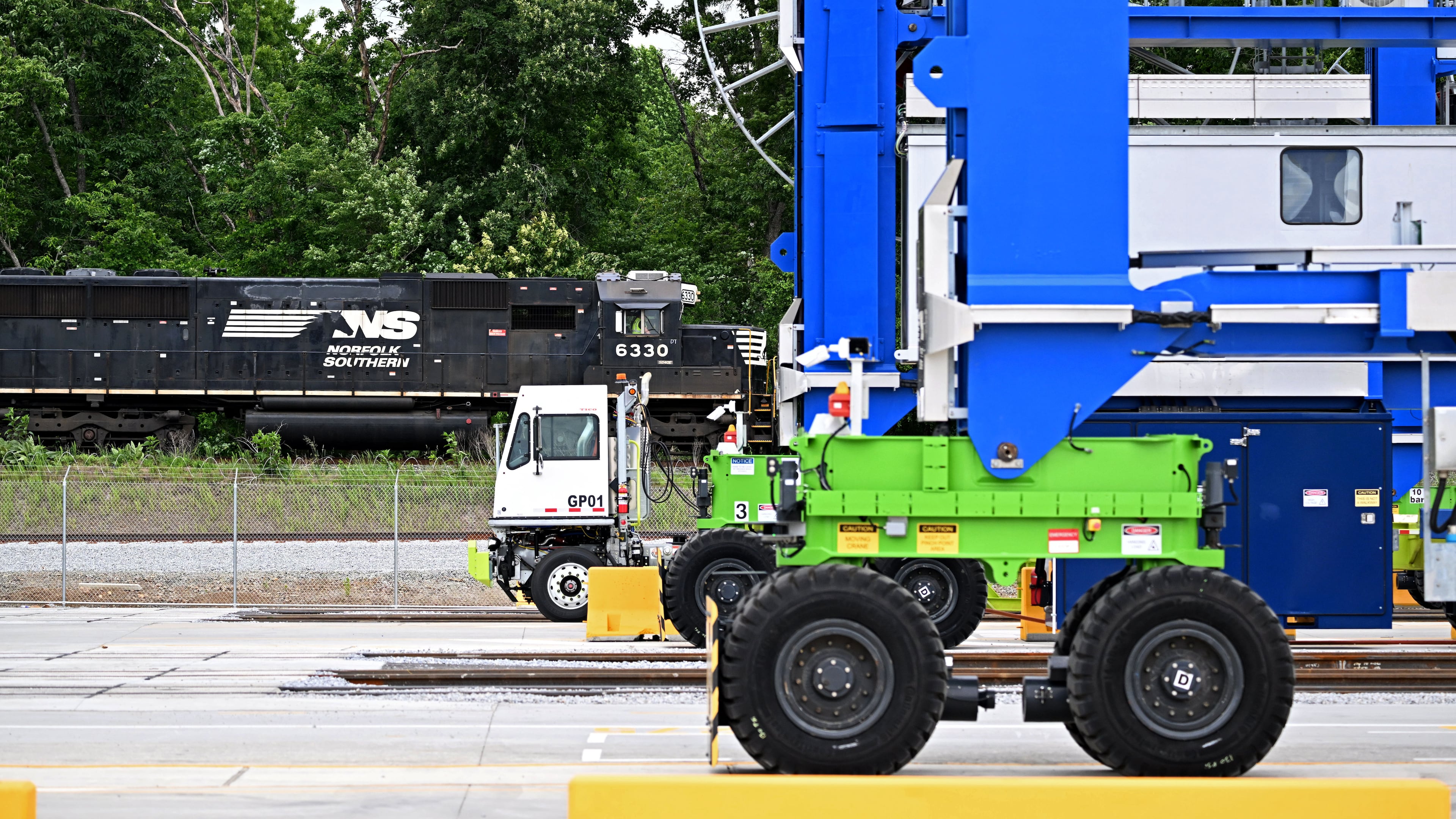


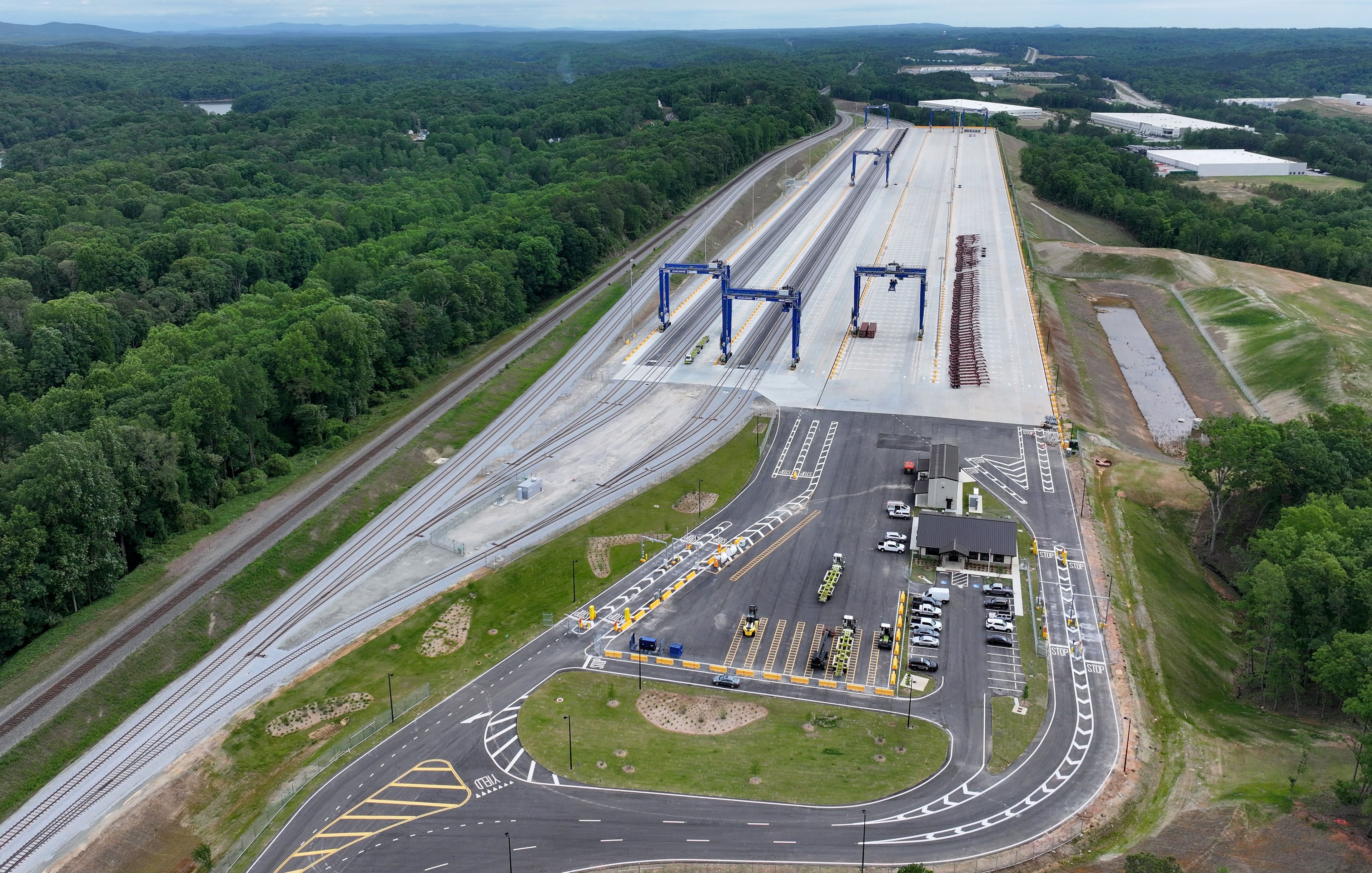
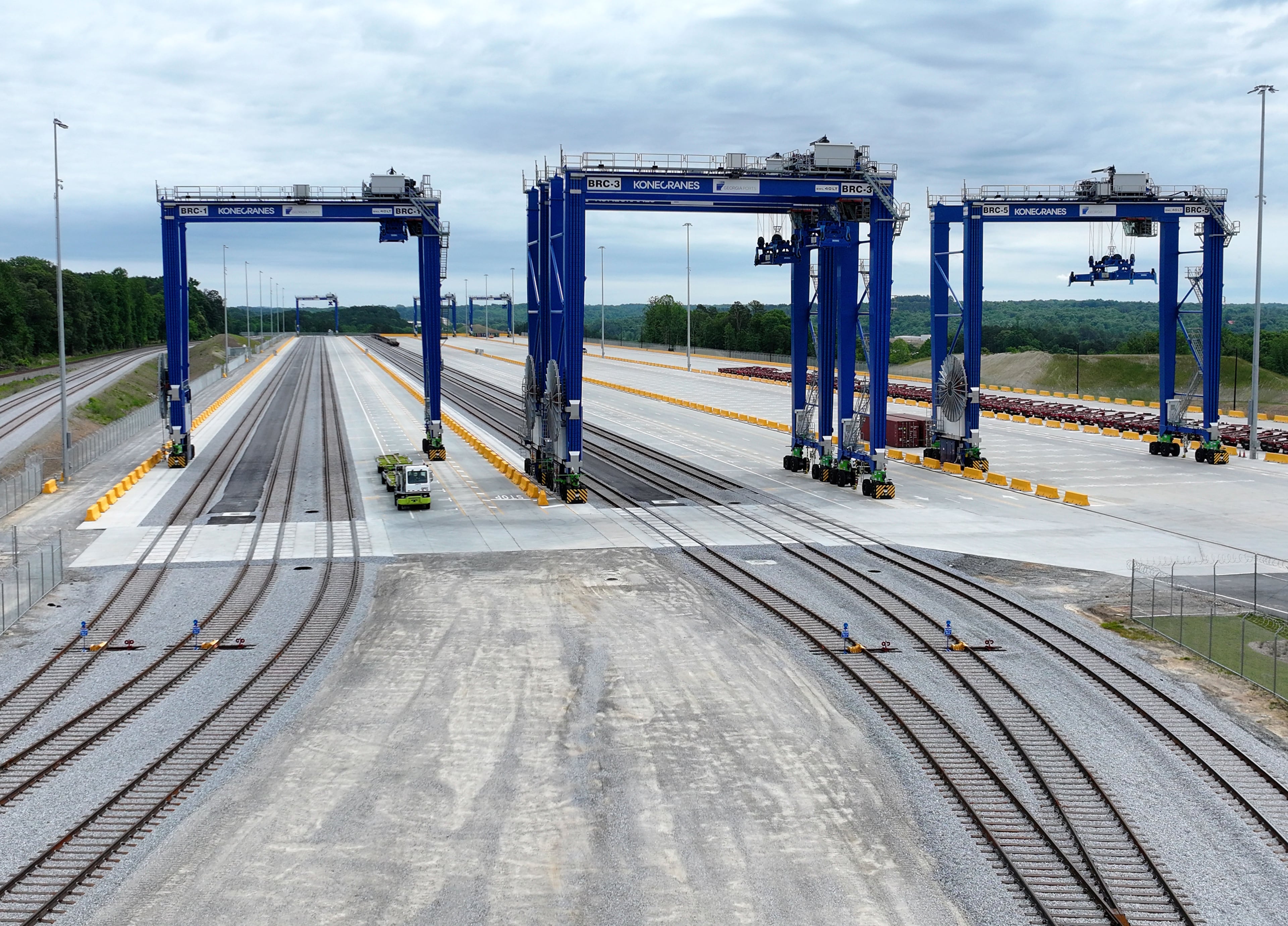
GAINESVILLE ― Five cargo containers look mighty lonesome sitting on a 100-acre concrete slab designed to support tens of thousands of the colorful metal boxes.
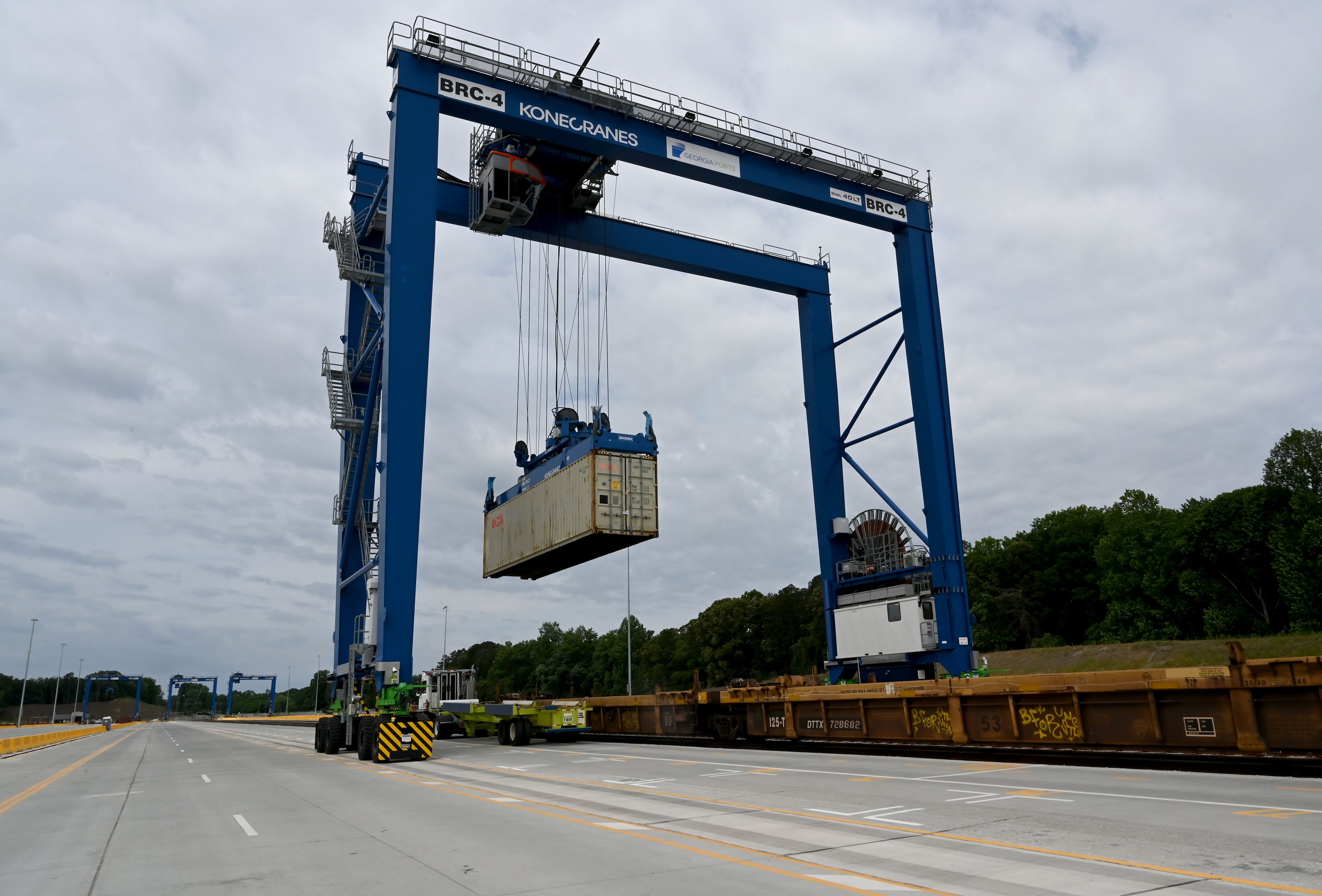
Yet the seven erector set-like gantry cranes and the six 3,000-foot-long railroad sidings nearby hint at busier days ahead for the Georgia Ports Authority’s newest cargo facility, the Gainesville Inland Port.
The complex, nestled on a picturesque site on the edge of the North Georgia mountains a few miles from I-985’s end, opened May 4. It is next to a freight line that is part of Norfolk Southern’s East Coast network, connecting it directly to the Ports Authority’s coastal terminals along the Savannah River.
The Gainesville Inland Port “essentially extends our gates” by 300 miles, said Ports Authority CEO Griff Lynch, with cargo containers going from ship to the new facility — and vice versa — in 50 hours by train. Cargo turn times at other major U.S. ports typically approach one week.
The inland port’s opening also promises to eliminate thousands of truck trips along Georgia’s highways, including overworked I-285 around Atlanta. The forecast is for 26,000 containers to move between Savannah and Gainesville via rail over the next year, with that number climbing steadily over the next decade.
The Ports Authority projects the inland port will handle 100,000 containers annually by 2036, and the facility is designed to move 200,000 containers at full capacity. The forecast reflects the I-85 corridor’s growth as an industrial hub: 330 manufacturers of everything from heavy construction equipment to food to plastics to auto parts already operate in the region.
Traffic is expected to grow by hundreds of containers a week in the short term and thousands this summer and fall as customers shift their logistics approach.
Goods needed quickly — “hot commodities,” as inland port General Manager Wesley Barrell called them — will still move between Savannah and Atlanta by truck, but bigger shipments and those destined to go beyond Gainesville will come by rail.
“If you build it in the right place, they’ll come, and it’s in the right place,” said Alec Poitevint, chairman of the Ports Authority board of directors. “It is a different mindset: They’re used to having a truck backed up to the loading dock that they then send it to Savannah. But we’ve seen it work elsewhere.”
Tested and proven strategy in Crandall
Gainesville is the Ports Authority’s second inland rail port. The other, known as the Appalachian Regional Port, opened eight years ago in Crandall in the state’s northwest corner and serves the Southeast’s other freight rail titan, CSX.
That facility is smaller and, unlike Gainesville, did not have an established manufacturing base. But it was close enough to Dalton and its flooring manufacturers as well as Chattanooga, home to auto and appliance makers, to make it a “good bet on the future,” Lynch said.
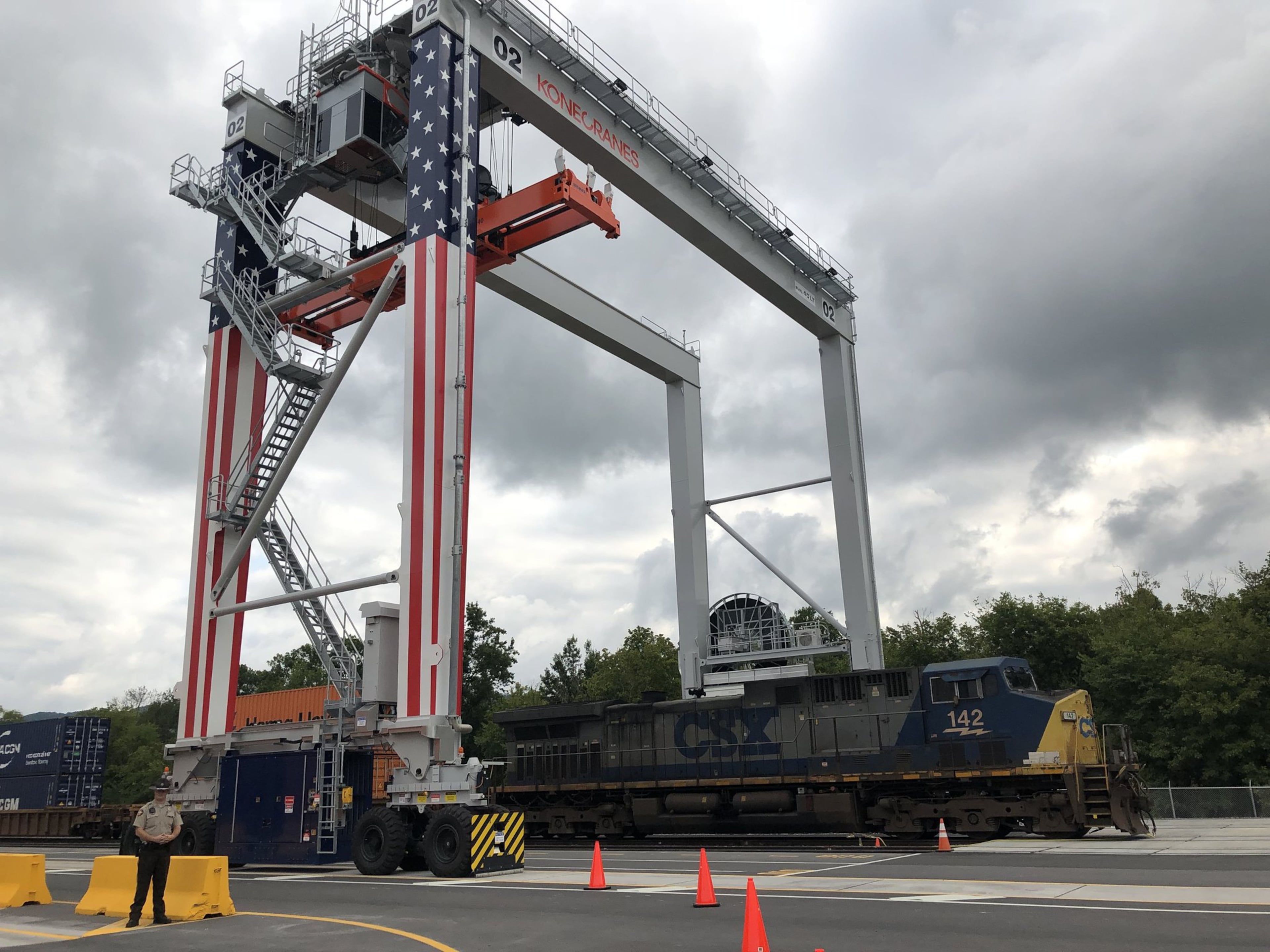
Designed to handle 50,000 containers annually at maximum capacity, the Appalachian Regional Port eclipsed 45,000 in 2025 and just brought another gantry crane online to move more cargo.
The Appalachian facility also served as a test bed for Gainesville, the planning for which started just as the Crandall port was coming online. The Ports Authority perfected the terminal operating systems at the Appalachian Regional Port, honed their sales pitch to customers accustomed to using trucks for freight moves and figured out how to intertwine communications between shippers, ocean carriers and port officials.
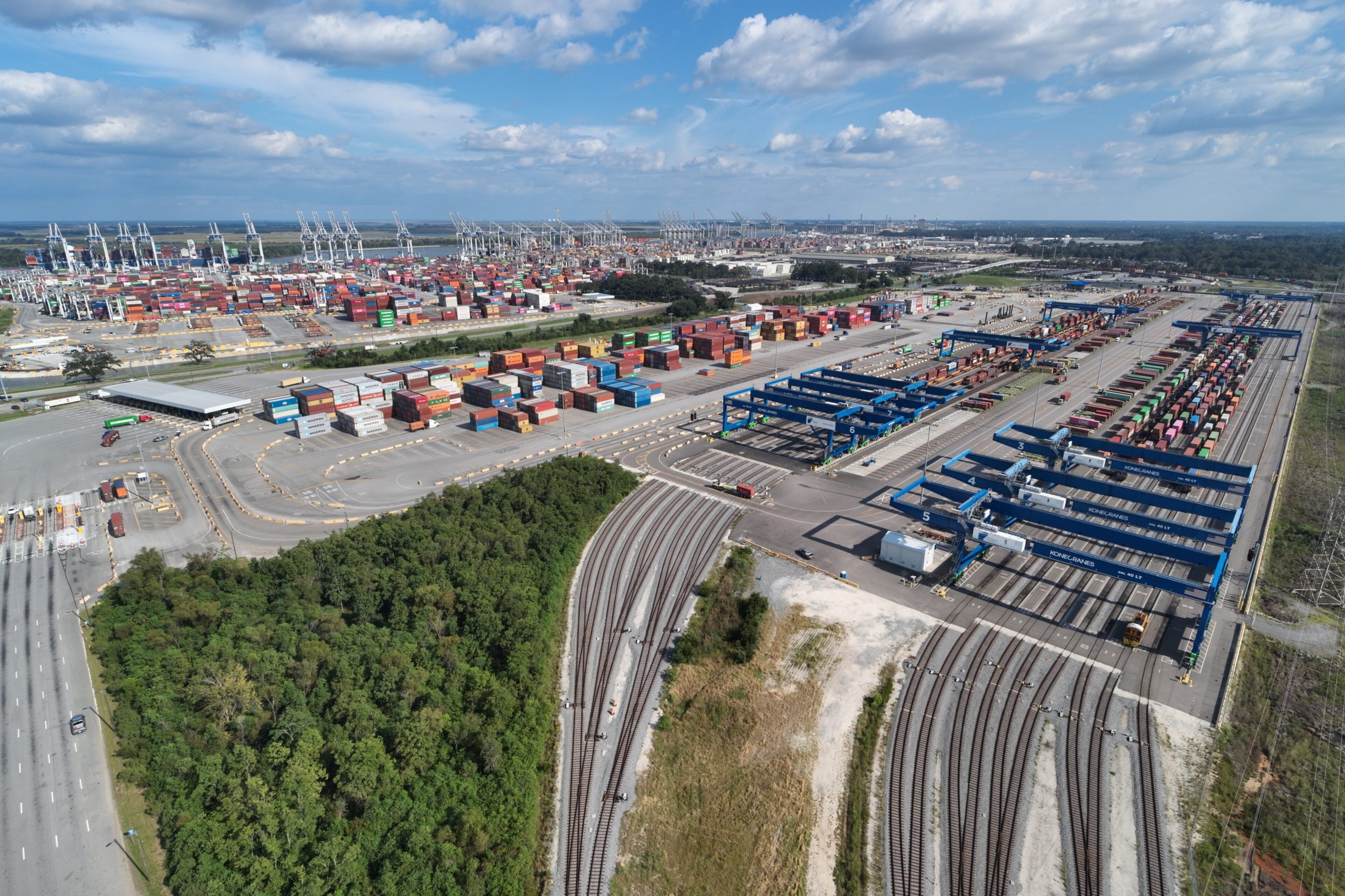
In the meantime, the Ports Authority opened the Mason Mega Rail Terminal adjacent to the docks in Savannah in 2020. A fifth of containers coming in and out of the port now do so by train. The long-range goal is to have as many containers moving by rail as by truck.
Hall County could see accelerated growth
Development authorities say the Gainesville Inland Port property could draw even more industry to Hall County, one of Georgia’s fastest-growing counties.
Like with all real estate, location is key. That’s no different for warehouses and manufacturing plants, which face an uphill battle if they can’t ship or receive materials by road or rail.
Real estate experts said being close to an inland port and obtaining speedy access to international markets is the equivalent of beachfront property for most industrial projects.
“It creates efficiency and support for manufacturers and distribution operations alike,” said Brad Pope, a supply chain and logistics executive at real estate services firm JLL. “The inland port puts the power of the Savannah port right in the backyard of Atlanta’s largest and most dynamic industrial submarket.”
Both the Atlanta and Savannah industrial markets saw unprecedented booms following the COVID-19 pandemic, which strained supply chains and juiced e-commerce demands. Both areas set records for new warehouse construction, but Savannah’s growth was unmatched across the country — largely because of the growth of Georgia’s ports.
For much of last year, Savannah’s industrial market grew faster than any other in the country, according to JLL. That’s poised to continue with 15 industrial projects breaking ground during this year’s first quarter, the most since 2024.
The industrial market around the new inland port in Gainesville is the largest warehouse market in the Atlanta region, topping even the area around the world’s busiest airport. It also started the year by posting its best quarter in three years, according to Pope.
The inland port will only add fuel to that fire, he said. That’s a sentiment shared by Tim Evans, CEO of the Greater Hall Chamber of Commerce.
“For many of our existing industries, it has given them another reason to look at making investments here in our community as opposed to other locations they have around the country,” Evans said.
The nearly decade-long buildout of the Gainesville facility has allowed businesses around Hall County to jostle for position. Roughly a third of the county’s workforce is employed in industrial facilities, such as Mar-Jac Poultry and Kubota, which makes lawn mowers, small tractors and utility vehicles at a factory next door to the inland port.
The inland port is also pitched as a benefit for residents living in the area, although neighbors have raised concerns in county meetings about increased truck traffic and new gas stations built to service the inland port’s activity.
While some of the shipping containers brought into the inland port by train will transfer to trucks for last-mile delivery, spreading across a six-county area, Barrell said many of those trucks would’ve been on the road anyway, making a longer haul to and from Savannah.
The concentration of trucks making shorter trips to and from Hall County, however, is projected to increase, likely by hundreds of trucks per day when fully scaled, according to port estimates.
To mitigate some of those effects, the Georgia Ports Authority also invested $4.8 million into Hall County road improvement projects.
Evans added that it’s a lifestyle benefit for truckers in the area.
“They might not necessarily be all that ready to make an overnight haul to Savannah and back,” but with the inland port, “They can stay here locally, do short runs all day and sleep in their own bed at night.”