Why Democrats’ $8M Georgia Supreme Court push fell short


Democrats proved Tuesday they could drive voters to races most Georgians usually ignore.
What they couldn’t do was persuade enough of those voters to treat two officially nonpartisan Supreme Court contests like the partisan battles the party wanted them to become.
That contradiction sits at the center of one of the biggest lessons from primary night: Even an $8 million campaign, big-name endorsements and a Democratic turnout surge weren’t enough to knock two sitting Georgia Supreme Court justices off the bench.
Not that it was a shock. No challenger has defeated a sitting Georgia Supreme Court justice since 1922. But Democrats thought they could upend that by going all out for Jen Jordan and Miracle Rankin with the full backing of the party and the blessing of former President Barack Obama.
Jordan lost to Justice Sarah Warren by 18 points, and Rankin lost to Justice Charlie Bethel by 2.
Their defeats showed the limits of partisan muscle in officially nonpartisan judicial races where experts say incumbency, the language of impartiality and, bluntly, voter apathy among some Democrats helped define the contests.
“It’s absolutely unsurprising, and the reason is completely structural,” said Michael Fix, a Georgia State University political scientist. “Many voters don’t have information about the high-profile races, let alone judicial races. They don’t think it impacts them, so why would they care?”
To be clear, Fix and other experts say voters should care deeply about state judicial races that can affect their lives more directly than federal courts. But the system is designed to favor incumbents, he said, and the nonpartisan label makes it harder for many voters to decode the stakes.
“Nonpartisan elections are the worst kinds of elections. If the average voter has low information about the races, what do you have if you have nothing else when you go to vote? You see the R or D by their name,” Fix said. “And when you take that away, you take away the one thing about the candidate most people know.”
Democrats understood that obstacle from the start. Their answer was to make the races as visible and partisan as possible, mounting a statewide ad blitz, sending five rounds of statewide mail totaling more than 50,000 pieces and coordinating a door-knocking campaign that framed the contests around abortion rights and judicial independence.
An analysis of returns shows at least 8% of Democratic primary voters backed the incumbents anyway. What’s unclear is whether it was out of genuine support, confusion over the partisan stakes or discomfort with dragging judicial races deeper into party politics.
Bob Irvin, a former Republican state legislator, said the latter was a unique motivator for voters across Georgia who “don’t believe judicial elections, and judges, should be partisan.”
As for the gap between Jordan’s double-digit loss and Rankin’s narrower defeat, analysts have several theories. Voters sometimes favor female judicial challengers when they’re facing men. And Rankin’s name, along with her role as former president of the Georgia Association of Black Women Attorneys, may have helped identify her to left-leaning voters.
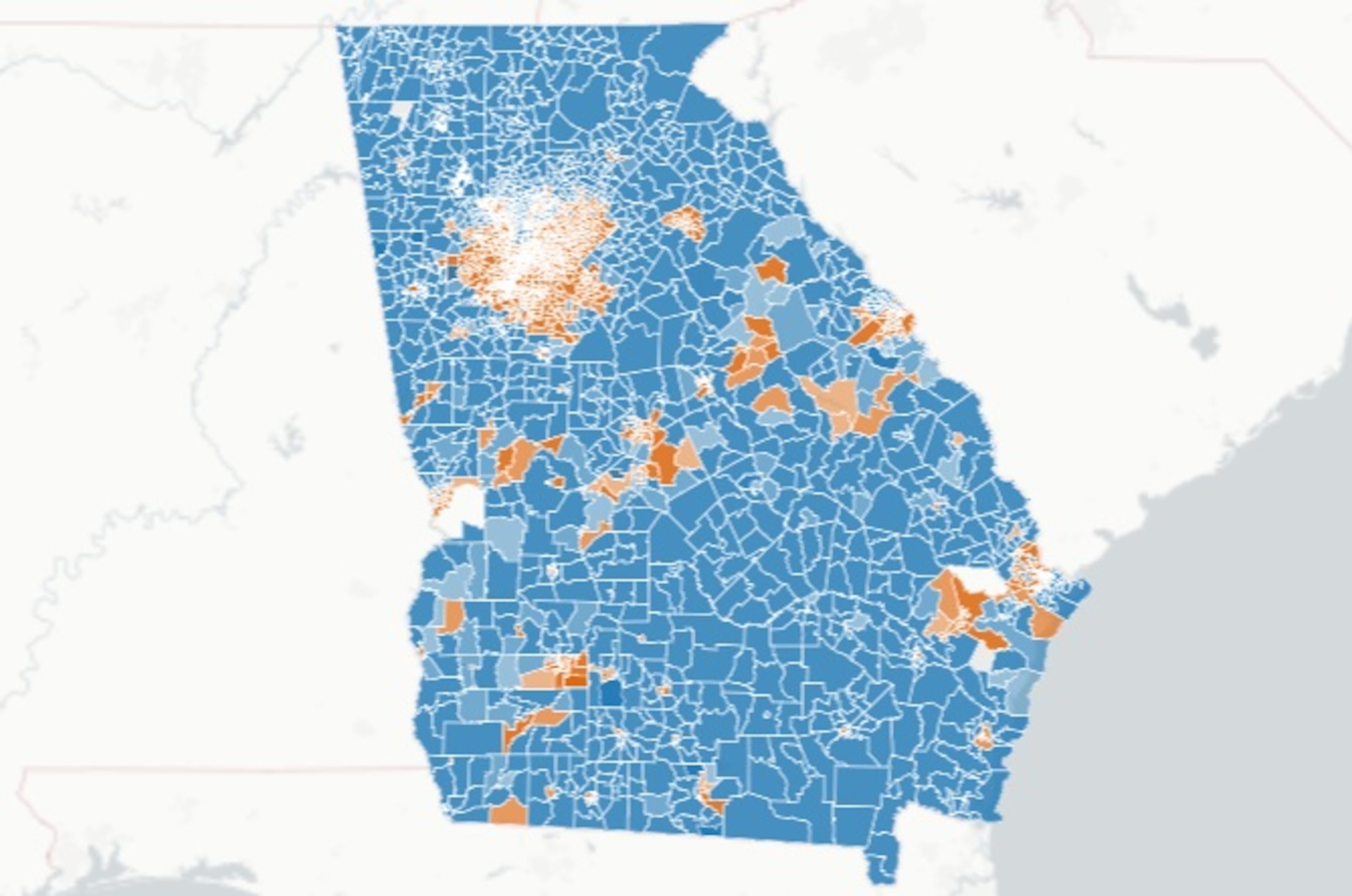
The precinct-level results sharpen that contrast. In the state’s most heavily Democratic precincts, Rankin won 74% of the vote, compared with Jordan’s 56%. Jordan only outperformed Rankin in predominantly GOP precincts, highlighting how much more difficult it was for her to consolidate the party’s base.
The incumbents, both appointed by former Gov. Nathan Deal, took a far different approach, framing their reelection bids around experience, impartiality and respect for the rule of law.
Party chair Charlie Bailey pointed to a silver lining, saying the effort helped drive broader Democratic participation. Democrats outpaced Republicans in the primary, an important sign of enthusiasm heading into November. He said the party won’t shy away from other risky targets.
“I can’t promise you we’re going to win every race, but we’re going to win a hell of a lot more than we lose — and even in those that we lose, we are going to make Republicans crawl over broken glass to get these seats from us,” he said.
Warning signs
Georgia’s judicial elections are nonpartisan, but politics often play a quiet role.
The nine-member court has been largely shaped by Republican governors, who appoint justices to vacancies that give them the advantages of incumbency before they face voters.
Justice John Ellington, who won an open seat in 2018, is the only member of the bench who was not first appointed to the job. And only a handful of sitting justices have faced formidable opponents in recent Georgia history.
In 2006, Justice Carol Hunstein faced former Bush administration attorney Mike Wiggins, who called her a soft-on-crime liberal who legislated from the bench. Her landslide victory was widely seen as a triumph for judicial independence.

And in 2010, Justice David Nahmias was dragged into a surprise runoff by a little-known attorney who hardly mounted a campaign. Nahmias’ easy victory a few weeks later led analysts to speculate that his unusual last name factored into his earlier struggles.
Two years ago, Justice Andrew Pinson was the only one of four justices up for election to face a challenger. He defeated former U.S. Rep. John Barrow, who also tried to turn the race into a referendum on abortion rights, but without anything close to the level of party support Jordan and Rankin received.
Barrow has long argued the system is stacked against challengers, who risk discipline from the state’s judicial watchdog if they speak too directly about issues likely to come before the court, while incumbents can lean on the prestige of office and judicial restraint to avoid taking public stands.
That tension resurfaced on the eve of this year’s election when the Georgia Judicial Qualifications Commission alleged Jordan and Rankin violated judicial conduct rules by promising to restore abortion rights and publicly endorsing one another. They asked the U.S. Supreme Court to force the JQC to unpublish its allegations. The request was denied Friday.
“The problem is the people as partisan as hell arguing for nonpartisanship,” said Barrow. “And the people who are bipartisan in their approach, arguing for a seat at the table, have to constantly defend their right to free speech.”
The Jordan-Rankin alliance also marked a different kind of campaign. Their joint strategy marked a sharp break from how Georgia Supreme Court races are usually run, part of a broader effort to treat judicial contests more like partisan campaigns. That approach seeped into county-level races, too. Fulton County District Attorney Fani Willis actively campaigned to oust two sitting Superior Court judges.
“It was definitely a good election cycle to be running unopposed,” said Fulton County Superior Court Judge Robert McBurney.
Now attention is shifting to what the defeats mean for the next political fight.
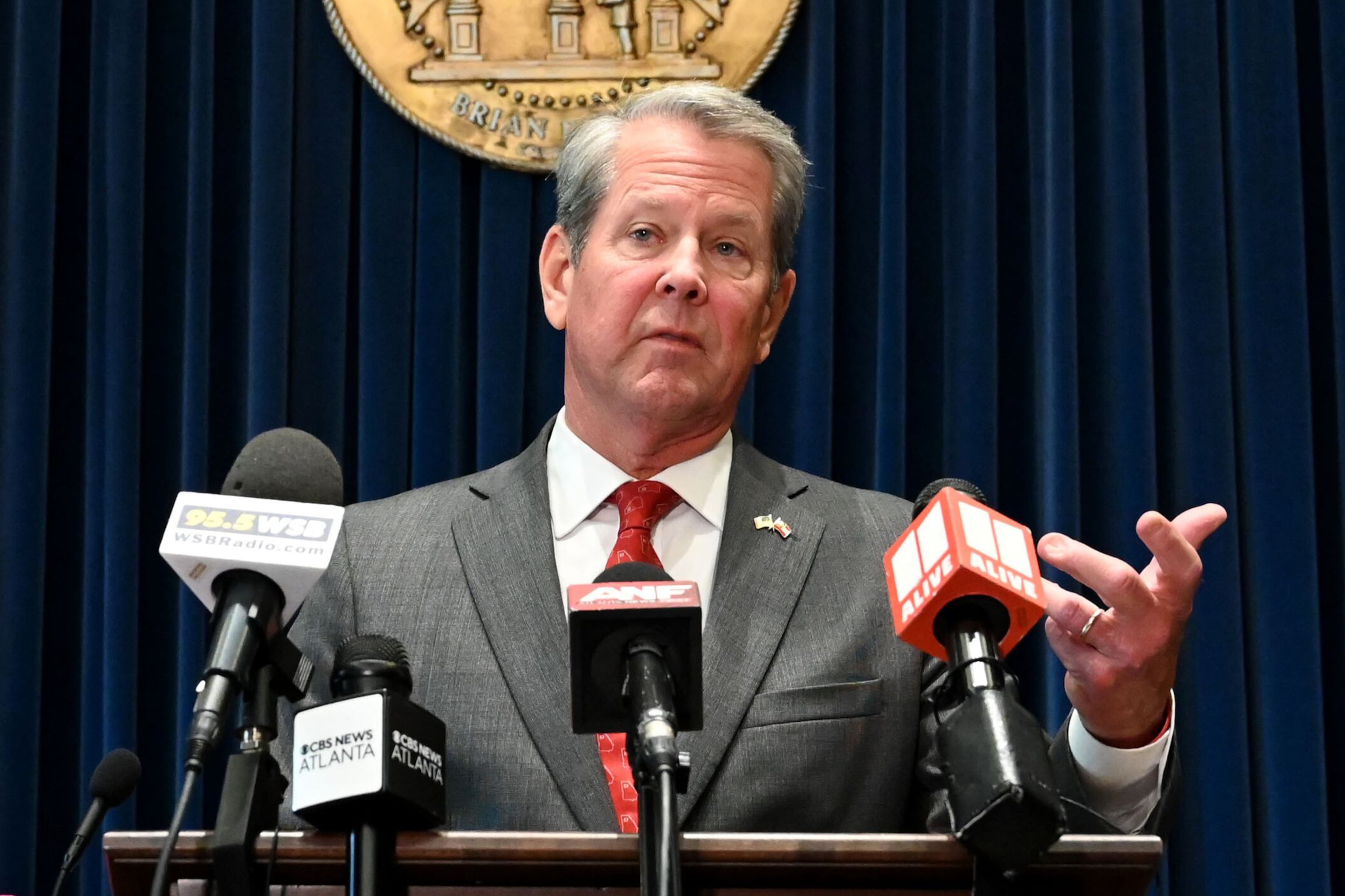
Gov. Brian Kemp signed a law this month making district attorney races and other key local offices in five deep-blue metro Atlanta counties nonpartisan, a move Democrats have warned could blur party cues in some of their strongest territory.
The results Tuesday offered an early stress test of that strategy. If Democrats couldn’t flip two statewide nonpartisan Supreme Court races despite an $8 million campaign backed by the party’s leading state and national figures, what happens when that same dynamic plays out county by county across their own base?
Others see a different warning sign in the growing politicization of judicial elections. Some fear Georgia could become more like Wisconsin, where tens of millions of dollars are routinely spent over ideological brawls.
“It is important to keep partisan politics out of our judicial elections,” said Noah Pines, a prominent Atlanta criminal defense attorney.
“While justice prevailed in this election — in that the two most qualified candidates were reelected to the Georgia Supreme Court — I fear that the Democratic Party will continue to inject money, politics and misinformation into our judicial elections.”
— Staff writer Rosie Manins and Data Editor Charles Minshew contributed to this report.
