AI job losses are increasing. Are training programs the answer?


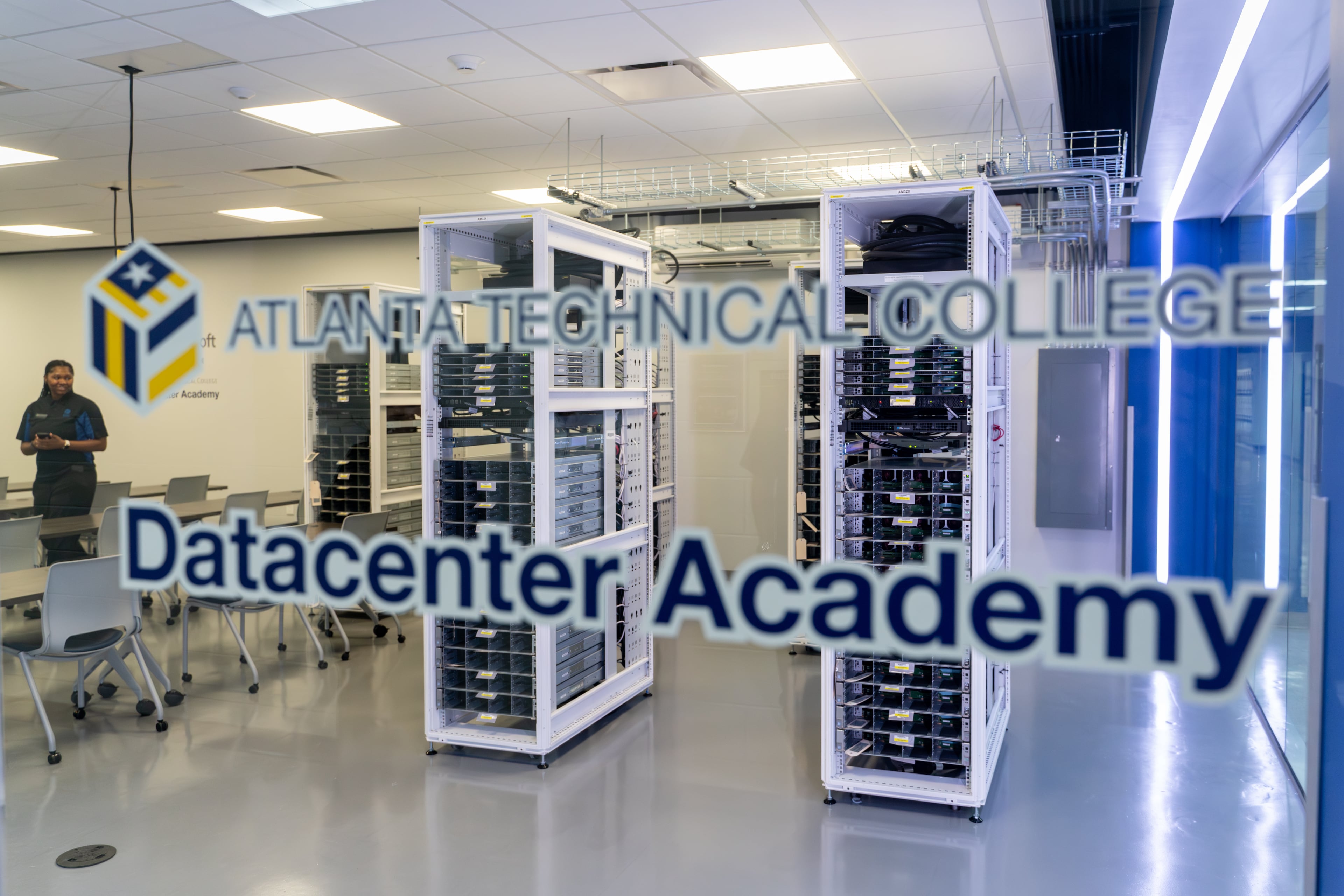
Five racks of computer servers hummed in a futuristic yet industrial-looking classroom at Atlanta Technical College, south of downtown.
Cool blue-white LEDs lined the room’s windows, while yellow heavy-duty power outlets hung from the ceiling over rows of desks where students will learn how to maintain the servers whirring behind them.
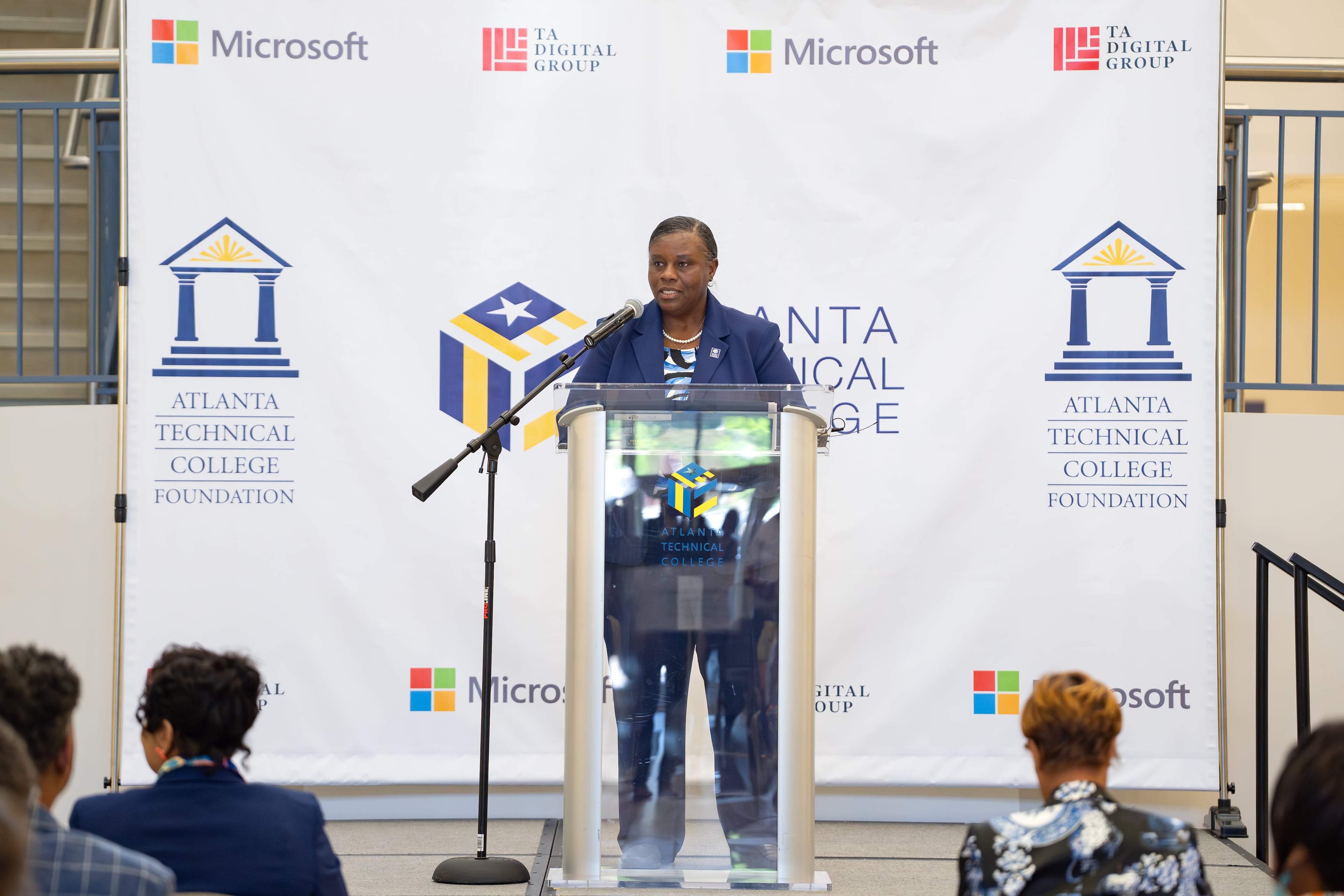
A bevy of elected officials, and Microsoft and real estate leaders gathered around Victoria Seals, the college’s president, as she cut a ceremonial ribbon to officially open the school’s new Microsoft Datacenter Academy on Wednesday.
“We are living in a time where the emphasis is on artificial intelligence. However, what we know is that behind every advancement in AI is the power of HI, human intelligence,” Seals said before the ribbon-cutting.
“Yes, technology may drive the future, but it is the people who shape it. The business of data and data management is growing, and we will not let our students and communities be left behind,” she continued.
AI has triggered a global arms race for investment and construction of sprawling computing campuses, with Georgia emerging as a top U.S. market. But it has also alarmed many white collar workers who fear being replaced by models such as Claude or ChatGPT.
The Atlanta Technical College celebration also came the same day that Meta, the parent company of Facebook, Instagram and WhatsApp, laid off thousands of workers — 10% of its workforce — across the globe as it tries to retool itself into an AI company and plows billions into the technology.
Other tech companies, including Microsoft, have also fired thousands of workers as AI becomes a larger priority. Over the past two years, the roles expected to be affected by the technology have seen heavy job losses, according to Bloomberg.
In Georgia, state data show the information and professional and business service industries have lost more than 5,000 jobs over the past year, although AI may just be one factor among other economic changes, such as increased prices and tariffs. In total, the state has added only 2,700 jobs over the 12 months that ended in April, essentially flat.
As job disruptions mount, programs to try to offer new skills for workers looking to make a career change have popped up across metro Atlanta to build what many refer to as “AI literacy.”
But recent research finds that is an opaque, shifting term, and training does not necessarily mean opportunities.
“There’s all of these ideas … that you can educate your way into a new career. That’s not the case anymore,” Anuli Akanegbu, a cultural anthropologist and labor researcher, told The Atlanta Journal-Constitution.
Akanegbu spent six months last year going to workforce development programs around Atlanta for her report, “(404) Job Not Found: What Workforce Training Can’t Fix for Black Atlantans in the Age of AI,” published by the nonprofit tech policy research center Data & Society.
The programs she observed were around digital literacy, cybersecurity, computer science and job-preparation, and often included AI as a segment or supporting tool within the training.
She found that AI literacy is often less about technical proficiency and more about performing familiarity with certain tools, like ChatGPT, which puts more pressure on workers without providing opportunities.
“We have a lot of overeducated and underemployed people, so what we’re going to have is just a lot more people who are educated, but where are the corresponding jobs at the end?” Akanegbu asked.
Akanegbu said several of her research participants, from program managers to those who were in the trainings, have had to leave Atlanta in the past year because they couldn’t find work.
“They could not stay in Atlanta because there weren’t enough jobs to go around,” she said.
“Is learning AI or upskilling in AI going to guarantee you your next job? No.”
Data center jobs and training
There is at least one industry where the growth in AI has led to a boom in jobs: data center construction.
Metro Atlanta has emerged as the second-largest data center market in the U.S., according to real estate services firm CBRE. A recent University of Georgia study reported the state is home to hundreds of facilities either operating, planned or under construction.

Those data center construction roles have increased in the U.S. by 216,000 since 2022, a recent Goldman Sachs report found.
But those are often short-term jobs that go away once a center is built. Data centers typically produce some high-paying jobs involved in servicing the facilities, but in the longer term, the results are more mixed depending on the type of data center and how many are already in a community, according to the Brookings Institution.
Although the Datacenter Academy classroom is new at Atlanta Technical College, the curriculum around it is not. Seals, the college’s president, said the school has been teaching it for the past five years.
The academy covers data center operations, networking, cybersecurity and more. The college has “continued to update it and make sure that it’s aligned with the new technology equipment and is staying on the forefront of what the industry is doing,” Seals said.
Cody Jackson, 28, is a student in the academy. He came to Atlanta Technical a year and a half ago on a scholarship through the Datacenter Academy, meaning his tuition, books and fees were all covered.
Jackson had been working as a broker for a logistics company but was ready for a change, and a buddy told him about the college’s program.
“I feel as if not only the nation but the world is going very tech heavy, and it’s super important to stay up with the times. And I mean, honestly, this is where the money is at, from what I hear,” Jackson told the AJC.
He will graduate this summer and has already received a job offer from Microsoft as a logistics technician.
But although Atlanta Technical boasts a job placement rate of 100%, according to its 2025 annual report, across its various degrees, not all who go through other workforce training programs have opportunities lined up when they’re done.
Correction
May 26, 2026This story has been updated to correct the job placement rate for Atlanta Technical College based on its 2025 annual report.