At 1678 Omakase, price is the hook. Does the sushi tasting menu land?

The value proposition for 1678 Omakase is right in its name: The Brookhaven sushi restaurant serves a 16-course omakase dinner for just $78.
That price is less than half what Atlanta’s more established omakase counters charge. Omakase Table’s Buckhead location starts at $295 per person, while dinner at Mujo starts at $245, though those two restaurants represent the cream of the crop — both earned spots among The Atlanta Journal-Constitution’s 50 best restaurants of 2025, as well as Michelin stars. Hayakawa, which also has a Michelin star, has the most expensive starting price at $315.
And 1678 Omakase’s price-undercutting strategy is clearly working; the restaurant blitzed local social media feeds when it opened and routinely sells out its sushi counters, encouraging its rapid expansion.
In many ways, 1678 Omakase (and its sister restaurants, Jak Omakase in Duluth and OnTen in Midtown) can be a great value. It shares many rhythms and tropes of omakase dining with its more expensive rivals.

But, to paraphrase modern-day philosopher Katt Williams, a Chrysler 300 only looks like Rolls-Royce Phantom until a Phantom pulls up.
One of the primary issues with 1678 Omakase is inconsistency. My two visits could have been at two different restaurants, even though the courses and the fish were nearly identical.
The first took place in the rear dining area, with the sushi bar packed end-to-end with about 10 diners. With the edges of everyone’s stools touching, the tight quarters made it difficult to repeatedly reach for each piece of nigiri placed in front of me. By the end of the meal, my dining companion had almost edged around the corner of the bar for extra space.
On that occasion, our chef was quiet and businesslike, hardly interacting with the diners. There were a couple of clear mistakes with the service: A round of nigiri miscounted, a bit of connective tissue left in a piece of hirame, also known as fluke.
At times, I felt guilty that this was my friend’s first omakase experience. The meal felt impersonal and a bit rushed at times, like we were terminals on a sushi assembly line.
My second visit was much more enjoyable, when my wife and I were seated in comfortably spaced stools at the forward-located sushi bar. Our chef, serving only six diners, was much more engaging and personable. There were no obvious missteps.
The cocktails proved to be one of the most consistent, tasty aspects of both meals. They tended to be sophisticated and balanced, especially the Norito, a savory, slightly sweet drink made with nori-infused vodka and sesame oil, topped with bubbles. The Ume-Rita was another pleasantly balanced choice, made with tequila and umeshu, a Japanese plum liqueur. There’s also a well-curated selection of wine, sake and Japanese whisky, though the drink prices are not the same bargain as the sushi menu; cocktails are priced between $17 and $22.
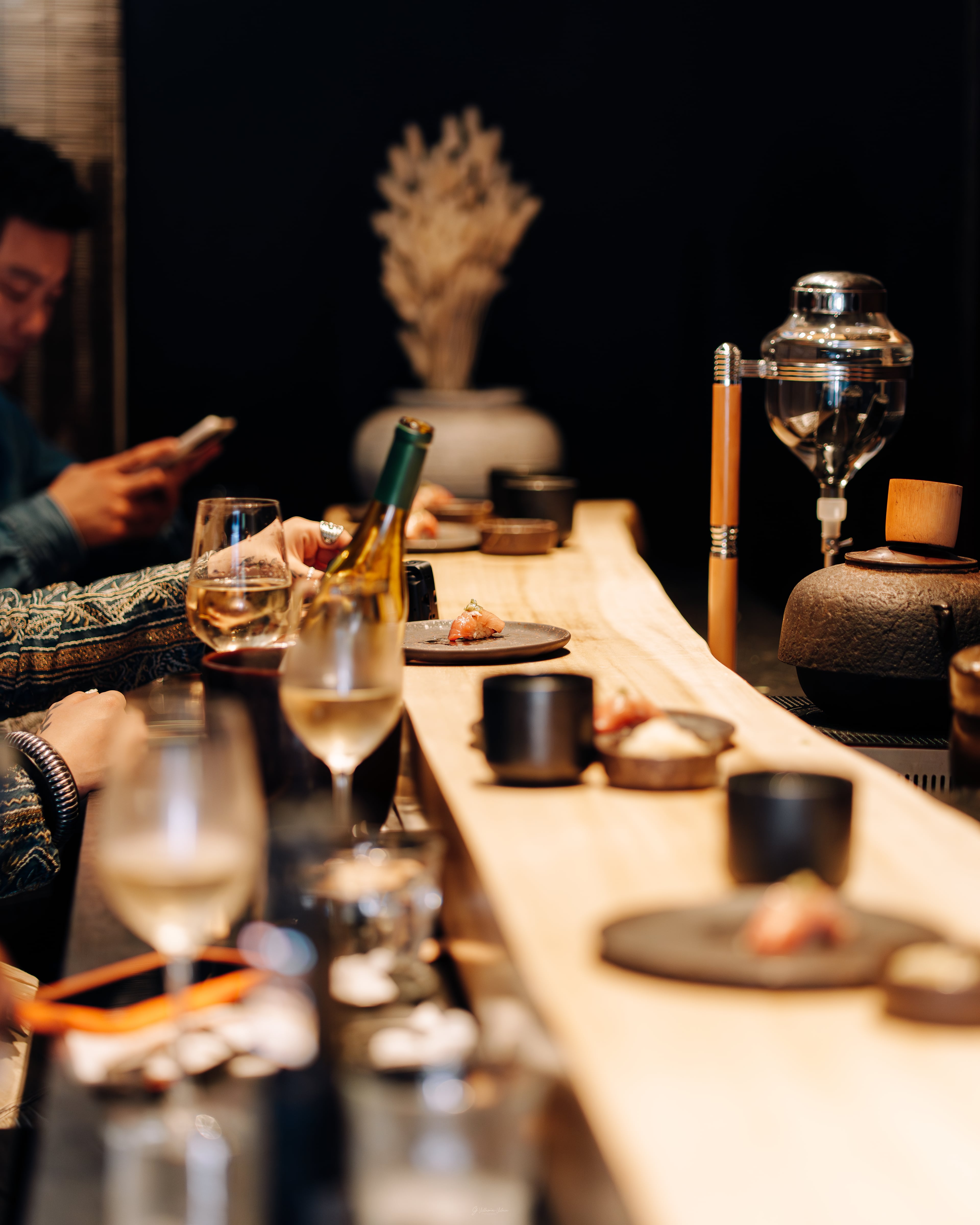
That second dinner was an experience I could confidently recommend, with the caveat that expectations should match the price. 1678 Omakase can offer a quality meal and a nice date night, but it wouldn’t be mistaken for Rolls-Royce-like luxury.
I asked Jak Tuan, owner of 1678 Omakase, Jak Omakase and On10, how he is able to serve an omakase-style menu for just $78. He pointed out that sub-$100 omakase restaurants are already popular in New York and Los Angeles; he has simply adopted their model in Atlanta, another metropolis where Japanese seafood can be efficiently delivered.
He also acknowledged that his growing sushi empire benefits from economies of scale, something that Atlanta’s elite omakase counters simply can’t take advantage of. Tuan orders fish for multiple restaurants and employs a roster of sushi chefs, allowing his restaurants to remain open seven days a week and serve many more diners.
1678 Omakase also eschews the several cooked courses that many other omakase counters serve as a prelude to the sushi parade. The few fully cooked items were also served as sushi, like miso cod nigiri or cooked blue crab in a hand roll.

Tuan sources his fish from the same Japanese fish markets as other upscale Atlanta restaurants; he actually spoke with me from Japan, where he was meeting with a supplier. But most of the seafood included in the 16-course omakase are relatively common: amberjack, sea bream, salmon, golden eye snapper, tuna, scallops and shrimp. There are some luxury items like Japanese wagyu beef and uni (sea urchin), though you’ll find those items at many sushi restaurants. The most interesting-looking fish on listed on the menu, kamasu (Japanese barracuda), was not served at either of my visits, though I still remember first trying the species at Mujo in 2023.
The chefs at 1678 Omakase pre-slice most of the fish before each seating, which helps speed the meal along. They do still employ their knives, adding shallow finishing cuts to some of the fish that help collect any added flavoring. There is thought behind these added flavors: A hint of lime adds a wink of citrus to the light, clean fluke nigiri, while a dab of chili crisp plays well with sea bream.
When 1678 Omakase hits all its marks, it’s a good restaurant; it serves solid sushi and doesn’t feel like an extreme commitment of time and financial resources.

When the restaurant misses, it’s not worth it; 1678 Omakase is still a pricey dinner, especially once you add tax, tip and a couple of cocktails or supplements. My average cost per person across both visits was more than $150.
For me, there’s a greater conceptual issue at play that I must address, even at the risk of sounding like a snob. 1678 Omakase and its sister restaurants clearly fill a niche in the market. They’re popular, and diners have flocked to them to get a taste of the omakase experience, which are positive factors for Atlanta’s restaurant scene in general.
It’s just not the same as Atlanta’s elite omakase counters. Omakase translates to “I leave it up to you,” meaning the diner gives control of the meal over to the chef. In return, the chef honors the diner with extreme attention to detail. They slice fish to match the size of the customer’s bite, or notice when a diner is left-handed and adjust their service to accommodate them, which I always notice and appreciate as a leftie. The experience is excessive and luxurious to a ridiculous degree.
Value-engineering omakase removes the aspects that led to its fetishization in the first place: The artistry, individualism and over-the-top hospitality. The concept of omakase is fundamentally at odds with the theory behind economies of scale. I don’t blame these lower-priced omakase restaurants for filling a void in the market, but I’m compelled to point out what may sound obvious — it just ain’t the real thing.
1678 Omakase
2 out of 5 stars (acceptable)
Food: sushi
Service: attentive, if occasionally impersonal
Noise level: moderate
Recommended dishes: chef’s choice tasting menu; recommend adding the Big Mac Nigiri supplement, which includes wagyu, tuna and uni, for an additional charge.
Vegetarian dishes: this restaurant cannot accommodate vegetarian diets
Alcohol: full bar with an impressive cocktail list
Price range: less than $100 - $150 per person, excluding drinks.
Hours: noon - 11 p.m., Monday - Sunday
Accessibility: ADA accessible entrance, but call ahead to arrange accessible seating options
Parking: free lot
Nearest MARTA station: 1 mile from Brookhaven/Oglethorpe station
Reservations: required, available on Resy
Outdoor dining: no
Takeout: no
Address, phone: 804 Town Blvd., Atlanta. 678-629-1799
Website: instagram.com/1678_omakase
The Atlanta Journal-Constitution’s dining critics conduct reviews anonymously. Reservations are not made in their name, nor do they provide restaurants with advance notice about their visits. Our critics always make multiple visits, sample the full range of the menu and pay for all of their meals. AJC dining critics wait at least one month after a new restaurant has opened before visiting.