Desperate patients seek cures, leave with debt and regret



Ron Evangelista’s first appointment at Progressive Medical Center left him feeling hopeful.
For years, Evangelista, 82, had been dragged down by osteoarthritis in his neck. The pain was so persistent that it had become challenging to do the simple things he loves, like walking the dogs or dancing with his wife, Kathy. She, too, had some chronic health issues.
The couple, who live in Chattanooga, Tennessee, had tried conventional medicine without much success. So, based on a friend’s recommendation, they decided a trip to Atlanta was worth a try. Progressive Medical Center, they heard, offered something different.
Six weeks and more than $16,000 later, however, their views began to shift.
“Gee whiz, I thought, aren’t we great — getting all this attention and all this service,” Ron told The Atlanta Journal-Constitution, thinking back to their first appointments. “Little did you know.”
Georgia’s thriving alternative medicine industry attracts patients from all over the nation to clinics that promote treatments with compelling tales of beating the odds. Gripping testimonials describe stage 4 cancer cures, persistent symptoms finally resolved, joint pain eliminated without surgery, the signs of aging reversed.
But the AJC has found a side that isn’t revealed in the testimonials and has exposed patients to hidden risks and enormous debt. Doctors and other practitioners — some who aren’t even licensed — say they can treat all sorts of conditions for which they have little if any formal training. The treatments they sell are often unapproved, unproven or discredited by science.
Practitioners offering alternative treatments often say they are “board certified” for complex conditions.
Risky Medicine
An AJC series examining how Georgia became a haven for unproven treatments
Part 1: Welcome to Georgia, where questionable therapies flourish with little oversight
Tennessee cracked down on a questionable therapy. Georgia gave its doctors a home.
Part 2: Desperate patients seek cures, leave with debt and regret
Atlanta clinic promoting unconventional medicine has controversial history
Part 3: Underfunded Georgia medical board does little to stop doctors who cross the line
Why you will have problems checking out your Georgia doctor
Who’s providing alternative medicine in Georgia, and what they can, can’t do
Traditional doctors who achieve that designation spend years training in their specialty areas and must pass rigorous exams from national organizations affiliated with the American Board of Medical Specialties.
But the AJC found that the certifications cited by those providing care in many alternative medicine clinics amount to nothing more than weekend seminars in hotels or a few hours of online classes — if that. And the certifying “boards” may be marketing arms of alternative medicine organizations and don’t require applicants to take exams to prove they meet standards.
Key takeaways
Georgia’s thriving alternative medicine industry is attracting patients from other states and even from outside the country. The draw: clinics that promote treatments with compelling tales of beating the odds.
But some of the doctors and other practitioners — including those who don’t have any kind of healthcare license — may be exposing patients to enormous debt and hidden risks, an Atlanta Journal-Constitution investigation found.
Most clinics say up front they accept cash only. Some patients also report being steered into buying pricey supplements.
Here’s what clinics don’t say: The credentials claimed by some of the practitioners are paper thin, gained after watching videos or attending a weekend seminar. And the treatments they sell are often unapproved, unproven or discredited by science.
Little stands in the way of Georgia doctors, chiropractors, nurses — and even clinic operators with no healthcare licenses — from claiming such credentials or offering all sorts of fringe treatments for a wide variety of conditions: autism, cancer, diabetes, dementia, aging, chronic fatigue, Parkinson’s.
These treatments rarely are covered by insurance. In fact, most alternative medicine clinics say up front: cash only. But desperation is a powerful motivator, and, the AJC found, people are willing to pay — and pay a lot — if they believe there’s a magic bullet out there for them or their loved ones.
“Desperate people will do desperate things,” said Joe Schwarcz, director of McGill University’s Office for Science and Society in Montreal.
Schwarcz, a professor of chemistry who has spent decades interpreting science for the public, said even people who are part of the scientific community will resort to fringe or disproven treatments when they face a deadly condition for which traditional medicine cannot offer a cure.
“I never blame desperate people for doing whatever they do,” he said. “You blame the people who are taking advantage of that.”
Questioned injections
That Ron and Kathy Evangelista were drawn to Progressive Medical Center makes sense.
Located just off I-285 in Dunwoody, the facility has been in business for 27 years, and on its website claims it has served more than 40,000 patients, helping each person “achieve optimal health and wellness.”
Omnipresent on social media, it posts videos almost daily featuring its co-founder and administrator, Gez Agolli, touting its many unproven procedures along with avowed patient success stories.
An AJC examination of Agolli’s credentials and those of some Progressive staff raises several questions and suggests that the clinic may be skirting the law in its use of naturopaths.
Progressive openly promotes its use of naturopaths and says on its website that it’s legal because, while Georgia doesn’t license naturopaths, state law doesn’t specifically prohibit them. However, the Georgia Composite Medical Board and an attorney general’s opinion say the law does not allow naturopaths to diagnose or treat patients because that would be considered practicing medicine without a license.
The Progressive website also refers to one naturopath affiliated with the clinic as a “naturopathic physician.” State law says that in healthcare settings only licensed physicians may be referred to as doctors or physicians.
Yet none of that has stopped a steady stream of patients from seeking Progressive’s unconventional treatments, though some, the AJC found, have ended up second-guessing their decisions.
Hydrogen peroxide injections and IV treatment

This chemical compound is a powerful oxidizing agent commonly used as a disinfectant. It comes in different concentrations, with household disinfectant products at about 3%.
Claims: It can kill cancer cells and treat AIDS, Alzheimer’s, emphysema and infections. Some also tout hydrogen peroxide footbaths for removing toxins such as heavy metals from the body.
Risks: Bubbles of oxygen can form in the bloodstream, and a gas embolism can cause heart attacks, strokes or death. Using concentrations that are too high can add to the risk. Lawsuits have tied deaths in Florida, Minnesota and South Carolina to the therapy.
Regulations: The Food and Drug Administration has not approved hydrogen peroxide for injection or IV infusion and has warned consumers that drinking high-strength solutions can result in serious harm or death. The Centers for Disease Control and Prevention said that even a 3% solution may cause vomiting and diarrhea. Other authorities have advised there is no scientific evidence that hydrogen peroxide treats cancer, AIDS or other diseases.
Red flag: Being told the treatment is safe since the body naturally produces hydrogen peroxide; patients have experienced ill effects with even weak solutions.
In multiple interviews with the AJC, Ron and Kathy Evangelista described how they were assured by Progressive’s staff that everything they’d need was right there: stem cells, IV cocktails, hyperbaric oxygen and more.
They were required to pay $16,000 up front for the various recommended treatments, none of which were covered by Medicare or other types of insurance. Undaunted, they obtained a medical credit card and used it to cover the payment.
But after making the trip to Atlanta every other week for six weeks, they decided to stop, believing the care they were receiving was of little value and, in at least one instance, had put Ron in danger.
According to the couple, they saw an actual medical doctor only once, and the only thing the physician did was direct them to the clinic’s in-house supplement store, where supplements from a company established by Agolli are among the items for sale.
There, they said, they were directed to buy a long list of products. That meant yet another bill, they said.
Because of the potential for patient exploitation, medical boards in some states other than Georgia say physicians should avoid directing the sale of goods in their offices or at least disclose their financial interest. Some boards can even sanction physicians for promoting the sale of goods or services in which they have a financial interest.
Even more troubling, the couple said, Ron’s treatment for his osteoarthritis included injections in his neck that were extraordinarily painful and, they later were told by his spine surgeon, may have been completely inappropriate.
According to Ron’s account, the injections he received at Progressive were given by a nurse practitioner who didn’t use fluoroscopy — a form of X-ray — or any other means to guide the needle when injecting his neck.
Ron said he believes he received Prolozone injections. The procedure, which isn’t approved by the Food and Drug Administration, involves injecting patients with ozone gas and other substances and is favored by alternative practitioners for treating musculoskeletal issues.
“We’ve had so many actual doctors and people who take care of us now become alarmed at what I told them, particularly about my neck,” Ron said. “I looked at Kathy and I said, ‘Gee, what did we do to ourselves?’”
In response to questions regarding Ron Evangelista’s procedure, Progressive issued a written statement to the AJC that said the advanced practice registered nurse who injected Evangelista has over 30 years’ experience and has injected thousands of patients without a complaint. Furthermore, the statement said, fluoroscopy or other forms of imaging aren’t considered necessary for trigger point injections, in which medication is injected into muscle tissue.
According to Dr. Bryce Basques, an assistant professor of orthopedics at Brown University who specializes in spinal disorders, neck injections for osteoarthritis are typically given by physicians — not nurses or nurse practitioners — and require fluoroscopy. That’s because they are only effective if medication is injected deeply into an area where a mistake could be catastrophic.
Basques acknowledged that some patients may receive injections in the muscles surrounding the neck — the so-called trigger point injections — but he said such injections would not benefit someone with osteoarthritis.
“If you’re treating arthritis, a muscle injection doesn’t do anything, because arthritis is a disease of the bones and joints,” he said.
The AJC found that the Evangelistas aren’t the only people who have left Progressive unhappy, particularly over what they said was a directive to buy supplements at the company store.
Theresa Queen, a registered nurse who lives in Woodstock, said she went to Progressive in 2022 to address several issues, including low energy and poor sleep. She used a credit card to pay $3,300 for a series of tests and then another $244 for supplements at the in-house store, according to documents she provided to the AJC.
But in a matter of weeks, Queen said, she became ill. She said that led her to visit her primary care physician, and there, she said, lab work showed that her kidney function was impaired. The nurse said she believes the issue was caused by mixing the supplements from Progressive with an antifungal medication that Progressive had prescribed.
“I was very mad, especially because that was a lot of money, and to be sicker as a result — yeah, I was furious,” she said.
Similarly, a patient who visited Progressive filed a complaint with the Consumer Protection Division of the Georgia Attorney General’s Office in 2023 over the supplement issue, according to documents provided to the AJC by the AG in response to an Open Records Act request.
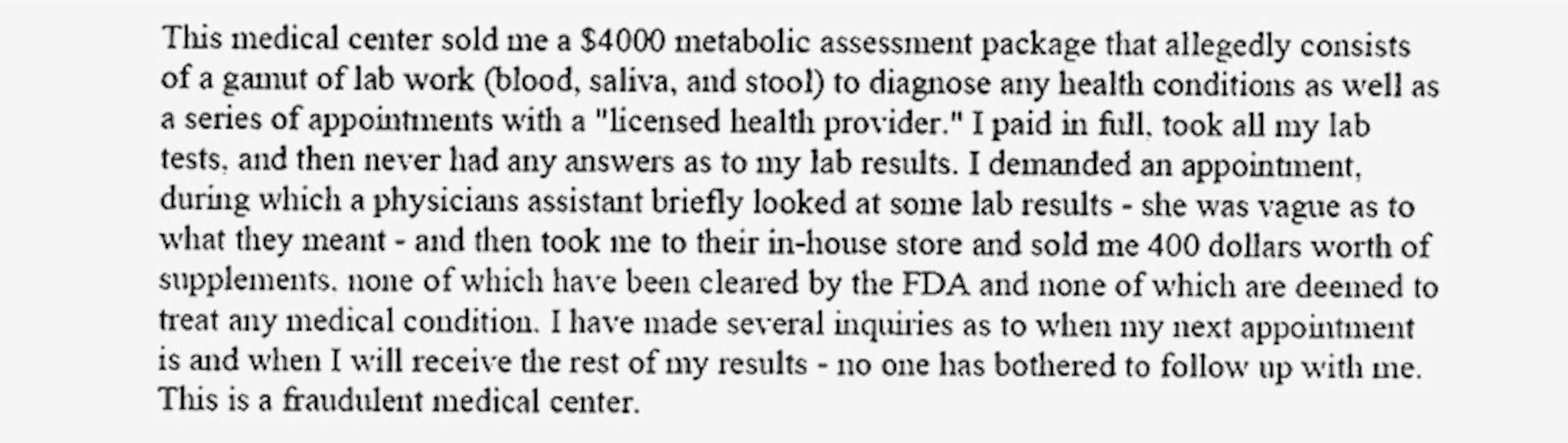
The patient, whose name was redacted, described paying $4,000 for lab work and then, before getting a full explanation of the results, being directed by a physician assistant to purchase $400 worth of supplements at the in-house store.
“This is a fraudulent medical center,” the patient wrote.
In its statement to the AJC, Progressive said patients are informed verbally and in writing that they aren’t obligated to buy supplements at the clinic’s store. “The supplement store is offered as a convenience to patients and the public,” the statement says.
As for Progressive Nutracare, the brand of supplements produced for Agolli and sold at the store, they are purchased from “reputable manufacturers” and often priced below retail, the statement says.
“From time to time, certain patients may have reactions due to a multitude of reasons … during a specific protocol to eradicate infections,” the statement adds. “It is our philosophy that supplements are needed due to the fact that most Americans … have relied on junk food devoid of nutrients and require supplements to make up for the deficit in their bodies from adulterated food.”

Cancer and regret
There can be no more powerful incentive to seek out practitioners with unconventional treatments or backgrounds than a cancer diagnosis that offers little hope.
That’s the path JP Garmon followed three years ago when his wife, Cindy, was diagnosed with neuroendocrine carcinoma, a rare and aggressive form of cancer, and it’s a path that Garmon, an engineer who lives in McDonough, said he has come to regret just about every day since.
“The traditional route seemed so dire,” he said in a recent interview with the AJC. “I figured, `What do I have to lose?’ Turns out it was a lot.”
When his wife was diagnosed, Garmon turned to the internet to find something he hoped would be better for her than traditional chemotherapy. His search led him to insulin potentiation therapy, a treatment developed in Mexico that purportedly allows patients to receive effective doses of chemo without the harsh side effects. Looking further, he found Dr. Rhett Bergeron, an Atlanta-area physician who offers it.
Insulin potentiation therapy, or IPT, has become part of the lexicon of alternative medicine based on a theory that insulin makes cancer cells more receptive to chemotherapy drugs. That, in turn, supposedly makes it possible to use lower dosages of the drugs.
“What if cancer patients could get all of the cancer-killing benefits of chemotherapy without all the terrible side effects?” read the description of IPT on the website for Bergeron’s clinic, Real Health Medical, at the time Garmon signed on. “It might seem too good to be true. But doctors have been using a much safer form of chemotherapy for decades. It’s called insulin potentiation therapy or IPT.”

That claim has never been validated through clinical trials — the gold standard for scientific proof that a treatment is safe and effective — and, in fact, the medical board in California has disciplined at least two physicians for promoting the procedure in that manner.
In choosing to have his wife undergo IPT at Bergeron’s clinic, Garmon was going outside his insurance and was required to make a payment each time she was treated. Willing to do whatever it took, he went along and used two credit cards, eventually charging more than $13,000, he said.
But whatever optimism Garmon felt at the beginning quickly faded as his wife of 41 years rapidly went downhill.
One particular incident left an indelible mark. According to Garmon, he called Bergeron’s office to report that his wife had coughed up blood. In response, he said, he was told by a member of the doctor’s staff that he should make an appointment.
“I was going nuts, and it was like they wanted to schedule her for an appointment in three weeks …,” he said. “I’m going, `You have got to be kidding me.’ … I think they were callous. I think they were very happy to hit my credit card.”
Four months after Cindy’s diagnosis and two months after starting weekly IPT treatments, she died.

Garmon doesn’t know what impact Bergeron’s treatment may have had on Cindy’s health. But what he does say — and firmly believes — is that Bergeron’s practice, located in a Roswell office park, wasn’t capable of dealing with such a virulent form of cancer and that Bergeron should have said so up-front.
“My opinion is Bergeron knew from the get-go he was in over his head,” Garmon said.
Bergeron is not an oncologist. In fact, his profile on the Georgia medical board website does not list a specialty.
Medical board records do show Bergeron has twice been disciplined for medical-related issues.
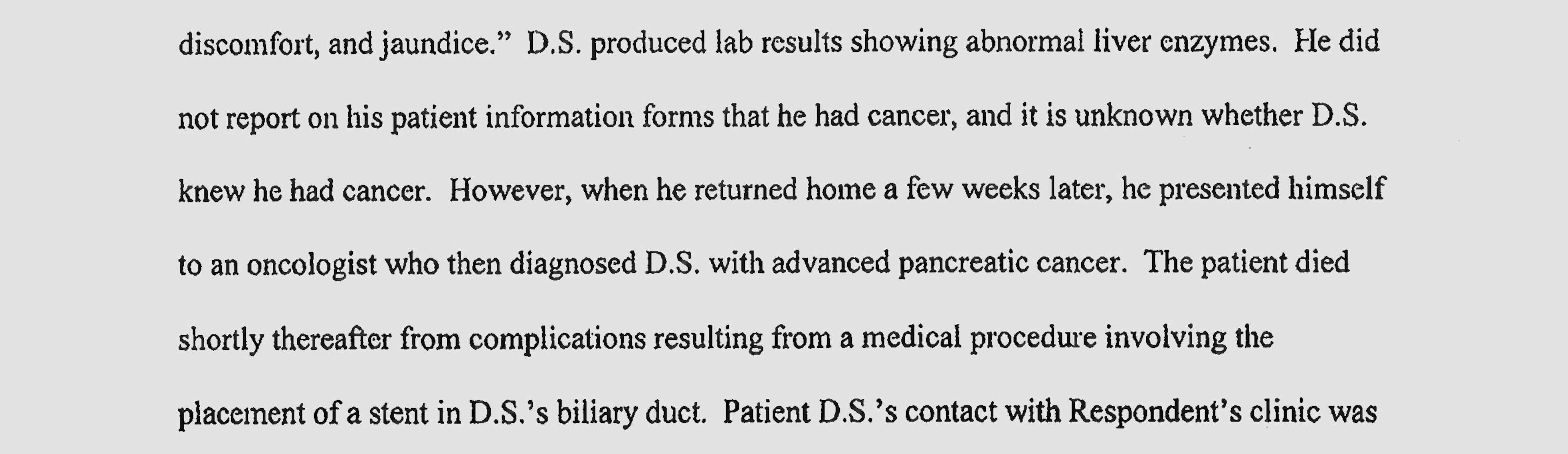
The most recent case, adjudicated in 2009, included a finding that his clinic failed to recognize the symptoms of advanced pancreatic cancer in a patient who later was diagnosed with the disease by an oncologist. According to the board, the patient complained of viruses, fatigue, stomach discomfort and jaundice, and his lab results showed abnormal liver enzymes.
Yet he was never treated by Bergeron himself. Instead, the board found, he received a series of IV treatments from a nurse practitioner.
The website for Bergeron’s clinic no longer touts IPT as it did when Cindy Garmon became a patient. Instead, it simply says the doctor uses a “metabolic-immune protocol” that incorporates “metabolic, functional, mind-body and restorative medicine” along with “select aspects of standard of care oncology.”
In an interview with the AJC, Bergeron said he still treats patients with IPT but doesn’t do it as much as he once did. Many of his patients don’t want chemotherapy of any kind, he said. And when patients do want chemo, he tries to talk them into seeing oncologists because those treatments are covered by insurance, he said.
As for Cindy Garmon, she was already dealing with poor liver and kidney function when she came to his clinic, making it unlikely that any kind of treatment would help, he said.
“(IPT) was the only thing I thought might make a difference, and after four or five treatments, I think it was obvious her labs were not improving, so there was no benefit,” he said.
Insulin potentiation therapy

For cancer patients, insulin is injected, followed by low-dose chemotherapy. Sugar water may then be injected to stop the low blood sugar caused by the insulin.
Claims: It is said to treat cancer without the side effects such as hair loss and nausea that come with higher doses of chemotherapy drugs.
Risks: If insulin is taken by nondiabetics, it can lead to dangerously low blood sugar levels. Another risk is that the lower-dose chemotherapy will not be sufficient to treat the patient’s cancer.
Regulations: There are no clinical trials that have proved the safety or effectiveness of IPT and, in fact, research has shown that cancers may grow when exposed to insulin.
Red flag: Practitioners who offer it and discourage traditional cancer care.
William D. Figg, head of the clinical pharmacology program at the National Cancer Institute’s Center for Cancer Research, was one of three authors of a 2019 article in The Lancet Oncology that concluded there’s no evidence to show the value of IPT.
Speaking recently with the AJC, Figg said his opinion hasn’t changed. Besides the fact that there’s no proven clinical benefit with IPT, he noted that giving insulin for something other than diabetes can have detrimental side effects, including hypoglycemia, a significant drop in blood sugar.
“It’s a terrible thing, preying on those that are ill,” he said. “But that’s been around for a while. The only thing we can do is call out the therapies and educate the public.”
Hope leads to blindness
The saga of how an emergency room doctor’s med spa came to also be a stem cell center in suburban Atlanta reveals how little oversight, limits and training may be present to protect patients trying “regenerative medicine” and alternative medicine therapies. While research conducted by established academic institutions has rigorous protections and disclosures, unproven treatments offered by alternative medicine facilities are a different story: Patients beware.
Dr. Jamie Walraven, an emergency medicine physician, started a stem cell therapy center after she had one day of hands-on training at a Florida seminar and a few days of in-person classes, according to court records. After that, she did three stem cell cases in her office under the supervision of a technician sent from a California network.
Her nurse and business partner, Linda Faulkner, had just one day of hands-on training on how to process fat taken from a patient through liposuction to isolate stem cells.
Nonetheless, Walraven’s website said she was “board certified” in antiaging and regenerative medicine as her clinic began offering stem cell treatments for all sorts of conditions, including arthritis, erectile dysfunction, MS, Parkinson’s disease and more.
Doris Tyler, a woman then living in Florida, was the first patient Walraven and her partner treated with stem cells for macular degeneration, a progressive eye disease, and it ended in disaster: Tyler wound up blind. In a lawsuit, Tyler argued the treatment caused her blindness.

In an interview with the AJC, Doris and her husband, Don, said they were told when considering the procedure in 2016 that many of the patients who had tried the protocol for the eye disease had experienced improvements in their vision.
“You’re going to improve or you’re going to stay the same — they promised that. What do you have to lose?” Don Tyler said.
Given that traditional treatments were limited and the disease had no cure, the couple wanted to try what they thought was a low-risk, cutting-edge option. A GoFundMe page set up by their son raised the $8,900 to cover the cost of the procedure because the Tylers, both retired schoolteachers, couldn’t otherwise afford it.
Working with an ophthalmologist who Walraven recruited for the procedure, the medical team drew fat from Doris Tyler’s abdomen and then processed the fat to isolate stem cells that were then injected into her eyes. The couple went home, hopeful that Doris’ vision would improve.
However, in less than a month, Doris suffered a retinal detachment in her left eye, leaving her blind in that eye. Weeks later, the same happened to her right eye.
Later, the couple would learn through a lawsuit that two months before Doris came to Atlanta for her procedure, the California network that trained Walraven and other doctors around the country to do stem cell treatments knew concerning information about the procedure.
The network had received information from a physician that patients who had similar stem cell treatments on their eyes had suffered retinal detachment. Because of the risk, the review board that oversaw the ethics of the study decided that protocols involving injecting the eye should be halted, according to court records.
But the California network didn’t tell Walraven. In fact, she didn’t know about it until three years after administering the treatment, according to court records reviewed by the AJC.
The knowledge that safety concerns had been identified is one of the hardest things about Doris going blind, Doris and Don Tyler said.
“All they had to do was pick up the phone or email, whatever, and tell (Walraven), `We’re having trouble, don’t do any more eyes,’” Don Tyler said. “If they had, Doris never would have had it.”

The couple sued, and testimony revealed other things they didn’t know. Walraven acknowledged that her claims about being board certified in antiaging and regenerative medicine weren’t true, and she subsequently removed them from her website.
The lawsuit was settled, with terms that remain confidential. The Tylers and their attorney refused to discuss terms of the settlement.
Walraven’s profile on the Georgia medical board’s website lists malpractice payments for $3.5 million, as well as one for $487,000. It’s unclear if the information is accurate or if it is related to Tyler’s lawsuit.
The ophthalmologist who injected Doris’ eyes, Dr. Robert Halpern, shows a malpractice payment of $1.4 million, although it’s unclear if it’s related to Tyler’s case. Halpern could not be reached for comment.
The Georgia medical board has taken no disciplinary action against the two physicians, according to their public profiles, even though the board is required by state law to review large malpractice payouts to see if physicians provided substandard care.
And while the FDA continues to warn patients on its website that stem cell treatments are not approved for a wide range of conditions, the AJC found clinics in Georgia offering such unapproved stem cell treatments, often in conjunction with other alternative therapies and even chiropractic treatments.
Walraven’s Ageless Wellness clinic in Peachtree City is among them. The clinic’s website says patients should come in for everything from IV therapies and hormone treatments to stem cells and chelation.
Walraven did not respond to the AJC’s requests for an interview. In a deposition, she said she told Tyler that the procedure was experimental, not FDA approved and came with risks. But she also testified that she and the other doctor involved should have been told that the protocol had already been removed due to risks and that Tyler deserved to know that, too.
Doris Tyler, 86, who now lives in Tennessee, relies on her husband, who is 87, to take care of her and handle most of the household tasks.
“Sometimes I feel so stupid that we trusted them, but I did,” Doris said. “I grew up, and I think Don did too, believing that if you went to the doctor, that he had your best interest at heart and that he knew or she knew what they were talking about.”
After all the couple has been through, their views changed.
“It was just a moneymaking thing,” Don Tyler said, referring to Walraven’s clinic. “That’s all it was.”
About this investigation
Who’s watching out for patients in Georgia?
That was a driving question as reporters Carrie Teegardin and Danny Robbins set out to examine how the state was responding to practitioners touting unproven and disproven health treatments.
An initial step was to assess the extent of alternative medicine and “wellness” clinics across Georgia and learn who practices at them, what treatments they offer and what claims they make. Using web searches and public records, data analyst Phoebe Quinton compiled information on hundreds of such businesses.
The reporting team, led by editor Lois Norder, then researched the qualifications of the nearly 300 practitioners identified at the clinics, storefronts and mobile services. Was the provider really board certified? A bestselling author? A world-renowned cancer expert? Was the person pictured in the white coat and called “doctor” really a licensed physician?
That laid the groundwork for the next step: learning more about Georgia’s oversight of those businesses.
For that, the AJC relied on databases it created for all orders issued by the Georgia Composite Medical Board since 2018, malpractice verdicts and federal actions against doctors. The team also reviewed minutes of medical board meetings, medical licensing laws and board financial information.
That work raised the question of whether other states do more to protect patients and how they regulate alternative medicine. So the team studied medical practice laws in other states, actions by their medical boards involving alternative medicine and board orders for substandard care.
To gain a national assessment of medical board oversight, Quinton used the public file of the National Practitioner Data Bank to see how often the Georgia medical board imposed serious discipline compared with other states and how often the board imposed discipline of any kind on physicians with malpractice payouts.
Some of the most painstaking work involved the individual alternative medicine businesses highlighted in the series. The reporters relied not only on court and business records but also interviews with patients they identified, clinic owners and operators and public officials.