Atlanta coffee shops give power, and caffeine, to the people
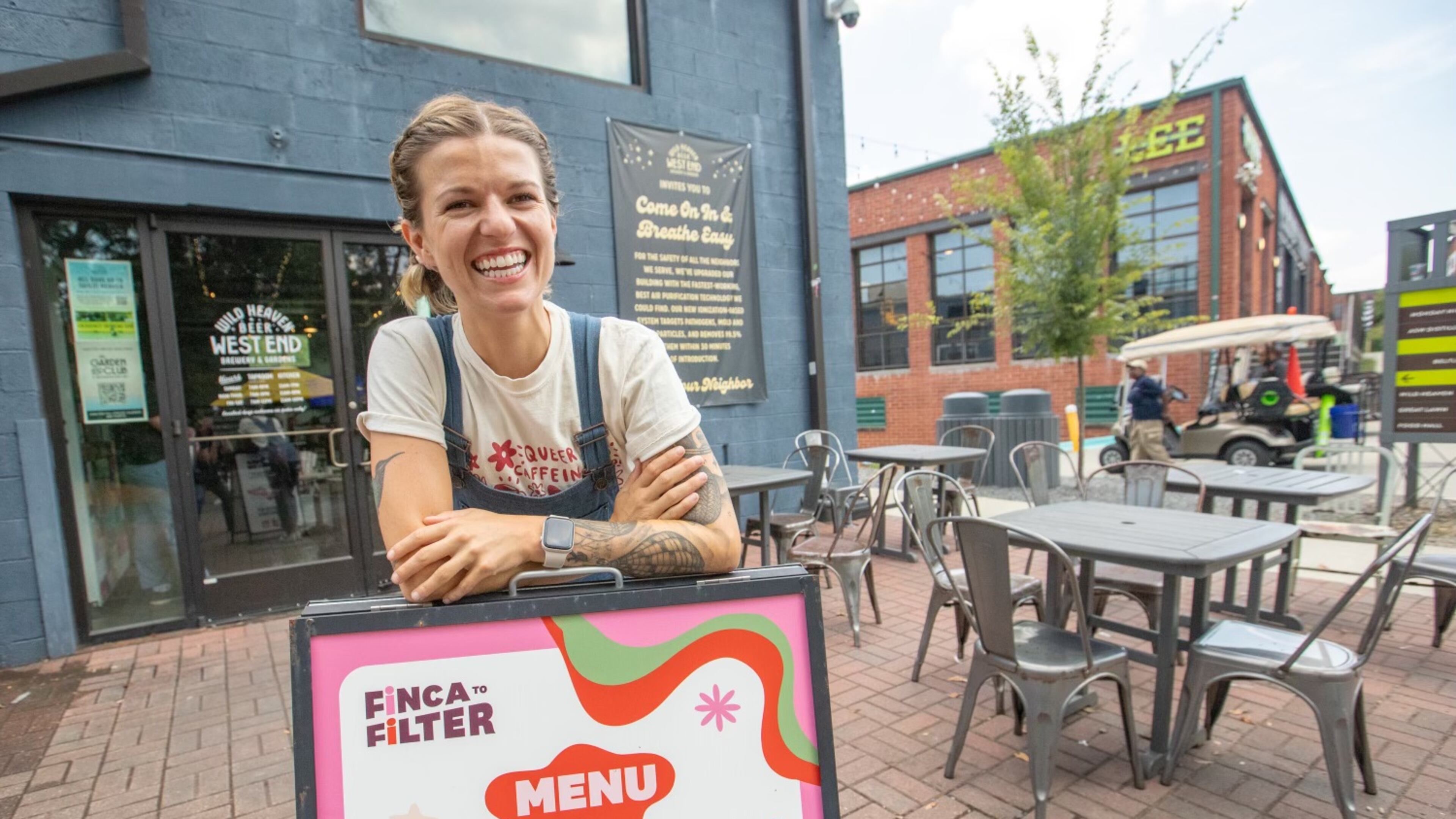
On Jan. 29, ahead of demonstrations against immigration enforcement tactics and the death of Minneapolis protesters shot and killed earlier in the month by U.S. Immigration and Customs Enforcement agents, the Instagram account of Atlanta coffee shop Finca to Filter published a note.
“On *FEBRUARY 1* we will be standing in quiet solidarity by offering printed signs and free drip coffee on the O4W patio from 11:00 AM–12:00 PM to support those gathering nearby at O4W Park,” the post’s caption read.
“I also want to be transparent that FiNCA & Side Saddle will remain open on January 30. While I respect the intention behind the economic blackout, the business cannot endure a full closure at this time and maintaining operations is necessary to support our team.”
The note was signed by Kayla Bellman, owner and operator of Finca to Filter and Side Saddle Wine Saloon & Bar. Bellman said she wanted people who supported the nationwide economic “blackout” planned for that Friday, and the “March against ICE” protest scheduled for Feb. 1, to find a welcoming space and allies.
“That’s what we’re here for,” Bellman said in an interview with The Atlanta Journal-Constitution. “So we offered free coffee for anyone who felt the collective call to not spend money that day. They could still come gather safely amongst the community of like-minded people.”
Bellman is one of several coffee shop owners in metro Atlanta who blend the business of selling coffee with support for community activism. While the history of Atlanta restaurants’ participation in protest movements is well-documented, metro area coffee shops are increasingly becoming the new groundzeros for organized resistance.
So far this year, protests in Atlanta have not materialized on a large scale. That held mostly true for the planned Feb. 1 march, but Bellman still provided warm beverages and printed protest signs displaying messages like “Immigrants Make America Great.”
Bellman said being a queer woman influences her decision to actively support the community.
“We’re normalizing those things — speaking up for our neighbors and friends, and using our voice,” she said. And she hopes to see more cross-sectional work among marginalized groups. “I would love to see more people come out and say they love their queer neighbors, their trans neighbors, their immigrant neighbors. We need more collective support. We’re not safe until we’re all safe.”
Andy Bibliowicz, owner of Peoples Town Coffee Bar, lives two blocks away from his café in the Peoplestown neighborhood, where he also serves as treasurer of the neighborhood association.
He said he opened the business in 2023 because his community, which he called a food desert, lacked a communal space for neighbors to connect following the COVID pandemic lockdown.
In September 2025, Bibliowicz learned ICE agents had apprehended Jorge Martinez, whose wife Helen Martinez is a custodian at nearby T.H. Slater Elementary School. Bibliowicz announced that all proceeds from sales on September 16 would be donated to Martinez for financial support including legal fees. He also said Peoples Town Coffee Bar raised almost $4,000 for Martinez, although her husband was ultimately deported.
“We’re not a huge, busy coffee shop,” Bibliowicz said. “We’re your local, friendly neighborhood spot, so we’re not (usually) making thousands of dollars a day. But to us, to lose a day was a sacrifice we were willing to make.”

A native of Ecuador raised in Atlanta, Bibliowicz said Peoples Town regularly directs a portion of beverage sales to El Refugio, a local organization supporting the families of ICE detainees being housed at Stewart Detention Center. El Refugio provides families who are visiting individuals being held with free lodging near Stewart, along with legal referrals and other volunteer services.
Bibliowicz said he considers the risks and rewards of taking stances on controversial issues, aware that public advocacy can deter customers.
“I have to make a choice,” Bibliowicz said. “If my business is a reflection of who I am, then we need to say it.”
Ivan Solis is the owner of Recuerdos, a coffee shop pop-up currently in residency at Bar Ana. Along with Mexican coffee, Recuerdos sells trauma-informed children’s journals made by Mexico-based company Querido Padre, which creates and works with shelters and nonprofits to distribute the journals to youth experiencing family separation due to immigration enforcement.

Recuerdos also recently supported El Refugio by hosting a Feb. 7 event called “Correr Para Communidad,” produced in collaboration with Los Corridos, a running club that identifies as Latine-led.
The event included group runs around the Poncey-Highland neighborhood, where Recuerdos is located. Recuerdos provided cafecito coffee shots for participants and hosted a raffle inside the space he shares with Bar Ana, with items including Patagonia gear and dining experiences upstairs at El Ponce.
“To me, hosting these things is creating something I’ve always wanted to see,” Solis said.
“We constantly hear from regulars and other Latinos who come in for coffee that drive from one or two hours away, seeing that there is a Mexican-owned coffee shop in Atlanta. It means a lot to them and it brings me a lot of joy knowing that I can be that space for people.”

Atlanta native Mshairi Siyanda is lead organizer for the Movement for Black Lives, a national organization that advocates for political power and economic justice for Black people. She is helping produce a March 14 event called the Atlanta People’s Movement Assembly, which will feature workshops on community governance as a means of tackling issues faced by Black Atlantans, like increasing utility costs.
Siyanda said any type of nourishment is critical to creating synergy with community work and advocacy. In addition to free child care, food will be provided to all attendees of Atlanta People’s Movement Assembly.
“Food is an anchor,” Siyanda said. “You can open up a sense of family to people who might be strangers at first. It’s just ways we say ‘I love you’ to each other.”
Siyanda said she often uses Black-owned coffee shops like the Ke’nekt Cooperative, Portrait Coffee, and Community Coffee as spaces to meet and discuss strategy. She said these and other coffee shops help promote deeper relationship-building within Atlanta.
That sort of work is also critical to Daniel Brown, owner of Gilly Brew Bar in Stone Mountain Village. Brown said he avoids using the term “coffee shop” when referring to Gilly because he believes it suggests something transactional and sometimes extractive.

“We’ve learned that coffee shops can be early signs of gentrification, so constantly I’m challenging myself on how do I create a culture where we don’t become part of the problem,” Brown said.
Part of Gilly’s identity is its location: Built in the 1830s by enslaved Africans, it was once the home of the first mayor of Stone Mountain, a city whose history is forever tied to the Ku Klux Klan.

Brown, who is Black and of Jamaican heritage, said Gilly Brew Bar became significantly involved in protests after opening in 2018.
“Earlier on we were definitely a bit more boots-on-the-ground, fist-in-the-air. Even going back to the pandemic and Black Lives Matter marches, I knew that was something we wanted to be part of and potentially lead in,” Brown said.
He added that as Gilly has grown as a business, and after witnessing other businesses projecting activism in ways that seemed inconsistent, his approach has evolved.
Now he said Gilly’s role is less about confrontation and more about the cultivation of community.
“The way we lend to certain movements is being able to provide a space where people can feel comfortable. There’s a sense of belonging and ownership in that, that I think is very powerful.”
About the Author
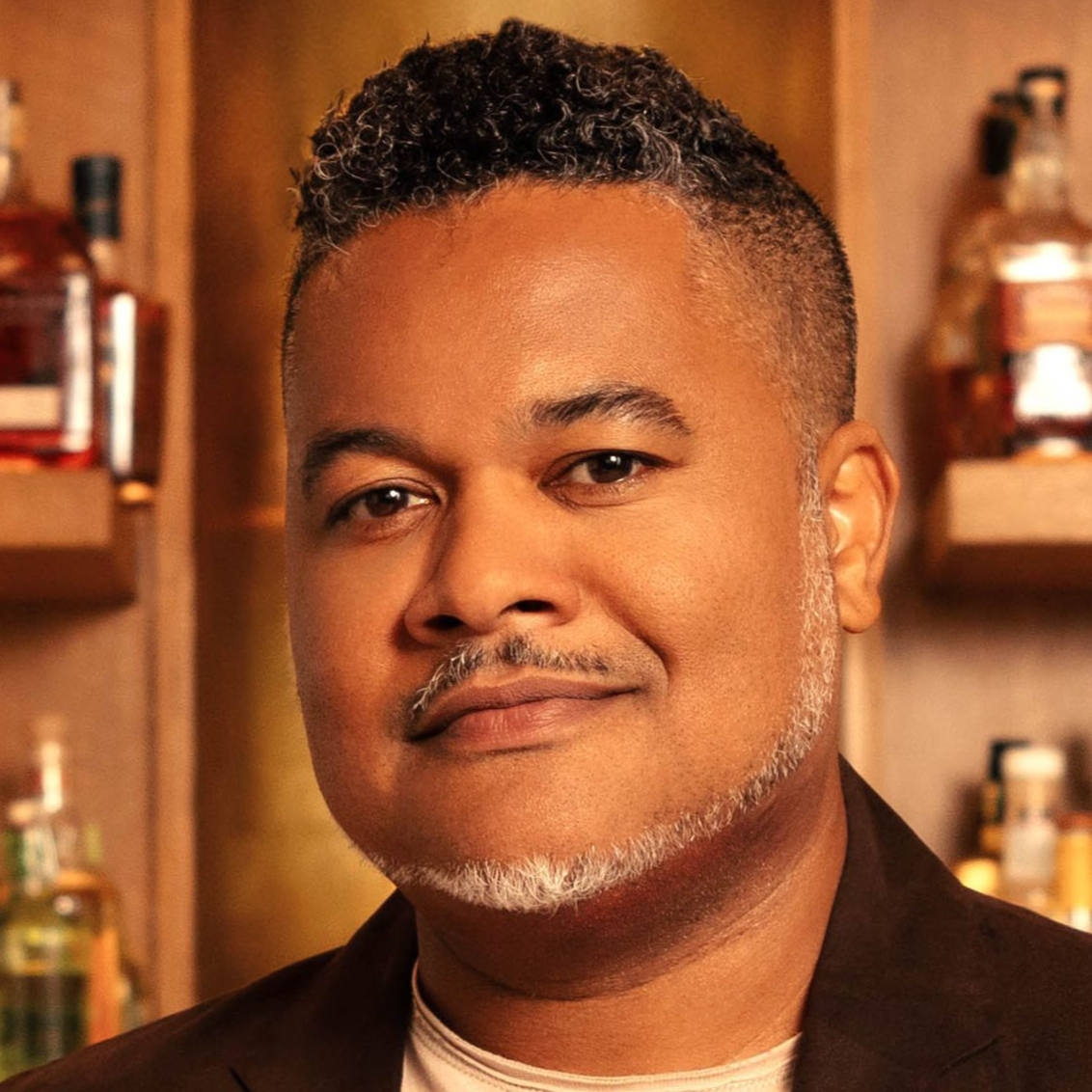
Mike Jordan is senior lifestyle reporter at The Atlanta Journal-Constitution. His work has been published in The Wall Street Journal, ProPublica, The Guardian, National Geographic, Bon Appetit, Rolling Stone and others. Jordan won the James Beard Foundation’s Jonathan Gold Local Voice Award in 2024.


