Keeping immigrant students safe means talking about ICE
In the Atlanta area, administrators have been telling teachers not to talk about U.S. Immigration and Customs Enforcement. We have heard this from teachers in JOLT Atlanta, a justice-oriented teacher collective, and from teachers in the Atlanta Association of Raza Educators. One teacher shared that an administrator at a DeKalb County school instructed them to remove from the board a hotline number for a community organization supporting immigrant families. This administrator told teachers to focus on teaching content, assuming that teachers were not teaching academic content through students’ lived experiences. Part of the rationale was that talking about ICE makes students feel anxious and unsafe.

This incident highlights a worrying trend. School administrators are misplacing the source of anxiety and harm onto discussions of ICE, instead of placing that squarely where it belongs: on ICE raids and abductions. News outlets and advocacy organizations have condemned the violent tactics and undemocratic processes of ICE. National Public Radio detailed the increasing violence of ICE — such as tackling, pepper-spraying and tear gassing people — as well as using firearms, in some cases, fatally. The American Civil Liberties Union identified multiple threats to civil liberties by ICE, including unreasonable searches, violations of due process and discrimination based on race and ethnicity.

ICE raids and abductions are anxiety-producing, and discussion about ICE will likely surface anxiety. But it is not the discussion that undermines safety or causes anxiety. It is the reality of ICE abductions that causes anxiety and undermines the safety of students and their families.
Students who are experiencing, witnessing or fearful of ICE violence need space and support to discuss what is happening and what they are feeling. Leading educational scholars such as John Dewey, Paulo Freire, and Gloria Ladson-Billings have argued for decades that for democracy to thrive, classrooms must be spaces where students can talk about what is happening in their lives and communities.
In fact, not connecting what’s happening in the world to the classroom can have negative effects on student learning and thriving. Campos works in a school serving many Latino students. He has multiple students who are so upset they cannot focus on their learning, such as one student who walked into class crying because her dad had been detained on his way to work. Campos has another student who rarely comes to school because he’s been too depressed to leave the house since his father was deported earlier this year.
These stories are backed up by recent research finding that Latinx youth in metro Atlanta were experiencing emotional harm from spaces that erased their cultures, experiences and struggles, including school classrooms. Meanwhile, a recent report from the Children’s Equity Project found that “(c)hildren whose families are impacted by harsh immigration policies are more likely to have reduced school enrollment and increased absences, resulting in lower academic achievement.” Another report in Psychiatric News found that even the threat of family separation can have negative effects on students. These negative effects can also affect students whose families are not experiencing direct threats of deportation because they are upset about classmates disappearing.
Instead of trying to ignore and dismiss the terror that immigrant families across the nation are facing, teachers should be encouraged to provide space for students to read, write and talk about what is happening in their lives, communities and the world. Because why are students gaining skills and building their intellect, if not to apply their learning to their life and the world around them? The National Council of Teachers of English recently emphasized this point in a position statement, writing: “To fully participate in society, students need to be able to grapple with the very topics that are being pushed out of the classroom by divisive concepts legislation and other methods of censorship.”
The Atlanta Association of Raza Educators offers concrete recommendations for how to keep immigrant students and families safe. To aid teachers in creating space for discussions and other supportive structures, school districts must equip teachers with culturally responsive and trauma-informed resources, training, curriculum and instruction through meaningful professional learning opportunities, ideally conducted in partnership with local colleges, universities and community organizations.
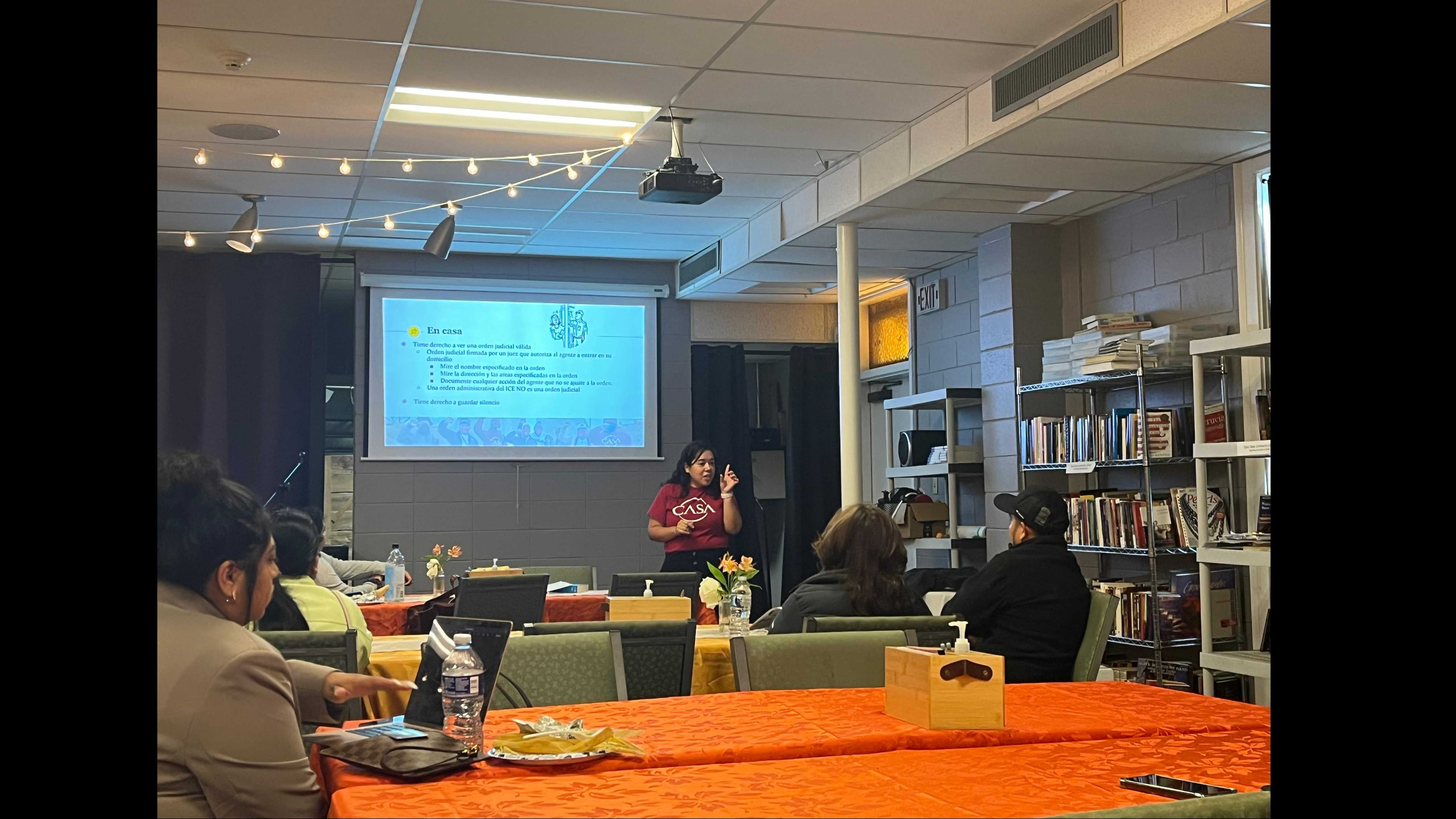
However, larger scale changes are also needed for immigrant students to thrive. For example, districts must seek to recruit and retain multilingual, Latinx, May, and immigrant heritage school personnel, including teachers, administrators, interpreters and counselors. Additionally, schools should be providing “know your rights” sessions for teachers, parents and families, again in partnership with community organizations. Finally, all school districts should have clear protocols for protecting students from ICE kidnappings, and protocols should be created with local community organizations.
Nadia Behizadeh is a Georgia State University professor, a member of the Georgia Association of Educators and vice president of the GSU American Association of University Professors chapter. Jonathan Peraza Campos is an educator, an organizer with Escuelitas on Buford Highway, the program specialist for Teaching Central America at Teaching for Change, a member of the Atlanta Association of Raza Educators and a historian-in-training. The views, thoughts and opinions expressed are those solely of the writers.
If you have any thoughts about this item, or if you’re interested in writing an op-ed for the AJC’s education page, drop us a note at education@ajc.com.
More Stories
The Latest


