UPS boosts cold-chain network amid rise of GLP-1, vaccine shipments

Sandy Springs-based UPS is continuing to grow its healthcare business, announcing this week that it was investing $48 million in cold-chain short-term warehouses.
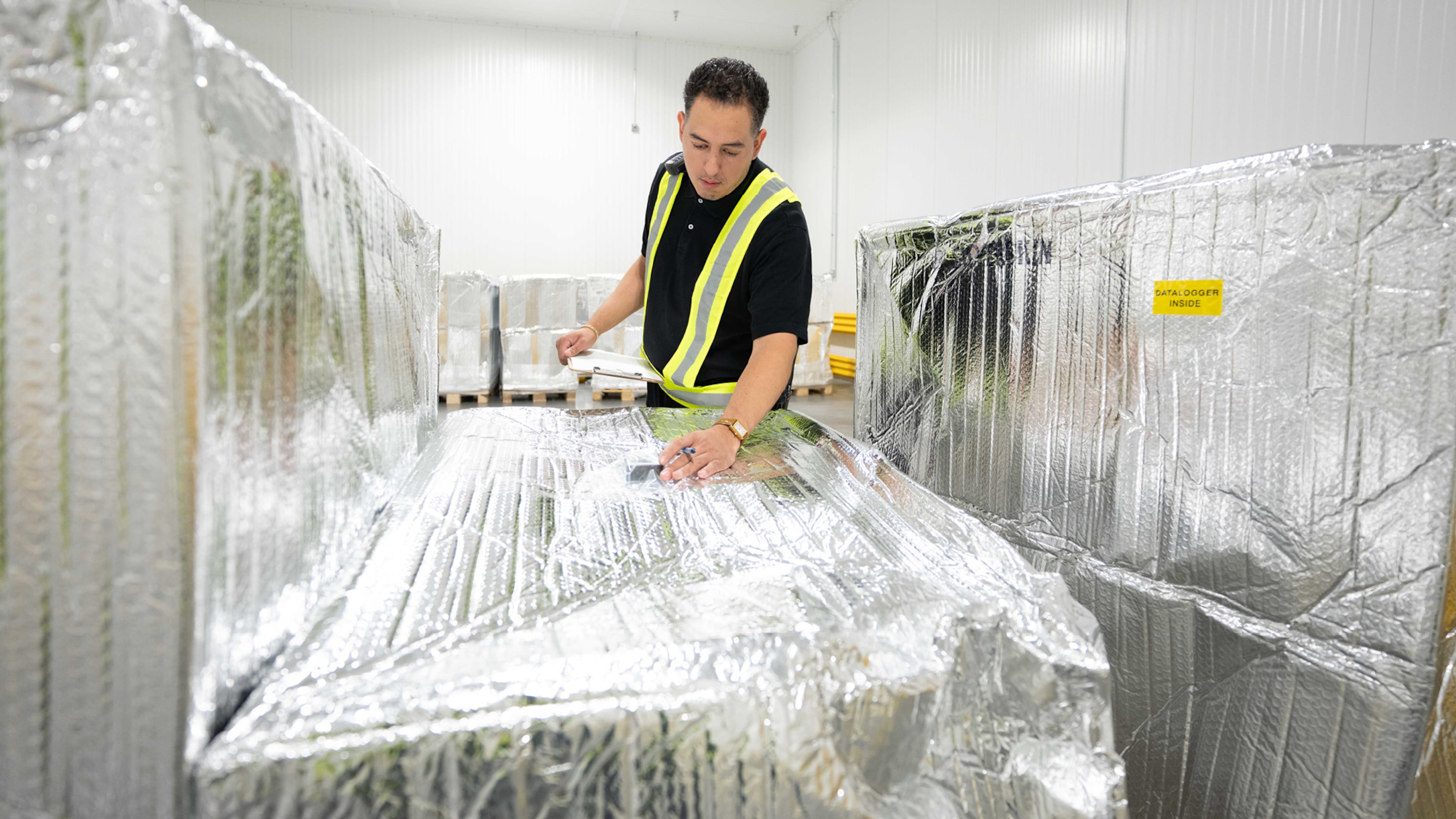
The more than two-dozen freight cross-dock facilities are designed to handle the rise of specialized medicines including GLP-1s, vaccines and cancer treatments that require temperature-controlled shipping.
Complex healthcare logistics are a key part of UPS’ long-term growth plan.
The global shipping giant saw its first $3 billion healthcare revenue quarter earlier this year after establishing the UPS Healthcare vertical in 2020.
“We won’t forget healthcare ever, because healthcare is such an important part of our growth engine,” CEO Carol Tomé said in the company’s April earnings call.
“It is in every segment of our business with double-digit operating margins, and we’re going to continue to lean into that space in a meaningful way.”
The 27 cold-chain warehouses will be used to temporarily store shipments on layovers between flights or between modes of transport. They were strategically located across the globe based on where manufacturers and consumer demand are — including in Atlanta.
The “cross-docks” solve what can often be a weak point in the temperature-controlled supply chain during those moments of hand-off between transport modes, said Kiel Harkness, vice president of strategy for UPS Healthcare, in an interview.
“We’re reducing the amount of potential breakage points that would make a therapy or a medicine not effective. Even when it traveled thousands of miles … if it’s not ready to use when it gets to you, the whole thing is blown,” he said.
“And that’s what these temperature-controlled cross-docks are providing for the industry.”
Zooming out, he noted, UPS is responding to changes in medical advances that have meant more and more drugs are coming from far away, in a short time.
“I think we’re all used to medicine being around us … in the pharmacy down the street, or at the doctor’s office a couple miles away,” he said.
“But there are emerging and really high, high growth areas of healthcare and pharma where actually the medicine is not right next to you when you need it.”
It might need to travel around the world in the matter of days, and this is a “huge problem to solve,” Harkness said.
A seminal example of this has been the rise of GLP-1 drugs, used for weight loss, which must be kept to a refrigerated temperature level, he said. Vaccines and specialized cancer treatments like immunotherapies are others.
“With just the changes that we’re seeing in pharmaceutical companies with GLP-1 drugs and how they’re going direct to consumer rather than through distributors, that’s such an opportunity for us, and (I’m) proud to say that we lead the market in that area,” Tomé told investors in April.
Morgan Stanley recently projected the global GLP-1 market could more than double by 2035.
Harkness confirmed the GLP-1 market is an “extremely significant” trade flow, and a product that needs to stay at refrigerated temperature “from the moment they leave that manufacturer’s site, as they go over road, as they go into facilities, and then they move into planes, and then back into trucks.”
“Those are all points that we secure and stop breakage from happening. And these cross-docks are a critical piece of that.”
Looking ahead, Harkness predicted UPS will “stay very focused in this cold-chain, temperature-controlled space. Right now, there’s huge growth going on there.”
But the company is also going to continue to serve “the entire healthcare value chain outside of it, and … we follow where our customers are telling us their needs go.”