Chattahoochee fish kill and flooding postmortem gets testy at City Council
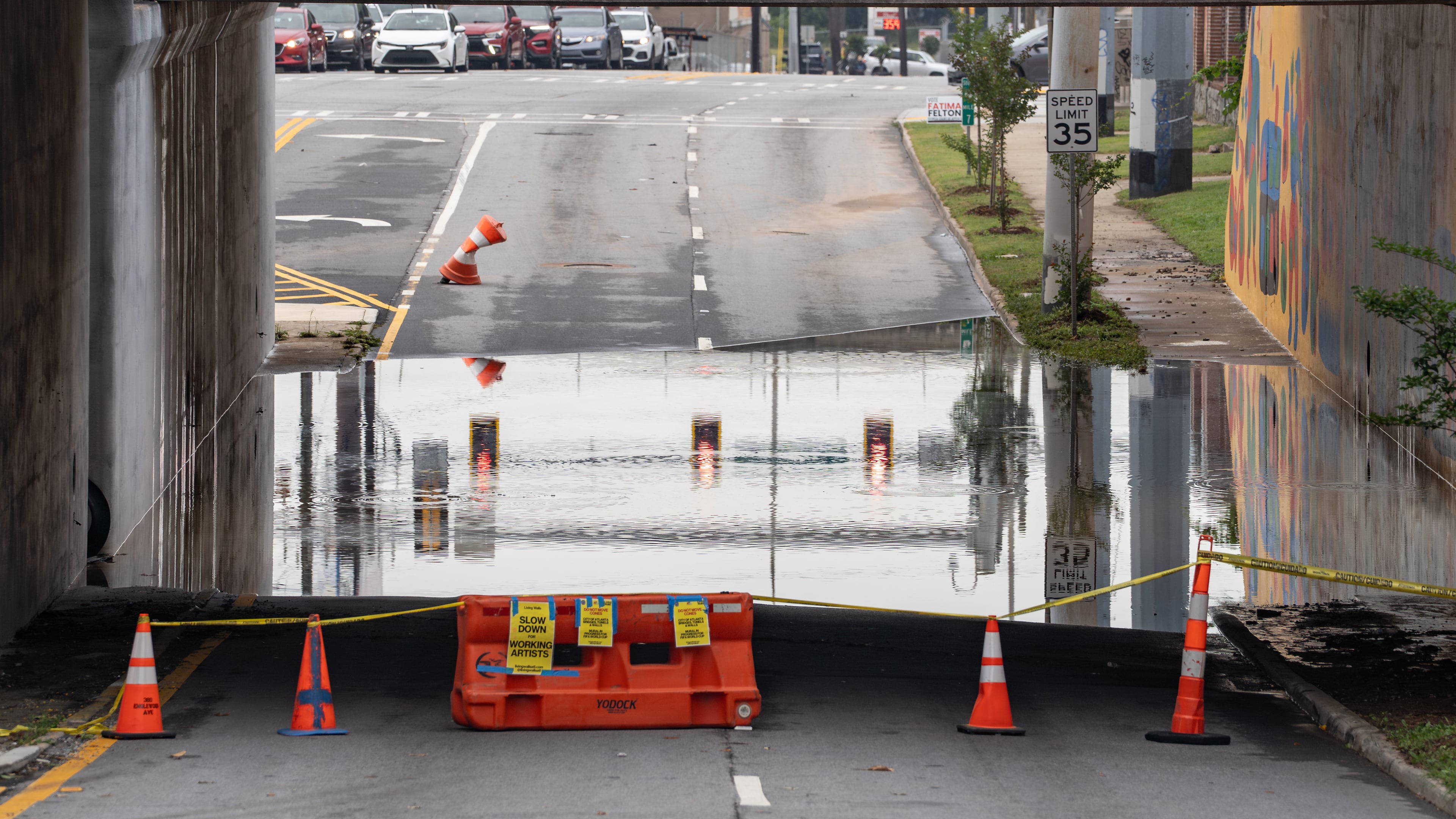

After midweek floods, a Friday boil water advisory and a fish kill, it would be an understatement to say last week was eventful for the city of Atlanta’s Department of Watershed Management.
And when a City Council committee convened Tuesday to dissect the events, things got heated as exasperated council members grilled city staff about their response to the trio of problems. In particular, council members took issue with the city’s communications about the boil water advisory.
“We may have incidents that we haven’t even thought about that we’re going to need to be able to alert the public to,” said Councilmember Alex Wan, who represents Midtown, Morningside and surrounding areas.
The contentious postmortem came just weeks before Atlanta is set to host eight World Cup games, leading some on the council to question whether the city — especially its communications strategy — is up for the task.
‘This is the second strike’
Some of the most pointed questions for city staff during Tuesday’s City Utilities Committee meeting dealt with a boil water advisory issued last week.
On Friday, the DWM told residents and visitors near downtown to boil their water after a power outage temporarily disabled one of the city’s two water treatment plants.
The advisory was lifted Saturday morning after tests confirmed drinking water was safe. But Wan and others questioned whether more should have been done to inform the public — and whether City Hall has learned from past crises.
Almost exactly two years ago, a series of water main breaks left large parts of Atlanta without water for days, shutting down businesses, hospitals and more. Back then, the city also faced withering criticism for its sparse communications about the extent of problems and efforts to restore water.
Councilmember Liliana Bakhtiari, who filled in Tuesday as the committee’s chair, said the city’s messaging last week about the need to boil water was again murky and too slow. Bakhtiari said it took hours for the department to get out a news release, then said the message itself was unclear about which parts of the city were under the advisory.
“We can collect their money,” Bakhtiari said about the DWM, which bills customers for water use. “Why can’t we give them updates that can impact their lives?”
DWM Commissioner Greg Eyerly acknowledged the critiques and said the department is “working on a pilot to fix a lot of those issues.”
Still, Wan said there “has to be a quarterback” in charge of communications in these situations.
“This is the second strike on us,” Wan said, referring back to the May 2024 water outage crisis.
Things grew tense toward the end of the meeting, when the city’s Chief Operating Officer LaChandra Burks unexpectedly took the podium. Burks took issue with council’s questions, saying she would not allow staff “to be spoken to as less than the adults that they are.”
“We’re all humans,” Burks said. “Everything is not perfect on the council side either.”
‘Rain was not forecast’
Eyerly was also peppered with questions about the large fish kill that occurred on the Chattahoochee River last week.
On Friday morning, the Chattahoochee Riverkeeper told city and state environmental officials that huge numbers of fish were dead along a stretch of river starting near the city of Atlanta and stretching at least 20 miles downstream. The exact cause of the fish kill is still unclear, but the riverkeeper has said it may be connected to the floods that swamped parts of Midtown and the downtown connector last Wednesday.
But Eyerly indicated his agency was taken aback by the torrential rains Wednesday and seemed to cast at least some blame for the flooding issues on weather forecasters.
The National Weather Service’s Peachtree City office said on the morning of May 20 that thunderstorms were “possible along and north of the I-85 corridor in the afternoon.” Still, isolated cloudbursts like the one that drenched Atlanta are extremely difficult to predict.
“Rain was not forecast and certainly not forecasted in the type of event that we saw,” Eyerly said. “That’s critical for our operations.”
Eyerly said they are still investigating the incident but will submit a report on the fish kill soon to the Georgia Environmental Protection Division, the state’s top environmental regulator. And while Atlanta has a history of spilling untreated sewage into the Chattahoochee, Eyerly said he did not believe that was to blame here.
EPD, meanwhile, is conducting its own investigation, which an agency spokesperson said Tuesday was still ongoing.