Inside Centennial Yards: Atlanta’s newest neighborhood and attraction

Not all hotel ballrooms have windows. Almost none hover over train tracks, let alone one of the country’s busiest freight lines.
The enormous windows within the newly opened Hotel Phoenix highlight the building’s unique position at the forefront of a new era for downtown Atlanta.
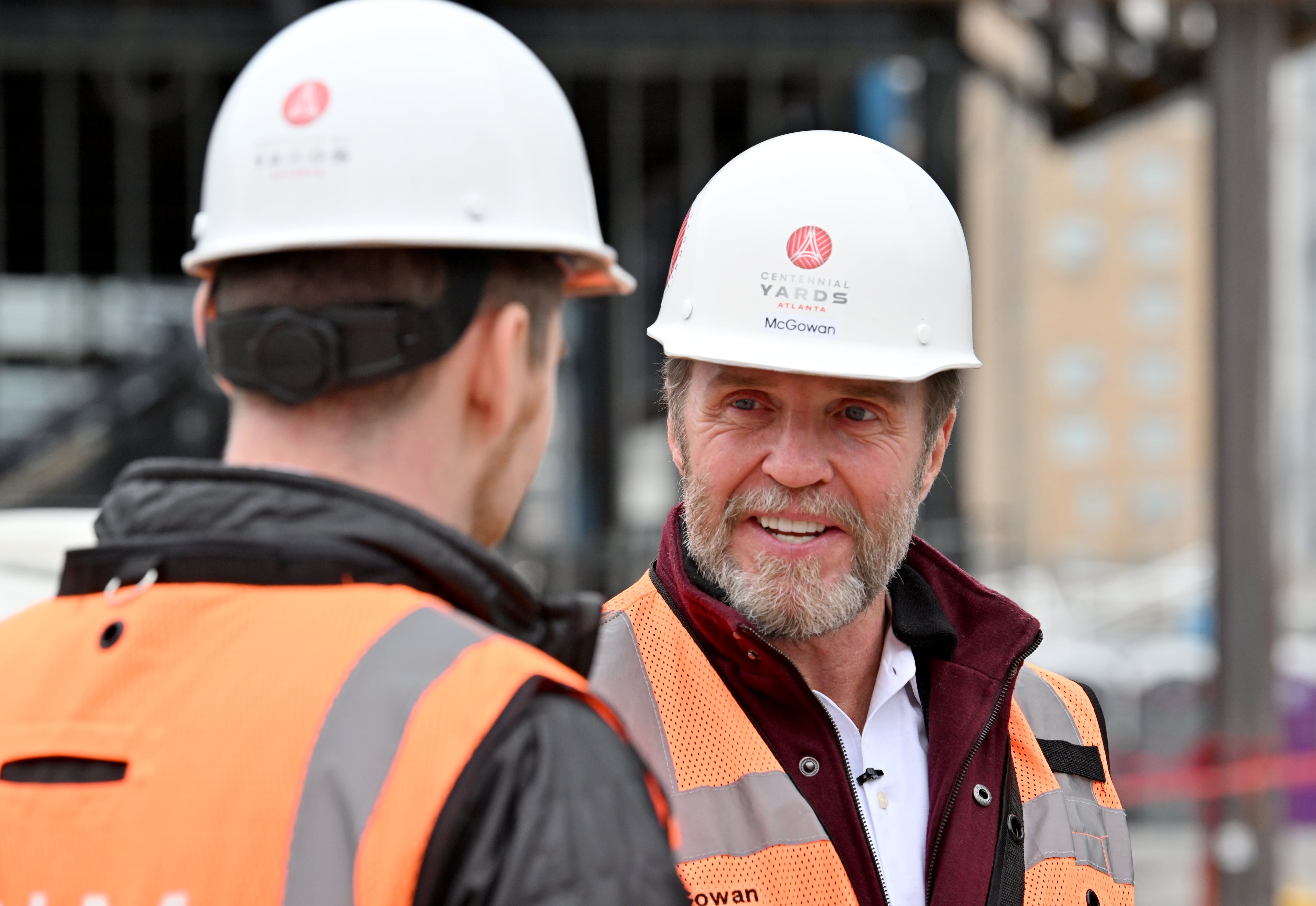
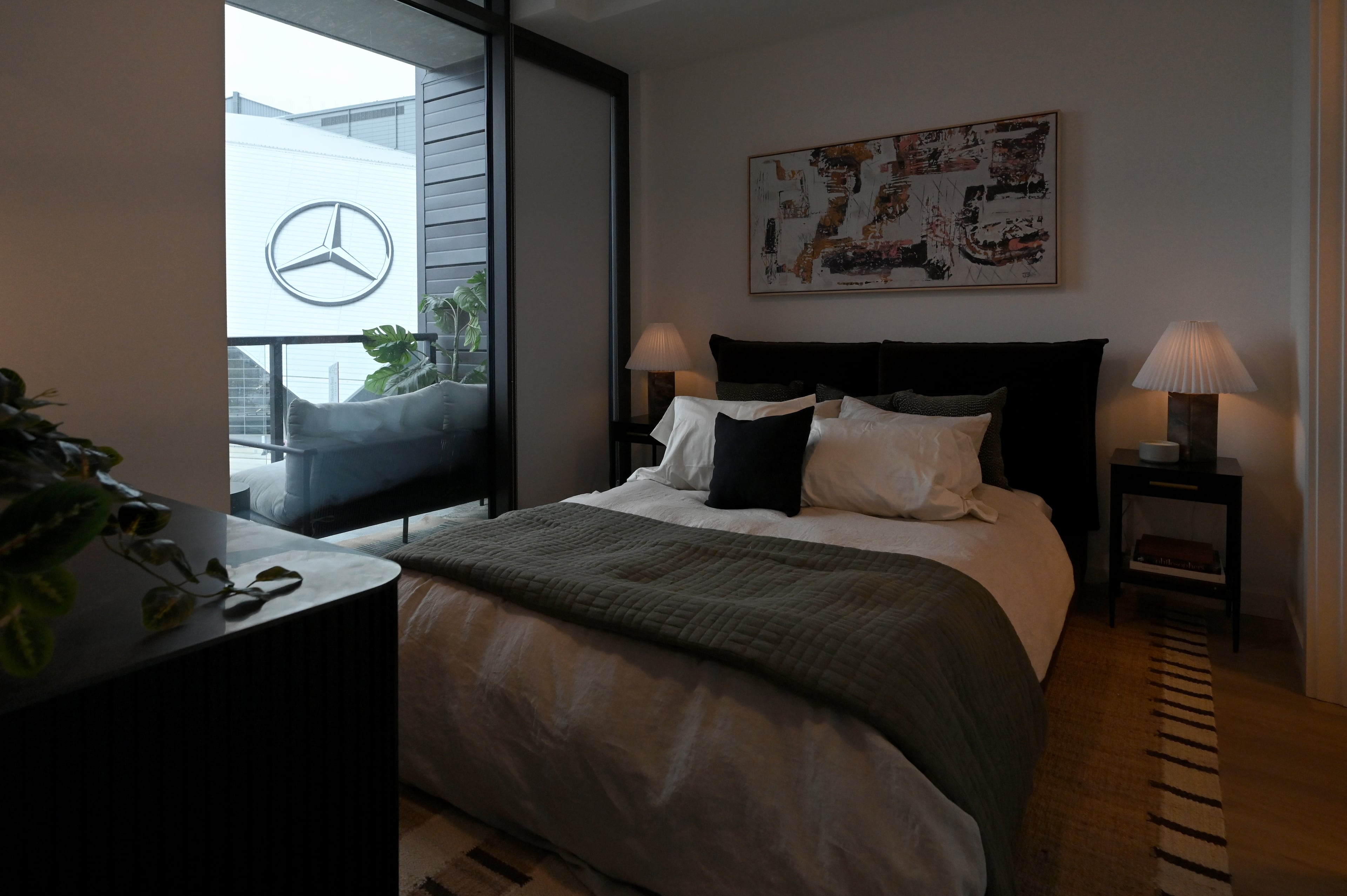
“We’re standing where there was once a 40-foot hole in the ground,” said Brian McGowan, head of the $5 billion Centennial Yards development and a project investor. “And now you look out the window at Mercedes-Benz Stadium and you’re right in the heart of downtown.”
Even more striking is the cacophony of construction across the street. The core of Centennial Yards is rising from an area Atlantans have long called the Gulch, a 50-acre void thought by many to be too complicated to ever develop.
But after years of planning, debates and logistical challenges, new buildings are rising from the Gulch’s depths. Hotel Phoenix and its neighboring apartment tower called the Mitchell are the first sign of downtown’s potential future.
“Two years ago, this was rail tracks, and now you can sit in the pool on a beautiful Atlanta day and have a cocktail. It’s mind-blowing,” Steve Koonin, CEO of the Atlanta Hawks and Centennial Yards investor said, admiring the Mitchell’s amenity deck. “As a native Atlantan, you couldn’t even dream it.”
The Atlanta Journal-Constitution last month toured Centennial Yards, both the completed buildings and those underway within one the South’s largest construction sites. It offered an early preview of how the megaproject, often described as a minicity, is taking shape, reconnecting downtown communities and creating a new neighborhood in its own right.
“There’s going to be thousands of people living here and tens of thousands of fans going back and forth,” McGowan said. “ So you couldn’t really have a better spot if you’re looking for a vibrant urban place to live.”
The activity also comes at a pivotal time for Atlanta, which prepares to welcome hundreds of thousands of international soccer fans during the World Cup this summer. Not unlike the Centennial Olympic Games 30 years ago, city leaders see the monthlong World Cup as a rare chance for Atlanta, especially downtown, to make a new first impression.
It’s taken years for Centennial Yards, developed by Los Angeles-based CIM Group, to get to this point.
The City Council in 2018 approved a controversial $1.9 billion incentive package, the largest in Atlanta history, to support the project. Its first phases primarily focus on entertainment and high-end apartments and hotels. That has raised concerns among some intown residents and groups about affordability within Centennial Yards and the gentrifying affects it could have on its neighbors.
Longtime downtown residents in Castleberry Hill, South Downtown and Fairlie-Poplar, such as Nate Wysong, say it’s an impressive feat to see the Gulch redeveloped. The project, however, won’t just be judged on its architectural achievements and appeal to travelers, tourists and transplants.
“Centennial Yards has the potential to reshape downtown Atlanta in a positive way,” said Wysong, an Atlanta Downtown Neighborhood Association board member. “But its lasting success will depend on whether it makes downtown more livable, inclusive, connected and desirable for residents and families over the long term.”
McGowan said people of all walks of life are attracted to urban living, adding, “We want it to be inclusive and have as many different types of income levels living with Centennial Yards as possible.”
Critical junction
Atlanta’s rail yards form the bedrock of the city’s growth journey, a story reflected in Centennial Yards’ first towers.
Train iconography is hidden throughout the buildings, acting as an Easter egg hunt for history buffs. Railroad lanterns adorn the elevators in Hotel Phoenix. Artwork in the Mitchell’s coworking space portrays a luxury train carriage where business was conducted a century ago.
“It’s really out of respect for the history of the site and respect for the city of Atlanta,” McGowan said. “It was founded on the railroads — that’s why we’re here.”
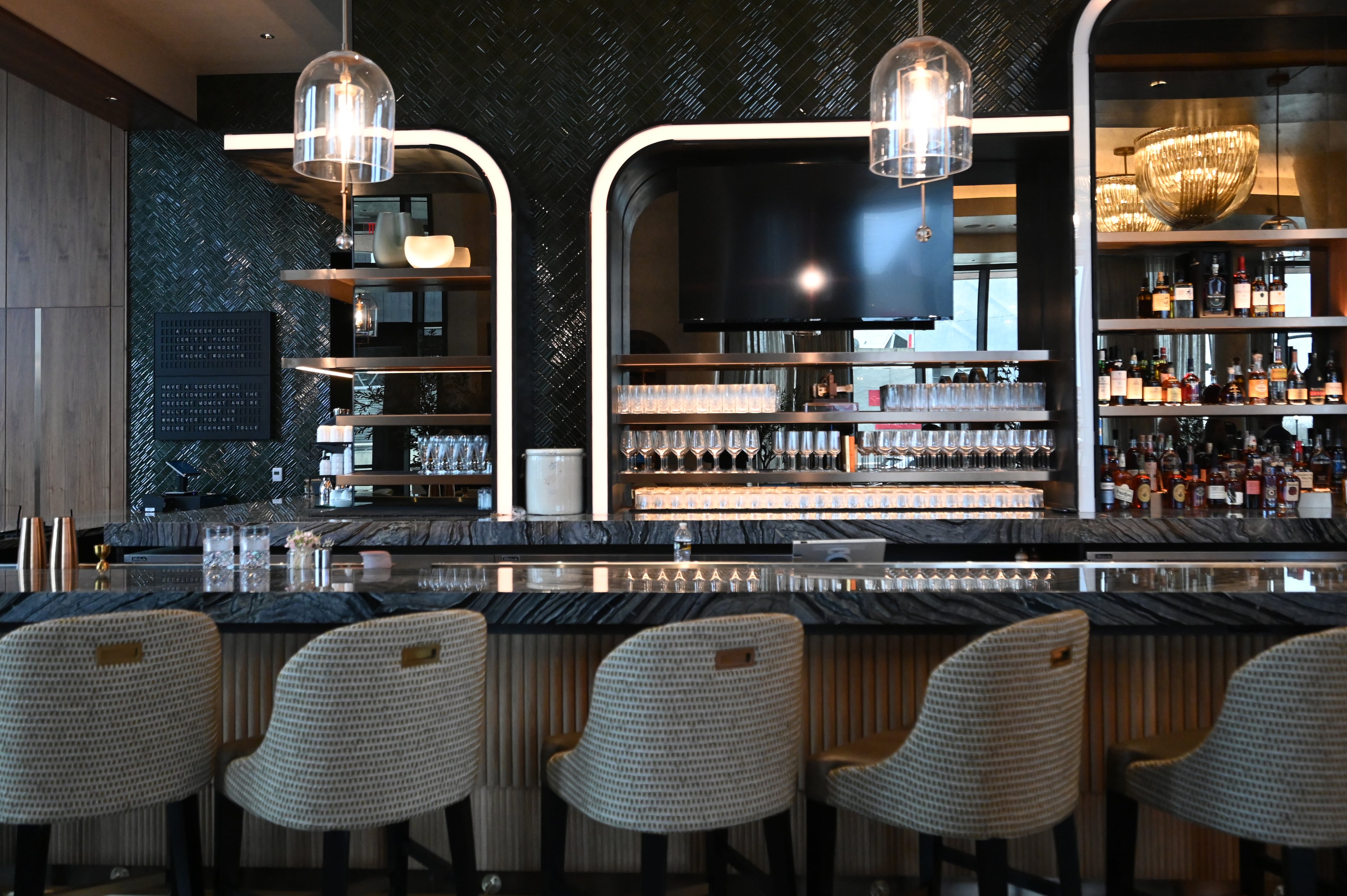
Both buildings give off an air of luxury including many of the expected trappings of high-end hospitality and urban living. The apartments provide a pool deck, expansive gym, pet spa and dog park for its residents, while Zephyr Southern Brasserie in Hotel Phoenix offers upscale French-Southern cuisine. Several restaurants, including soul food icon Busy Bee Cafe, are slated to soon join the towers.
Those upscale features aren’t cheap and influenced CIM to forgo affordable housing within the Mitchell.
Its incentive package with the city requires the developer to reserve 20% of all new residential units built in the project at subsidized rents. The developer, however, could opt to pay an in-lieu fee — roughly $140,000 per unit in the Mitchell’s case — to forgo that requirement.
CIM opted to pay the nearly $8.5 million fee, saying in a statement it remains “dedicated to fulfilling our commitment to provide affordable housing units.”
As part of its incentive package, CIM separately provided $28 million to the city’s affordable housing trust fund. Centennial Yards’ first project was converting the former Southern Railway freight depot and office building into 162 apartments, which includes 25 affordable units.
DeJon Tebought, vice president of the Atlanta Downtown Neighborhood Association, said he bought a downtown condo in 2018 partially because of the forthcoming urban development activity. He hopes CIM’s affordable housing decision with the Mitchell isn’t repeated.
“Having a couple (affordable) units in each building as they build out just helps legitimize the projects as a neighborhood for everyone,” Tebought said.

Connection central
The rise of the automobile and decline of passenger rail changed downtown’s role within the city.
The rail yards and passenger activity supported businesses, hotels and shops, but suburban sprawl brought that activity with it. By the early 1970s, both of downtown’s main train stations — Terminal Station and Union Station — were torn down, and the Gulch had devolved into an expansive parking lot for tailgaters and entertainment.

In the decades since, downtown became a place primarily where people drove to work or events and then left afterward. The handful of residential pockets have clamored for more people to join them downtown.
“The entertainment will be great,” Tebought said. “But it’ll be enhanced by having people there every day at all hours of the night and day.”
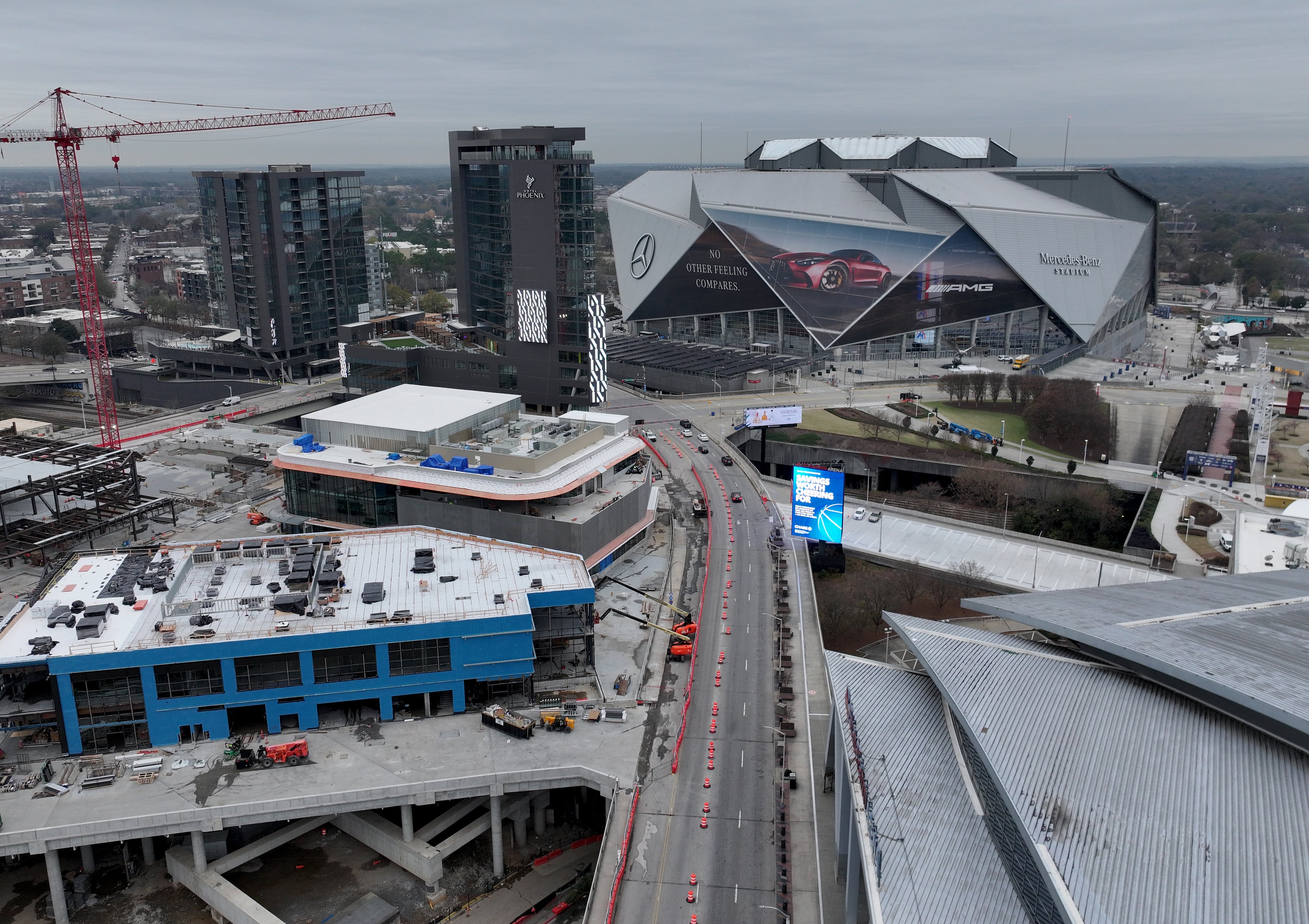
Over the next five to seven years, the Centennial Yards development team expects to build thousands of apartments. Other large downtown stakeholders, namely the South Downtown and Underground Atlanta development teams, also have residential plans.
Centennial Yards largest engineering challenge was building a platform of concrete and steel so the new buildings could meet the surrounding viaducts. Brandon Dexter, vice president of construction for CIM Group, called the platform a triumph in its own right.
“I don’t think in a million years anybody could ever fathom seeing this come to life,” Dexter said.

The buildings soon to join Hotel Phoenix and the Mitchell include a 5,300-seat concert venue by Live Nation, an immersive theater called Cosm, a second high-rise hotel and a retail building. A central gathering plaza that can hold 3,000 people is also taking shape.
Centennial Yards plans an additional entertainment-focused phase as well as more hotels, apartments, offices and a data center.
“If you want big, shiny and new, you come to Centennial Yards,” McGowan said. “If you want smaller, quaint and historic, you go to South Downtown. If you want an artsy feel, you go to Castleberry Hill. All of that together really complements.”
Wysong said downtown residents are excited for new neighbors and connections made possible by Centennial Yards. Its future phases will be critical to delivering its neighborhood-focused promises, he said.
“A true return on public investment should be visible in everyday life,” Wysong said, listing off the various facets that comprise a neighborhood. “Not only high-end dining or event-driven entertainment.”
About the Author

Zachary Hansen, a Georgia native, covers economic development and commercial real estate for the AJC. He's been with the newspaper since 2018 and enjoys diving into complex stories that affect people's lives.