Meet the Atlanta man who endured 12 days in prison for a Netflix reality show

Warning: Spoilers are included in this story.
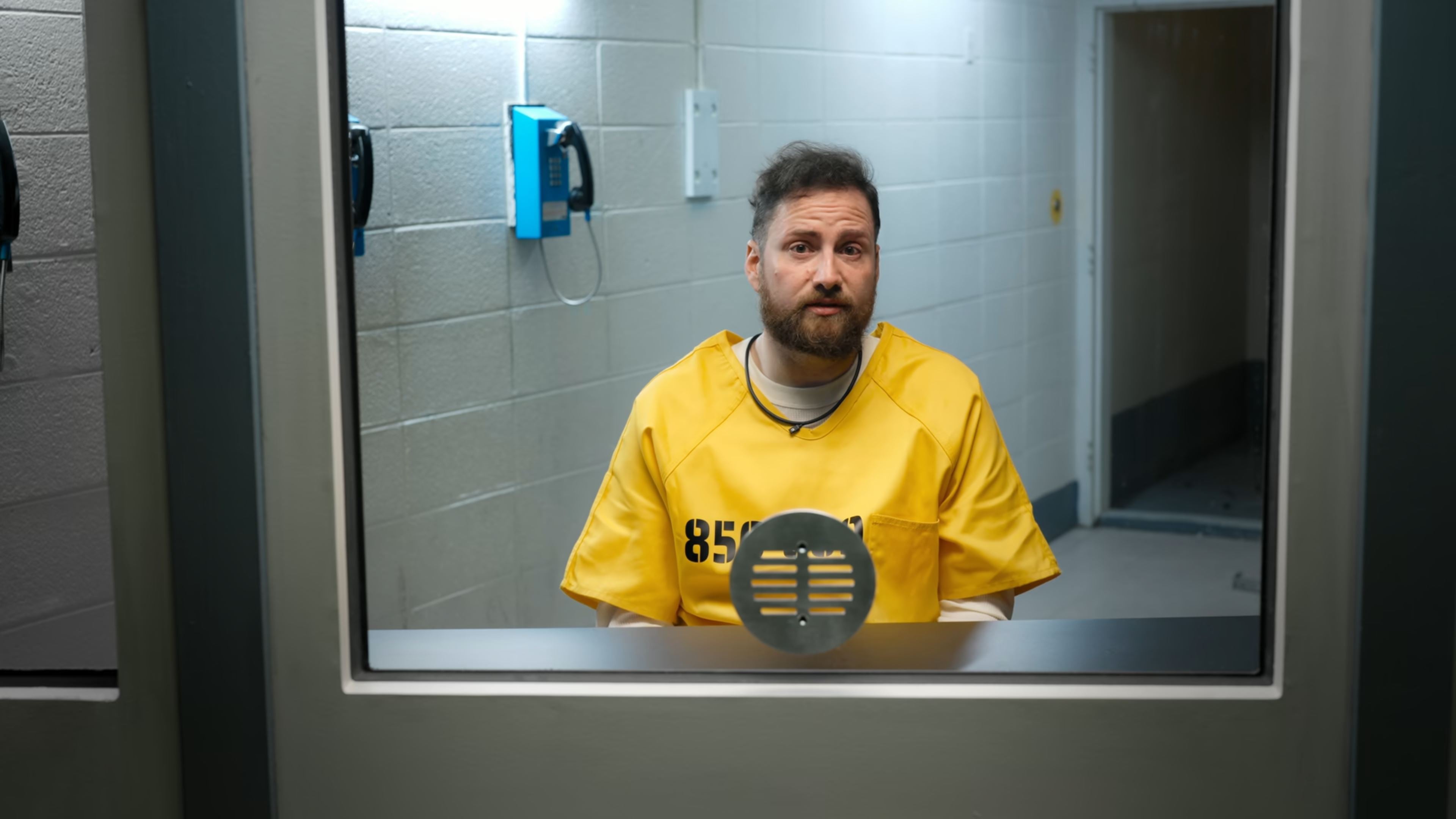
Jake Ellenburg, owner of an Atlanta marketing agency, spent 12 days last year at the Cherokee County Adult Detention Center.
But he had committed no crime.
In fact, Ellenburg was there voluntarily, courtesy of Netflix’s “The New Stanford Prison Experiment,” a reality program released by the streaming service last month. The idea: resurrect a 1971 sociological experiment using an actual jail space to explore how people navigate power dynamics.
Ellenburg chose to eat subpar food, sleep in an uncomfortable bunk bed with an open toilet nearby and live in tight quarters with virtually no contact with the outside world while cameras caught everything. In a sense, it was like “Big Brother” minus Julie Chen Moonves and a cash prize.

The 35-year-old married Atlantan was the lone Georgian among a diverse group of 30 men and women who were given roles as either prison guards or prisoners. (The three women were chosen as guards.)
Ellenburg was recruited by a casting agency, though he never found out who recommended him.
“This sounded insane,” Ellenburg told The Atlanta Journal-Constitution. “But l love living my life like chapters in a story. I’m originally from Alabama, a small town guy. People like me don’t get hit up for things like this very often.”
“If I ever wrote a memoir,” he added, “this would be part of that, right?”
Ellenburg said he was already familiar with the original experiment by psychology professor Philip G. Zimbardo after taking a Psych 101 class in college.
Zimbardo in 1971 recruited 24 Stanford students to either be guards or prisoners, but the two-week study quickly went awry, ending eight days early because the “guards” punished rebellious “prisoners” with forced nudity, no beds and no toilet access. Later, archives showed Zimbardo coached the guards to behave aggressively, negating the validity of the experiment.
“That experiment stuck with me because I’m an optimist,” Ellenburg said. “I was more hopeful that fellow humans wouldn’t do those kinds of things unless they were pushed or directed. I want to think our base level choice is kindness. I know that’s not the case, but that’s just how I like to think.”
The show’s executive producer Jane Lipsitz told Netflix companion site Tudum that she was not surprised by the initial backlash to the idea of Netflix bringing back the Stanford Prison Experiment, given what happened the first time.
“If we were simply re-creating the original experiment, that would be unconscionable,” Lipsitz said. “But this is a different time, with different participants, different safeguards and, ultimately, a very different journey.”

In 2025, Netflix leased an empty, decommissioned jail space at the Cherokee County Adult Detention Center, which underwent a $40 million renovation in 2022.
Howard Baker, spokesperson for the Cherokee County Sheriff’s Office, said the center has been used for a variety of scripted productions in recent years including movies like “Creed III,” “Just Mercy” and “Bad Boys: Ride or Die”; and Netflix productions like “Sextuplets” and “A Man in Full.”
Baker said his office had concerns about the participants’ safety. Netflix established protocols to protect against the types of cruel behaviors exhibited during the original experiment. They hired off-duty deputies and medical staff who were present 24/7 throughout filming to provide security and oversight.
The volunteers were given a designated safe word (“pineapple”) if they wanted to leave ― and several did as the experiment shifted into different phases.

In all, Baker said the shoot didn’t disturb regular operations.
It helped that the space Netflix used was separate from where actual inmates reside. The only time the participants even heard prisoners was in the intake area, where everyone was fingerprinted and photographed.
“There was a woman in the infirmary behind us who screamed the entire time we were there,” Ellenburg said. “I could hear her screaming in my sleep, dude. It just persisted that long.”
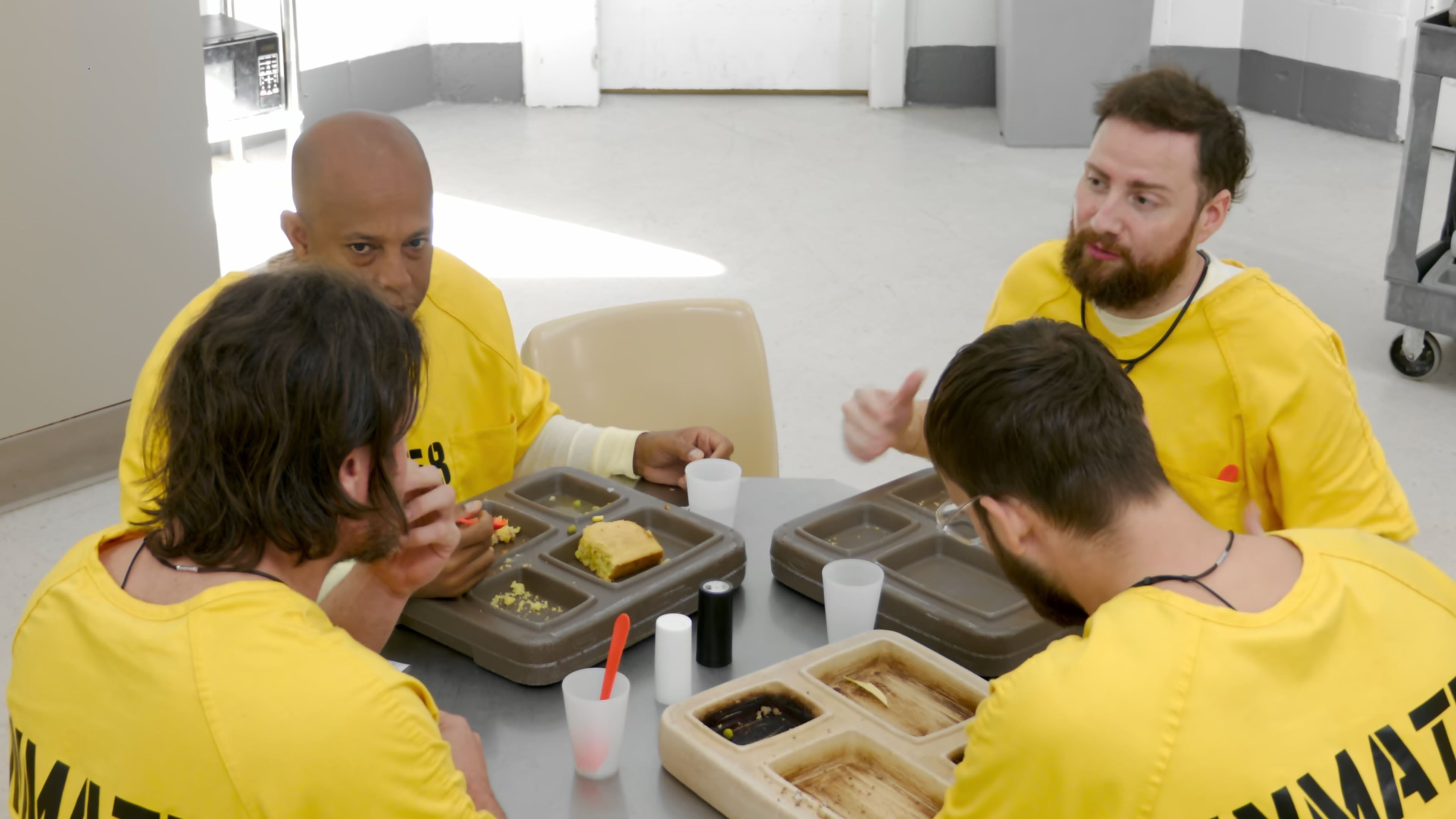
After intake, Ellenburg donned a yellow uniform as inmate 856-009.
“The guards exclusively called us by our last three numbers,” he said, “but among inmates, we kind of refused that rule.”
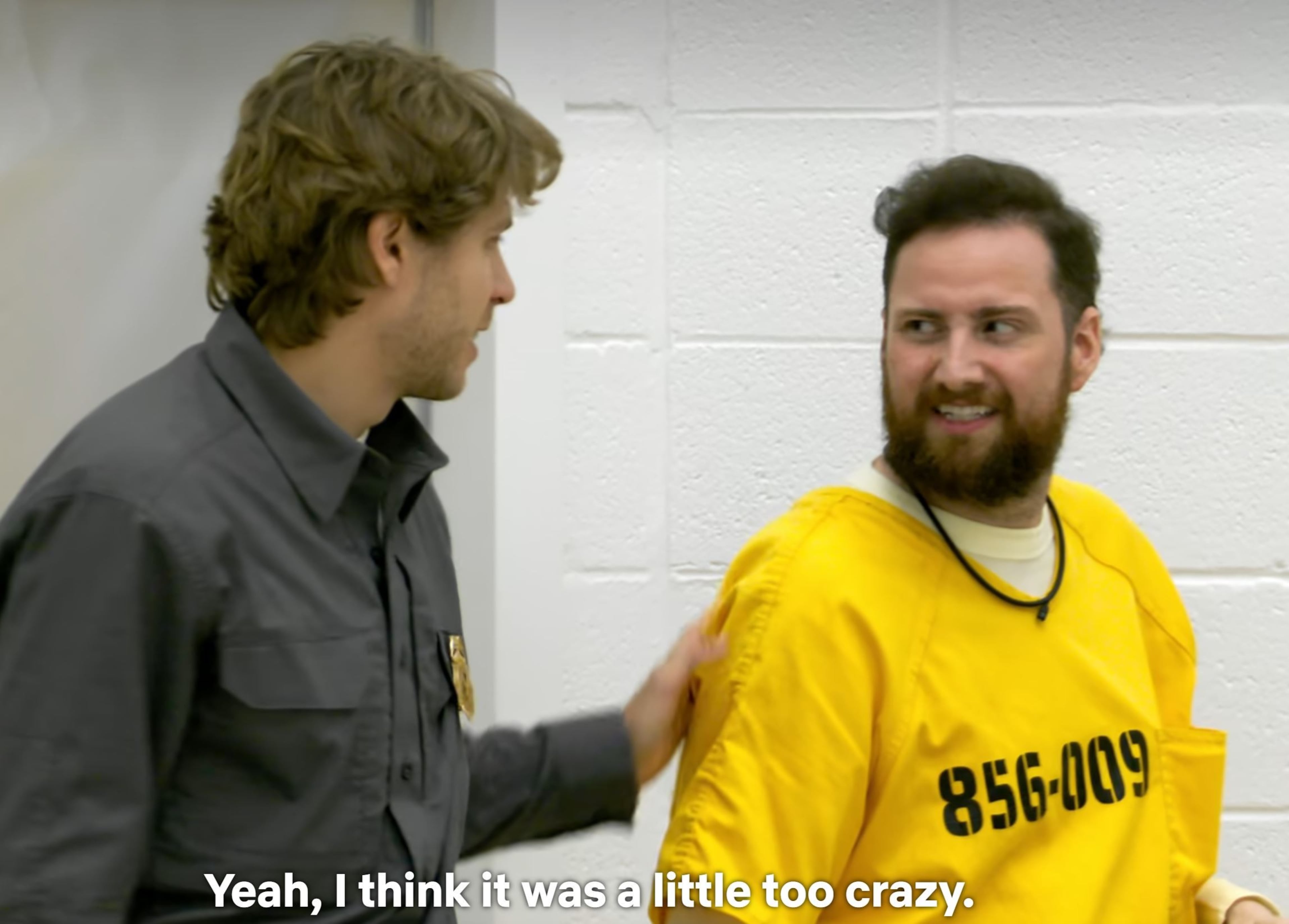
The participants quickly realized how terrible the food was. It was the same food fed to actual Cherokee County Adult Detention Center inmates.
He hated the bland breakfast oatmeal and the varieties of mystery meat. “I could never tell what exact protein I was eating any given day,” he said. “I also had no idea you could make so many different foods taste like nothing.”
Any idea of personal space quickly vanished. He felt awkward at first if he or his roommate needed to urinate, but got over it after a couple of days. “I’m usually a shy guy,” he said. “If the bathroom at the movie theater is packed, I’m the person who waits until I get home.”
While participants occasionally broached touchy topics like politics and religion, those discussions were largely excised from the show, Ellenburg said: “I had to explain to a couple of the other white inmates what the prison industrial complex is.”
Throwing in female guards didn’t really cause any issues.
“They were thinking the guys might run over the women because they were women, but what they didn’t account for was that every guy loves their mama,” Ellenburg said. “We missed our moms, our wives. And the female guards added a layer of empathy some of the male guards may have been missing.”
One of those male guards acted more like a summer camp counselor, asking each inmate to tell their life story and holding a paper airplane contest. Other guards were more strict, with one taking away the microwave because an inmate fiddled with the clock. And two inmates were punished with “23 and 1,” meaning 23 hours locked in their cell for a day, for even considering a rebellion.

While there were some tense moments, no physical violence occurred. The only person who the show identified as having actually been in prison found the experiment triggering and left after two days.
Ellenburg did not get star treatment. There were too many participants and only about four and a half hours of actual airtime. He said he interacted with many of the more rebellious types, but was largely ignored in the final edit.
“I really only hung out with the troublemakers,” he said, “but I never got into trouble.”
When the producers got rid of the “guards” on Day 10 and left the “prisoners” to fend for themselves, no chaos ensued.
Instead, there was a debate over whether all the remaining prisoners should just leave en masse before the end of the experiment.
“I think I only got airtime because I came up with that idea,” Ellenburg said. “They threw me a bone. I thought we had spent this time building this community. Some of these guys are friends for life, you know? I thought it would be much better if we could leave on a united front.”
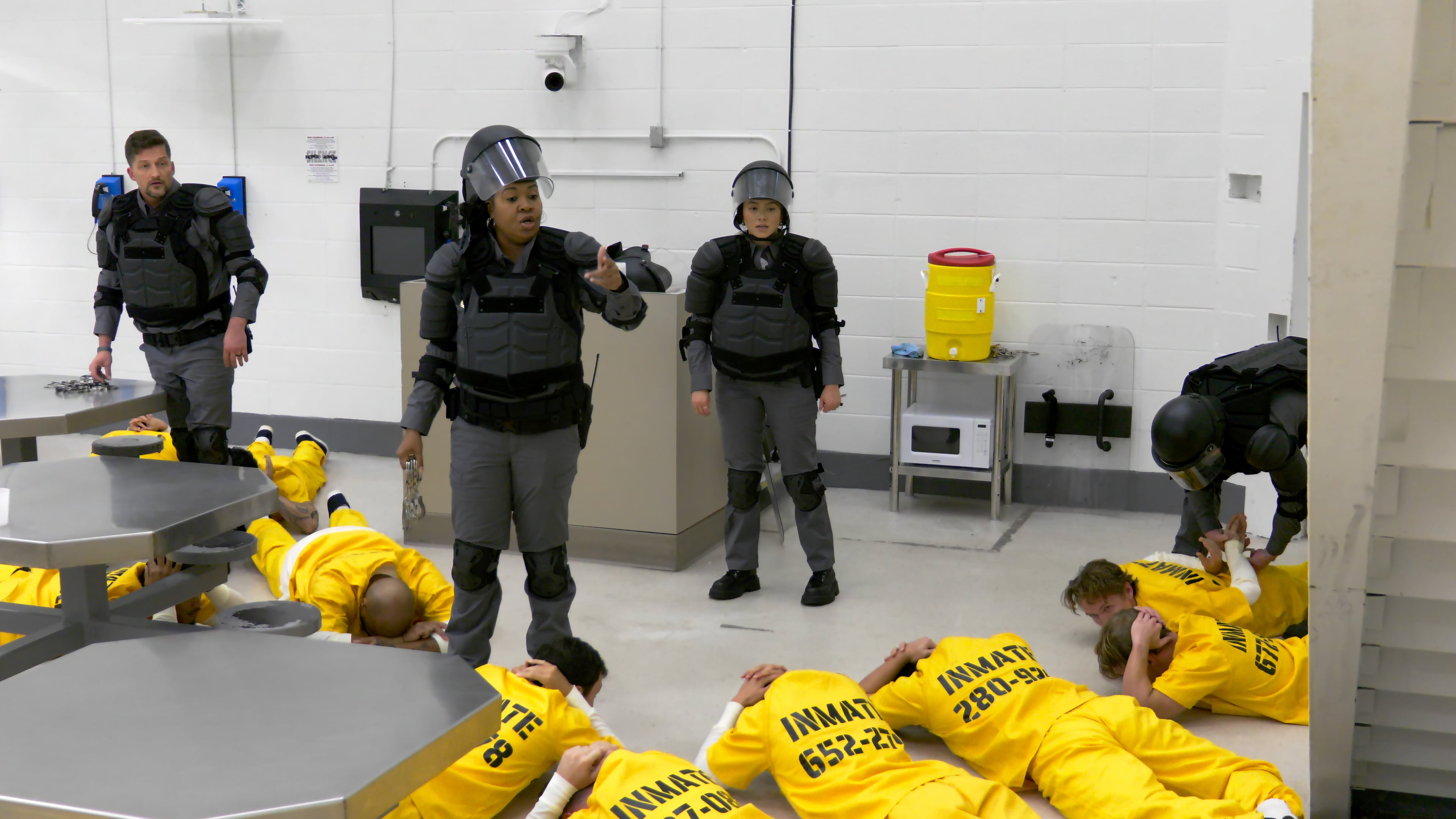
Some participants initially resisted leaving before the end of the two weeks, insisting they were not quitters. “There was so much debate, conversations, crying, yelling that last day,” Ellenburg said.
But the tide turned when military vet Sonny Earl Robertson suggested they lock arms and all say “We have the power” instead of using the safe word as they departed.
“It was a full team effort, and by the end of it,” Ellenburg said, “everyone kind of understood that this message of unity was way bigger than our 14-day prison challenge.”

Many viewers on social media expecting more conflict on the show found that final message unsatisfactory.
“My message to people who didn’t like the ending: ‘I’m sorry we weren’t savages!’”
Ellenburg said returning to regular life for a time felt like a “fever dream.” And while he isn’t deeply interested in more reality TV, time in the fake clink made him rethink his priorities in life.
“Should I be doing more to fight power I disagree with?” he said. “The show really made me think I should get more involved, maybe even run for office one day.”