Small in size, Hapeville dwarfs other metro burgs as ‘a home for the arts’
Amid the fast food and gas station signs drivers encounter heading south on I-85 is a billboard proclaiming “Hapeville: a home for the arts.”
That well-placed signage has apparently worked its way into Atlanta’s subconscious, Hapeville Arts Alliance Executive Director David Burt said.
“I started going around town, and I would tell people, ‘Yeah, I live in Hapeville.’ And they would say, ‘Oh, that’s that place with the arts?’”
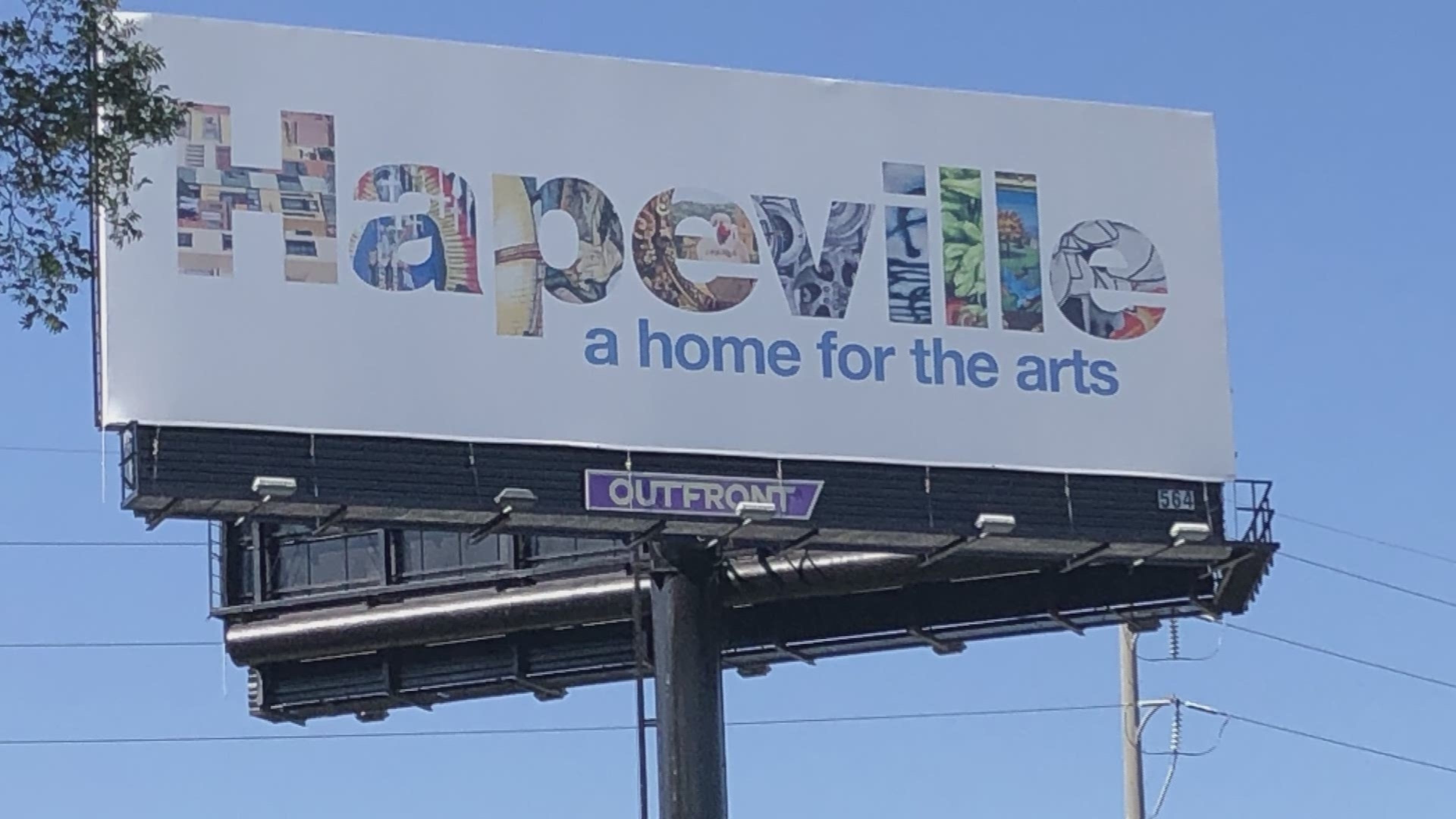
But it’s not just wishful boosterism fueling the Hapeville billboard, said Burt, who has been campaigning to bring art and artists to Hapeville since the Hapeville Arts Alliance was founded in 2010.
For a town with a population of just 6,553, according to the 2020 census, Hapeville, 7 miles south of downtown Atlanta, has developed an outsize reputation in the arts that extends beyond that declarative billboard. With a litany of artist residencies and programs, including more than 38 public art projects, Hapeville has shown the kind of commitment to fostering the arts that has eclipsed its larger Tri-Cities neighbors College Park, population 13,930, and East Point, population 38,400.
In previous decades, Hapeville was known more for the Ford Atlanta Assembly Plant and the original Chick-fil-A Dwarf House. But over the years those associations have begun to shift thanks to the concerted efforts of the Hapeville City Council and the city’s Hapeville Main Street Program, where Burt serves on the board. The Hapeville Main Street Program’s mission is “to create a vibrant downtown cultural arts district.” The majority of its budget is allocated for arts-related events, programs and public art,” Main Street and grants coordinator Nikki Cales said.
Part of the southside city’s success has been its, at times, aggressive wooing of arts organizations, including the 21-year-old Atlanta Printmakers Studio that formerly operated out of a cramped, windowless space at MET Atlanta in Adair Park.
Working with the Hapeville Development Authority — the owner of a former 1950s Amoco gas station at 748 Virginia Ave. that had fallen into disrepair — Burt advocated for relocating Atlanta Printmakers Studio to Hapeville with the carrot of an extensive renovation paid for with the city’s hotel-motel tax. The architectural firm Source Urbanism transformed a once-derelict eyesore into a handsome, bright, welcoming community center for Atlanta artists.
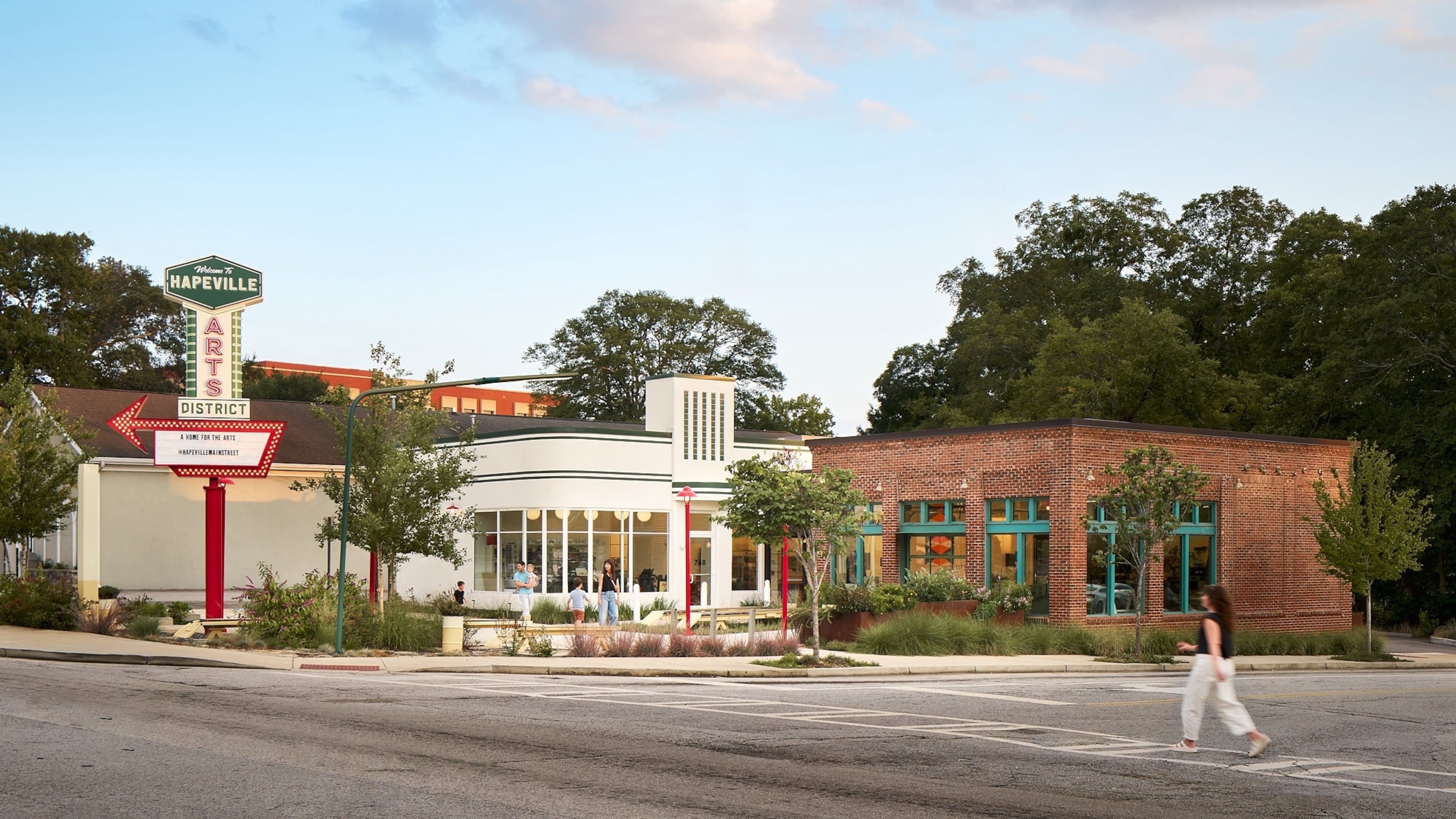
Atlanta Printmakers Studio opened in Hapeville in 2023 and has become the unofficial gateway to the city’s art scene. A 25-foot, retro, 1950s-style sign on the studio’s campus was commissioned by the Hapeville Main Street program and funded through a GM on Main Street Grant Program and proclaims, “Welcome to Hapeville Arts District” with a neon arrow pointing the way.
That makeover has defined the city’s dedication to turning blight into opportunity.
“They wanted us here, and they were willing to work with us to find a space for us that would suit our needs, and then that they would renovate for us,” Atlanta Printmakers Studio Executive Director Angela Nichols said.
The studio, which has become a community hub, hosts 70 studio artists, regular gallery shows, an Emerging Artist Residency, a small in-house shop and annual events such as Print Big, where a steamroller produces supersize prints.
An impressive array of arts organizations call Hapeville home, including the Black- and woman-owned bookstore Impossible Moon, which will have its grand opening Jan. 24; Atlanta’s longest-running theater, the Academy Theatre; the Hapeville Depot Museum, housed in an 1890 train depot; and the makers space Freeside Atlanta. In 2022, West Midtown’s Goat Farm Arts Center opened a satellite space with 40 occupied artist studios in a building adjacent to Tri-Cities United Methodist Church, where current artists include Shanequa Gay, Honey Pierre and In Kyoung Chun.
“We focused on Hapeville because of the city’s strong support for the arts and our prior experience producing arts programming there,” Goat Farm creative director Allie Bashuk said.
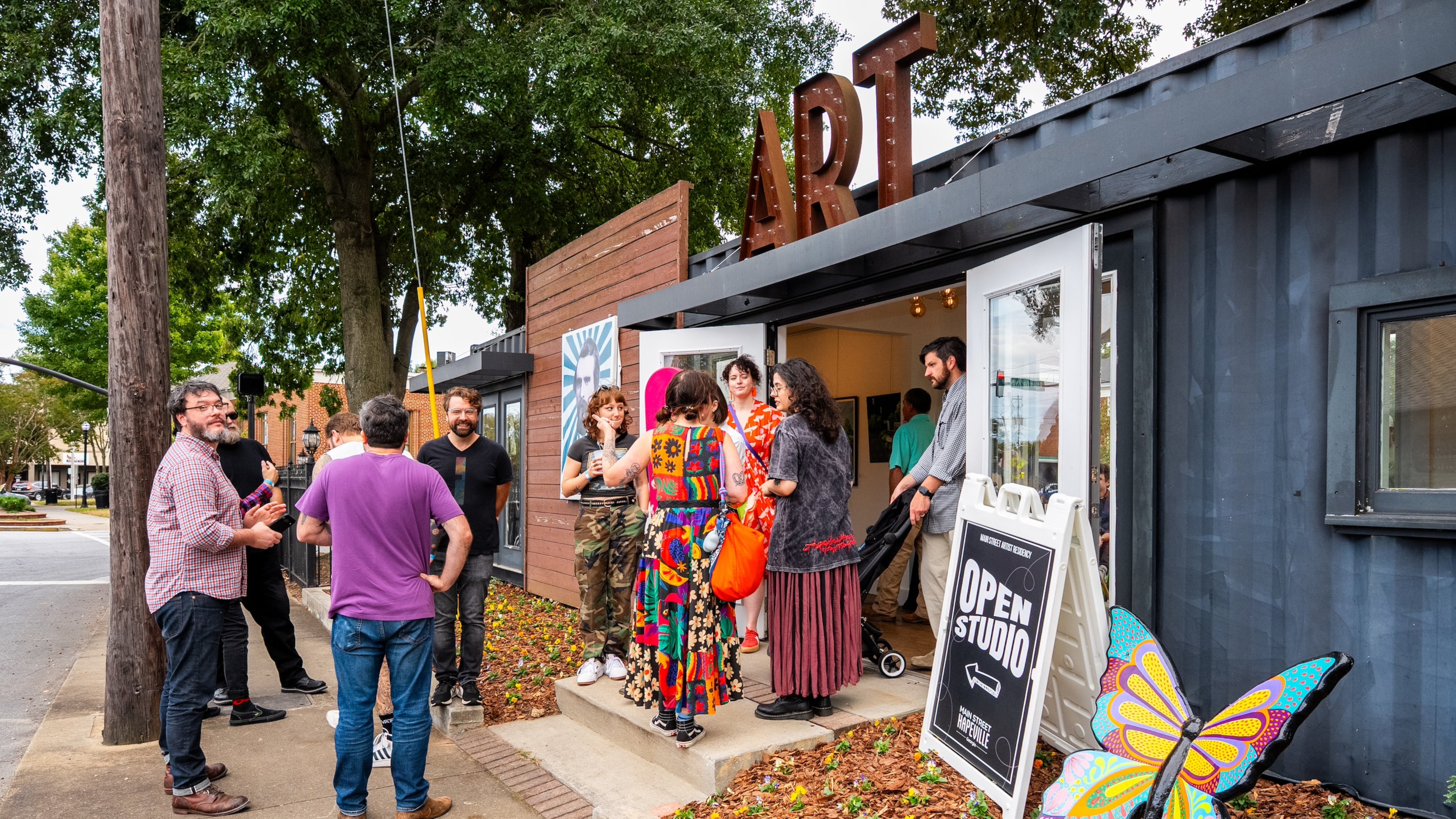
In addition, Cales said, the city offers an Artist Residency Program that pairs artists working in modified shipping containers that serve as studio and exhibition space. The spaces offer front-and-center exposure during two annual Downtown Hapeville Gallery Crawls and the Butterfly Lantern Parade, which Cales said have greatly increased Hapeville’s historic downtown foot traffic. In 2021 the city launched Free Art Boxes modeled on Little Free Libraries, as places to give and receive free art.
In 2026 the scene will expand, Cales said, with the relocation of ATL Glassworks.
“Hapeville understands that to invest in the arts and historic initiatives means a higher quality of life for residents while attracting tourists and new business,” said Samantha Singleton, director of the Hapeville Depot Museum. “Investing in museums, historic sites and the arts is an economic multiplier.”
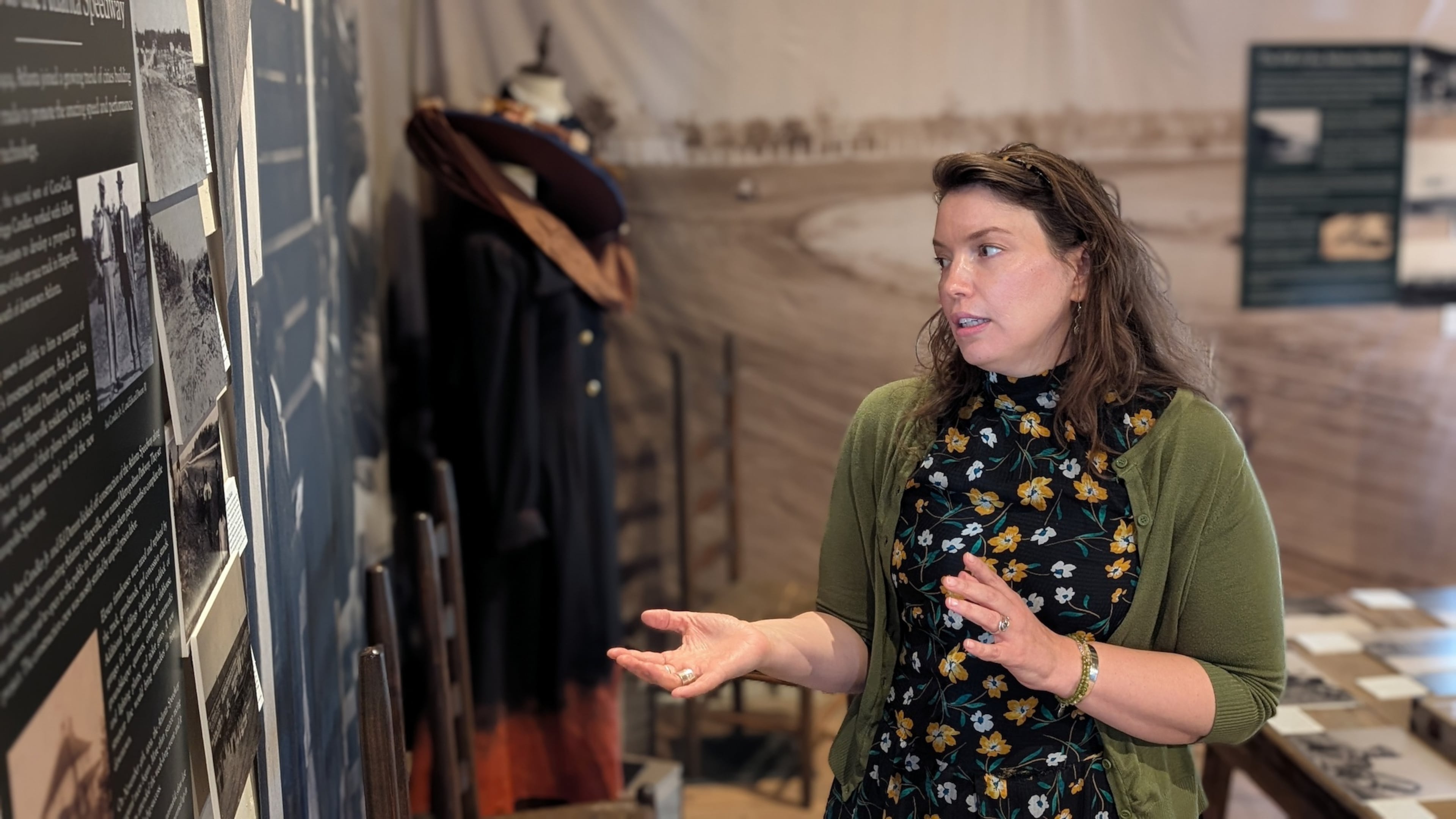
The Hapeville Depot Museum has garnered attention for its innovative residency program in which artists and historians team up to create an exhibit within the museum. “The artist learns about historic research from the historian and the historian gets to let loose and be more creative,” Singleton said.
A significant part of the city’s arts advocacy is Chloe Alexander, a working artist and teacher who just finished an eight-year tenure on the City Council. During that time, she worked alongside a city government and Hapeville businesses that she said appreciated the economic and quality-of-life value of supporting the arts.
“I’m proud that I was able to work with a council that was very open minded to perspectives that aren’t necessarily part of their every day,” Alexander said. “I think when it comes to municipalities, one of the biggest hurdles, even for cities that want to foster the arts, is how to do it effectively.”
One of the highlights of Alexander’s time on the City Council, she said, was helping support Yehimi Cambron’s 100-foot-tall 2020 mural “We Give Each Other the World,” painted on the side of InCity Suites. It entailed applying for a National Endowment for the Arts grant to support the project and enlisting the support of the hotel’s owner.
“Because people have been able to see how well the arts are supported and at this point really expected by residents and people in the Tri-Cities area, there’s an embedded investment to make sure that it continues,” she said.
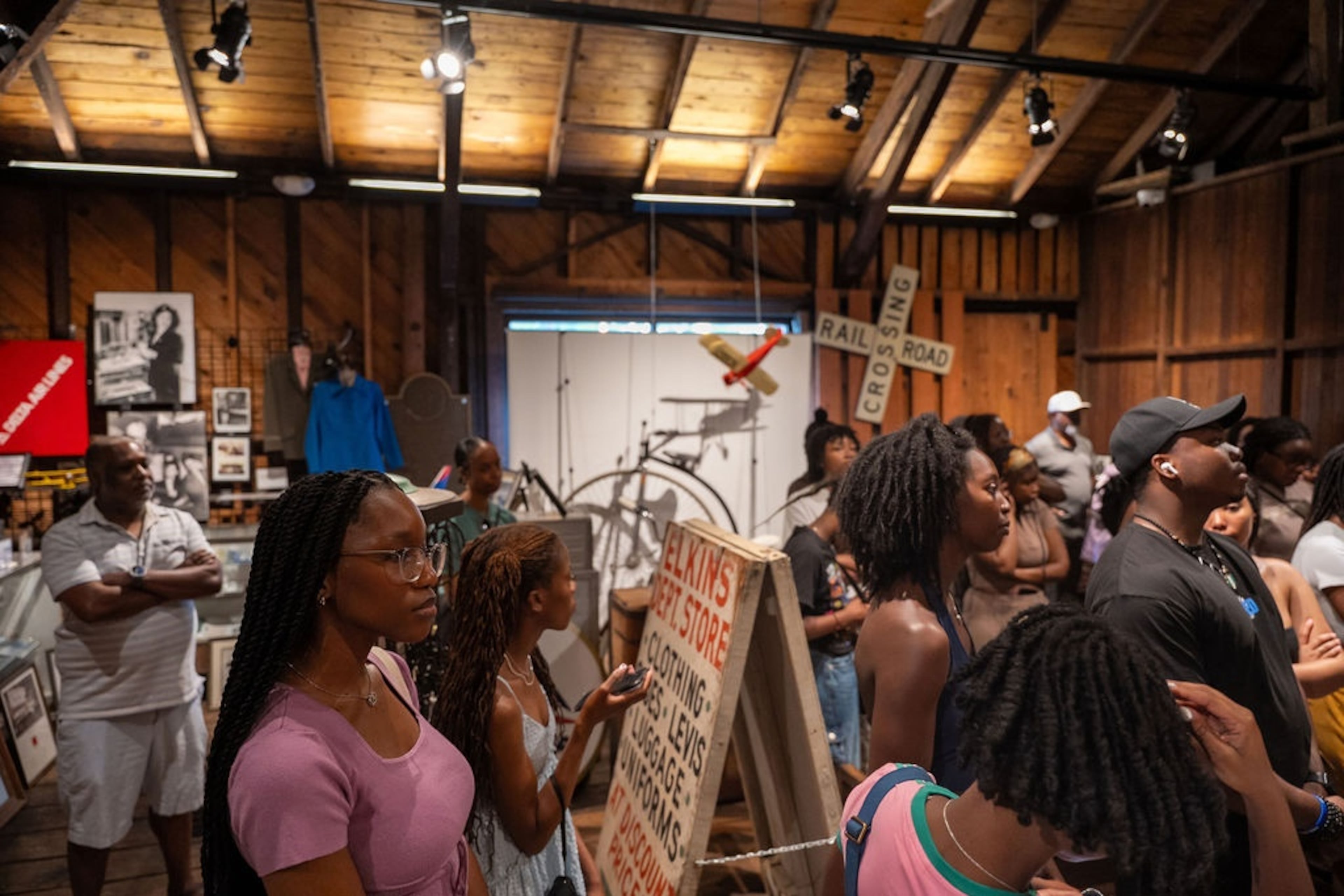
Alexander also credits the city government for finding ways to financially support art, events such as the 2025 Juneteenth celebration at the Hapeville Depot Museum.
Part of Hapeville’s secret sauce is its size, Alexander said. “It’s a small city. It’s a lot easier to pick up a phone and call somebody. There is just not as much red tape.”
With that smaller size comes a nimbleness and a can-do attitude, Singleton said.
There are some more tangible pluses that make Hapeville friendly to the arts, including lower housing prices, plenty of free parking downtown and a dense, walkable main drag.
“When they say they’re the home of the arts,” Nichols said, “they are putting their money where their mouth is.”


