Could a weighted vest help you stay stronger as you age?
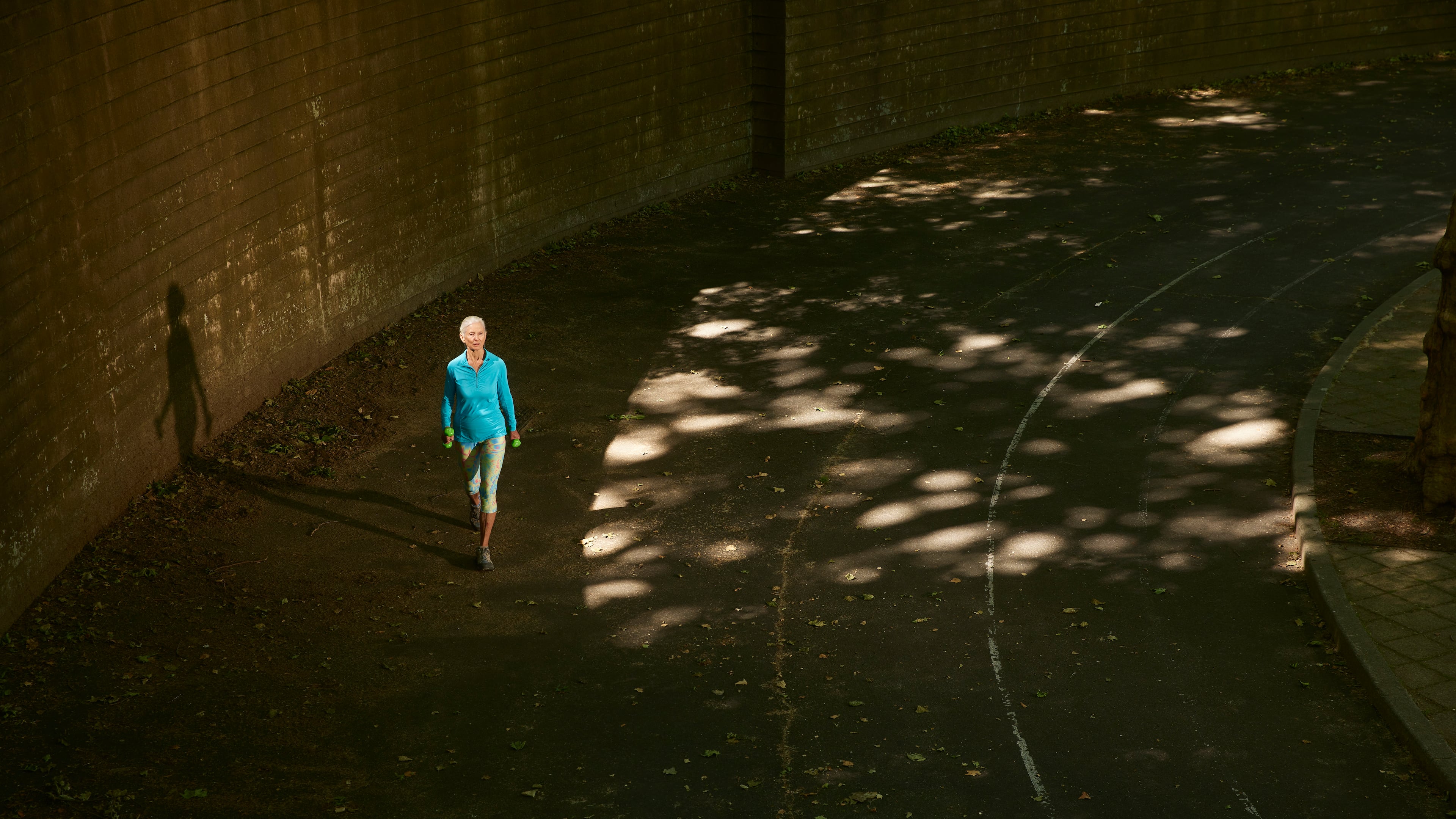
Weighted vests are gaining popularity among adults 50 and older as a way to add resistance to activities such as walking, according to the AARP. The trend is showing up on walking trails and in gyms across metro Atlanta.
Adding resistance can help support the muscle strength that becomes increasingly important with age. The Centers for Disease Control and Prevention recommends adults 65 and older include muscle-strengthening activities at least two days a week, along with regular aerobic activity and exercises that improve balance.

But a weighted vest isn’t necessarily the answer for everyone. Here’s what to know before adding one to your routine.
What a weighted vest adds
Strength plays an important role in maintaining independence later in life, said Christian Torres, an Atlanta certified personal trainer and founder of Primal OverDrive.
For someone who already walks regularly, a weighted vest is one way to make that activity more challenging without requiring them to walk farther or faster, Torres said. But it works best as an addition to strength training, not a replacement.
“I would look at a weighted vest as another progression tool, not as a replacement for actual strength training,” he said. “Walking with a vest and lifting weights create overlapping demands, yes, but they aren’t the same stimulus.”
Starting conservatively
There’s no universal starting weight. It depends on a person’s size, training history and health, Torres said.
“For a beginner, especially an older adult, I prefer starting conservatively,” he said. “Something around a few percent of body weight can be a reasonable coaching starting point, and some people may even start with an unloaded or very lightly loaded vest.”

He recommends easing in with shorter walks and paying attention to how the body responds, including changes in posture, gait and perceived effort.
A lighter option
For those who’d rather skip the vest, handheld weights offer a similar challenge. Torres recommends exercises such as “farmer carries,” in which you walk holding a dumbbell in each hand, and “suitcase carries,” which uses a single dumbbell on one side.
“Now you’re training the legs, grip, upper body and trunk with very simple equipment,” Torres said.
For older adults, the goal of adding resistance isn’t simply to make a workout harder. It’s to build the strength needed for everyday life.
“Muscle matters, but I would put just as much emphasis on strength and power because those are what help you get out of a chair, climb stairs, carry groceries or catch yourself if you lose your balance,” Torres said.