What happens to fertility after 40? Atlanta experts explain.
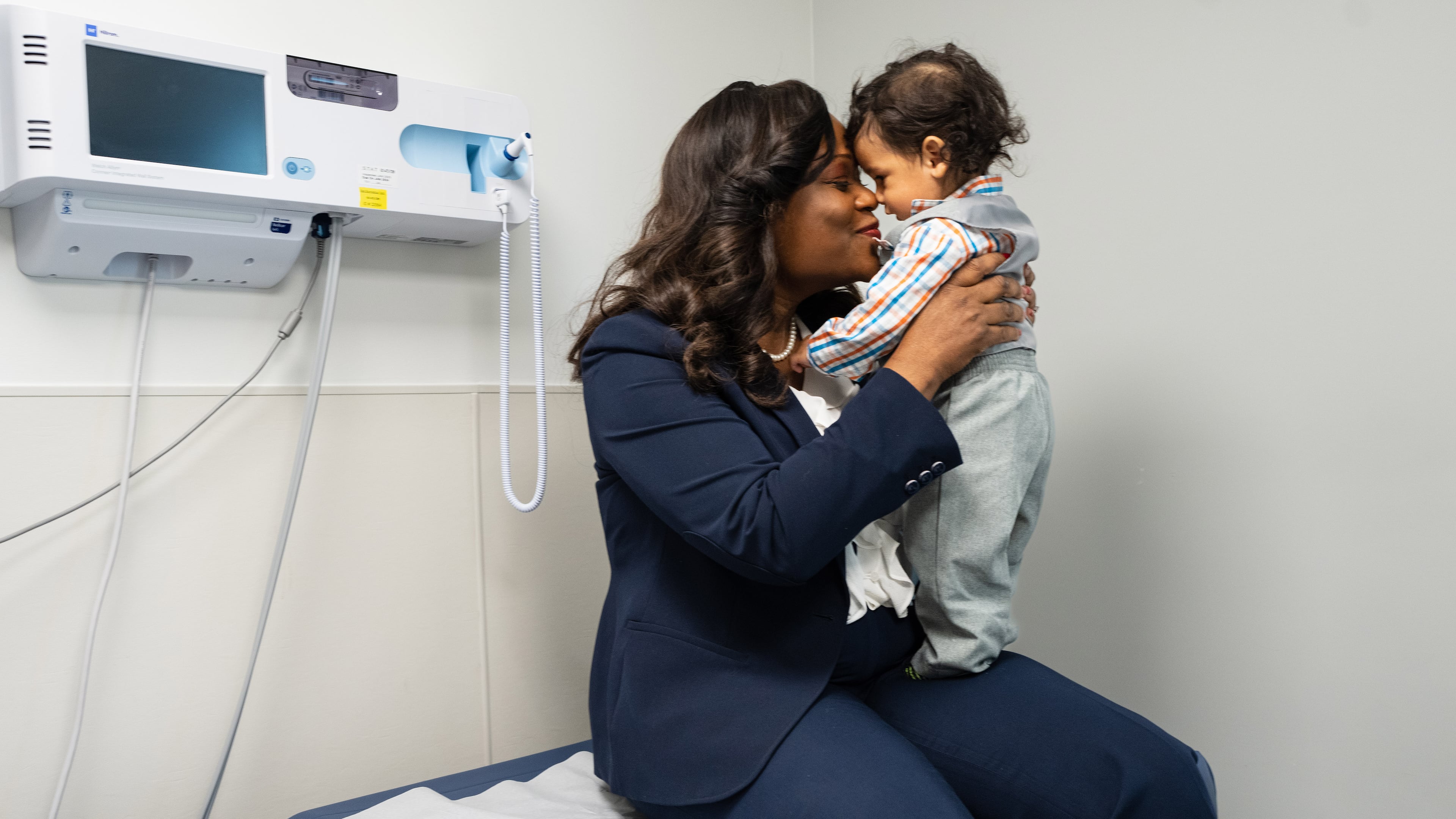
Nyema Barber was 41 when she brought her son, Legacy, home from Northside Hospital more than a decade after giving birth to her older children, who are now in their 20s.
“The patience you have as a parent when you’re younger is not the same when you’re older,” said Barber, who now lives in McDonough.
She’s watched the recent wave of celebrity pregnancy announcements with a mix of recognition and skepticism, such as actress Anne Hathaway, who revealed this summer that she’s pregnant with her third child at 43 after experiencing infertility and conception struggles.
The celebrity headlines are part of a larger shift toward later motherhood. More women are having babies in their 40s, a trend reflected in both national and Georgia data. In the U.S., the fertility rate for women 40 and older in the U.S. climbed 24% between 2015 and 2024, according to the Centers for Disease Control and Prevention. In Georgia, the rate for women ages 40 to 49 rose from 5.3 births per 1,000 women in 2015 to 6.5 in 2024, a 23% increase.
Barber said she doesn’t see those celebrity pregnancies as a reason for women to compare their own experiences.
“It’s wonderful that any mother can experience motherhood over 40,” she said. “But just keep in mind that these celebrities are living a different life and have different resources. Don’t feel bad if your path to motherhood is not the same as theirs.”

Celebrity pregnancy announcements show us the outcome, but rarely the path that led there. Details about fertility treatment may not be made public, leaving out important context about what it can take to conceive after 40.
Understanding the biology of fertility is an important place to start.
The biology behind the headlines
Dr. Sue Ellen Carpenter, Atlanta-area fertility specialist and founder of Bloom Fertility, sees many women navigating pregnancy after 40 and says the biology of fertility is often missing from the conversation.
“When we read about celebrities having children in their 40s, remember, we’re receiving carefully curated information,” she told The Atlanta Journal-Constitution. “Having all the facts, such as revealing whether there was an egg donor or even egg freezing, is unknown.”
Research shows that fertility in women declines with age, primarily because both the number and quality of eggs decline over time. That decline doesn’t mean pregnancy is impossible after 40. But as women get older, conceiving naturally can become more difficult, and some may need fertility treatment.
Carpenter said the core issue comes down to a fact of biology many people may not think about: Women are born with all the eggs they’ll ever have.
“The simple answer is it really comes down to the number of viable eggs we are given. It’s predetermined,” she said.
The emotional weight nobody sees
Knowing the biological realities of fertility is one thing. Experiencing them firsthand can be another.
Dr. Lauren Berman, an Atlanta-area psychologist at the Fertility Psychology Center of Atlanta, works with women navigating the emotional challenges of trying to conceive later in life.
“Most women I speak with believe that once they stop birth control, or make an effort to conceive during the fertile time of the month, pregnancy will be easy,” Berman said. “The truth is more complicated than that.”
That gap between expectation and reality often triggers grief, she explained, and may feel like other forms of loss.
“It is jarring to find out that you will need help to get pregnant,” Berman said. “Often, women blame themselves or feel they are not female enough if they can’t get pregnant. I call infertility the vacuum cleaner: it can suck in all the issues you have ever had and magnify them.”
That self-blame often deepens when women compare their own struggles to what they see play out publicly, Berman explained.
“Celebrities are not immune from the emotional challenges of attempting conception or from the physical complications during pregnancy,” she said. “Celebrities have one advantage that many American women do not. That is financial access to fertility medicine.”
Barber has also reflected on the differences between her experience and the celebrity pregnancies she sees in the headlines.
“It boils down to the means and money that a lot of these celebrities have,” she said. “They can afford surrogacy. They can afford many things that others don’t have access to that will give them the chance to become parents as they get older.”
But even a successful pregnancy doesn’t necessarily bring relief, Berman shared.
“Most women that I speak with, who have had trouble conceiving, do not take a deep breath or make a sigh of relief until much closer to delivery.”
Not too late, just different
Fertility may change with age, but the experience of becoming a parent can bring its own advantages.
“Women over 40 can have a very positive parenting experience,” Berman said. “They are parenting a very wanted child. They are likely to have a measure of financial security. They are likely to have perspective on career/family balance that younger women do not have.”
Carpenter agreed, noting that a woman’s overall health is an important factor when considering pregnancy, not just her age.
But both experts recommend that women over 40 who want to become pregnant see a fertility specialist early. Testing can help assess hormone levels, ovarian reserve and other factors that affect fertility.
Berman said she hopes the conversation reaches women well before they turn 40, not just those already navigating fertility challenges. For some, getting help along the way may be part of their path to becoming a parent.
“Do not take your fertility for granted,” she said.