Columbia, where the South drops the act
You don’t go to Columbia for charm or spectacle. You go for the friction: bronze stars on the State House, ribs that defy Instagram and a raw calm carved from stubborn ground.
If Charleston is the South dressed up for company, Columbia is what you catch when the South is in sweatpants at home. It’s not a city that tries to seduce you with facades or curated charm. It doesn’t need to. Columbia is a liminal space: between the rural and the urban, between a bloody past and a restless present.
When Sherman’s Union troops entered Columbia at the end of the Civil War, they set much of it ablaze. The State House still bears bronze stars marking the cannon strikes. Unlike Charleston, which preserved its antebellum gloss, Columbia’s defining memory is destruction and the necessity of rebuilding. That scar tissue — visible, unapologetic — gives the city its particular rhythm: scarred but steady, humble but proud, always in the act of starting over.
South Carolina’s capital is often overshadowed by its flashier neighbors — Charleston with its elegant facades, Greenville with its new-money polish. But Columbia offers something different: raw grit, history and the kind of beauty that only reveals itself when you lean in.
Columbia never lacks initiative
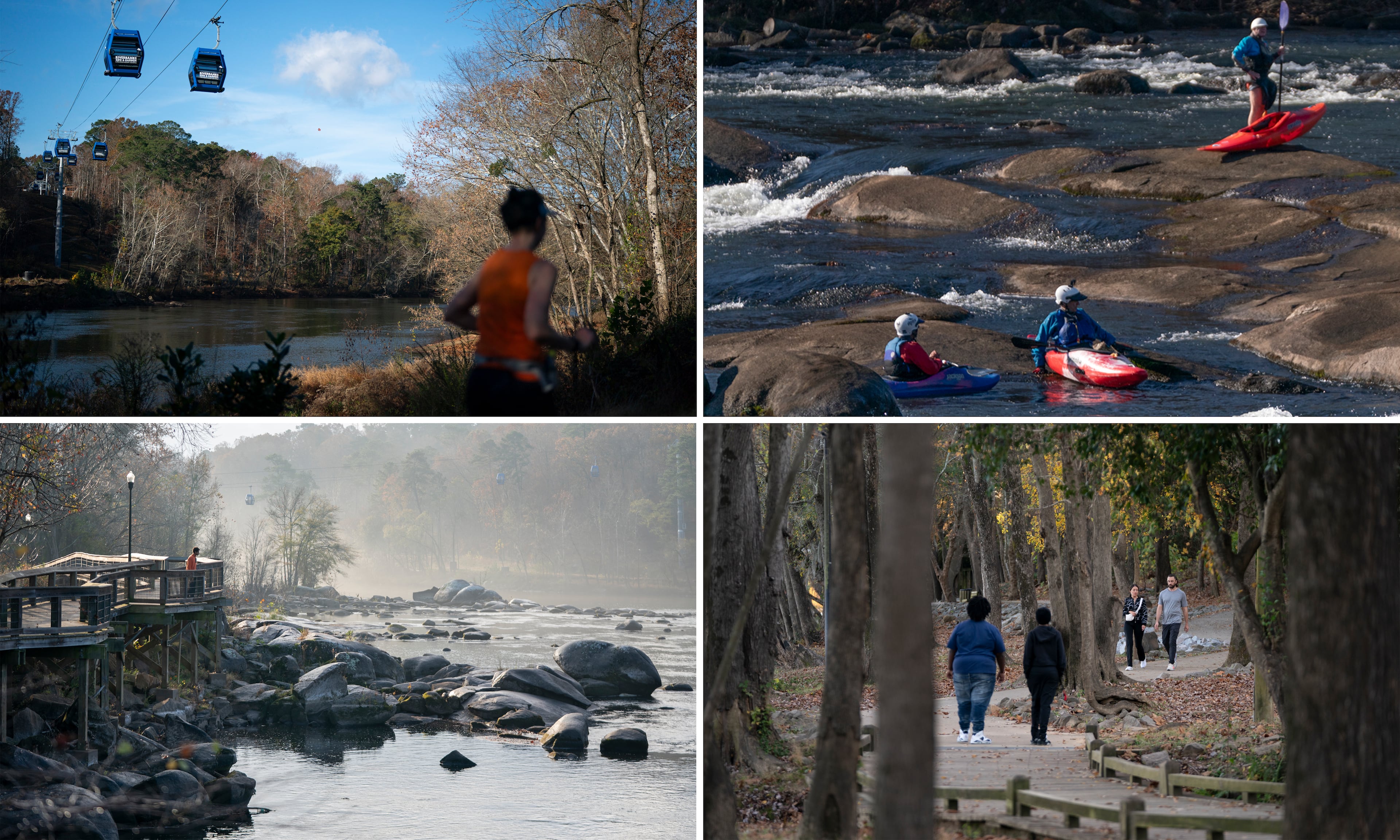
Begin on the Columbia Riverwalk, part of the Three Rivers Greenway. The paved path hugs the Congaree and Saluda Rivers, the skyline glinting in the distance, herons gliding overhead. It’s Columbia’s front porch — a place where joggers, families and daydreamers share the same slow breeze. The city’s contradictions start here: wild and urban, quiet and defiant, history whispering beneath the rush of water.
It’s where I first called Preach Jacobs, the city’s cultural ambassador and founder of the recently reopened SoulHaus art gallery. His voice crackled through the line — warm, grounded, a little amused.
“Man, I been here all my life,” he said. “My parents picked cotton. I make art. That’s Columbia right there.”
At 42, his “Jackie Robinson year,” Preach has turned his life into a living gallery: hip-hop, journalism, visual art and community building. “My parents didn’t teach me everything I know,” he said. “They taught me how to learn everything I wanted to know.”

His city, he told me, is full of stories waiting to be written: “artists staging shows in tattoo parlors, pop-ups in lofts, murals blooming across brick walls.” Columbia may lack infrastructure, but it never lacks initiative.
Preach’s Columbia isn’t invisible; it’s overlooked. “You can’t hate a place unless you’ve loved it,” he told me, quoting “The Last Black Man in San Francisco.” “Columbia’s mine. Warts and all.”

Dinner is at Railroad Barbecue, a Columbia landmark where the smell of smoke meets the weight of history. Order the brisket, yellow rice and collards. It comes with sweet cornbread. While you wait, take in the walls: photos of Black leaders, clippings and local memorabilia. The restaurant’s founder, activist Kevin Gray, turned barbecue into an archive. Skip the old segregation-era institutions; eat where the food and the politics taste right.
Try Transmission for a nightcap, a relaxed bar with an arcade in the back and smoked wings that deserve their own fan base. Next door, The Joint offers drinks and live sets — tight space, big sound. If you’re still moving, climb to the rooftop bar at the nearby Moxy hotel, where bartender Angelo shakes a drink he’s experimenting with while he talks about coming back home after years in Charlotte.


“It’s like Charlotte’s little brother,” he said.
Columbia, to him, is a work in progress: familiar, complicated, unfinished.
“People gotta start building stuff,” he said. “Things that aren’t just church.”
The ice clinks as he sets the glass down. The drink is tart, floral and, like Columbia, unfinished. It’s good, but still learning what it wants to be.
Nobody’s pretending here
Start the day at Curiosity Coffee Bar, where the espresso’s strong enough to reset your nervous system.
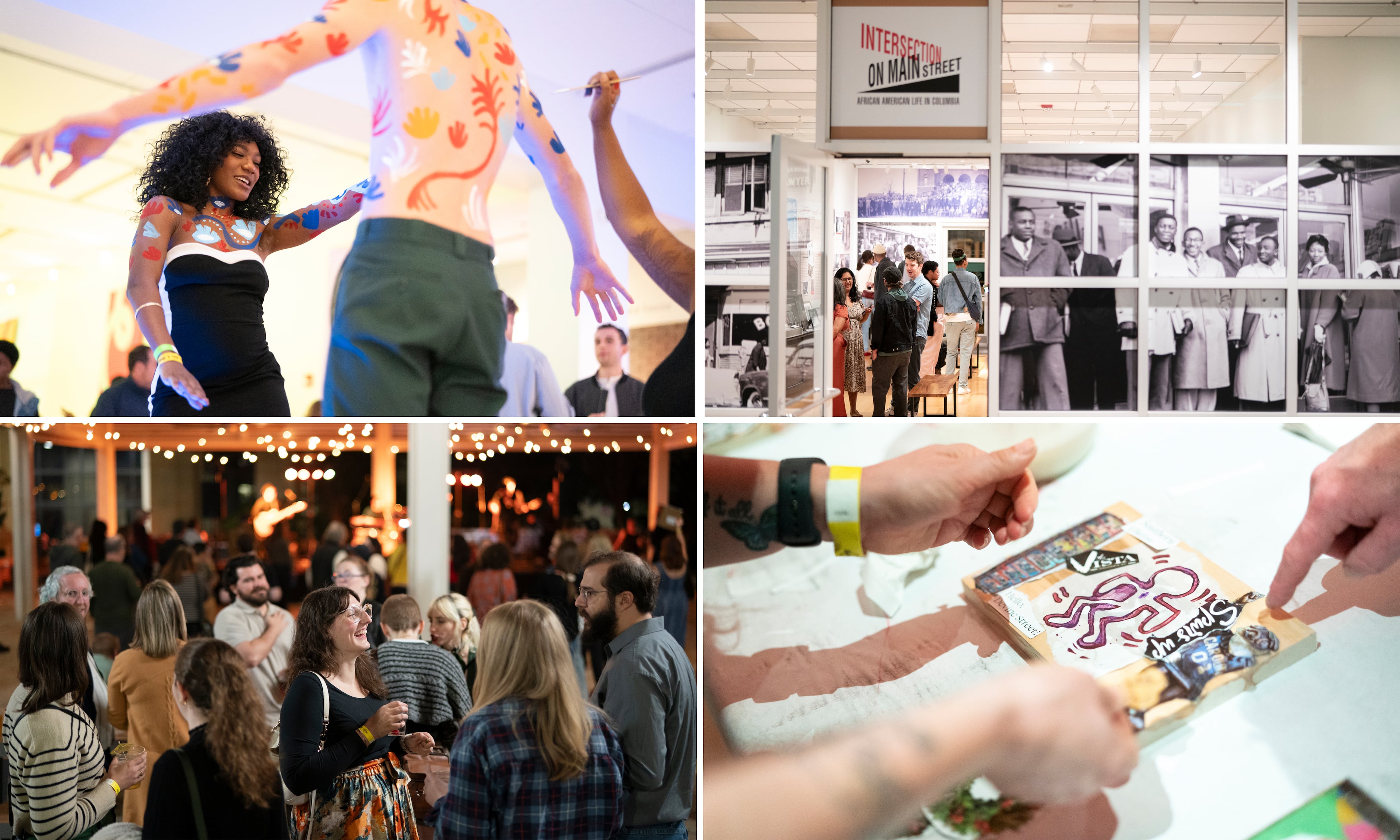
Walk it off downtown at the Columbia Museum of Art, a slick, modern temple that’s still figuring out what kind of faith it serves. The exhibits span continents: European masters, Keith Haring, the occasional local breakout, but the real story’s outside the glass: a creative scene that’s hungry, restless and unafraid to be messy. Artists here don’t wait for the grant money. They build what they can, with what they have. And it works: imperfectly, beautifully.
By noon, you’re starving. Head to Market on Main, where the patio hums with conversation and the smell of truffle fries hangs in the air. It’s the best kind of brunch spot — the kind where brunch isn’t an event but something that fits naturally into the rhythm of a Sunday. Order the M.O.M. Burger if you’re hungry or the smoked duck salad if you’re pretending not to be.
If you need to breathe, drive 20 minutes out to Sesquicentennial State Park, or “Sesqui,” as locals call it — because “Sesquicentennial” is a cruel word to pronounce after lunch. It’s 1,400 acres of pine, red clay and water still enough to make you forget your phone. Rent a kayak if you must, but, really, this is a place to sit and remember you’re small.
Back in town, as the day exhales, Soda City Market takes over Main Street. It’s chaos in the best way: smoke from grills, music from every direction, kids running wild, and farmers hawking collards and okra like it’s treasure. Nobody’s pretending here, a reminder that the real thing never needed mint juleps or magnolia-scented myth.
Dinner at Goat’s, a Black-owned wine and craft cocktail bar where the lighting’s low and the cocktails are precise. Order too many small plates — poutine, duck tacos, steamed mussels. Let the conversation wander.
Then the night unfolds however you want it to: Champagne Lounge if you’re feeling refined, Mo’Hogany Seafood and Cocktail Lounge for slow jams and conversation, Space or S Bar if you’re chasing the bass instead. Check each venue’s social media before you go — the vibes shift nightly, from laid-back lounge to full-blown party.
‘Down here, you can build’
Start your last day in Columbia where the ghosts live. The State House grounds are beautiful in that uneasy Southern way: manicured lawns, a history that refuses to behave. Statues of Confederate generals share the same sunlight as memorials to civil rights heroes. It’s all here, tangled together, no filter, no apology.
A few blocks away, the campuses of Benedict College and Allen University hum with a different kind of power. Founded by freed people, built brick by brick in defiance, they’re living proof that the story didn’t end where the monuments say it did.
You’ll want something solid after that. East Bay Deli is often full of college students nursing hangovers, and they make a surprisingly good Reuben for a diner outside of New York. From there, stroll over to the Richland Library Main Branch. The scene inside is unexpectedly refreshing: teenagers, retirees, grad students and neighbors, all sharing tables. It’s democracy in its quietest form, open Sundays from 2 to 6 p.m. — people do have church, after all.

Just as good might be a second trip to Railroad Barbecue for The Hobo, their bolanga sandwich. Thick-cut, grilled to a perfect crisp: It’s Columbia in miniature: soulful, unpretentious, elegant in its own way.
If you’re lucky, your ride to the airport might be Neil, a transplant from Queens who came down for college and never left. He drives with the windows cracked, hip-hop low under his breath.
“Up north, we gettin’ pushed out,” he says, eyes on the road. “Down here, you can build.”
He grins. “The South’s got a future — if we take it serious.”
And maybe he’s right.
Columbia isn’t neatly packaged. It’s caught between the rural and the urban, between a bloody past and a restless present. Its art scene is improvised, its attractions — no matter how beautiful or sensuous — still feel in flux.
If you want charm, go to Charleston. If you want glitz, go to Atlanta. But if you want the South with the mask off, come here. Columbia isn’t easy. It’s a city still shaking the dust off its own history, still building, still burning, still feeding whoever shows up hungry. That’s exactly why it’s worth the trip.
This story has been updated to to note that SoulHaus art gallery has reopened.
Donovan X. Ramsey is a journalist and author of When Crack Was King: A People’s History of a Misunderstood Era. His work on race, politics, and the criminal legal system has appeared in The New York Times, The Atlantic, GQ, and WSJ Magazine
More Stories

Keep Reading