RECIPES: New cookbook explores the Southern Jewish table
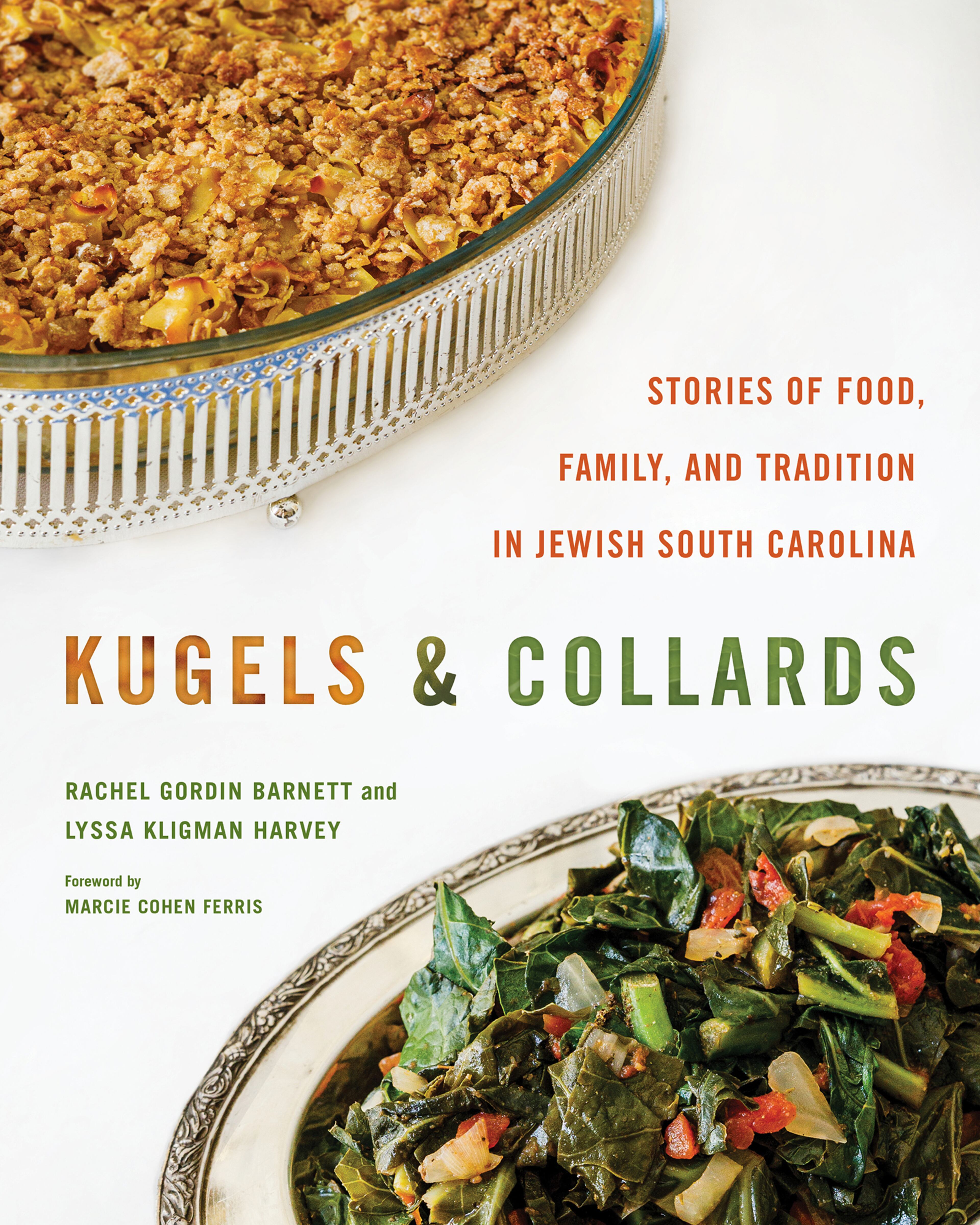
“Kugels & Collards: Stories of Food, Family, and Tradition in Jewish South Carolina” (University of South Carolina Press, $36.99) by Rachel Gordin Barnett and Lyssa Kligman Harvey is a multicultural story of food and history.
Four years in the making, it’s a collection of essays, recipes and photos from 60 contributors, all of whom have called South Carolina home.
“What we created here is a sort of unintentional archive of South Carolina’s Jewish history through the food memories that are so important to its people,” said Gordin Barnett in an interview with The Atlanta Journal-Constitution. “The first Jews appear in South Carolina in the late 1690s, and by the 1800s, Charleston has the largest Jewish community in what was then the United States.”
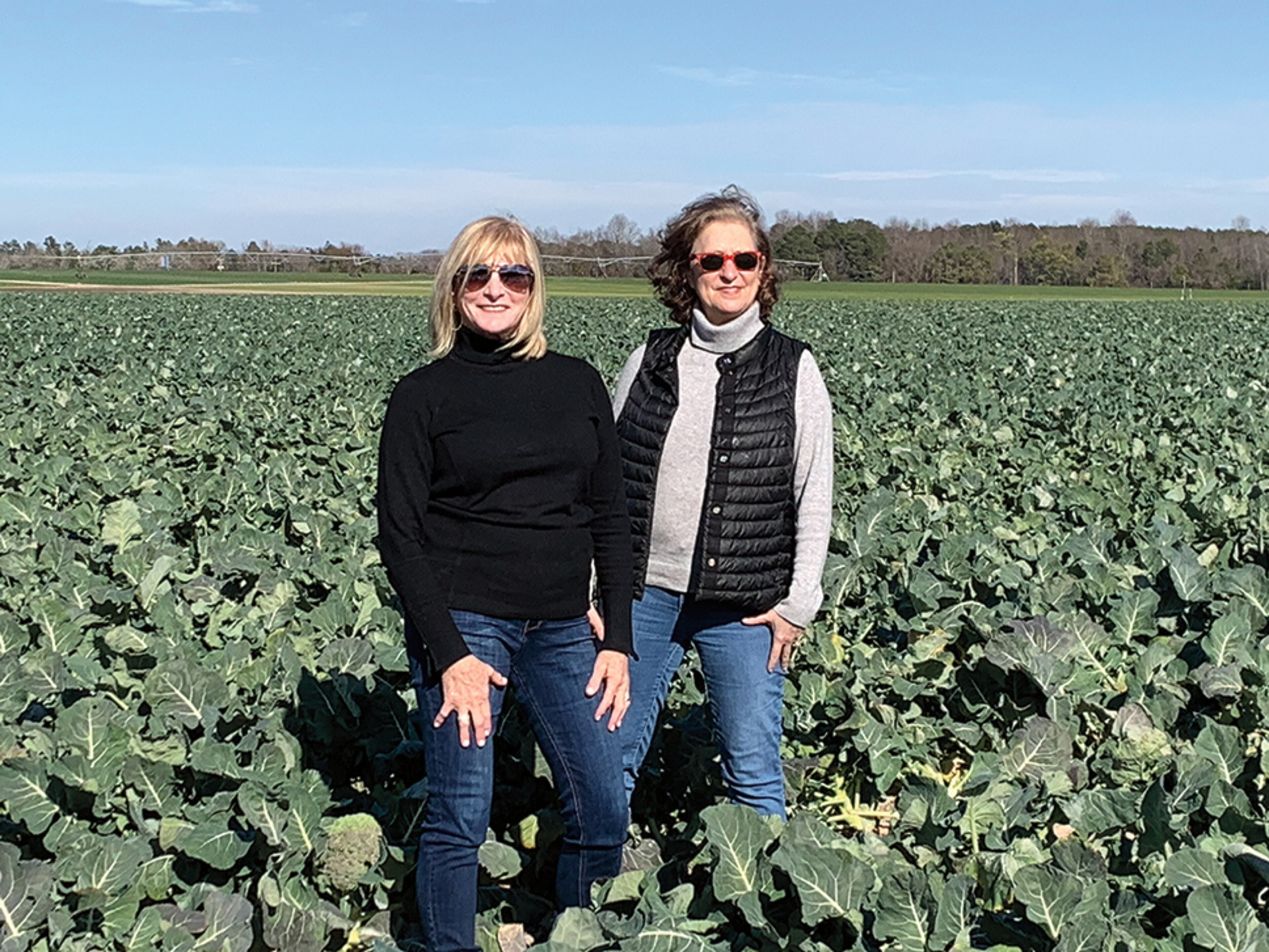
South Carolina’s Jewish history is certainly long and deep, beginning with Sephardic Jews, who were the earliest to escape from Spain and Portugal during the Inquisition, followed by the Ashkenazi, and many waves since.
“My grandfather was a Russian immigrant,” Gordin Barnett said. “He and his brothers left Russia to escape the pogrom, and they landed in New York. But they made their way South, and they took off to these little towns in South Carolina, and became peddlers. Then, when they got a little more resources, they were able to open stores in these small towns, and that’s where I grew up.”
“I grew up in Columbia, the capital of South Carolina. But my grandfather had the exact same story,” Kligman Harvey said. “He came to America from Russia. My grandmother came from Poland, and they were sponsored by relatives who had already migrated down South. My grandparents lived in several different towns until they found their way to Columbia, where they had a grocery store and an Army-Navy store.”
Both authors say “Kugels & Collards” was a labor of love. They worked closely with the preservation advocacy group Historic Columbia of South Carolina and the Jewish Historical Society of South Carolina, where Gordin Barnett is the executive director. Fittingly, those two organizations will receive all proceeds from sales of the book.
Before the book, there was the Kugels & Collards blog, which the authors started in 2017, collecting South Carolina Jewish family stories and recipes. Since then historic markers, walking tours and oral histories have been added to the project.
“Lyssa and I, having an interest in food, thought, why don’t we talk about food memories,” Gordin Barnett remembered. “Who doesn’t have great food memories?”
“At first, when we asked people to contribute stories, they were a little hesitant,” Kligman Harvey said. “But by the time they finished writing the story, and remembered the smells and the people around the table, they thanked us for helping them recall. So one memory led to another, and one recipe led to another.”
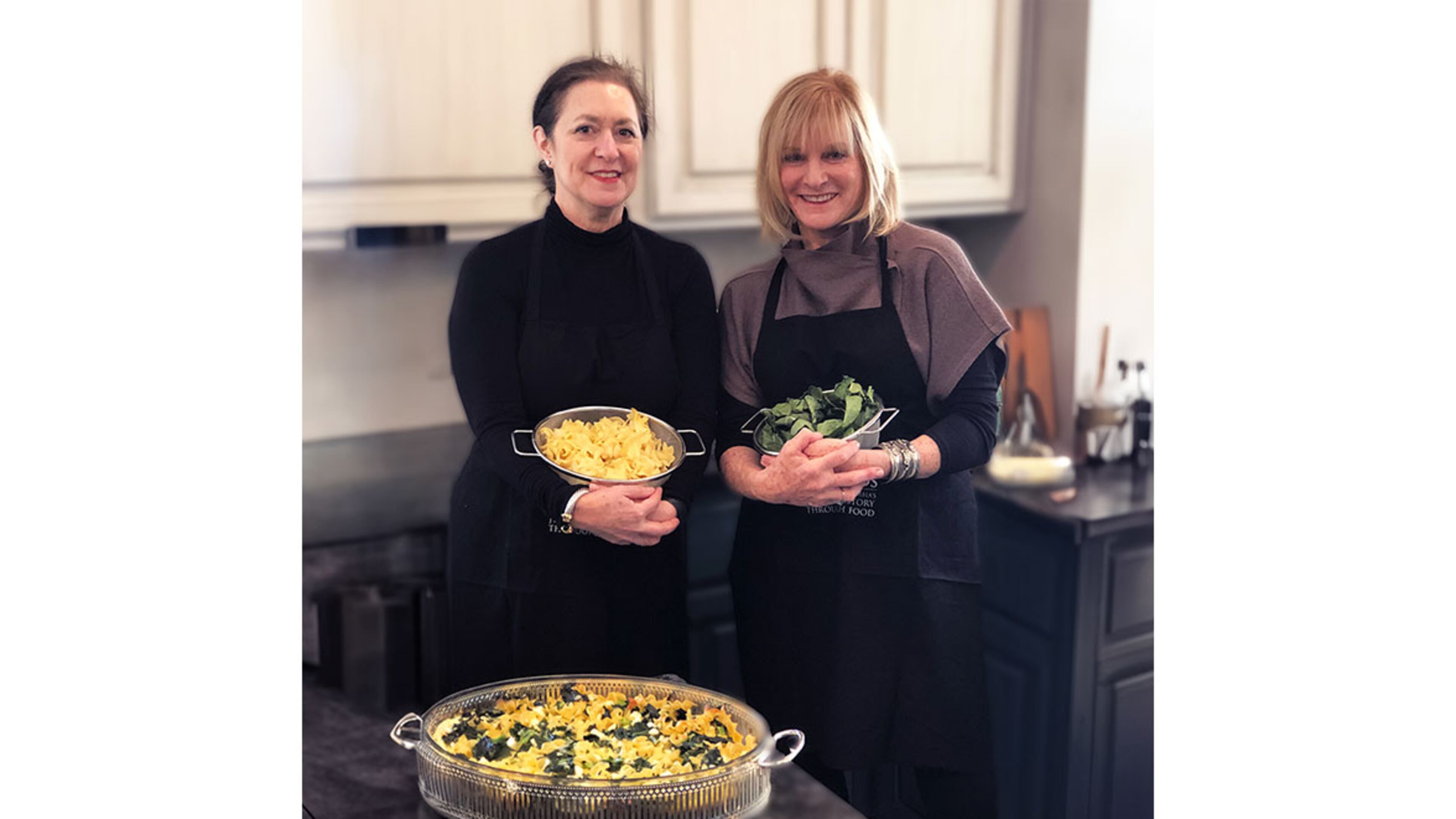
The chapter, “Around the Jewish Table,” features recipes for Rosh Hashanah, and Kligman Harvey and Gordin Barnett are proud to say they cooked every one of them.
“What surprised me in gathering these stories was really how emotional people would get about their memories of being around the Jewish table,” Kligman Harvey said. “Rachel and I call it a collective unconscious of Jewish food memories. That’s what we think of as the Southern-Jewish table.”
Gordin Barnett grew up in the only Jewish family in the small town of Summerton, South Carolina. And her family employed an African American housekeeper, Ethel Mae Glover, who took care of the family and cooked all the meals.
“She learned how to keep a kosher kitchen, and she brought her Southern recipes in, and she knew how to not cook with pork,” Gordin Barnett remembered.
Fittingly, the first recipe in “Kugels & Collards” is Ethel Glover’s Collards, which she often cooked for the Gordon family.
RECIPES
These recipes from “Kugels & Collards” include an array of dishes from the Jewish table, including stuffed cabbage, chopped liver, mandelbrot and a poppy seed Bundt cake.
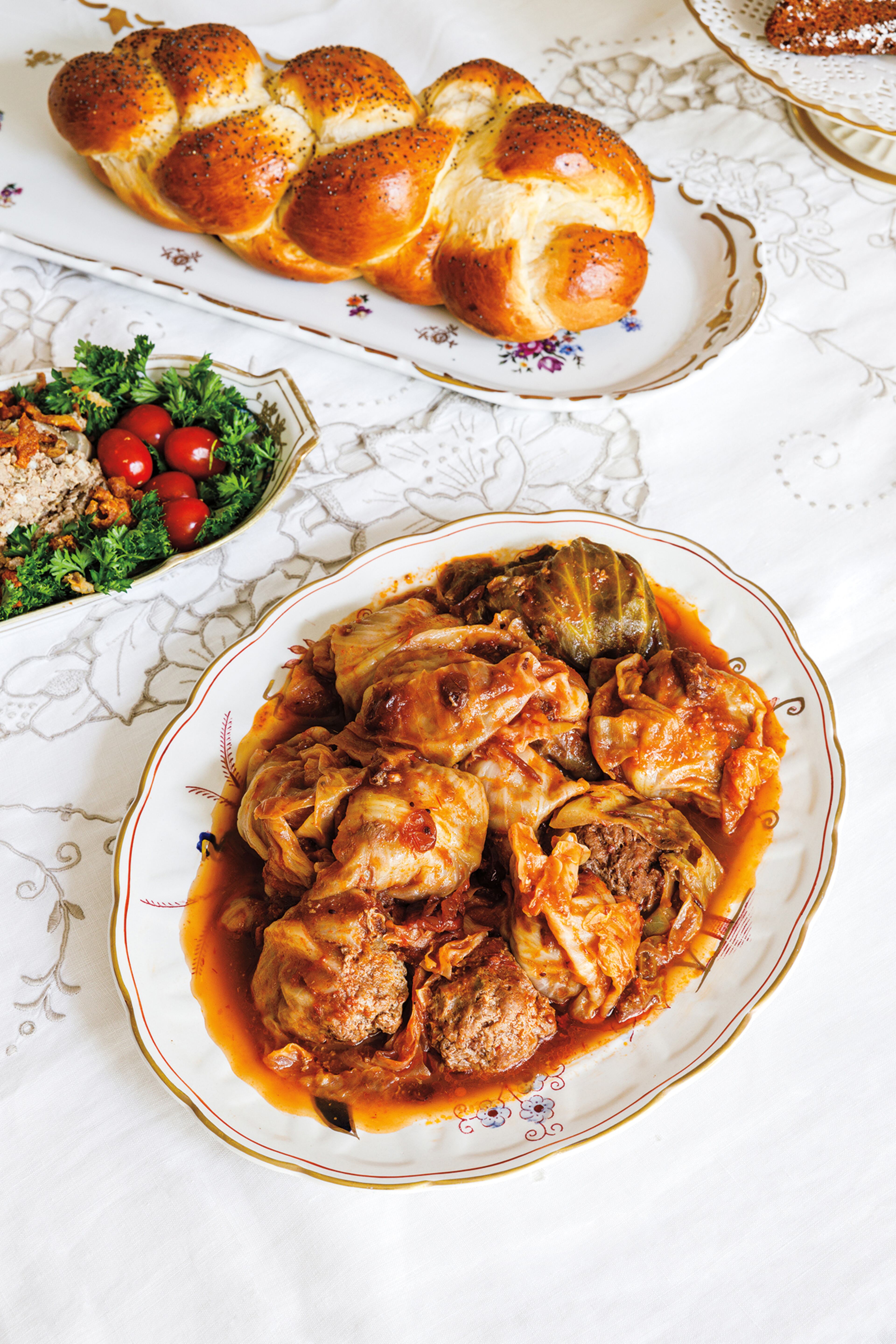
Aunt Sophie’s Stuffed Cabbage
For decades, Jewish congregations in South Carolina have shared Jewish customs and cuisine with the larger community through annual fundraising food events. The members of Columbia, South Carolina’s Tree of Life Congregation enjoy traditional Jewish dishes and baked goods at the annual celebration, “The Big Nosh.” The event offers an array of Jewish delicacies, including Aunt Sophie’s recipe for Stuffed Cabbage by Donna Stern Magaro.
- 1 head large cabbage
- 1 cup chopped fine onion
- 2 tablespoons butter
- 1 cup uncooked Minute Rice
- 2 pounds ground chuck
- ½ teaspoon parsley flakes
- Salt and pepper to taste
- 1 (14.5-ounce) can tomato soup
- ½ cup brown sugar
- Heat the oven to 300 degrees.
- To prepare the cabbage: Core the cabbage, put it in a pot, and cover the cabbage with water. Bring the pot to a boil, then turn off the heat and let the cabbage sit for 10 to 15 minutes. Drain the water and peel the cabbage leaves. They should be soft and easy to manage. Let sit on a paper towel to drain.
- To prepare the meat mixture: Saute onions in the butter. Cook the rice according to package instructions and mix well into the raw chuck. Add parsley flakes, and salt and pepper to taste. Add the onion to the mixture. Make golf-ball-sized meatballs with the meat mixture.
- To prepare the stuffed cabbage: Use a 9-by-13-inch casserole dish. Take a cabbage leaf at the thickest part. Roll the cabbage leaf around the meatball, taking the thinnest part of the leaf and tucking it under the whole ball. It should be a nicely wrapped meatball. You can also use two of the smaller leaves to make a makeshift roll. When you finish a meatball wrapped in cabbage, place it with the fold down in the bottom of the dish. Add tomato soup and sprinkle with the brown sugar.
- Bake for 2 ½ hours.
Nutritional information
Per serving: Per serving: 490 calories (percent of calories from fat, 36), 33 grams protein, 45 grams carbohydrates, 18 grams total sugars, 4 grams fiber, 20 grams total fat (8 grams saturated), 103 milligrams cholesterol, 411 milligrams sodium.For nutritional calculations, the salt included is defined as 1/16 teaspoon.
Recipes excerpted from “Kugels & Collards: Stories of Food, Family, and Tradition in Jewish South Carolina” by Rachel Gordin Barnett and Lyssa Kligman Harvey. Copyright 2023 by Rachel Gordin Barnett and Lyssa Kligman Harvey. Used by permission of the University of South Carolina Press.
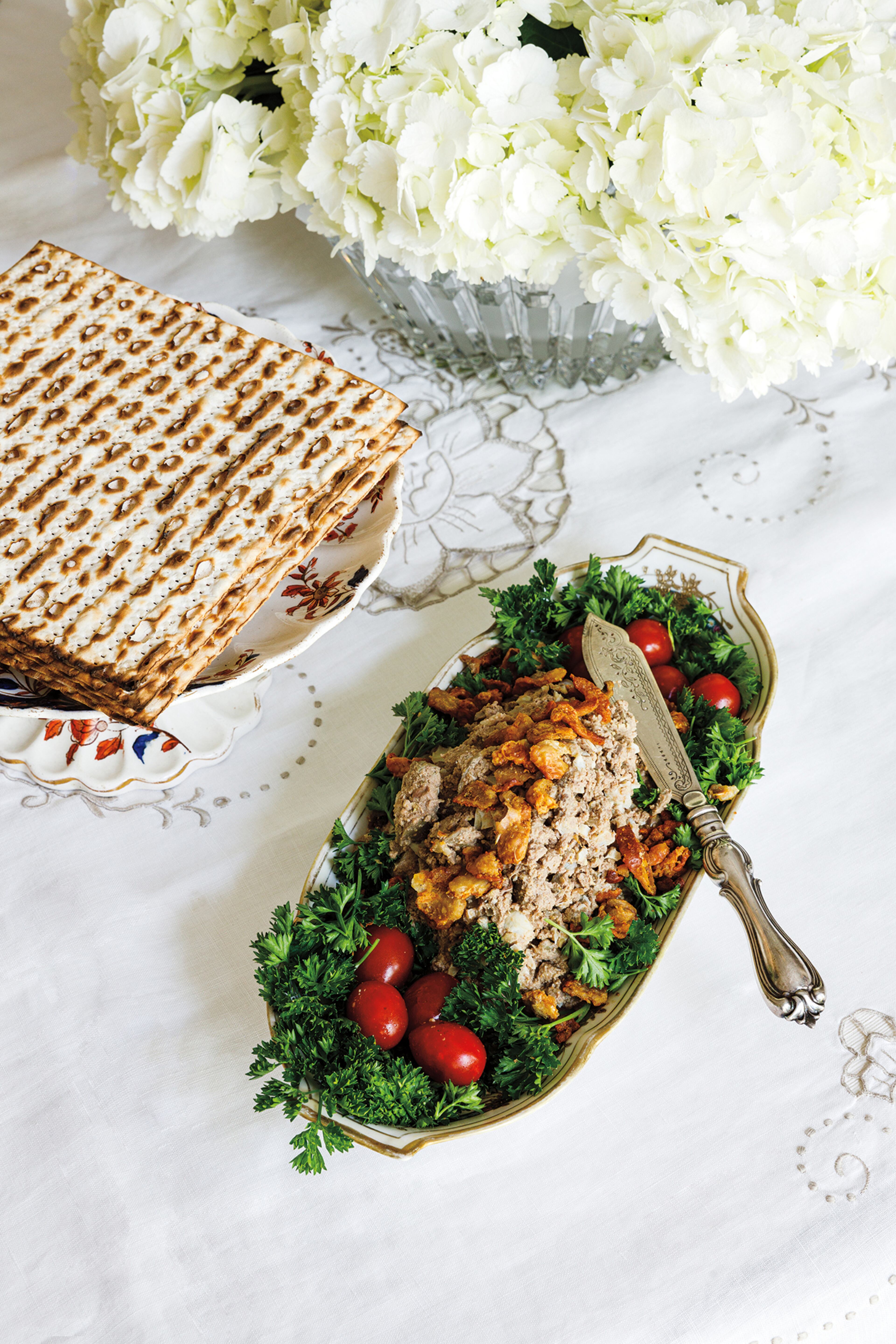
Faye’s Chopped Liver
Faye Levinson of Columbia, South Carolina was an impressive host. Chopped liver is a traditional Jewish dish, and Faye’s incredible chopped liver is an oniony, creamy dip.
- 1 pound chicken livers (3 to 4 pints)
- Salt and pepper, to taste
- 1 tablespoon vegetable oil (or chicken schmaltz), or more as needed
- 4 large onions, diced (4 to 5 cups)
- 3 hard-boiled eggs
- Turn the oven setting to broil.
- While the oven is heating, clean the livers, cut away the fat, season livers with salt and pepper, and pat dry with a paper towel. Put the livers on a roasting tray or cooking sheet and broil for 4 to 5 minutes. Using tongs, carefully turn livers, and broil an additional 4 to 5 minutes, or until there’s no pink in the center. The livers will be deep brown in color. Don’t overcook or livers will be tough.
- To a saucepan, add the oil or schmaltz and warm over medium-low heat. Add the onions and saute 20 minutes, or until the onions cook down and are deep brown. Put the sauteed onions in a bowl.
- Chop the livers and the eggs and add both to the onion mixture.
- If the mixture is not moist enough, add a bit of additional oil. The mixture should be finely chopped and creamy.
Nutritional information
Per serving: Per serving: 112 calories (percent of calories from fat, 51), 8 grams protein, 5 grams carbohydrates, 2 grams total sugars, 1 gram fiber, 6 grams total fat (1 gram saturated), 171 milligrams cholesterol, 94 milligrams sodium.For nutritional calculations, the salt included is defined as 1/16 teaspoon.
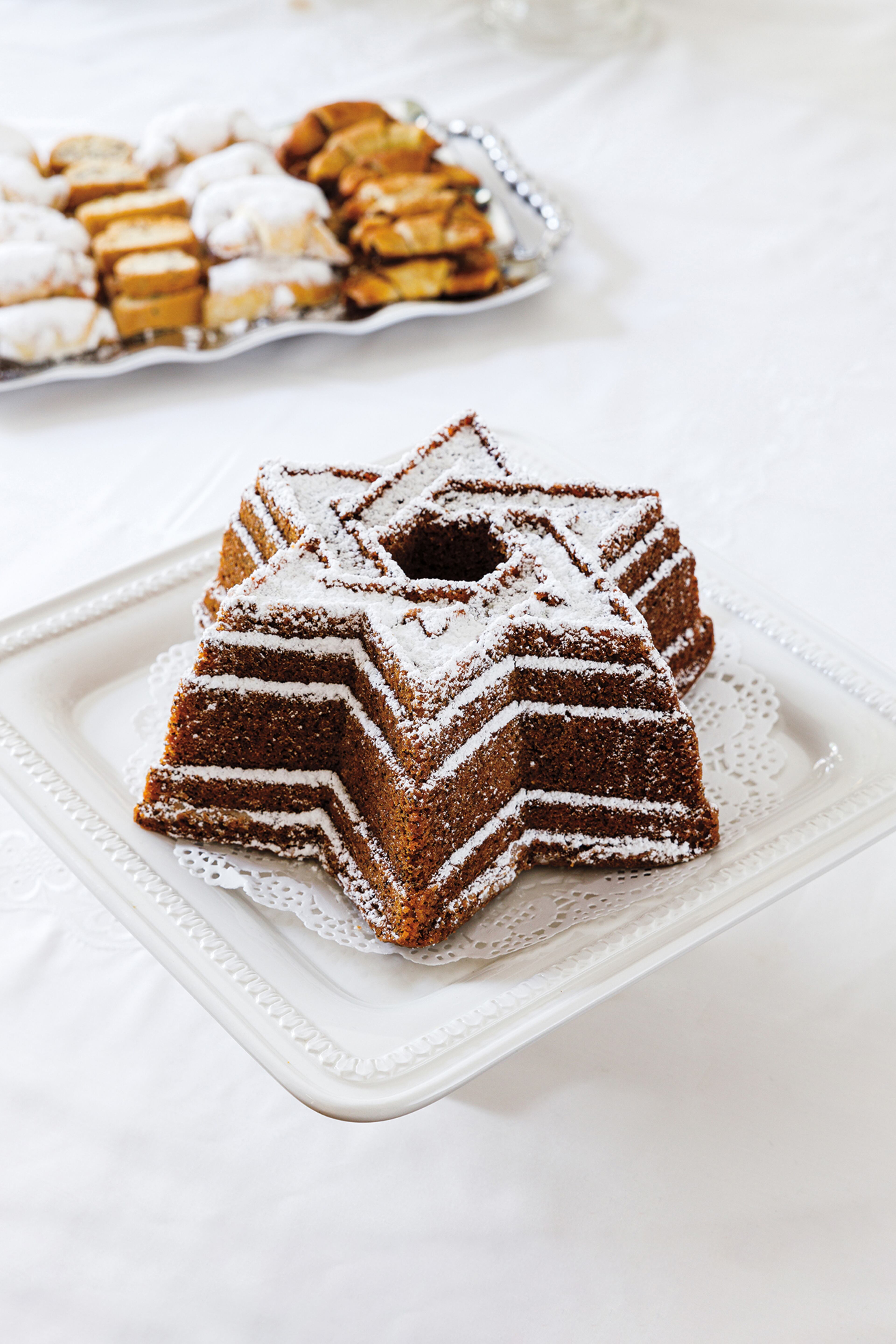
Lyssa’s Jewish Star Poppy Seed Cake
Lyssa Kligman Harvey’s Star of David poppy seed cake has become a family and Columbia, South Carolina Jewish community favorite. A Star of David Nordic Ware pan makes this delicious moist cake look festive.
- 1 box yellow butter cake mix
- 1 box instant vanilla pudding
- 1 cup yogurt
- 1¼ cups canola oil
- 4 eggs
- 1 teaspoon vanilla extract
- A couple splashes of brown liquor or brandy
- 2 ounces poppy seeds
- Powdered sugar
- Heat the oven to 350 degrees. Spray a Bundt pan with baking spray.
- In a large bowl, combine all the ingredients, except the powdered sugar, and mix. Pour the cake mixture into the pan, and bake for 55 minutes. The cake is done when a toothpick inserted in the middle comes out clean. Let the cake cool. Sprinkle the top and sides with powdered sugar before serving. Freezes well.
Nutritional information
Per serving: Per serving: 459 calories (percent of calories from fat, 55), 5 grams protein, 47 grams carbohydrates, 29 grams total sugars, 1 gram fiber, 28 grams total fat (4 grams saturated), 65 milligrams cholesterol, 401 milligrams sodium.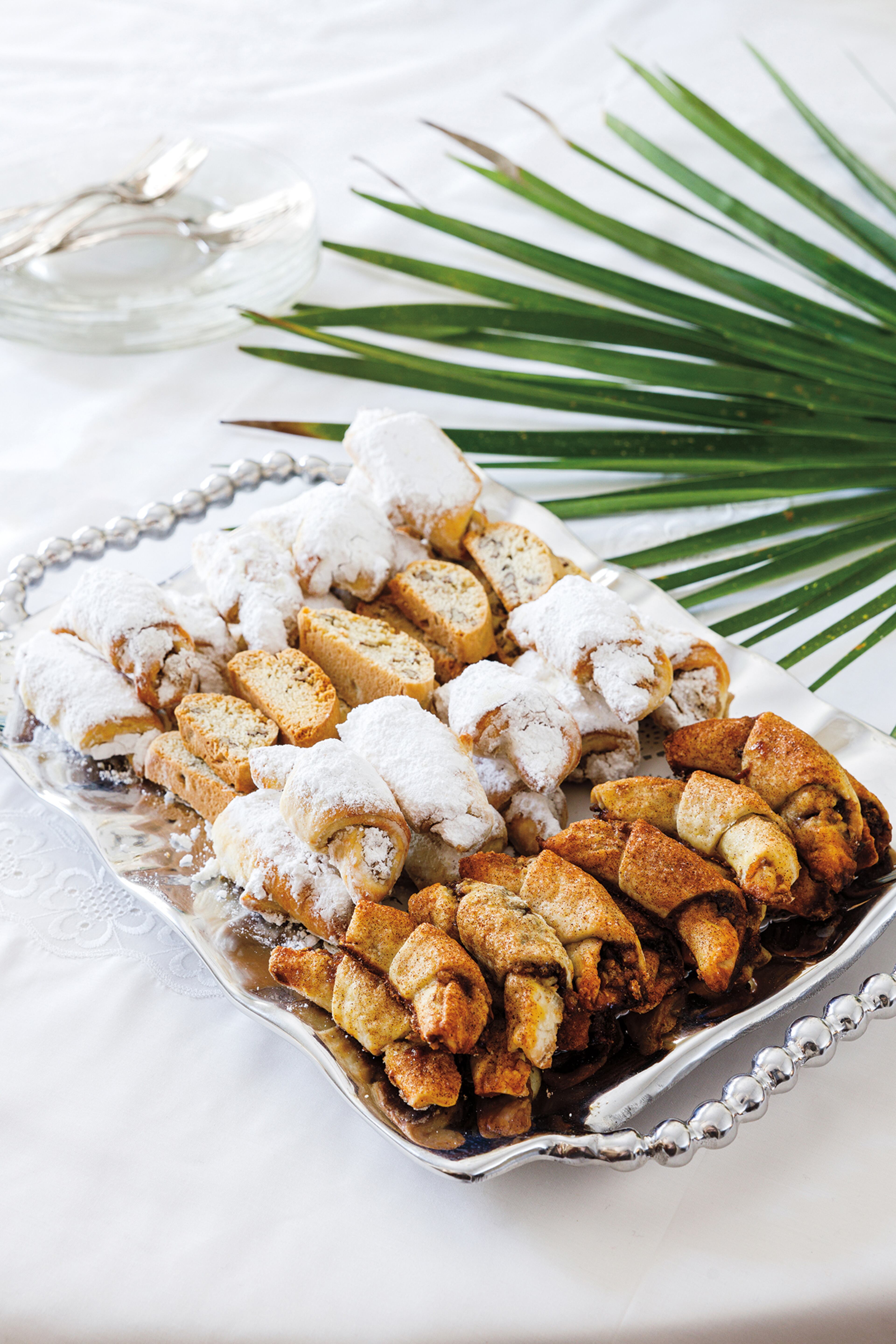
Sadye’s Mandelbrot
Sadye Krell from Charleston, South Carolina kept a kosher home. She was asked to make her mandelbrot (a traditional Jewish cookie similar to biscotti) for all simchas (joyous occasions such as births and weddings) and synagogue bake sales. Her recipe was slightly different than traditional recipes. Her secret? Half a cup of vegetable oil rather than a whole cup. Her vital ingredient was love.
- 3 eggs
- 1 cup sugar
- ½ cup oil
- 1 teaspoon vanilla extract
- 3½ cups flour
- 1½ teaspoons baking powder
- Dash of salt
- 1 cup almonds, broken
- Heat the oven to 350 degrees. Grease two cookie sheets.
- In a large bowl, beat the eggs. Add the sugar, oil and vanilla, mixing well by hand. Add the remaining ingredients, folding in the nuts last. Mix until stiff, but not dry, until dough is formed.
- Turn out onto a lightly floured board, and shape into five logs about 12-by-2 inches. Place on cookie sheets, two logs per sheet. Bake for 35 to 40 minutes, until lightly browned. Remove from the oven and cut the logs into 1-inch slices. Lay the slices flat and return them to the oven for 10 minutes, or longer to toast.
- Cool on a rack and store in an airtight container.
Nutritional information
Per serving: Per piece: 176 calories (percent of calories from fat, 42), 3 grams protein, 23 grams carbohydrates, 9 grams total sugars, 1 gram fiber, 8 grams total fat (1 gram saturated), 20 milligrams cholesterol, 43 milligrams sodium.Sign up for the AJC Food and Dining Newsletter
Read more stories like this by liking Atlanta Restaurant Scene on Facebook, following @ATLDiningNews on Twitter and @ajcdining on Instagram.