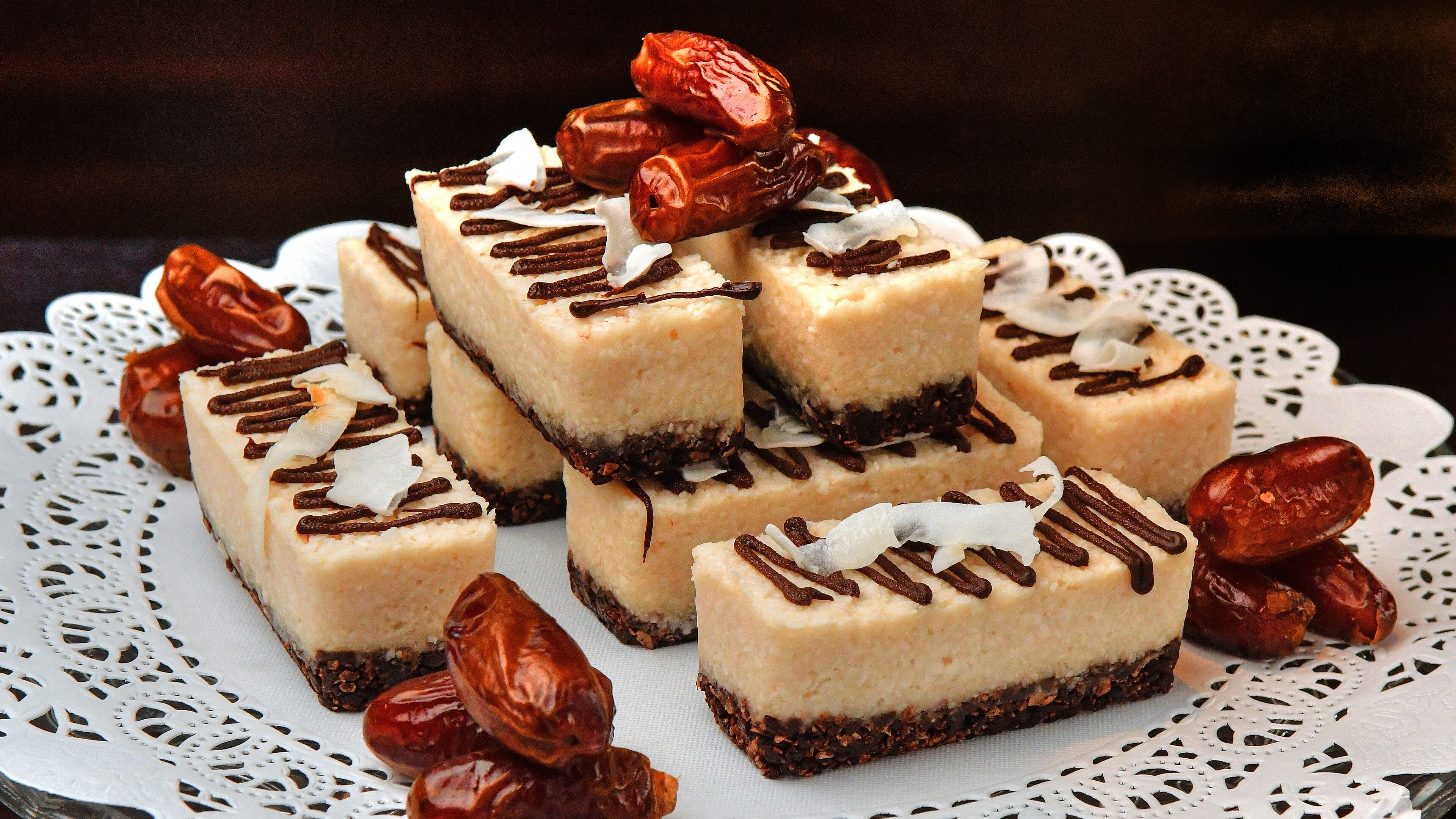
As the daughter of a mother whose family came to the United States a century ago from Syria, I grew up eating dates. Dates were particularly plentiful during the holidays, when pitted dates were stuffed with pecans and rolled in granulated sugar and appeared in candy dishes on every table. If those stuffed dates had an Arabic name, I didn’t know it. As I think of them now, we could have called them date “truffles,” far easier to prepare than truffles made with chocolate.
We made mamool, cookies stuffed with chopped dates flavored with orange blossom or rose water, and occasionally a platter of date-filled baklava. What I didn’t know then was that at the same time my grandparents were making their way from Syria to Florida, date palms were making their way from Morocco to the United States to begin what would be a century of cultivation in some of the hottest, sunniest parts of the country.
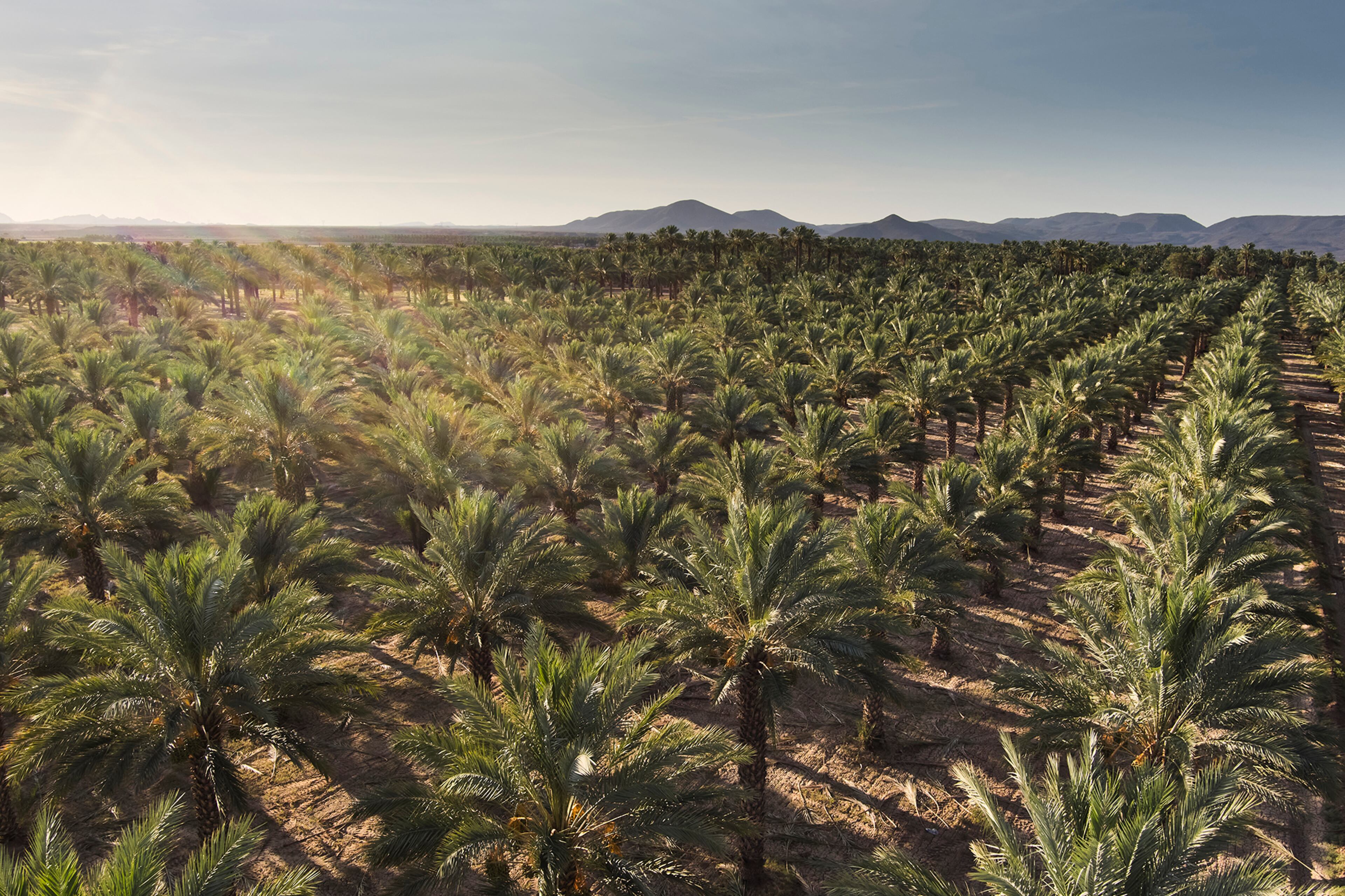
Dates are native to the Middle East and north Africa and were introduced as a possible farm crop for the United States through “agricultural explorers” who were a part of a U.S. Department of Agriculture program that began in the late 1800s. They brought home exotic fruits like mangoes, avocados and new varieties of oranges and introduced them into cultivation. In the early 1900s, those explorers brought back offshoots of Moroccan date palms and planted them in areas like the Coachella Valley in California where the palms began to thrive.
Four offshoots of those original palm trees still survive in Bard Valley, California, in what is now the hub of medjool date growing in the United States. And most of the date palms in cultivation are the offspring of those original trees.

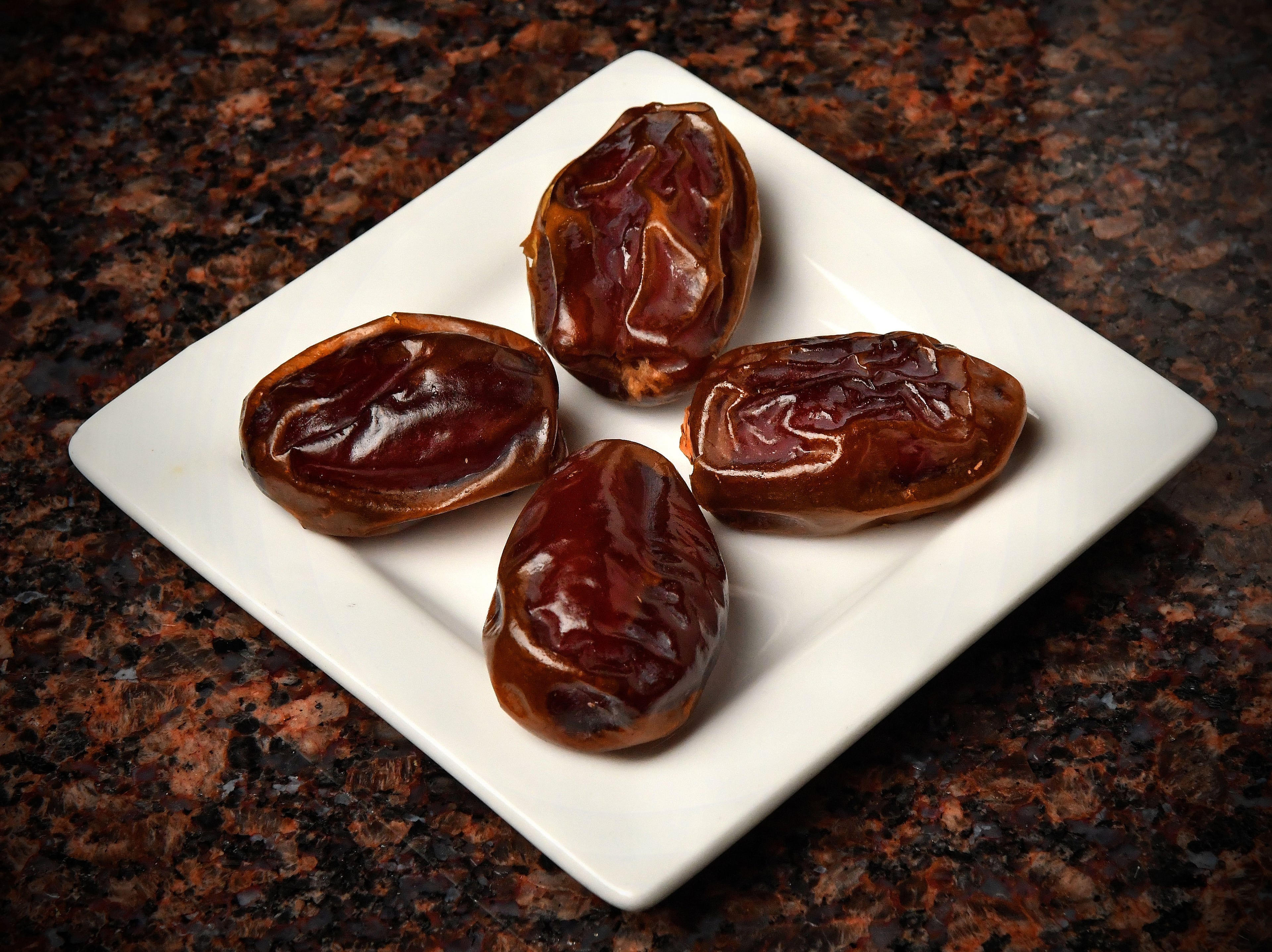
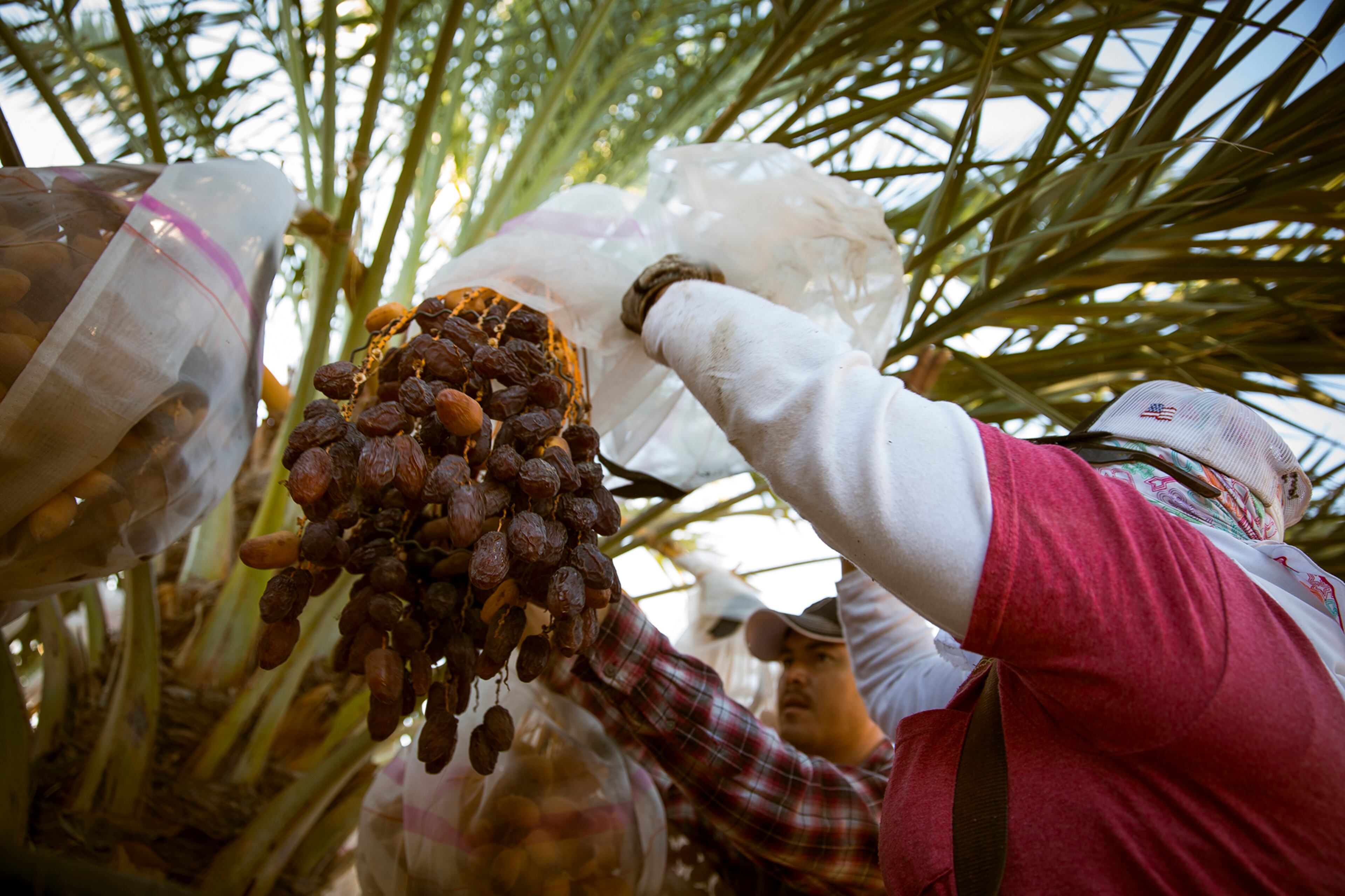
While dates, like most other fresh fruits, are available year-round, their harvest season is from late August through October. The dates you’re most likely to find at the grocery store are medjools with a deep brown, crinkled skin and succulent, sticky flesh. And they’re likely to come from Bard Valley Natural Delights, an association of 13 date growers whose farms span 7,000 acres in southeastern California, southwestern Arizona and parts of Mexico. David Baxter of Bard Valley Natural Delights says the farmers harvest the majority of the medjool dates grown in the United States.
Baxter says dates are not a fruit found in every household, with only about 8% of us enjoying dates regularly. “How you use dates likely depends on who you are. Some consumers enjoy dates as a beneficial snack, some eat them like they would prunes, and some use them in baked goods.” Indeed, in the 1940s, dates were used as a substitute for sugar when sugar was being rationed during World War II.
He says younger customers tend to use them as healthy snacks and often as a sweetener in smoothies. “And isn’t everyone a fan of bacon-wrapped dates?”
How does Baxter enjoy dates? “I eat them at my desk as a snack during the workday, but my favorite recipe is a half jalapeno, filled with spicy cream cheese and then topped with a date. Wrap that in bacon and grill it. It’s a big hit with all my friends.”
RECIPES
If the only way you’ve been eating dates is as a sweetener for a smoothie or as a bacon-wrapped bite, try these three recipes that take advantage of the sweetness and texture of dates in surprising ways.
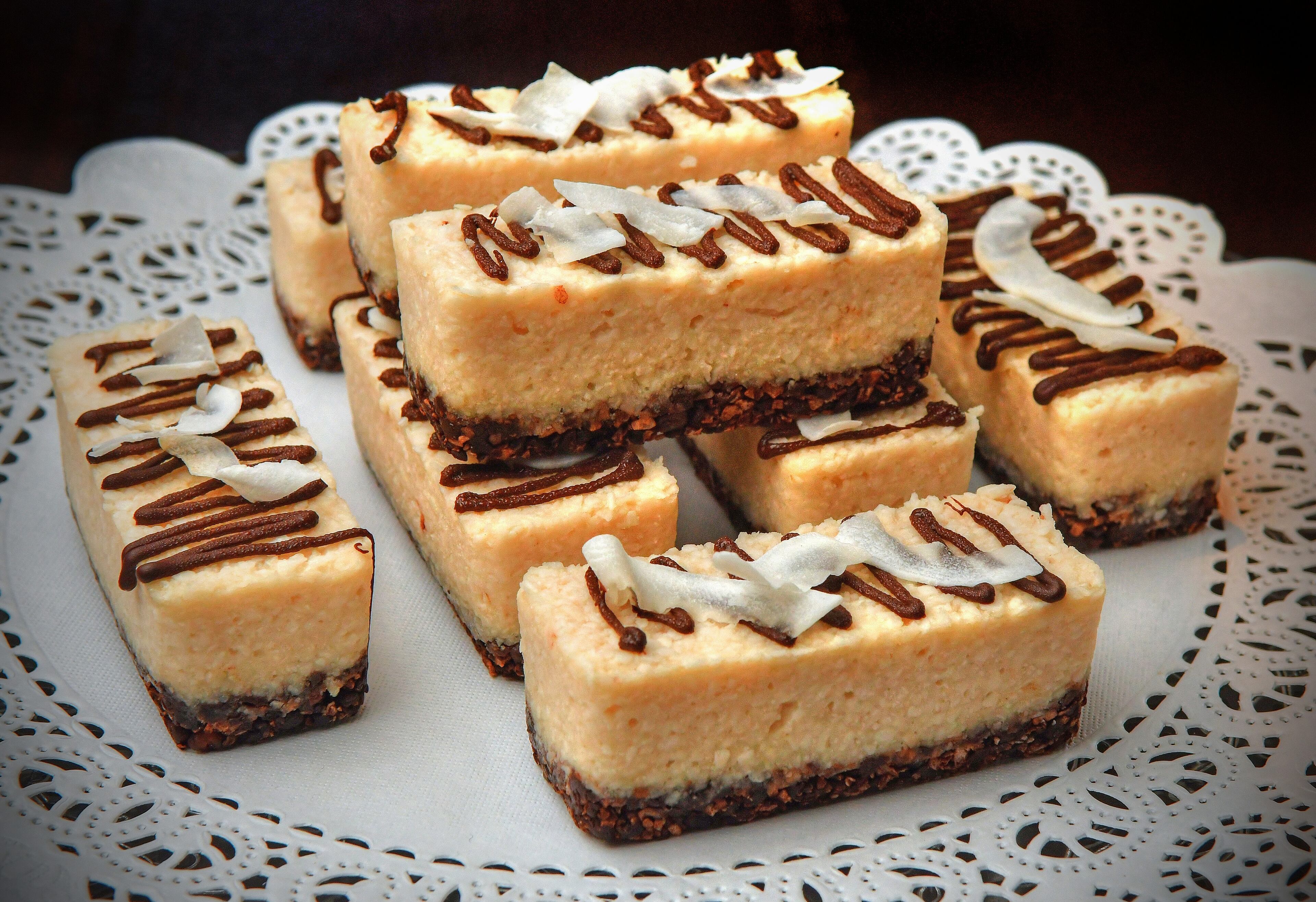
Saint Germain Bakery Coconut Bars
These no-bake coconut bars are the creation of collaborating pastry chef Blanca Lerma of Saint Germain Bakery at Ponce City Market. The bars were created in response to their customers asking for more vegan options. “Our goal is to make them as tasty as possible. So many customers associate vegan and gluten-free items with blandness, yet these are quite the contrary.”
At the bakery, they prepare these in silicone molds, which makes it easy to pop out each individual bar and for storage in the freezer. For those without silicone molds, we’ve adapted the recipe for an 8-inch square baking dish.
- 15 pitted Deglet Noor or medjool dates
- 2 cups plus 5 tablespoons unsweetened shredded coconut, divided
- 4 tablespoons cocoa powder
- 6 tablespoons plus 2 teaspoons maple syrup, more if needed, divided
- 1 1/3 cups nondairy coconut yogurt
- 4 tablespoons organic coconut oil, melted
- Dairy-free chocolate and coconut flakes, for garnish, optional
- Line an 8-by-8-inch baking dish with foil, covering the bottom and sides. Spray foil lightly with nonstick cooking spray.
- In the bowl of a food processor, combine dates, 5 tablespoons coconut, cocoa and 2 teaspoons maple syrup. Pulse to combine. Do not overprocess. You want a mixture that has some texture. Press the mixture into prepared baking dish, pressing firmly to make an even bottom layer. Set aside.
- Rinse the bowl of the food processor, and in the clean bowl, combine the remaining 2 cups coconut, remaining 6 tablespoons maple syrup, coconut yogurt and coconut oil. Process until smooth. Spoon this layer onto the chocolate layer.
- Cover and put the baking dish in the freezer. When ready to serve, use foil to lift the mixture from the baking dish. Cut in half and then cut each half into 5 rectangles, yielding 10 bars. Allow to thaw slightly before serving. Bars can be cut and stored in the refrigerator for up to 7 days, or frozen up to 2 months. If freezing, thaw before serving. Decorate with a drizzle of dairy-free chocolate and coconut flakes, if desired. Makes 10.
Nutritional information
Per serving: Per bar: 355 calories (percent of calories from fat, 55), 6 grams protein, 37 grams carbohydrates, 7 grams fiber, 23 grams total fat (20 grams saturated), 3 milligrams cholesterol, 23 milligrams sodium.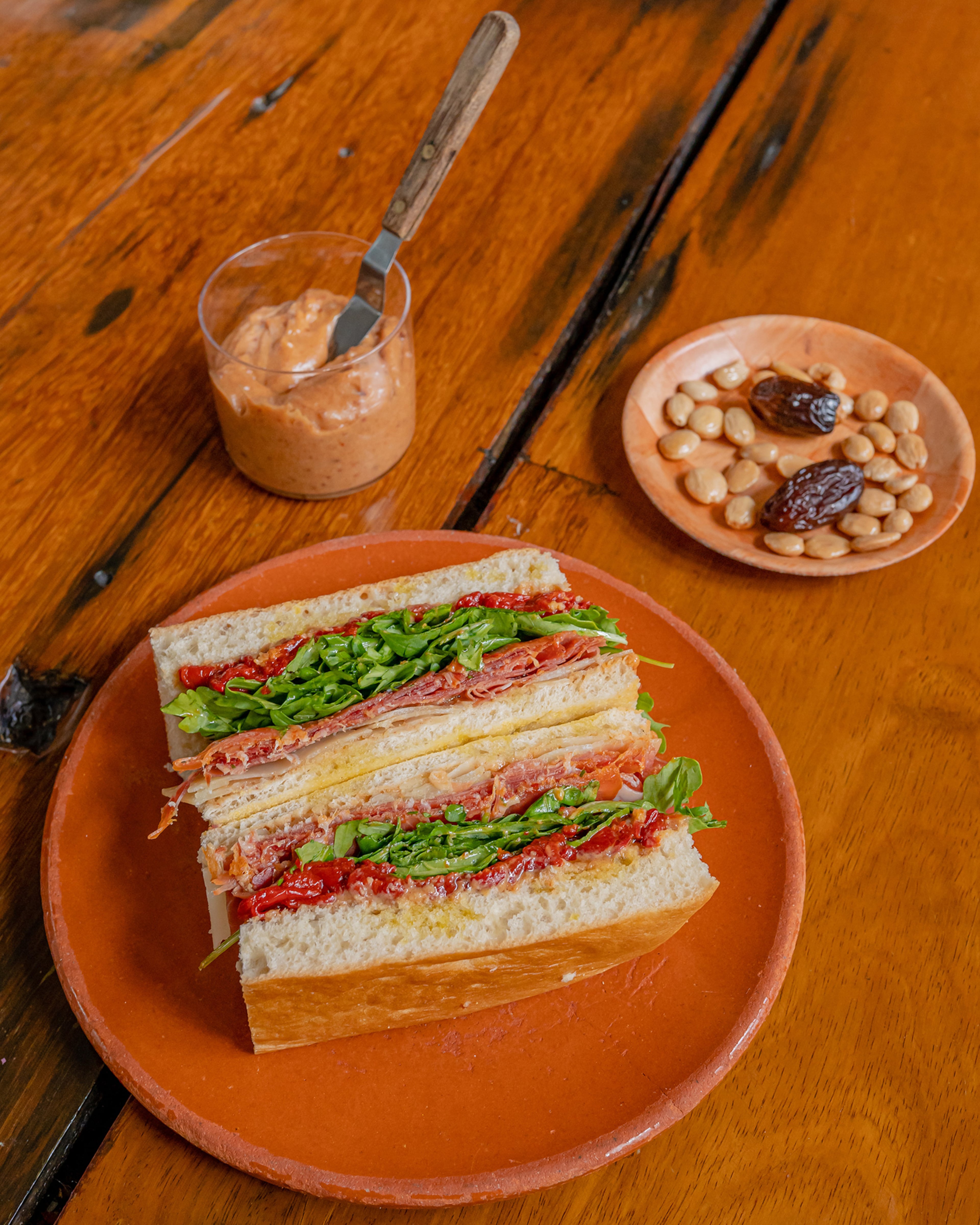
El Super Pan’s Pan de Jamón y Queso
This sandwich uses dates to great advantage. The date-almond spread, made tangy with a bit of sherry vinegar, provides just the right sweet note to complement the savory ham, cheese and peppers.
El Super Pan chef-owner Hector Santiago said he put it on the menu to celebrate the Spanish roots of Puerto Rican cuisine. “I love the rich creaminess of medjool dates. Eating them brings me back to Christmastime in Puerto Rico when we usually enjoy them along with nuts and cured meats. For this sandwich, we spread Spanish coca bread with a puree of medjool dates and Spanish Marcona almonds then fill it with jamón serrano, queso manchego, piquillo peppers and arugula. The rich almond-date ‘butter’ ties it all together. It’s a trip to Spain!”
You should be able to find piquillo peppers in the ethnic foods or pickled vegetable section of your grocery store. The restaurant simmers the peppers with a bay leaf in a mixture of water, sugar and sherry vinegar and then layers the peppers into the sandwich.
Coca bread is a slightly sweet chewy Spanish bread, similar to focaccia. We tried the recipe with sourdough bread as well as focaccia and found it delicious no matter what the bread.
- 2 (1/2-inch) slices focaccia or other rustic loaf
- 2 tablespoons Almond-Date Spread (see recipe), divided
- 1/4 cup roasted piquillo peppers, cut into 1/4-inch strips
- 2 thin slices jamón serrano
- A handful of arugula
- 2 slices manchego
- Toast bread until just warm. Spread 1 tablespoon Almond-Date Spread on each slice. Layer peppers evenly over one slice, then top with ham, arugula and manchego. Top with second slice, Almond-Date Spread side down, and serve while bread is still warm. Makes 1 sandwich.
Nutritional information
Per serving: Per sandwich: 530 calories (percent of calories from fat, 41), 22 grams protein, 58 grams carbohydrates, 12 grams fiber, 25 grams total fat (11 grams saturated), 56 milligrams cholesterol, 327 milligrams sodium.- 1/2 pound medjool dates
- 3/4 cups Marcona almonds
- 1/2 cup water, plus water for soaking dates, divided
- 2 tablespoons sherry vinegar
- In a medium bowl, cover dates with warm water and soak for 30 minutes. Drain, discarding soaking liquid, and peel and pit dates.
- In the bowl of a food processor, combine peeled dates with almonds, 1/2 cup water and sherry vinegar. Process until mixture is smooth. Cover and keep in refrigerator for up to 1 month. Makes 1 1/2 cups.
Nutritional information
Per serving: Per tablespoon: 54 calories (percent of calories from fat, 36), 1 gram protein, 8 grams carbohydrates, 1 gram fiber, 2 grams total fat (trace saturated fat), no cholesterol, trace sodium.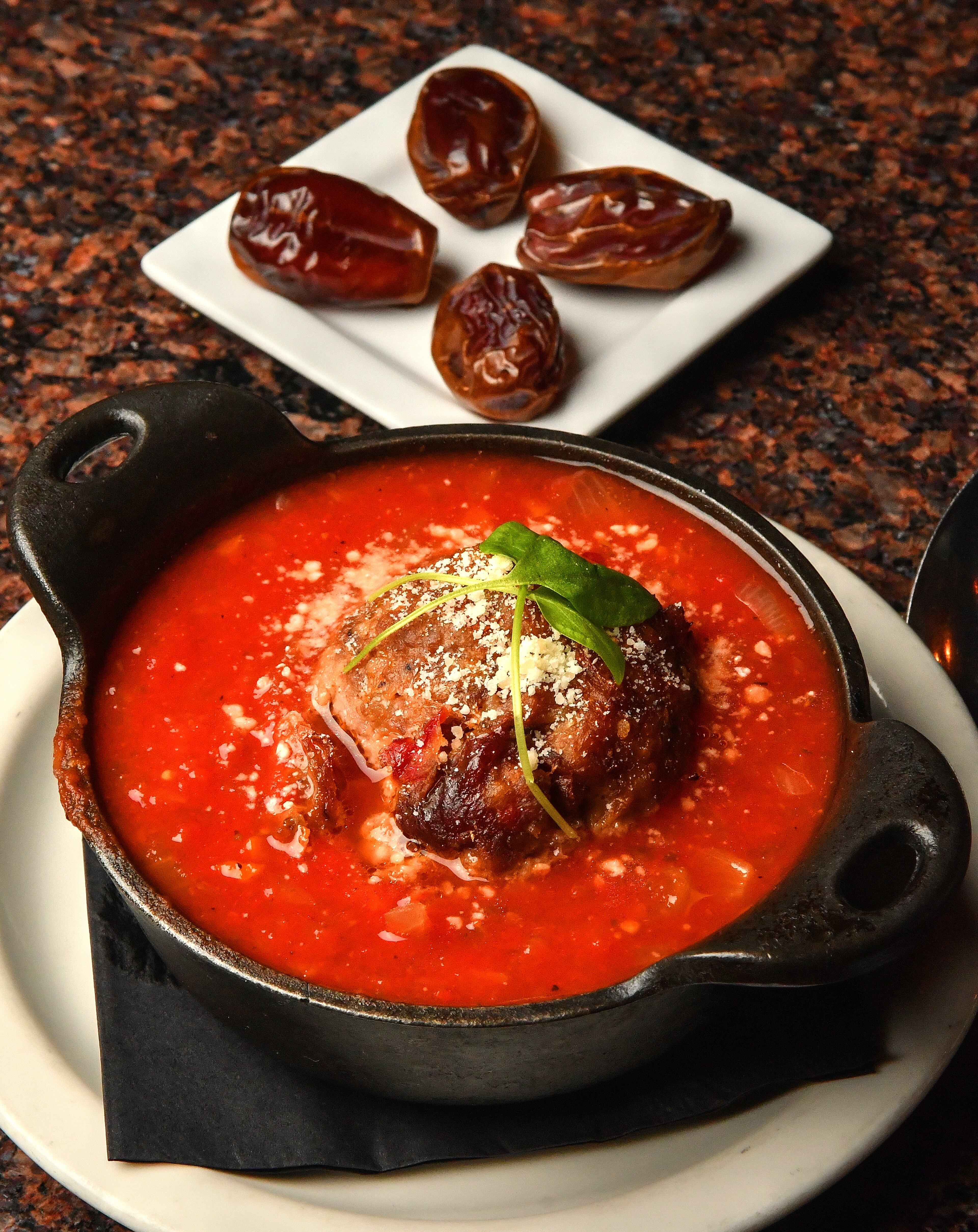
Meatball al Sugo
The little nuggets of dates in these meatballs, served as an appetizer at Sugo, are another example of how the sweetness of dates complements savory ingredients.
“This is a unique meatball with several ingredients in it that display the fusion of cultures and flavors we present here at Sugo,” said Sugo executive chef Ricardo Soto. “It is, without a doubt, an Italian classic with Italian sausage, tomatoes and pecorino, then we add dates, which are a Middle Eastern ingredient that’s also widely used in Greece.”
A bit of roasted garlic is part of the garnish for these meatballs. To prepare roasted garlic, heat oven to 350 degrees and wrap one or more heads of garlic in foil. Bake until garlic is soft, about 1 hour. Cool the garlic and separate the cloves, removing each from its peel. Roasted garlic will keep in your refrigerator for about a month. Cover it with olive oil before storing.
- 2 tablespoons olive oil, divided
- 1 pound yellow onions, chopped
- 5 pounds sweet Italian sausage
- 3 eggs
- 2 cups grated pecorino Romano
- 1 1/2 cups chopped pitted dates
- 3/4 cup chopped Roasted Tomatoes (see recipe)
- 1/2 cup dry Italian seasoned breadcrumbs
- Tomato Basil Sauce (see recipe)
- For garnish, if desired: fresh basil, chopped roasted garlic, extra-virgin olive oil and grated pecorino Romano
- In a medium skillet over medium-low heat, heat 1 tablespoon olive oil over medium heat and add chopped onion. Saute onion until caramelized, about 1 hour, stirring frequently. You should end up with 3/4 cup caramelized onions. Remove from heat and set aside.
- While onions are cooking, remove casings from sausage and put sausage into a large mixing bowl. Mix in eggs. Then mix in pecorino Romano, dates, roasted tomatoes and reserved caramelized onions. Be careful not to overwork the mixture. Sprinkle in breadcrumbs and mix together.
- Heat oven to 375 degrees if using convection, 400 degrees if using conventional oven. Lightly grease a rimmed baking dish with remaining tablespoon olive oil.
- Use a large scoop to divide the mixture into 10 meatballs. Arrange on baking sheet and roast for 25 minutes or until browned and cooked through. Serve each meatball with 1/2 cup Tomato Basil Sauce and garnish with fresh basil, roasted garlic, a teaspoon of your best extra-virgin olive oil and grated pecorino Romano. Makes 10 meatballs.
Nutritional information
Per serving: Per meatball: 914 calories (percent of calories from fat, 63), 42 grams protein, 43 grams carbohydrates, 4 grams fiber, 64 grams total fat (23 grams saturated), 224 milligrams cholesterol, 1,700 milligrams sodium.Roasted Tomatoes
- 5 Roma tomatoes
- 2 tablespoons extra-virgin olive oil plus more for storing roasted tomatoes, if needed
- 1 1/2 teaspoons chopped garlic
- 3/4 teaspoon dried oregano
- 3/4 teaspoon Italian seasoning
- 1/2 teaspoon kosher salt or sea salt such as Maldon
- 1/2 teaspoon freshly ground black pepper
- Heat oven to 225 degrees. Place a wire rack inside a rimmed baking sheet. Lightly spray rack with nonstick cooking spray.
- Core tomatoes and slice in half lengthwise. In a large bowl, toss tomato halves with olive oil, garlic, oregano, Italian seasoning, salt and pepper. Arrange tomatoes cut-side up on rack on prepared baking sheet. Roast 2 hours. Remove from oven and cool. If not using immediately, arrange tomato halves in a container and add just enough extra-virgin olive oil to cover tomatoes. Store at room temperature. When ready to use, chop into 1/4-inch pieces. Makes 3/4 cup.
Nutritional information
Per serving: Per tablespoon: 24 calories (percent of calories from fat, 78), trace protein, 1 gram carbohydrates, trace fiber, 2 grams total fat (trace saturated fat), no cholesterol, 81 milligrams sodium.Tomato Basil Sauce
This recipe will make enough for 1/2 cup sauce per meatball. Double the recipe if you’d like to serve it as Sugo does with 1 cup sauce per meatball.
- 5 fresh beefsteak tomatoes (about 2 pounds), cored and chopped
- 1 (14.5-ounce) can chopped Valoroso or San Marzano tomatoes in juice
- 4 yellow onions, roughly chopped
- 2 large carrots, roughly chopped
- 1 cup extra-virgin olive oil
- 1 rib celery, roughly chopped
- 2 1/2 tablespoons Lawry’s seasoned pepper
- 2 tablespoons honey
- 6 bay leaves
- 1 1/8 teaspoons chicken base (optional)
- Salt, to taste
- 5 basil leaves, chopped
- In a large saucepan over low heat, combine fresh tomatoes, canned tomatoes, onions, carrots, olive oil, celery, seasoned pepper, honey, bay leaves and chicken base, if using. Simmer uncovered 1 hour or until onions are translucent and carrots are tender but not mushy, stirring occasionally. Taste for seasoning, adding salt if needed. Remove and discard bay leaves and add basil. Use an immersion blender to roughly puree the sauce. If you don’t have an immersion blender, carefully ladle the hot sauce into a blender or food processor and roughly chop. Makes 5 cups.
Nutritional information
Per serving: Per 1/2-cup serving: 253 calories (percent of calories from fat, 75), 2 grams protein, 15 grams carbohydrates, 3 grams fiber, 22 grams total fat (3 grams saturated), no cholesterol, 170 milligrams sodium.Read more stories like this by liking Atlanta Restaurant Scene on Facebook, following @ATLDiningNews on Twitter and @ajcdining on Instagram.