Braves pull off nontraditional pitching plan flawlessly behind Kerr, Holmes
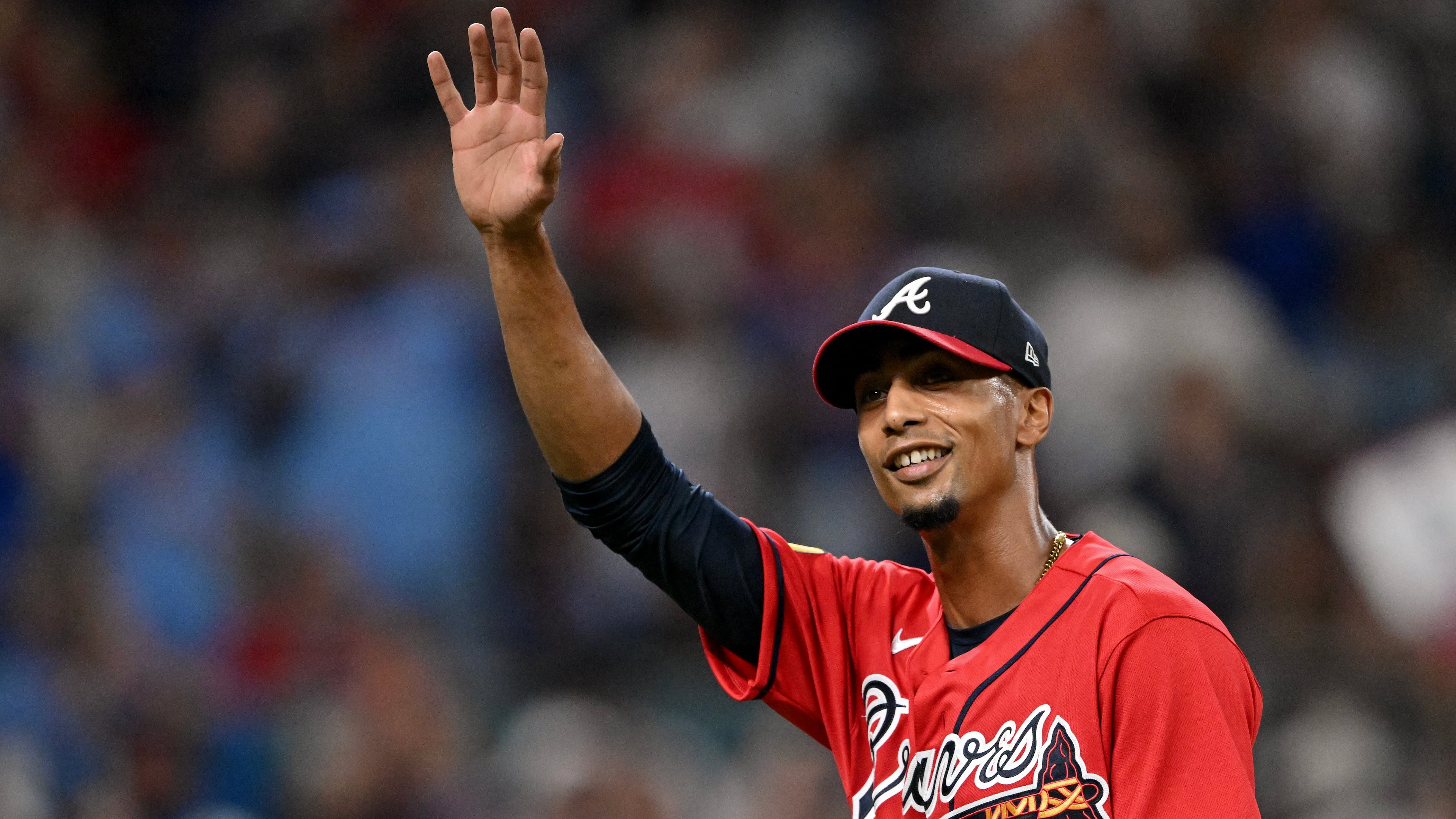
There was ample reason to be skeptical.
Why not simply start Grant Holmes in the first place? Why didn’t JR Ritchie or AJ Smith-Shawver make the postseason roster to give the Braves another starting pitching option? Of all the Braves’ relief pitchers, why hand the ball to Ray Kerr?
“I think it’s easy to just, like, go traditional starter and run that. And I think if Grant would have started, the same outcome could have happened,” Braves pitching coach Jeremy Hefner said. “But we just felt where we were, given (Wednesday’s loss), that was the best spot for (Kerr) to come in and get the job done.
“And I think because of (Holmes), right? I think because of (Holmes) that allowed us to go (with) Kerr. As opposed to like, ‘Eh, it’s (Holmes).’ It’s, like ‘No,’ because (Holmes) has the ability to do out of the bullpen what he does as a starter, it gives us confidence.”
The Braves wanted Kerr to neutralize the Phillies’ dangerous, top-of-the-order left-handed hitters in Thursday’s winner-take-all game in the NL Wild Card Series.
Neutralize he did, to the tune of one hit and one walk over 3⅓ scoreless innings.
Kerr had only appeared in 48 MLB games before Thursday, and only nine this season. He missed all of the 2025 season while recovering from Tommy John surgery. He didn’t make his 2026 debut until Aug. 17 in Minneapolis.
And yet the Braves handed him the ball to begin the biggest game of the season. Had things gone awry, it would have been easy to point to the decision to utilize Kerr as a faulty one.
“I was focused from the moment I woke up,” Kerr said. “I was like, ‘We’re going to put some zeros up and get a W.’”
Added Hefner: “(Kerr’s) a cool customer, and he developed a split as he’s coming back from Tommy John, and that’s been a huge strike pitch for him. And so in the playoffs, throwing strikes and getting ahead is paramount. And the sinker is a damage-suppression pitch, so probably not going to leave the yard.
“He may give up some singles and whatnot, but we felt like he was going to keep the ball in the yard, he was going to throw strikes, he wasn’t going to beat himself. We felt like (Kerr) could handle the moment, and we felt like Holmes, because of his reliever history, whenever we called on him, whether it was first, second or third (inning), he could handle it.”
Kerr, of course, had done this already this season. But the stakes were far less daunting.
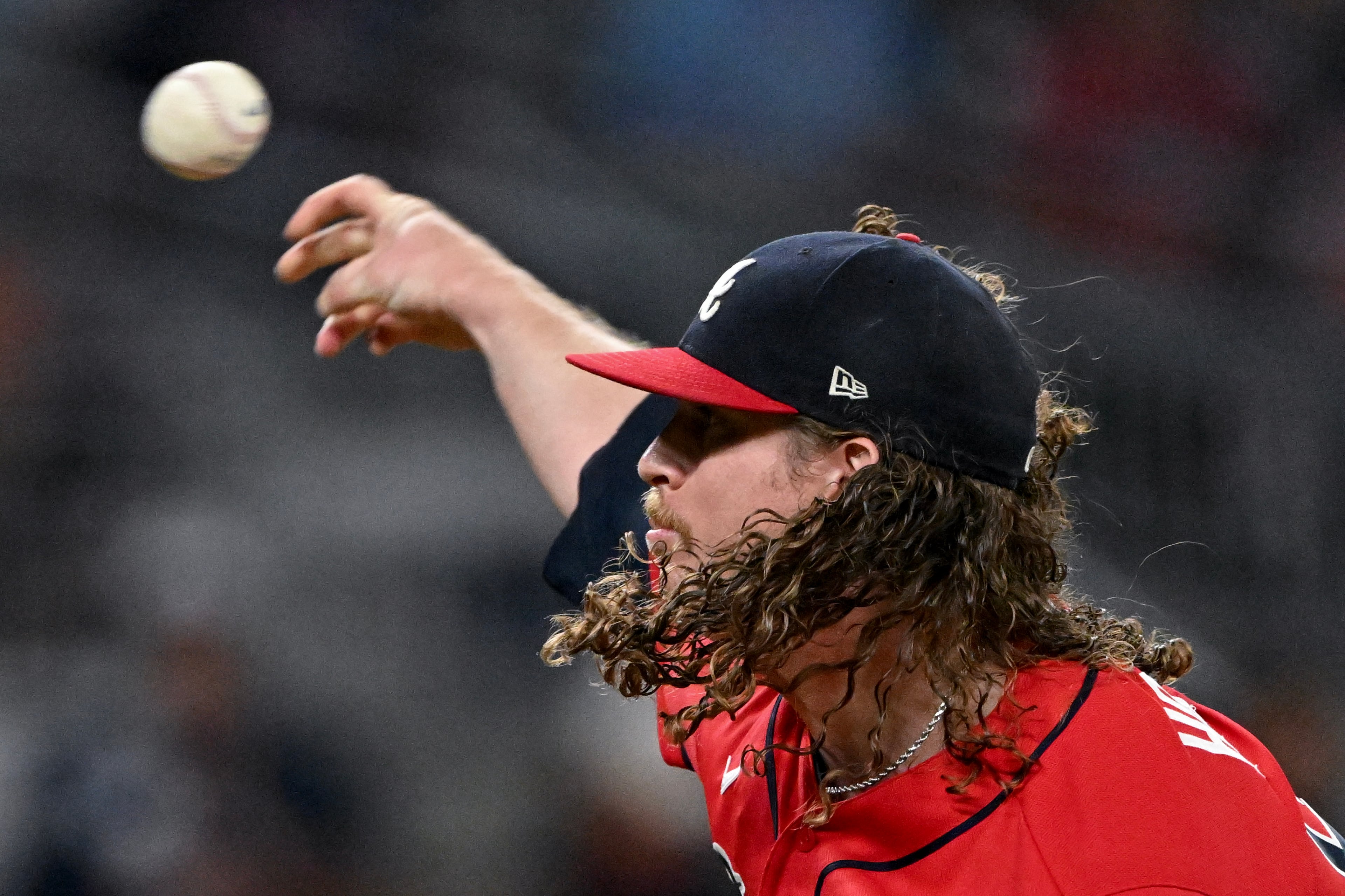
In Miami last Friday, Kerr started against the Marlins in a game that, essentially, meant nothing. He threw three scoreless innings, allowed two hits and a walk, and he joked postgame he wasn’t quite sure to do with himself pregame as that day’s starting pitcher.
Holmes followed Kerr and gave up a run in four innings of work.
Braves manager Walt Weiss said at the time they simply wanted to, “see how it looked.” The seed was planted for the strategy to be implemented in the future.
“You saw it in Miami. You’ve seen the success that (Kerr) had against the Phillies in the past,” Braves catcher Drake Baldwin said. “I mean, honestly, I think you can throw pretty much any of our guys out there. They’ve all had big moments. We all have confidence in pretty much anyone.
“(Holmes) had a heckuva year. Kerr, the second half has been really good as well. So, especially with (the Phillies’) main guys being lefties, that left-on-left matchup is nice. (Kerr) did incredible.”
Holmes had the right to be surly about this, though.
The 30-year-old righty was 10-6 this season with a 3.44 ERA in 29 starts and 31 appearances. Holmes had never pitched in the postseason either, but he had certainly earned the right to be considered as Thursday’s starter.
“Because we’re a team,” Holmes said when asked about accepting the assignment. “We’re a great team. Everybody’s got everybody’s back. I didn’t have any doubts today.
“If anything, I thought it would work even better. Kerr did an amazing job. I think he did a little more than everybody anticipated — and some. That was awesome.”
Holmes pitched just two innings and gave up a run with the Braves already up 5-0 in the top of the sixth. Had the circumstances been different, he may have remained in a bit longer.
But the Braves took no chances and brought in Robert Suárez, then Didier Fuentes, then Dylan Dodd and, ultimately, Chris Sale to close it out. It was all part of an unconventional plan.
In the playoffs, conventional thinking goes out the window.
“I’ve dreamed about stuff like this,” Kerr said. “For it to actually happen, I still haven’t even processed yet.”