College Football Playoff odds make 9-game SEC schedule ‘not a good idea’
The jury might ultimately be out on the SEC’s move from eight to nine league games this season, but there’s enough growing evidence to suggest it is backfiring.
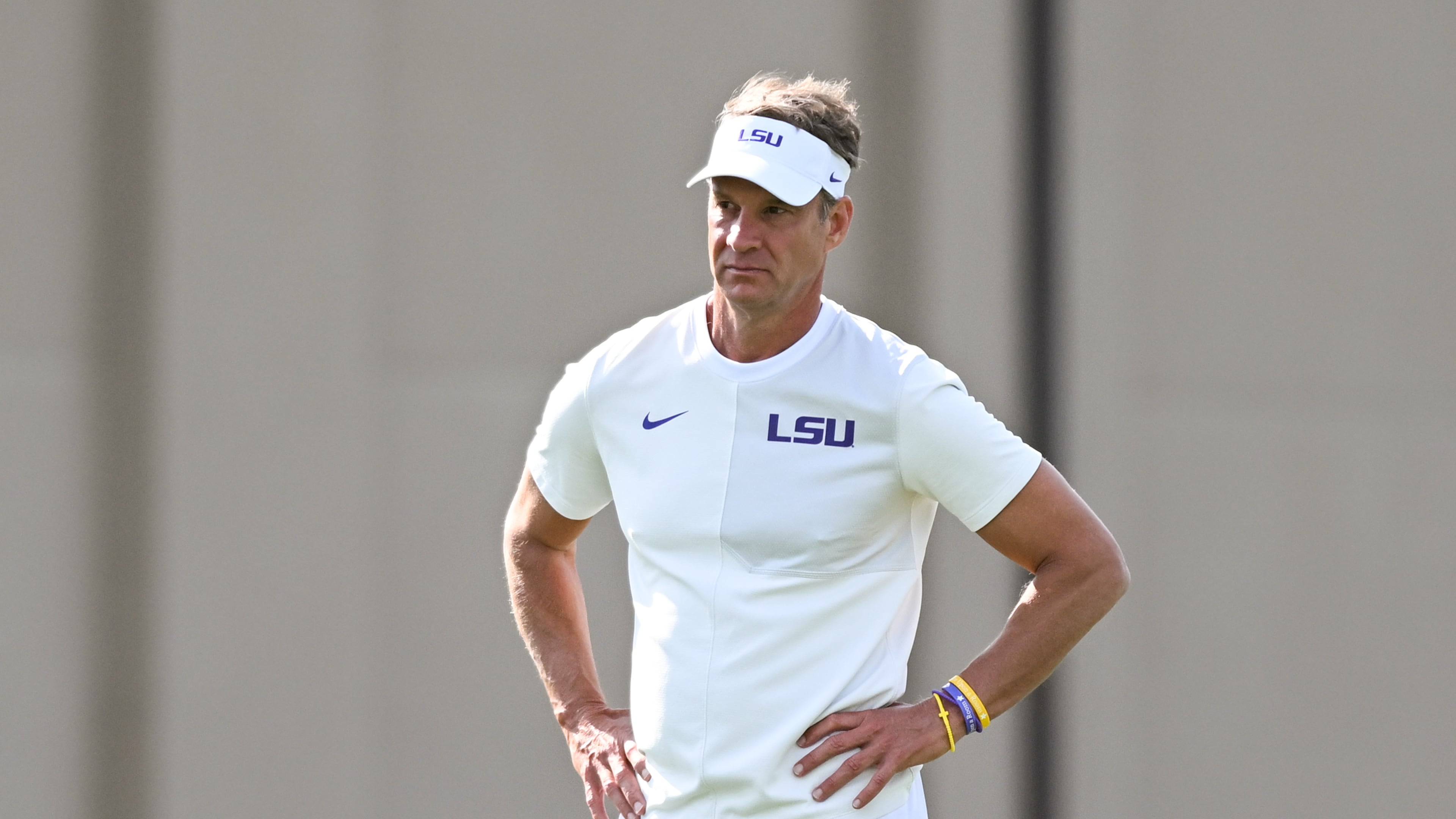
New LSU coach Lane Kiffin shared a scathing take on the fallout from the SEC’s move to a nine-game schedule.
“That was not a good idea until the system of how they selected teams was fixed, until it was fixed that there were automatic bids, until it was truly fixed that a strength of schedule matters how it should, much more like basketball does,” Kiffin said last week.
“Until that’s fixed, it made zero sense to me to go add another hard game, put teams on the road five times in this conference, which, top to bottom, is the hardest conference to play in and the hardest stadiums, but we did.”
A Big Ten team won the College Football Playoff for a third consecutive season (Indiana) as beat-up SEC teams fell by the wayside, and opening odds for the 2026 CFP field of 12 suggests it’s unlikely the trend changes.
Notre Dame — an independent granted a playoff provision stating it need only finish in the top 12 of the CFP rankings to be guaranteed a spot in the field — is the strongest favorite to make the CFP at -700, according to the FanDuel Sportsbook.
There are three Big Ten teams with better than 50-50 odds to make the playoff field — Indiana (-330), Oregon (-270) and Ohio State (-240) — while only two SEC teams are favored.
Georgia, the two-time defending SEC champion, has the best odds in the league (-220), while Texas is favored -180.
Kirby Smart said he likes what he has seen from the Bulldogs this spring, with the annual G-Day Game approaching Saturday, but that makes the words he uttered about the nine-game league schedule no less true for the coming 2026 campaign.
“It’s really tough, highly ranked teams, physical teams (and) it’s just going to continue to be a grind,” he said last fall. “…. It’s going to be scary, because you just don’t have enough. Nobody has enough depth.”
That’s exactly what played a large part of UGA’s 39-34 CFP Sugar Bowl quarterfinal loss to Ole Miss on Jan. 1, as the Bulldogs saw pivotal breakdowns at positions where players were injured (center, Drew Bobo) or missing (end, Gabe Hall, safety JaCorey Thomas), and less experienced players failed to measure up.
Kiffin said he believes adding another league game will make it harder for SEC teams to get in and will add to more attrition before teams make their postseason run.
‘You just got some more losses in your conference and beat yourself up more,” he said. “You’re going to continue to have this, in my opinion, this threshold until they go to more teams or a different system that 10-2 is in and 9-3 is out. So you just got some more losses in your conference and beat yourself up more.
“We have eight of the top-10 hardest schedules in the country. You made it harder. You don’t get more points when you’re already the first hardest schedule.”
The depth of competition in the SEC is unparalleled, per ESPN’s preseason SP+ ratings.
Kentucky, at No. 53, is the lowest of the 16 SEC teams in the SP+ rankings, while five of the Big Ten’s teams are ranked lower (No. 55 Maryland, No. 61 Wisconsin, No. 62 Rutgers, No. 67 Michigan State and No. 82 Purdue).
Defending national champion Indiana plays two of the five-lowest ranked Big Ten teams and opens with a nonconference schedule that includes home games with North Texas (ranked 109th), FCS Howard and Western Kentucky (ranked 86th).
South Carolina coach Shane Beamer, who coached one of three SEC teams that missed the 2024-25 field with a 9-3 record, recently noted the imbalance of the schedules from one conference to another during an SEC Network appearance.
“The biggest thing for us, and I mean the SEC, is the playoff committee going forward valuing strength of schedule for who has the opportunity to get into the playoff,” Beamer said on The Paul Finebaum Show.
“If I’m not mistaken, that’s three straight national champions that haven’t played a Power 4 nonconference (opponent),” he said. “Indiana won it, they were a helluva team, and we have great teams in this league, too. And we have to make sure we’re worried about ourselves and what we need to do as a conference to put our best teams forward to give us the most number of teams to get into the playoffs.
“(But) 10-2 you’re in, and 9-3 you’re out, and we had a 10-2 team (Vanderbilt) that didn’t get in, which is tough to see.”
SEC commissioner Greg Sankey, when announcing the move to a nine-game schedule last fall, claimed it would help the league in the CFP.
“This format protects rivalries, increases competitive balance, and — paired with our requirement to play an additional power opponent — ensures SEC teams are well prepared to compete and succeed in the College Football Playoff,” Sankey said.
The CFP revealed it added an enhanced schedule strength metric for the selection committee to use last season, and five SEC teams made the field.
But to Kiffin’s point, four of those five teams (Alabama, Oklahoma, Texas A&M and Georgia) had key players out or playing hurt.
The recent hand-wringing over the SEC’s move to a nine-game schedule has triggered more talk of the league’s coaches supporting CFP field expansion from 12 to 16 or 24 games after this season.
The recent chatter on the nine-game schedule likely indicates the topic of CFP expansion will come up at the SEC spring meetings in Miramar Beach, Florida, May 26-28.
The Big Ten is on record as supporting a 24-team playoff, while the SEC, ACC and Big 12 are on board with a 16-team playoff.
The SEC and Big Ten, which hold joint control over the future of the playoff field, were unable to agree on a format, so to CFP field stayed at 12 this year.
Here’s a look at FanDuel’s opening odds for top teams to make the CFP 12-team field this season:
- Notre Dame: -700 (Means a bettor would have to bet $700 to win $100)
- Texas Tech: -370
- Indiana: -330
- Miami: -280
- Oregon: -270
- Ohio State: -240
- Georgia: -220
- Texas: -180
- LSU: +115
- Texas A&M: +130
- Alabama: +160
- Ole Miss: +175
- Oklahoma: +260
- Michigan: +270
- USC: +290
- Penn State: +310
- Tennessee: +330
- Florida: +370
- BYU: +420
- SMU: +430
- Utah: +500
- Washington: +550
- Missouri: +550
- Louisville: +550
- Auburn: +650
- Clemson: +750
- Iowa: +800
- South Carolina: +850
About the Author

Mike is in his 10th season covering SEC and Georgia athletics for AJC-DawgNation and has 25 years of CFB experience. Mike is a Heisman Trophy voter and former Football Writers President who was named the National FWAA Beat Writer of the Year in January, 2018.