
Georgia games against Clemson, Ohio State could be axed because of scheduling
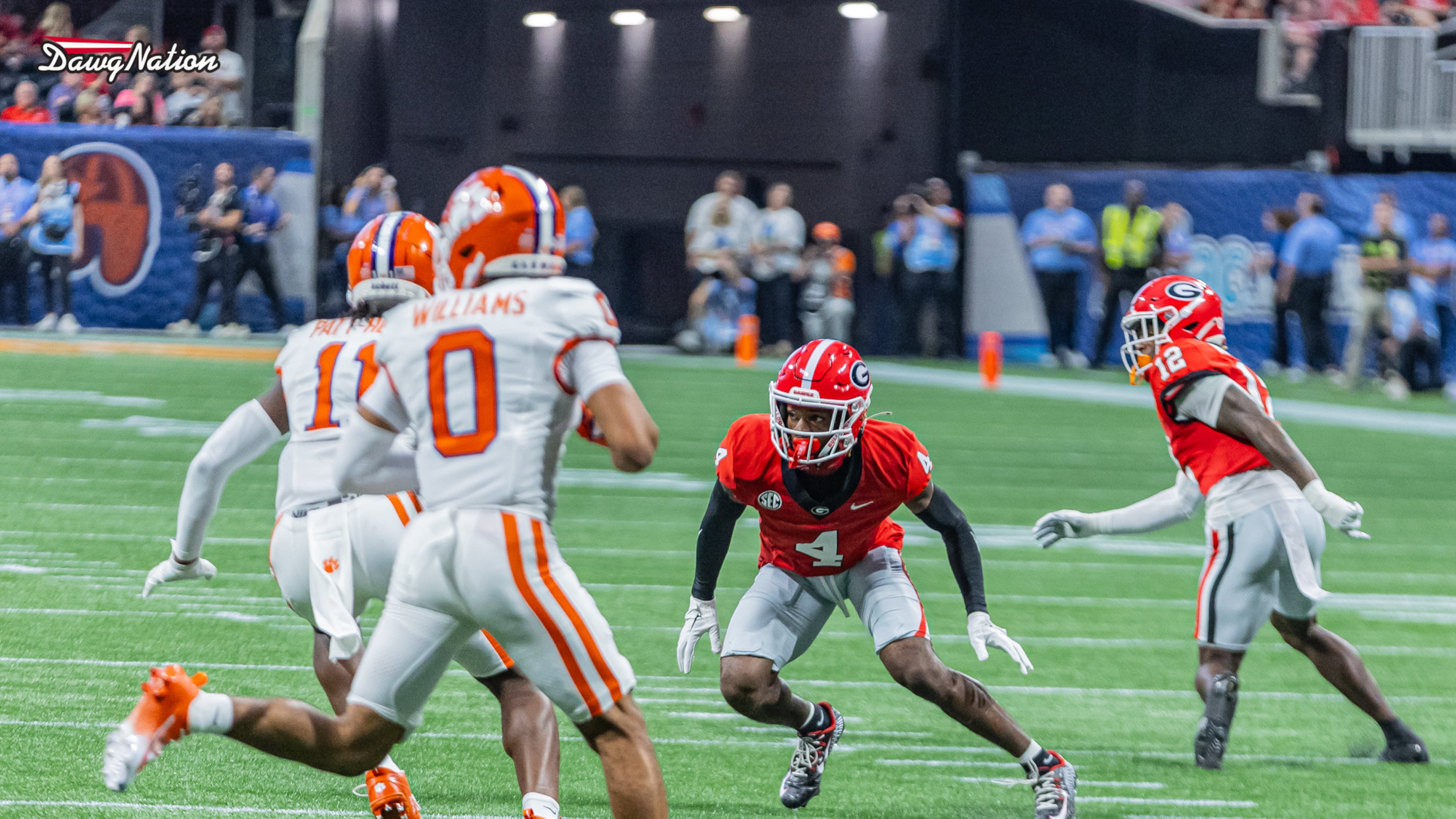
Under Kirby Smart, the Georgia Bulldogs always have been aggressive when it comes to nonconference scheduling.
Whether it be games against Clemson, Oregon or Notre Dame, Georgia has often opted to give itself an out-of-conference test.
But that philosophy could be changing.
In December, Georgia called off their scheduled home-and-homes with Louisville and NC State. The Bulldogs had been set to visit Louisville this coming season, with Jeff Brohm’s team making the return trip to Athens in 2027. The games against NC State were set for 2033 and 2034.
But with the SEC and ACC both changing their conference formats, those games became a casualty. Georgia will play nine SEC games next season in addition to facing Georgia Tech, Western Kentucky and Tennessee State.
The annual rivalry against the Yellow Jackets keeps the Bulldogs compliant with the SEC’s scheduling system, which requires teams to play nine conference games and at least one game against a Power 4 nonconference opponent.
“We play nine plus one, and we’ve got Georgia Tech,” Georgia athletic director Josh Brooks said following Georgia’s recent athletic board meetings. “So we’ve already got 10 baked in. So we’ve got to take a hard look at what are we going to do with those other two games.”
Georgia does have future games scheduled against Florida State, Clemson and Ohio State.
Whether those games get played likely will fall on the College Football Playoff committee and how it elects to value strength of schedule.
The SEC moved to nine conference games following assurances from the CFP committee that strength of schedule would be a greater factor in determining who makes the final 12-team field.
Not every conference plays by the same scheduling rules. The Big Ten, for example, does not require its teams to play a nonconference Power 4 program. The league has produced the last three national champions with those three schools — Michigan in 2023, Ohio State in 2024 and Indiana in 2025 — playing zero games against Power 4 nonconference opponents in the year they won the national championship.
The Hoosiers have only a 2030-2031 home-and-home against Notre Dame on their schedule as far as future marquee nonconference games go. There also are games against Kennesaw State, Howard and Ball State lined up.
If the CFP committee doesn’t reward teams for playing difficult nonconference schedules, you’ll likely see more teams adopt what Indiana and Curt Cignetti have done.
“We’re having a lot of discussions with the CFP about metrics,” Brooks said. “And metrics they’re going to look at about strength of schedule, right? And we need to see that be rewarded if we’re going to continue to play this 11th game of the P4. Otherwise, because you’ve got to look at the — it’s all data, right? You look at the teams that are higher ranked that play maybe eight conference games or nine. And then only play three G5s. In order for that to keep going, the teams need to be rewarded for stepping up and playing stronger schedules.”
Texas, for example, lost a marquee nonconference game last season to go 9-3. Had Texas played Ohio instead of Ohio State, maybe the Longhorns would have been included in the CFP field, instead of being on the outside looking in. Of course, Texas also could have beaten Florida last season, and the entire point of nonconference scheduling would have been moot.
Since Kirby Smart took over ahead of the 2016 season, Georgia has lost only one nonconference game, against Georgia Tech in 2016. The Bulldogs have won eight consecutive games against the Jackets.
Whether that in-state rivalry game continues to be the biggest nonconference game played depends on how the CFP continues to impact the sport at large.
About the Author

Connor Riley has been covering the University of Georgia since 2014 before moving to DawgNation full-time before the 2018 season. He helps in all areas of the site such as team coverage, recruiting, video production, social media and podcasting. He graduated from the University of Georgia in 2016.
More Stories
Keep Reading

