Explaining Gary Stokan’s impact on the Peach Bowl and Atlanta in 4 stories
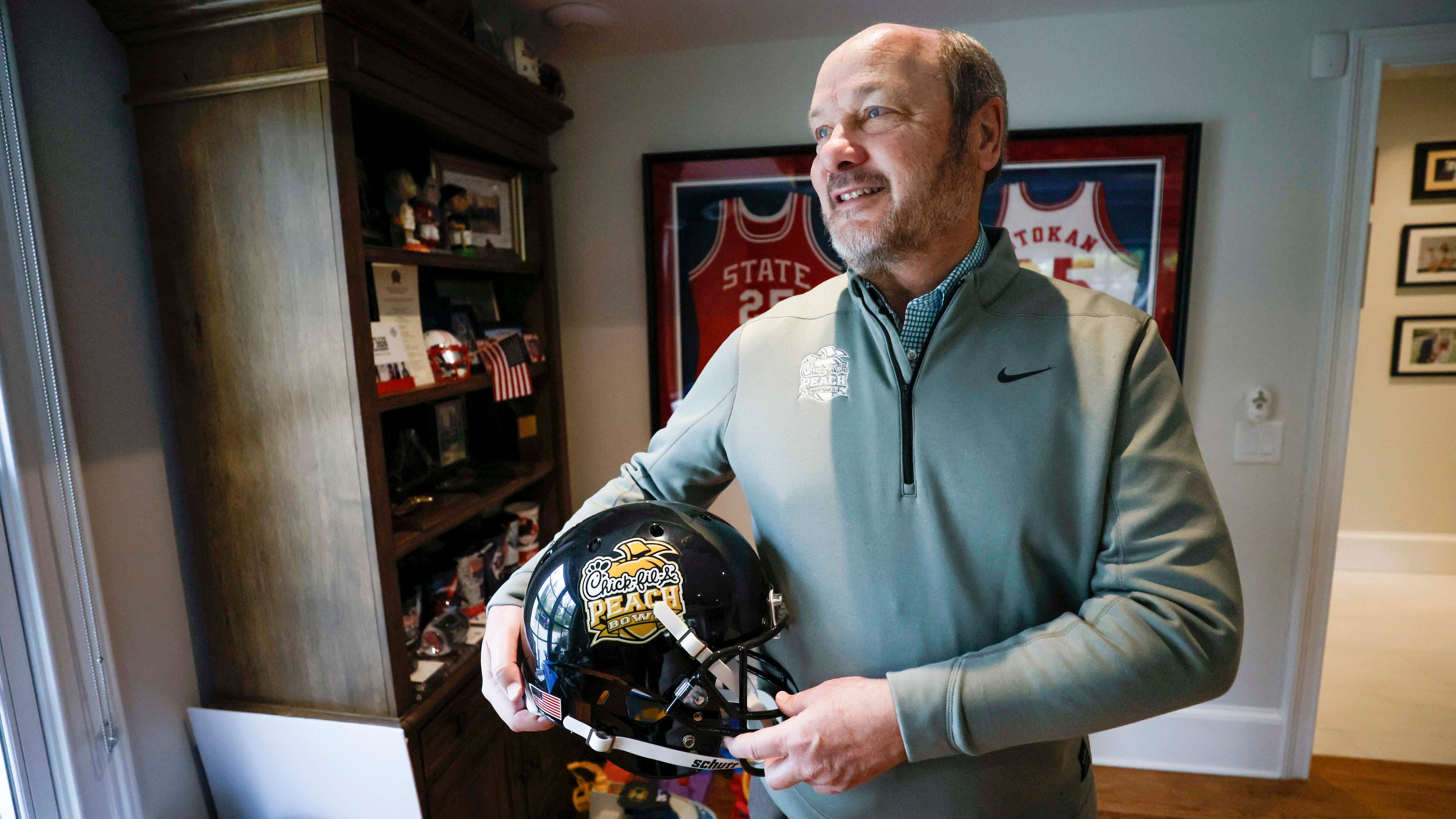
Gary Stokan is a story jukebox.
In a 45-year career in sports marketing, he has hours’ worth of tales about his adventures in the industry involving some of sports’ biggest names — including Michael Jordan and Nick Saban, to name two.
Mention a name or an event and off he goes with a tale.
And as he winds down a most impactful and illustrious 27-year tenure as the CEO and president of the Peach Bowl — his final game will be the College Football Playoff semifinal between Oregon and Indiana at Mercedes-Benz Stadium on Friday — they’re worth a listen.
Not only because a good yarn is hard to resist, but because they illustrate some of the qualities that Stokan called upon to lead the Peach Bowl, once a minor bowl that struggled with attendance, to its place in the CFP rotation along with the Rose, Sugar, Orange, Cotton and Fiesta bowls.
Vision
Long before he ran the Peach Bowl, Stokan was a marketer for Adidas, a job that included signing athletes to endorsement deals. One target was Michael Jordan as he was coming out of North Carolina in 1984. A former basketball player and assistant coach at N.C. State, Stokan saw a star in the making in Jordan. Even better for Stokan, Jordan actually preferred Adidas to Nike.
In the midst of the negotiations, Stokan remembered Jordan calling him to set up a meeting near the North Carolina campus.
“He looked at me and he said, ‘Mr. Stokan, I love you. You’ve been great to me and my family. And I love Adidas products,’” Stokan said. “If you can get close on the car, the shoe deal, the annuity, the clothes, I’ll sign with Adidas. You don’t have to beat them, you just get close.’”
Stokan drew up a Jordan marketing plan for Adidas headquarters in Germany, which would require the company to spend $2.5 million to land Jordan — “which was a lot at that time,” Stokan said.
But in a colossally disastrous decision, Adidas executives balked. Then the world’s leading sneaker brand, the company claimed it didn’t have the money to put into the U.S. market, Stokan said. (He was more successful in signing Herschel Walker and Mike Krzyzewski.)
You surely know the rest. With the almost incalculable lift from Jordan, Nike — which at that time was in financial trouble and might well have faltered without Jordan — now is valued at more than $90 billion. The Jordan-Nike partnership may well be the most successful athlete endorsement deal ever.
Years after Adidas spurned Jordan, Stokan was at a charity basketball game in Indianapolis held by Larry Bird. Jordan was playing and, during a free throw, was at midcourt.
“So he looks over at me, he looks at his shoes and looks over at me and says, ‘Hey, Gary, just think what might have been,’” Stokan said.
Stokan was hired to lead the Atlanta Sports Council and the Peach Bowl in 1998. As he had recognized Jordan’s potential years earlier, Stokan’s foresight served him well again. The bowl’s status was already ascending when he was hired — the payouts to teams had been dramatically increased, the popular ACC versus SEC format had been contracted and a prime venue in the Georgia Dome secured after years of games at Atlanta-Fulton County Stadium invariably played in miserable weather.
At the time of his hire, Peach leaders aspired for their game to be included with those selected to participate in the BCS — the Rose, Sugar, Orange and Fiesta — but “we really didn’t have much to hang our hat on at that point,” said David Epps, who began working for the Peach Bowl in 1994 and has been tabbed as Stokan’s successor.
“So we had all these pieces of the puzzle, but I think when Gary came in, he was not the kind of leader that was going to be satisfied with where the bowl was at the time,” Epps said. “And we had already sort of illustrated that we aspired to bigger and better things. He was really the guy to come in and jump in the saddle and start to put all the pieces together and start clawing our way toward having a shot.”
Stokan led visits to BCS championship games to observe and determine how the Peach Bowl could be improved, particularly in the areas of improving the experience for teams, fans and media. No detail was too small, such as how helpful and widespread signage was for fans. The bowl staff operated under a mission to be the best non-BCS bowl.
“So that when the opportunity does come to move up, that it would be hard for them to say no,” Epps said.
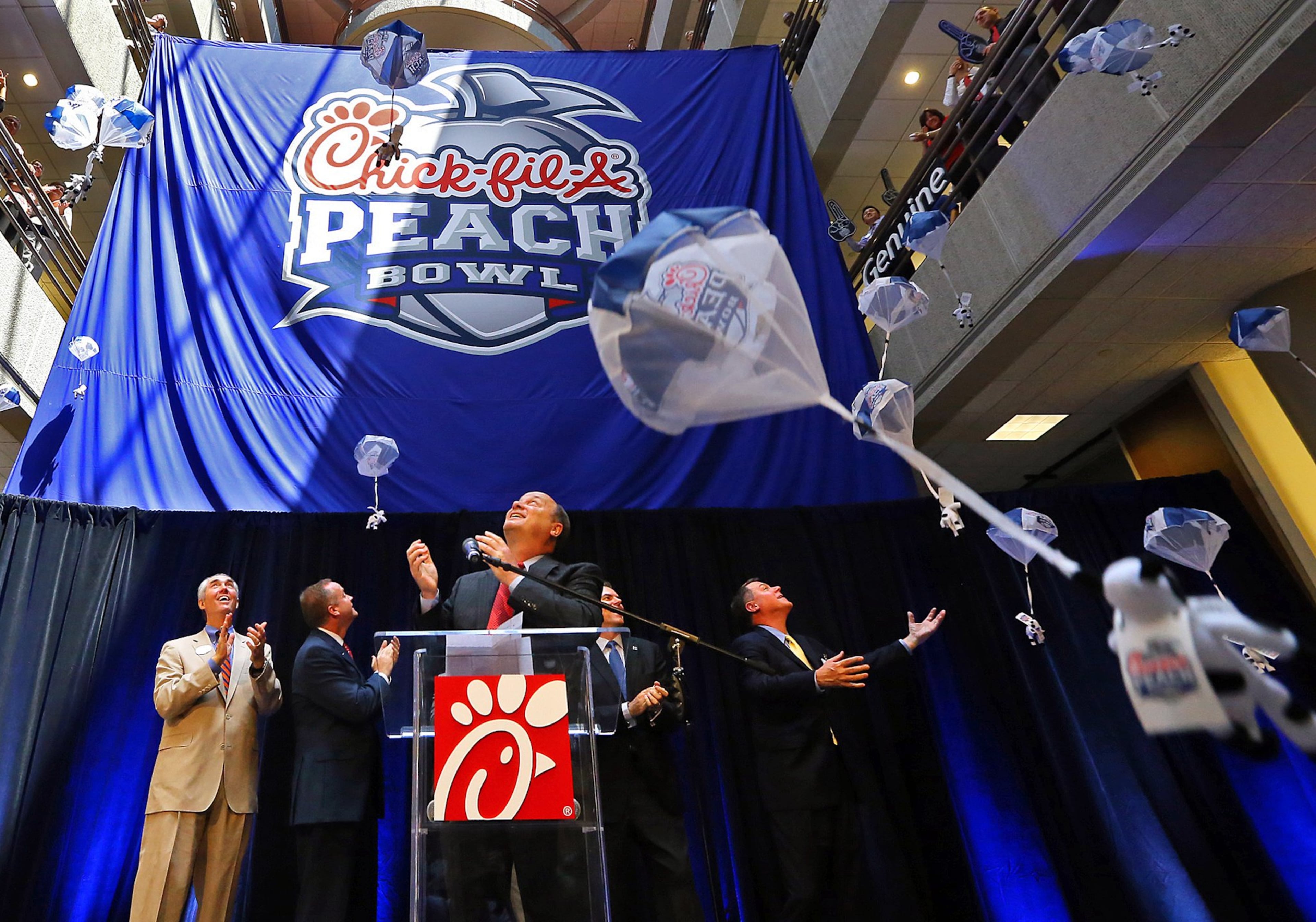
That opportunity finally arrived with the advent of the College Football Playoff in 2014, when the Peach and Cotton bowls joined the Rose, Sugar, Orange and Fiesta to create the New Year’s Six — bowls that would rotate the four-team playoff semifinals. The six have continued their arrangement with the CFP in the expansion to 12 teams.
It might seem obvious or unsurprising now that the Peach Bowl should be included — a well-run bowl in a world-class stadium in a city with a massive appetite for college football that is easily reached and boasts plenty of hotel rooms. But it’s also a bowl that had once nearly gone out of business and for much of its history rarely created notable matchups.
Epps called Stokan “the right person at the right time” to lead the Peach Bowl to its lofty status.
“Ultimately, I think (Stokan’s) real strength and benefit for the organization was that (he was) very clear about goal setting and knowing where you’re headed as an individual and also where you’re headed as an organization,” Epps said.
Charity
In the early ’90s, when Stokan was operating his own sports marketing agency, he organized a three-on-three basketball tournament at the Lindbergh Center MARTA station. He needed volunteer help and so he created a partnership with Children’s Healthcare of Atlanta. He offered a $25,000 donation in exchange for the hospital providing an army of volunteers. He took some sponsors to the hospital to show them where the donation money was going.
There, he saw an infant in dire health with young parents. They had seemingly little means to cover the cost of treatment but would be covered by the hospital’s commitment to providing financial assistance for emergency and medically necessary care. Moved, Stokan took a moment to visit the hospital’s chapel, where he said he got on his knees and tearfully thanked God for the health of his two daughters, Christie and Michele. The visit had a profound impact on Stokan, who has amplified the Peach Bowl’s charitable endeavors to the hospital in his tenure.
The bowl has donated more than $70 million to charitable causes in his tenure, substantiating the Peach Bowl’s claim as the most charitable bowl organization in the country. That included a $20 million gift in 2019 to the Aflac Cancer and Blood Disorders Center in honor of Anna Charles Hollis, the daughter of a Peach Bowl executive who succumbed to an aggressive form of leukemia in 2018 at the age of 6.
“He’s one of these people that, he wants to do good in the world,” said Donna Hyland, Children’s Healthcare CEO.
Hyland has noticed that when Stokan talks about Anna Charles, he tears up.
“I mean, that is real,” Hyland said. “This is not about, ‘Yeah, I’m running this big thing and I have an opportunity to really promote something.’ It’s never been about promoting him. It’s been about, ‘I’m doing this for a bigger cause.’”

Seizing opportunities
Stokan played college basketball at N.C. State. (He was teammates with the great David Thompson in the season he sat out as a transfer.) As he played out the 1976-77 season, his plan was to graduate and return home to his hometown of Pittsburgh and be a high-school coach and teacher.
Early in the season, the Wolfpack was on a two-game road trip, first to Michigan State and then Oregon State. After the first game in East Lansing, Michigan — Stokan remembers students cheering the attendance of a future Spartan, Magic Johnson — coach Norm Sloan had his assistants go recruiting rather than stay with the team. Stokan doesn’t know what possessed him to do what he did after the team reached the team hotel in Portland. He knocked on Sloan’s door and explained that, since he probably wasn’t going to play, he could help him coach.
Sloan gave him an “Are you serious?” look on his face.
“And then he says, ‘Yeah, yeah, you should do that,’” Stokan said.
The next day, Stokan suggested substitutions and tactical changes to Sloan. Later that season, Sloan asked Stokan about his post-graduation plans. Stokan shared his plans to return to Pittsburgh to coach and teach.
“And he says, ‘No, you’re not,’” Stokan said. “He says, ‘You’re going to stay with me.’”
And Stokan remained in Raleigh, North Carolina, joining Sloan’s staff. Not only was it an incredible fortune to be on an ACC staff in his first job out of college, but it completely changed the course of his career and his life. Had he returned to Pittsburgh to coach high school basketball, there is almost no chance Adidas would have hired him to sign pro athletes and teams and college programs in the Southeast to endorsement deals.
That was the job that moved Stokan and his wife, Tia, to Atlanta and put him on the path that ultimately led to the Peach Bowl. It has enabled him to run a high-profile sports organization, earn untold times more money than he would have as a high-school coach, rub shoulders with some of the biggest names in sports and play an influential role in the sports landscape of his adopted city.
Who knows what might have happened had he not thought to knock on his coach’s door?
“We couldn’t have known that, when we got married, where we would be and what would happen, but, wow” said Tia, Stokan’s high school sweetheart and wife of nearly 50 years.
A similar creativity and confidence to take hold of an opportunity led Stokan to one of his most significant maneuvers as Peach Bowl chief. When the bowl’s efforts to become a BCS bowl were being rebuffed, the NCAA voted to add a 12th game to the FBS regular season.
Stokan seized upon that change to score a win for the Peach Bowl and Atlanta, creating the Chick-fil-A Kickoff game in 2008. The game has been a rousing success, an annual neutral-site game that has brought high-profile matchups to Atlanta and helped cement the city’s reputation — touted most loudly by Stokan — as the capital of college football.
Over the years, the kickoff game — whose title sponsorship now belongs to Aflac — has brought hundreds of thousands of visitors to the city on Labor Day weekend, filling hotel rooms and restaurants.
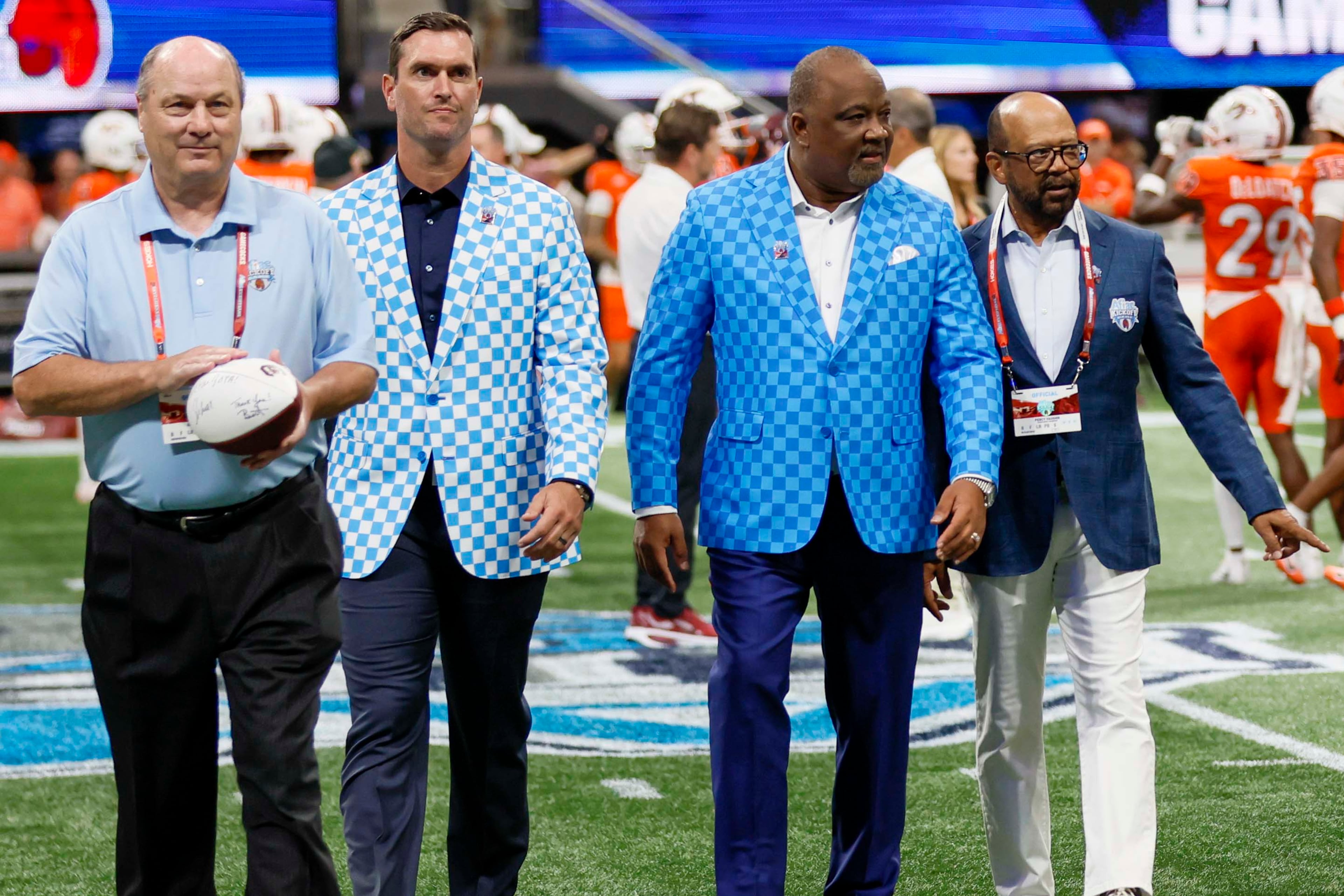
The economic impact of Peach Bowl Inc. events under Stokan has been measured at $1.5 billion.
“I think he’s had a huge impact on the city,” said William Pate, president and CEO of the Atlanta Convention and Visitors Bureau.
Mutually beneficial relationships
In 2000, Nick Saban was in his first season at LSU. Hired in 1998, Stokan was relatively new to his job, too.
As the regular season ended, Stokan got a call from Saban, who wanted a spot in the Peach Bowl. Stokan said that it was the only time that he ever received a call from a coach asking to be in his bowl game.
Quite arguably, with a 7-4 regular-season record, LSU was not the most deserving team. And when Stokan went to the Peach Bowl board, his pick was panned. In their most recent Peach Bowl trip, Stokan was told, the Tigers had not brought many fans nor helped to promote the game. Stokan traveled to Baton Rouge, Louisiana, to meet with Saban and other school officials, who promised to sell tickets and promote the game. It convinced Stokan, but still not the board.
And Stokan put his job on the line, saying that the board could fire him if LSU didn’t come through. And … LSU set a record for first-day ticket sales, according to Stokan, who still remembers the sales figure — 16,421 tickets. The Tigers beat Georgia Tech to finish 8-4, laying the groundworks for their national championship in 2003.
Saban didn’t forget.
When Stokan started the kickoff game, targeting 2008 as the launch, he secured Clemson and then put in a call to Saban, now at Alabama.
“And (Saban) said, ‘You helped me at LSU, and I’ll help you start this game,’” Stokan said.
The benefit wasn’t solely Stokan’s. Saban saw a recruiting benefit in bringing the Crimson Tide to the state of Georgia. Stokan said Saban told him “if we can finish second to Georgia in recruiting in Georgia, we’ll play for national championships.”
Six national titles later, Saban evidently knew what he was talking about. Perhaps uncoincidentally, the Tide played in seven kickoff games, winning each.
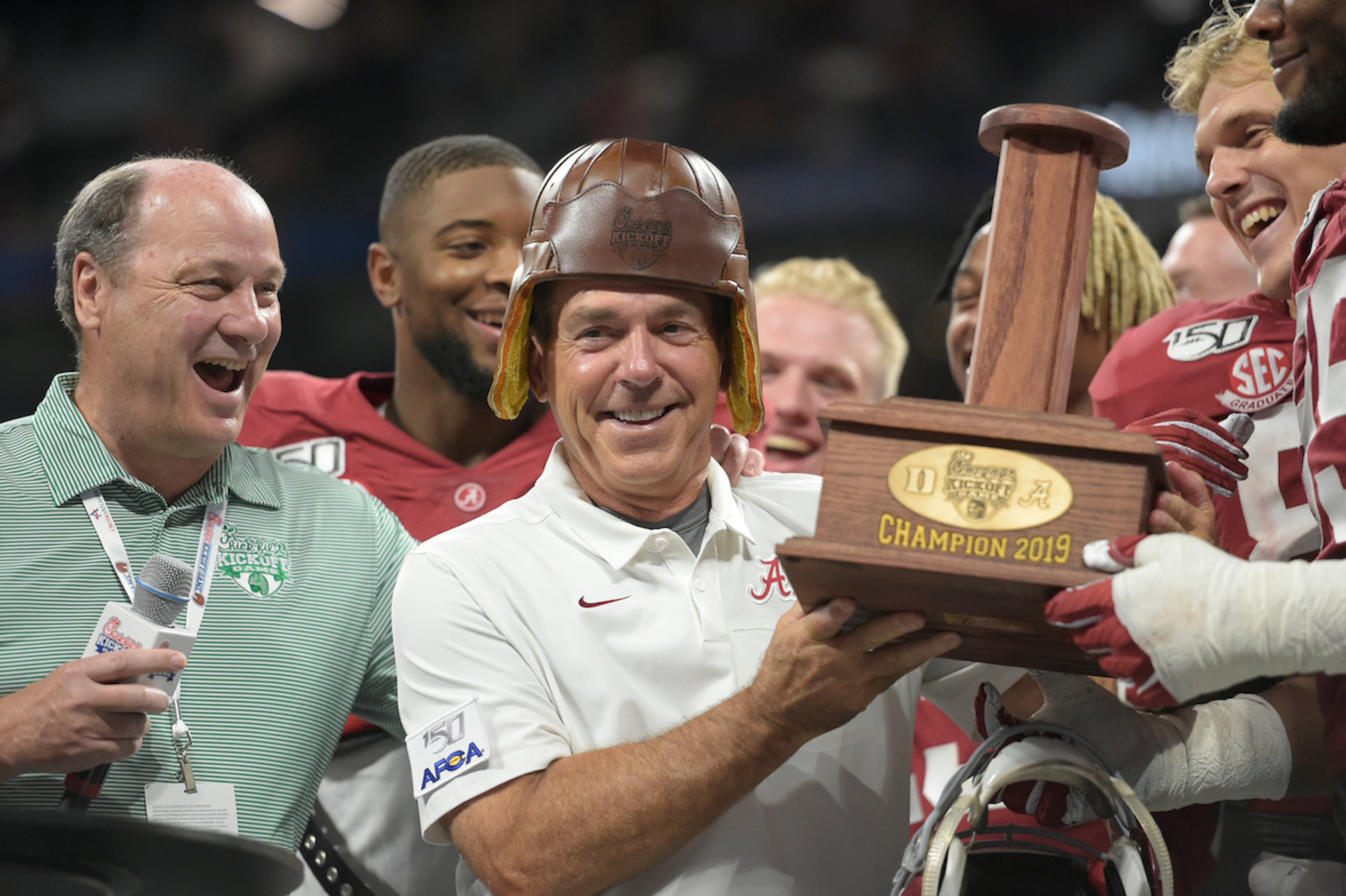
“You just build a trust factor up,” Stokan said of his business relationships. “You do something good for them, they do something good for you. It works out. I’ve been very blessed to have such great relationships.”
Kia became a sponsor of the Peach Bowl and kickoff game more than a decade ago and continues to maintain its partnership with the latter. Percy Vaughn, vice president of the Southern region operations for Kia Motors America, is the board chair of Peach Bowl, Inc. He has appreciated how Stokan has made sure that Kia has been recognized and included in bowl activities even as the game has grown in stature.
“That’s the thing I like about Gary’s leadership, is that he did not forget the sponsors that were with him before they grew,” Vaughn said. “So I think that was the most important thing to me, was the integrity.”
The final Peach Bowl led by Stokan will take place this week. In retirement, he looks forward to giving his time to his four grandsons.
The legacy he leaves behind is difficult to quantify, but it’s surely been immense.
About the Author

Ken Sugiura is a sports columnist at the Atlanta Journal-Constitution. Formerly the Georgia Tech beat reporter, Sugiura started at the AJC in 1998 and has covered a variety of beats, mostly within sports.


