Georgia Republicans just got Trumped
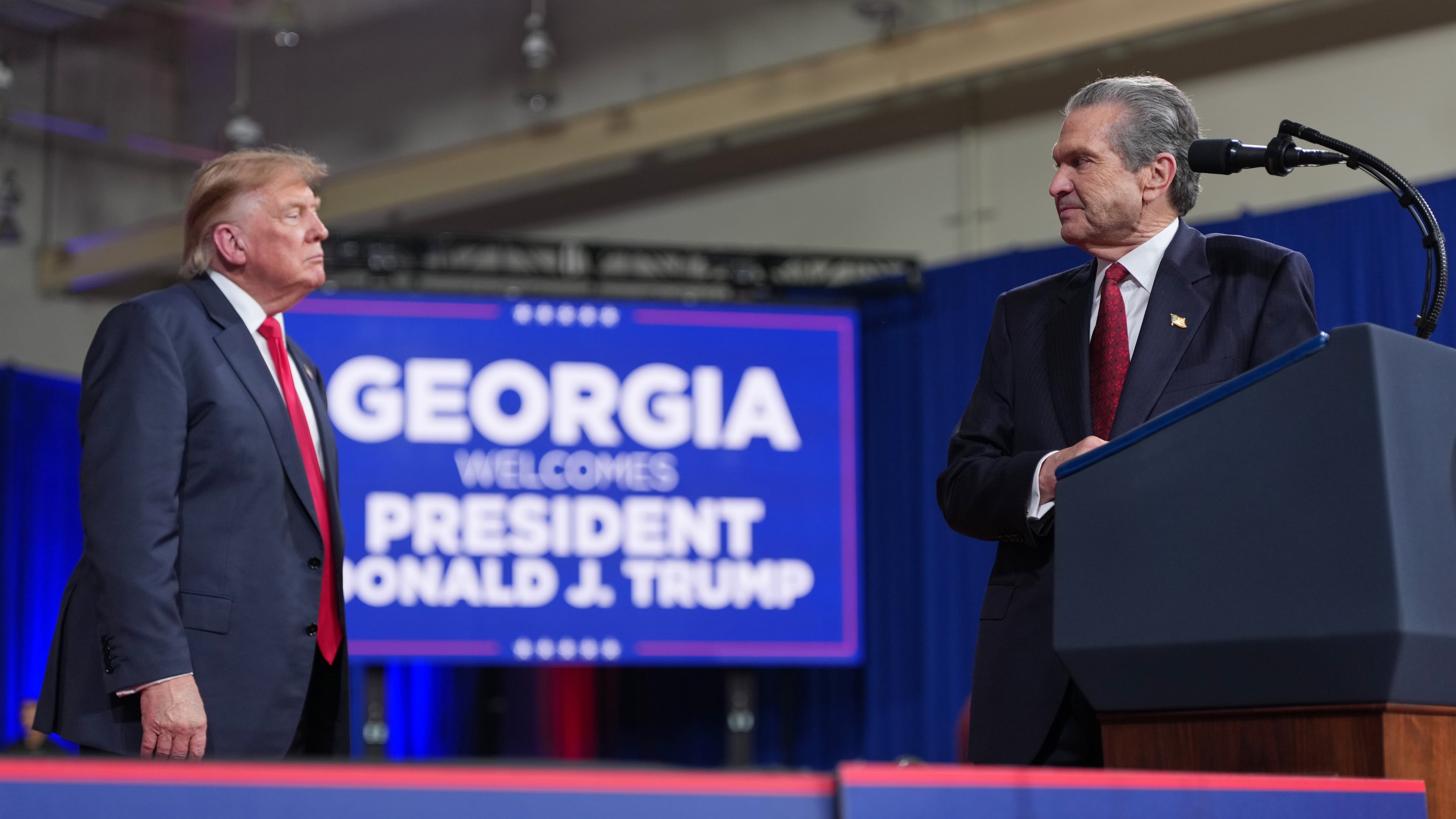
If there was a single moment that cost Rick Jackson his election for Georgia governor, it was likely his decision in mid-October to attend President Donald Trump’s second rally in Georgia, less than a week after he had been with Trump at an earlier rally in Dalton.
By then, Jackson had already announced he would not be with Trump for his encore appearance in Georgia, and it was easy to see why. The Atlanta Journal-Constitution’s last poll before Election Day had shown Trump with just a 42% approval rating among likely Georgia voters, including 49% who strongly disapproved of the president.
Why continue to embrace Trump’s political brand when it would only bring him down?
Although the president ran in 2024 on the slogan, “Promises made, promises kept,” he has proceeded to break nearly every promise he made since then.

Instead of ending “forever wars,” he started a new one in Iran. Instead of bringing down inflation and the cost of living, he called complaints about affordability a “hoax.”
But there was no hoax behind record high gas prices squeezing famously on-the-road Atlantans, or Georgia’s farmers and truckers struggling to break even with record-high diesel prices.
Likewise, Georgia businesses struggled with the stresses of Trump’s tariffs, which made their own goods more expensive, along with the sheer uncertainty of the president’s on-again, off-again, tripled-them, just-kidding tariff rates on everything from cheese to aluminum to toys from China.
Although many welcomed Trump’s promise to close the Southern border, his aggressive enforcement actions left majority-Hispanic cities like Dalton scrambling to deal with citizens and noncitizens alike being detained and jailed.
In tiny Social Circle, city leaders only heard through the media that the Department of Homeland Security had secretly purchased a warehouse with plans to convert it to a massive immigration detention facility that would double the city’s population. Despite the pleas for help and information from the deep red part of Georgia, the administration never spoke to city leaders about it.
In Atlanta, the FBI descended on Fulton County’s elections hub and seized more than 650 boxes of Georgians’ ballots from the 2020 election.
In the face of all of that, Republicans — especially those running for statewide office — embraced Trump and nearly all of his decisions, partially because they agreed with him and partially in a bid to win their GOP primaries.
When Trump threatened to invade Greenland, U.S. Rep. Buddy Carter introduced a bill to rename it, “Red, White and Blueland.”
Even after U.S. Rep. Mike Collins defeated Carter and Derek Dooley in the GOP primary for Senate and headed for the general election, Collins only hugged Trump’s brand tighter. He supported the war in Iran, voted again for Trump’s tariffs and even stuck to the Trump script that Georgia’s 2020 elections had been rigged against him. They were not.
If there had been a cliff to jump off, you had the sense he would have tossed himself over that, too.

It doesn’t take a degree in political science to understand that embracing an unpopular president and his most unpopular policies is not a recipe for victory, even in a state controlled entirely by Republicans.
And that’s why Jackson’s entrance into the Georgia governor’s race was such a unique opportunity. Unlike Lt. Gov. Burt Jones, who already had Trump’s endorsement, Jackson was a clean political slate, a rags-to-riches billionaire promising to be a “voice for the voiceless.”
He had no apparent loyalties to Trump, other than a $1 million contribution to Trump’s PAC, which was the quickest way to ensure Trump did not attack him during the GOP primary.
But Jackson assumed he needed to publicly praise Trump to win the GOP primary, and praise him he did. In quick succession, Jackson promised to be “Trump’s favorite governor” and “Trump with a Southern tone,” even though Gov. Brian Kemp had proved that it’s possible to be a Republican and a conservative and win in Georgia, even without morphing into Trump.
Once Jackson made it to the general election against former Atlanta Mayor Keisha Lance Bottoms, he tried assiduously to distance himself from the president and almost succeeded.
For months he held event after event without ever mentioning Trump. When Bottoms faced off with Jackson in their only debate and reminded viewers that Jackson had promised to be Trump’s favorite governor, Jackson responded in a flash, “I don’t owe anybody anything.”
Asked at a news conference if he would be able to stand up to Trump the way Kemp had defied the president on multiple occasions, Jackson said emphatically, “I will stand up to anybody, just like Brian Kemp has done.”
Then, days after saying he would skip Trump’s second October rally to host his own event in Cherokee County, Jackson reversed course and said he would be with Trump again.
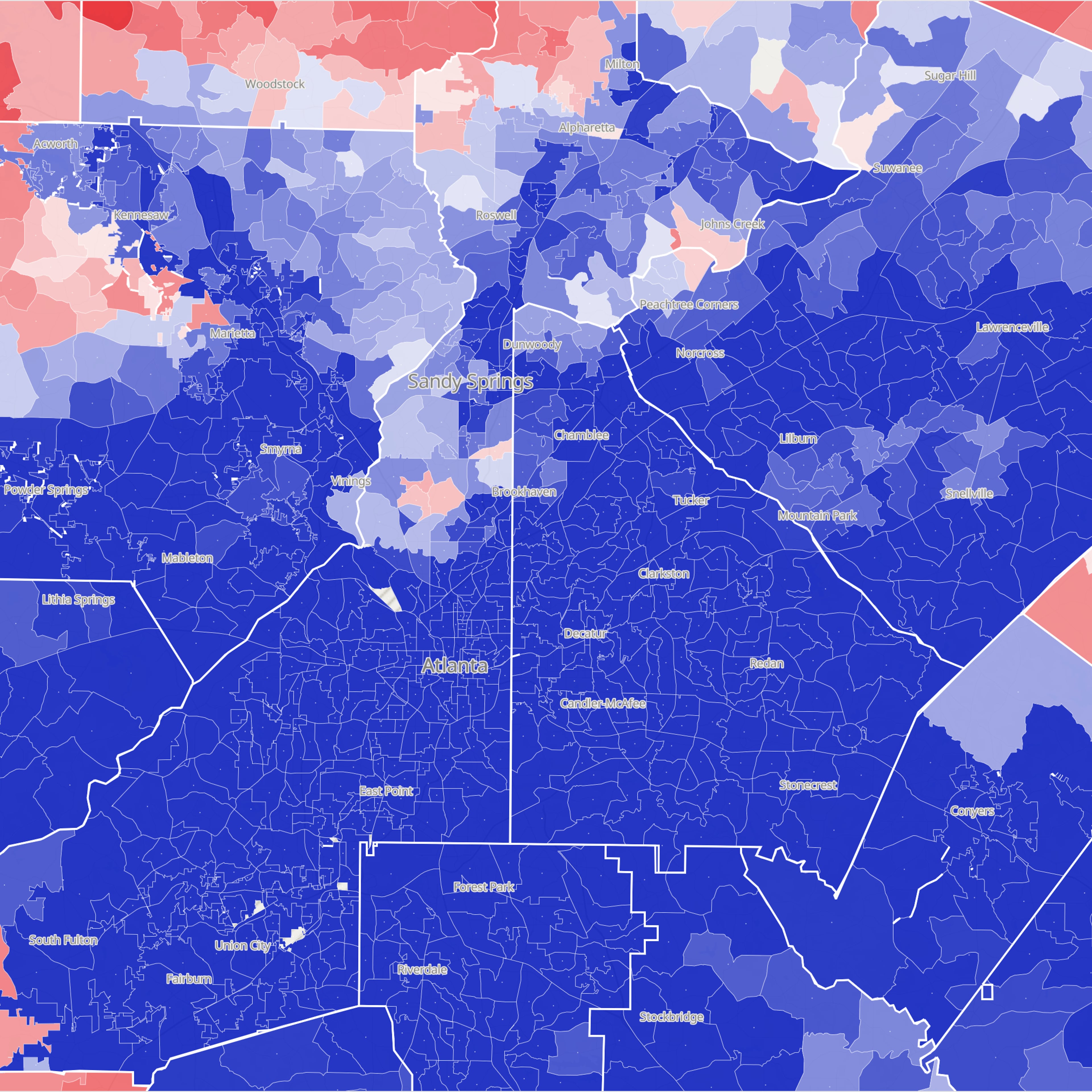
Once in Perry, Jackson was back on stage with Trump, complete with a matching dark suit and red tie. When the president called Atlanta “a dangerous hellhole” and predicted Jackson’s first act as governor would be to deploy the National Guard to Atlanta, Jackson never denied it.
For every event Jackson did with the president, Bottoms did 10 of her own, telling Georgians, “Rick Jackson wants to be Trump’s favorite governor. I want to be yours.” The line was devastating.
On Tuesday night, Georgians decided they’d had enough of Trump, with or without a Southern tone. They wanted leaders who promised to put them first and chose the ones who did.