Georgia State Election Board tests limits ahead of midterms
The State Election Board drew national attention ahead of the 2024 presidential election for passing a slate of sweeping rules that read like a wish list of election skeptics.
Once a lawyerly panel, a takeover by a trio of conservatives deeply mistrustful of the state’s voting system has turned the board’s once mundane meetings into boisterous events packed with crowds of cheering and jeering activists.
Now, with high-stakes midterms on the horizon and President Donald Trump struggling to gain traction on many aspects of his election security agenda, all eyes are on the state board. The board is considering efforts that dovetail with Trump’s priorities, including reviewing voter rolls for suspected ineligible voters and approving voting system security upgrades, and it could revive efforts that would move toward hand-marked ballots for the midterms.
In exclusive interviews with The Atlanta Journal-Constitution, the board’s five members offered competing visions about just how much power the body has, election security and how much federal intervention is acceptable months before a pivotal election where a U.S. Senate seat and top statewide offices are on the ballot.
Critics believe the board doesn’t have the authority to tackle many of the issues on their agenda and doing so risks eroding trust at a time when a sizable chunk of Georgia voters say they aren’t confident the state’s elections will be conducted fairly and accurately.
Just how far the board will go in passing sweeping proposals like it did in 2024 is unclear. Last year, a unanimous Georgia Supreme Court overrode several of the board’s rules, determining members had overstepped.

To critics, whether any new proposals pass may be irrelevant. Even when turned back by the courts, board members continue to use their meetings to amplify doubts about Georgia elections.
Marisa Pyle of the left-leaning voting rights group All Voting is Local pointed to ELLY, a program promoted by some of the board that purports to identify potentially ineligible voters. But opponents say using the program could lead to improper voter purges.
It “is a really good example of the ways that (board members) are trying to insert themselves into processes that they have no legal role in and to push these very questionable, publicly discredited tools,” Pyle said.
A 2020 turning point
For the bulk of its 60-year history, the State Election Board was the domain of wonky election law types, its meetings staid affairs that rarely drew public attention. Members, led by the secretary of state, worked with that office to investigate allegations of election fraud and set voting rules.
That changed after the 2020 election.
In 2021, the Republican-led Legislature, under pressure to address concerns with the Georgia election amplified by Trump, passed a sweeping law that removed Secretary of State Brad Raffensperger as the board’s chair. That statute also granted the board a considerable new power: the ability to seek the removal of county election boards for poor performance — and replace them with new management.
Despite its newfound authority, the board initially took a more measured approach, led by William Duffey, a former federal judge tapped as its nonpartisan chair in 2022. Duffey worked to professionalize the board and rebuild trust in elections.

The board held public hearings on election security and examined allegations of dead people voting. It dug into claims of illegal ballot collection raised in “2000 Mules,” even suing the conservative group behind the conspiracy-laden documentary to compel the disclosure of evidence.
The board also investigated Fulton County’s election management. A performance review failed to find legal violations, even as it identified “disorganization and a lack of a sense of urgency in resolving issues” and human errors during a 2020 audit. Members concluded that Fulton made improvements to its election operations and voted unanimously in 2023 to reject a takeover of the county’s board.
“We confronted a lot of the claims and found them not to have merit. I mean, we seriously investigated anything that came before us,” said Edward Lindsey, an attorney, lobbyist and former Republican state legislator who served on the board from 2022 until 2024.
But Lindsey remembers tensions amping up in 2023.
Complaints about the 2020 election poured in, and board gatherings grew rowdier. Lindsey remembers one meeting when Duffey was booed for giving a nondenominational prayer.
The balance of power on the board began to shift too. Initially, Janice Johnston, a retired OBGYN and election skeptic, was the board’s only nonlawyer. But she would be joined in 2024 by Rick Jeffares, a former state senator who had made social media posts suggesting widespread 2020 election fraud.
Lindsey, after facing criticism from the GOP’s ultraconservative flank, was eventually replaced by conservative commentator Janelle King. Duffey resigned in 2023 and was eventually succeeded by Waffle House executive John Fervier.
The board’s past two years have been marked by lawsuits, controversy and internal conflict. It’s been repeatedly sued for overstepping. The board cost taxpayers tens of thousands of dollars settling a lawsuit alleging it obstructed access to public records.

As the board continued its examination of Fulton’s 2020 election, many of its key relationships unraveled. Interactions with some local officials have grown tense and secretary of state office staffers have stopped attending board meetings and sparingly speak with members other than Fervier.
“I think members of the (State Election Board) have made a lot of spurious claims and accusations of the personnel within the secretary of state’s office … and I can’t say that I’d behave differently if I were the subject of those accusations,” said Sara Tindall Ghazal, the board’s sole Democrat.
The board recently hired as an investigator an activist who, as a private citizen, challenged the eligibility of thousands of voters. Recently, he’s used his new government job to pitch ELLY as a tool for county election officials to ensure accurate voter rolls.
At times, internal feuding has spilled into public view. The board’s executive director questioned Fervier’s manhood at a hearing last year and bickering during a legislative hearing in 2025 prompted lawmakers to compare board members to unruly children.
From skepticism to action
The board has passed few rules since being slapped down by Georgia’s highest court last year. Instead, much of its time has been spent working through a backlog of election investigations.
In 2024, citizen activists were the driving force behind rule changes. Now it’s Salleigh Grubbs, who was appointed to the board last year by Lt. Gov. Burt Jones. Grubbs, who is also the first vice chair of the Georgia Republican Party, has become the election board’s most polarizing member.
“I believe there’s been a concerted effort to try and stop the State Election Board from doing its job,” she said.
Grubbs has demanded more transparency in elections, especially regarding Raffensperger’s office and investigations into the 2020 election. Despite multiple recounts, lawsuits and investigations that found no evidence of intentional wrongdoing, Grubbs, King and new board member Carolyn Roddy — who took over for the retiring Johnston — say they still have questions.
In January, FBI agents seized troves of Fulton’s election records. King and Johnston were cited as witnesses in the affidavit justifying the raid.
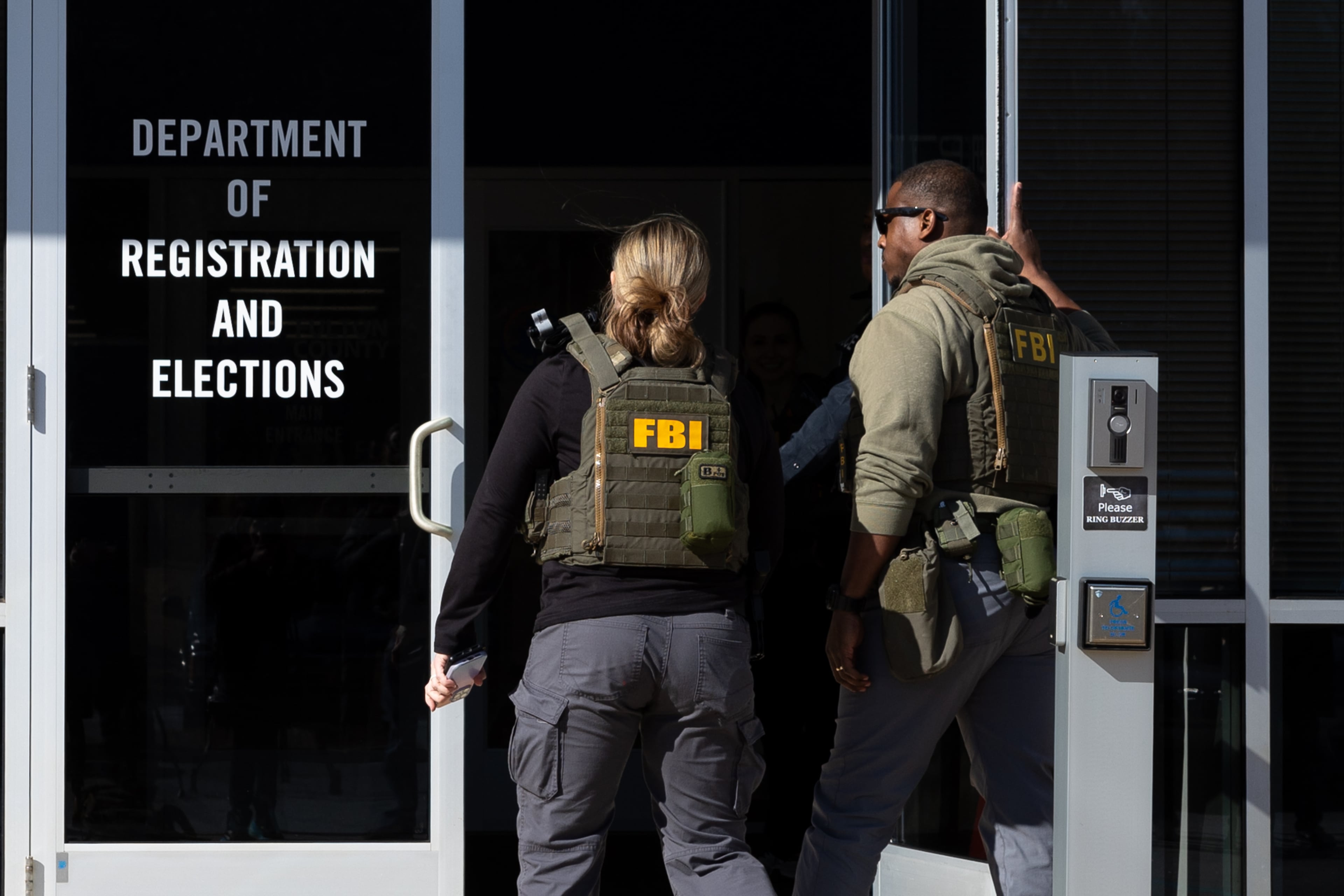
The dramatic escalation to reinvestigate Trump’s 2020 grievances sparked fears among some observers that the board would use it as a pretext to take over Fulton’s election operations. That prospect looks increasingly unlikely as the midterms near, but Grubbs, King and Roddy haven’t ruled it out.
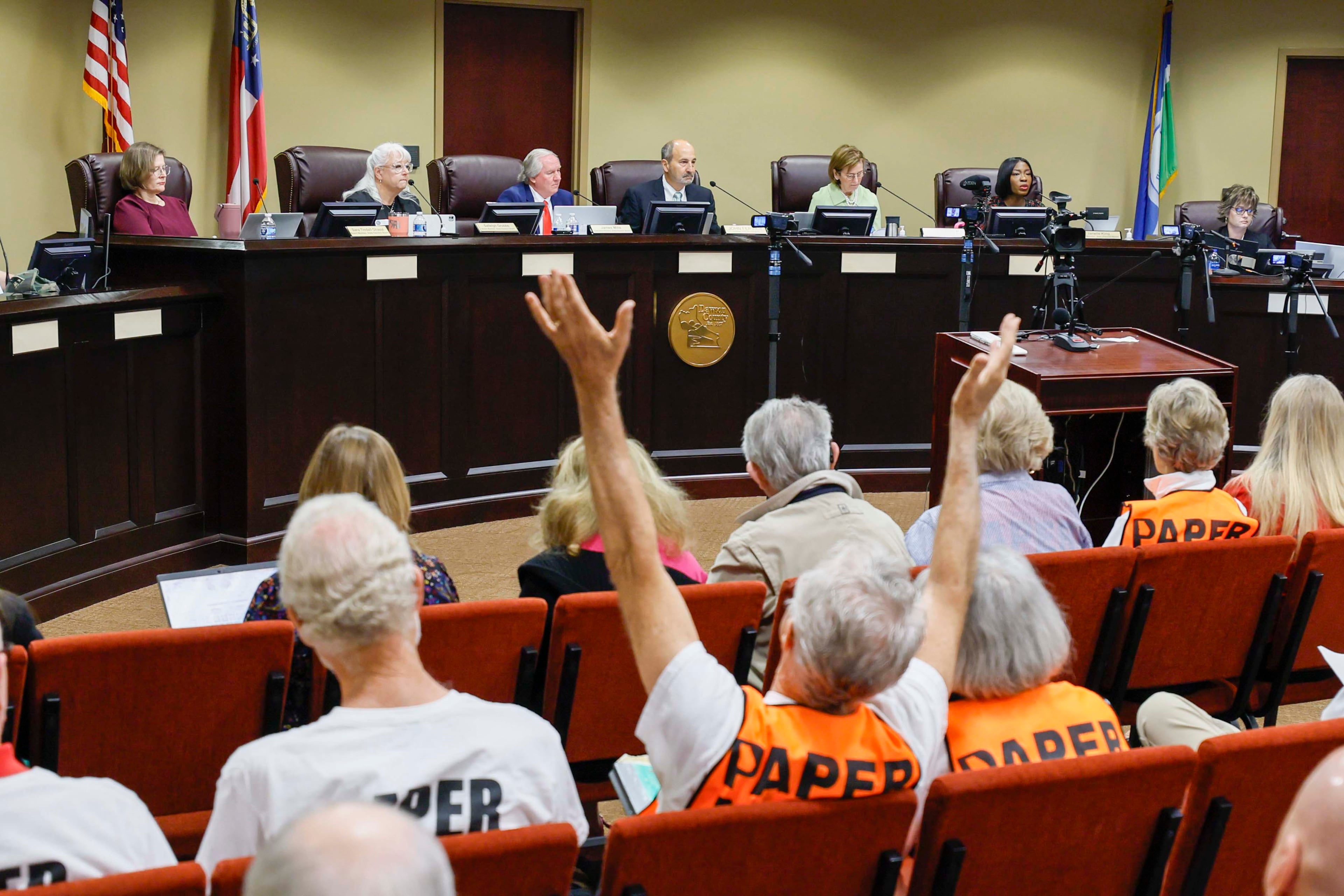
Perhaps the biggest unknown is how Roddy, a Marietta lawyer appointed by the state GOP, will shake up the board’s power dynamics.
So far, she has struck a less confrontational tone than her predecessor, Johnston. But Roddy is not optimistic that a thaw in relations with the secretary of state’s office is on the horizon.
“At this point, maybe the friendship will never occur,” she said.
Some observers believe lawmakers should change the board’s structure so it can be reined in. Currently, the governor, state House and Senate, Georgia GOP and Democratic parties each get to select a member.
“I think it’s time to have a ground-up review, in terms of how they’re appointed, who they’re (appointing), what authority they have,” said Lindsey, the former member.
Duffey, the former chairman, said it was a mistake to add so many nonlawyers to the board given how much of its work involves the weedy details of election law.
“I would encourage the State Legislature to look at a different template for appointing members to the board to find as much objectivity as they can,” he said.
Whether there is the political appetite to do so among Republicans in power is another issue.